
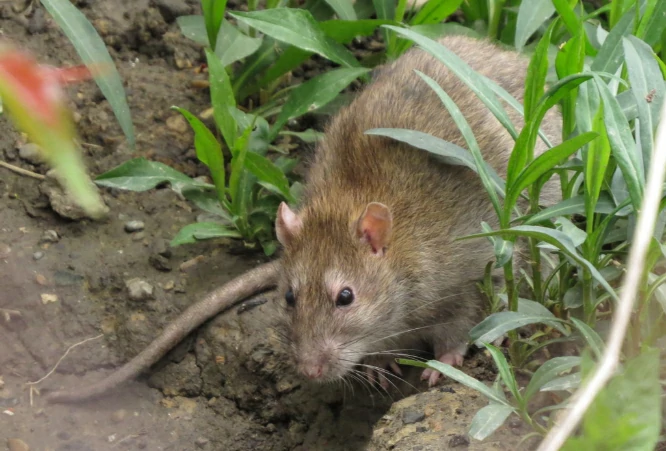
If you’ve noticed mysterious holes popping up in your garden, you might have rats. These holes usually appear near plants, along fence lines, or under bushes, and they can range from a couple of inches to several inches wide.
You might see dirt piled around the entrance, or notice that the holes seem to connect underground. It’s frustrating to find your garden torn up, especially when you’ve put effort into making it look nice. Why do rats dig holes in the garden.
Rats dig holes in gardens to create burrows for shelter, nesting, and storing food. These underground tunnels protect them from predators and weather, give them a safe place to raise babies, and provide access to food sources like roots, seeds, and vegetables growing in your garden.
Rats aren’t digging just to mess up your yard. They’re creating homes and survival systems. Understanding why they dig can help you figure out how to stop them and protect your garden.
Rats Need Shelter and Safety
The main reason rats dig holes is to create burrows where they can hide and stay safe.
Rats are prey animals. Hawks, owls, cats, dogs, snakes, and other predators hunt them, so they need safe places to hide. A burrow gives them protection from predators because they can duck underground where most hunters can’t reach them.

Burrows also protect rats from weather. In hot weather, underground spaces stay cooler. In cold weather, burrows provide insulation and keep rats warm. Rain, wind, and snow don’t reach them underground.
Gardens are perfect for digging because the soil is usually soft and well-maintained. If you’ve been working the soil for planting, you’ve actually made it easier for rats to dig.
The presence of plants, bushes, and other cover in gardens also makes rats feel safer. They can dig holes near vegetation and use the plants as camouflage for the entrance.
Rats Dig to Nest and Raise Babies
Burrows aren’t just hiding spots, they’re also homes where rats build nests and raise their young.
Female rats need safe, secure places to give birth and care for their babies. A burrow provides a dark, quiet, protected space that’s perfect for nesting.
Inside the burrow, rats will create a nesting chamber lined with soft materials like grass, leaves, shredded paper, or fabric. This is where the mother rat will stay with her babies for the first few weeks.
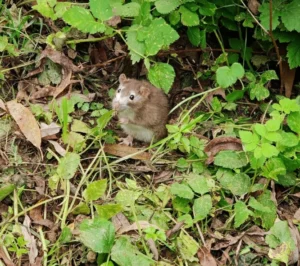
Rats reproduce quickly. A female can have several litters per year, and each litter can have 6-12 babies or more. This means once rats start nesting in your garden, the population can explode fast.
If you’ve got holes in your garden and you’re seeing lots of rat activity, there’s a good chance there are nests underground with babies inside.
Gardens Provide Easy Access to Food
One of the biggest reasons rats dig in gardens is because gardens are full of food.
Rats eat vegetables, fruits, seeds, roots, and bulbs. If you’re growing tomatoes, carrots, lettuce, squash, or pretty much any produce, rats will help themselves.
By digging burrows in or near your garden, rats can access food quickly and safely. They can pop out of their hole, grab some food, and disappear back underground before you even notice.
Rats also store food in their burrows. They’ll collect seeds, nuts, vegetables, and other food items and stash them in underground chambers for later. This behavior is called hoarding, and it helps them survive when food is scarce.
If you’ve noticed vegetables disappearing or being partially eaten, rats are probably coming out of their burrows at night to feed.
How Rats Build Their Burrows
Rat burrows aren’t simple holes. They’re complex underground systems with multiple chambers and tunnels.
Norway rats (the most common garden rats) are expert diggers. They use their strong front paws and teeth to dig through soil, and they can create extensive tunnel networks.
A typical rat burrow has several key features. There’s the entrance (the hole you see from above), which is usually 2-4 inches wide. The entrance might have fresh dirt piled around it, especially if the burrow was recently dug.
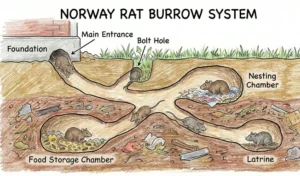
The entrance leads to a main tunnel that slopes downward. This tunnel can go several feet underground.
Off the main tunnel, rats create side chambers for different purposes. There’s usually a nesting chamber lined with soft materials, a food storage chamber, and sometimes even a bathroom area (though rats don’t fully control their bowels, they do tend to concentrate waste in certain spots).
Some burrows have multiple entrances and exits. This gives rats escape routes if a predator tries to get in.
The whole system can spread out over several feet underground, connecting different parts of your garden.
Where Rats Dig in Gardens
Rats don’t dig randomly. They choose specific spots that offer the best shelter and access to food.
You’ll often find holes near the edges of the garden, especially along fence lines or next to buildings. These spots give rats extra cover and make them feel safer.
Holes also show up under bushes, shrubs, or dense plants. The vegetation hides the entrance from predators (and from you), and the roots help stabilize the burrow.
Near water sources, like garden ponds, birdbaths, or hoses, you’ll find rat burrows. Rats need water to survive, and they’ll dig close to reliable water sources.
If you’ve got compost bins or piles of yard waste, rats will dig nearby. Compost attracts rats because it contains food scraps and creates warm, sheltered areas.
Raised garden beds can have burrows underneath them. Rats will dig under the bed and come up through the soil to access the plants.
You might also find holes near woodpiles, junk piles, or stored equipment. These areas provide additional cover and hiding spots.
Signs That Rats Are Digging in Your Garden
If you’re not sure whether rats are digging in your garden, here are some signs to look for.
First, the holes themselves. Rat burrow entrances are usually 2-4 inches wide and look clean and round. The soil around the entrance might be freshly disturbed.
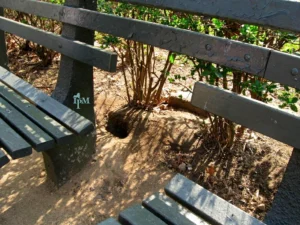
Second, runways. Rats use the same paths over and over, which creates visible trails in the grass or between plants. These trails are usually a few inches wide and look worn down.
Third, droppings. Rat droppings are dark, pellet-shaped, and about the size of a grain of rice. You’ll find them near burrows, along runways, and around food sources.
Fourth, gnaw marks. Rats chew on plants, vegetables, wooden stakes, and irrigation lines. If you see bite marks, rats are probably active in your garden.
Fifth, damaged crops. If vegetables are being eaten, especially at night, rats might be the culprits.
Sixth, sounds. If you sit quietly in your garden at dusk or dawn, you might hear rustling, squeaking, or scratching sounds from the burrows.
Finally, sightings. If you see rats running around your garden, especially near holes, you’ve definitely got a burrow system.
How Rat Burrows Damage Gardens
Rat burrows can cause several problems in your garden.
First, they mess up the soil structure. All that digging creates air pockets and loosens the soil, which can affect plant roots and drainage.
Second, rats eat your crops. They’ll nibble on vegetables, fruits, and seeds, which can ruin your harvest.
Third, burrows can damage plant roots. If rats dig too close to a plant, they might cut through roots, which can kill or weaken the plant.
Fourth, burrows create tripping hazards. If you’re walking through your garden and step on a weak spot over a tunnel, you could twist your ankle or fall.
Fifth, rat activity attracts other pests. The food and shelter that rats create can draw in insects, mice, and other unwanted visitors.
Sixth, burrows can mess up irrigation systems. If you’ve got underground sprinklers or drip lines, rats might chew through them or create holes that cause leaks.
What Attracts Rats to Your Garden?
Rats don’t dig holes just anywhere. They’re drawn to gardens that offer what they need.
Food is the biggest draw. If you’re growing vegetables, fruits, or herbs, you’ve basically set out a buffet. Even seeds and bulbs in the soil are food for rats.
Water sources attract them too. Ponds, birdbaths, leaky hoses, or irrigation systems all provide water.
Shelter and cover make your garden appealing. Overgrown bushes, tall grass, piles of yard waste, and clutter all give rats places to hide.
Compost bins are magnets for rats, especially if they contain food scraps.
Fruit trees drop fruit on the ground, and rats will come to eat it. Even rotting fruit is fine by them.
Bird feeders attract rats because seeds fall on the ground. Rats aren’t there for the birds, they’re there for the seeds.
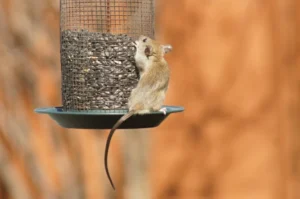
Chickens and other backyard animals can attract rats. The feed, eggs, and waste all provide food for rats.
Finally, if your neighbors have rats, there’s a good chance they’ll spread to your garden too.
How to Stop Rats from Digging Holes in Your Garden
If you want to keep rats from digging in your garden, you need to make it less attractive and harder to burrow in.
First, remove food sources. Harvest vegetables as soon as they’re ripe, pick up fallen fruit, and don’t leave food sitting around. Store birdseed and chicken feed in sealed containers.
Second, eliminate shelter. Clear out overgrown bushes, tall grass, and piles of junk or yard waste. Keep your garden neat and open.
Third, manage water. Fix leaky hoses and faucets, and don’t leave water sitting in bowls or puddles.
Fourth, use hardware cloth. If you’ve got raised garden beds, line the bottom with hardware cloth (metal mesh) to prevent rats from burrowing up through the soil.
Fifth, fill in existing burrows. Once you’re sure rats aren’t inside, fill the holes with dirt or gravel and pack it down firmly. You can also stuff steel wool into the entrance before filling it to make it harder for rats to re-dig.
Sixth, use traps. Snap traps or live traps placed near burrows can catch rats. Check them daily and rebait as needed.
Seventh, consider fencing. Bury hardware cloth or metal mesh 12-18 inches underground along the edges of your garden to block rats from digging in.
Eighth, keep compost bins sealed. Use enclosed compost bins and don’t put meat, dairy, or oily foods in them.
Ninth, encourage predators. Owls, hawks, and snakes are natural rat hunters. You can install owl boxes to attract owls to your yard.
Should You Use Poison?
Poison is an option, but it’s risky in gardens.
First, poison can harm other animals. If a rat eats poison and then gets eaten by a hawk, owl, or cat, that predator can get poisoned too.
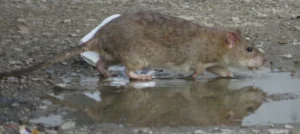
Second, poisoned rats can die in hard-to-reach places like inside burrows or under plants, where they’ll rot and smell bad.
Third, poison doesn’t address the root cause. If your garden still has food, water, and shelter, new rats will move in even after you’ve killed the old ones.
If you do use poison, place it in tamper-resistant bait stations and follow all safety instructions. Keep it away from areas where pets, children, or wildlife might access it.
Can You Fill the Holes and Be Done?
Filling holes can work, but only if you address the problem properly.
If you just fill the holes without getting rid of the rats, they’ll just dig new ones. Rats are persistent and will keep coming back.
Before filling holes, make sure the rats aren’t inside. You don’t want to trap them underground, because they’ll either dig out or die and rot, which creates a worse problem.
Fill the holes with dirt or gravel and pack it down firmly. You can also stuff steel wool into the entrance first, which makes it harder for rats to re-dig.
Monitor the area. If new holes appear, you know rats are still active.
The best approach is to combine filling holes with removing food sources, eliminating shelter, and setting traps.
Conclusion
So, why do rats dig holes in the garden? They’re creating burrows for shelter, nesting, and access to food. Gardens provide soft soil, plenty of cover, and food sources like vegetables, seeds, and roots, which make them perfect places for rats to set up home.
Rat burrows can damage your garden by eating crops, messing up soil structure, and creating tunnels that affect plant roots and irrigation systems. But you can stop rats by removing food sources, eliminating shelter, filling in burrows, and using traps or barriers.
The key is making your garden less attractive to rats. If you take away what they need, they’ll move on to somewhere else, and your garden can go back to being a place for plants, not pests.

Hi, my name is Ezra Mushala, i have been interested animals all my life. I am the main author and editor here at snakeinformer.com.