

No matter where you live, there’s a good chance you’ve seen a rat. They’re in cities, suburbs, farms, and even wild areas. You might spot one in your basement, scurrying across a subway platform, or digging in your garden.
It’s hard to go anywhere without running into rats at some point. They seem to pop up no matter what we do to get rid of them. So what’s the deal? Why are rats everywhere?
Rats are everywhere because they’re extremely adaptable, reproduce quickly, eat almost anything, and thrive in environments humans create. They can live in cities, farms, forests, and suburbs, and they’re excellent at finding food, water, and shelter no matter where they are.
Rats aren’t everywhere by accident. They’ve survived for millions of years by being flexible, smart, and tough.
Wherever humans go, rats follow because we create perfect conditions for them without even realizing it.
Rats Are Incredibly Adaptable
The main reason rats are everywhere is that they’re incredibly good at adapting to different environments.
Rats can live in deserts, forests, swamps, cities, and everything in between. They don’t need a specific climate or habitat to survive. If there’s food, water, and shelter, rats can make it work.

When conditions change, rats change with them. If their food source disappears, they’ll switch to something else. If their home gets destroyed, they’ll build a new one. If predators show up, they’ll adjust their behavior to avoid them.
This adaptability is built into their biology. Rats have strong immune systems, so they can eat spoiled or contaminated food that would make other animals sick. They can survive on very little water and go days without food if they have to.
They’re also behaviorally flexible. Rats are smart and can learn new things quickly. If a trap catches one rat, the others learn to avoid it. If a new food source appears, they’ll figure out how to access it.
Rats Reproduce Incredibly Fast
Another huge reason rats are everywhere is that they reproduce at an insane rate.
A female rat can have babies when she’s just a few months old. She can get pregnant again almost immediately after giving birth, and she can have up to 12 litters per year. Each litter can have 6-12 babies, sometimes more.
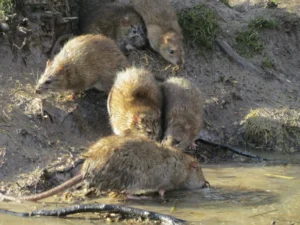
Do the math, and one pair of rats can turn into hundreds in just a year. If those babies start breeding too, the population explodes.
This rapid reproduction means that even if you kill a bunch of rats, the population bounces back quickly. You’d have to eliminate nearly all of them to make a real dent, and that’s almost impossible.
It’s also why rat populations are so hard to control. By the time you notice a problem, there are already way more rats than you think.
Rats Eat Almost Anything
Rats are omnivores, which means they’ll eat just about anything. This makes it easy for them to survive in all kinds of places.
In cities, rats eat garbage, leftover food from restaurants, pet food, birdseed, and anything else they can find. They’re not picky. If it’s edible (and sometimes even if it’s not), rats will give it a try.
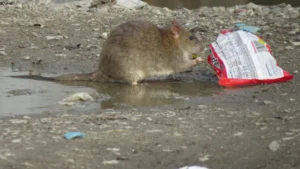
On farms, they eat crops, grains, animal feed, and even eggs or small animals if they get the chance. In forests, they eat seeds, nuts, fruits, insects, and fungi.
Rats will also eat things that seem disgusting to us. Spoiled food, rotting meat, feces, you name it. Their stomachs can handle it, which gives them a huge advantage over animals that need fresh, clean food.
This ability to eat almost anything means rats can survive in places where other animals would starve. It’s one of the main reasons they’re so successful.
Humans Create Perfect Conditions for Rats
Here’s the thing: rats are everywhere partly because we’ve made it easy for them.
Humans produce massive amounts of garbage. We throw away tons of food every day, and a lot of it ends up in places where rats can access it. Dumpsters, trash cans, landfills, and even litter on the street all provide meals for rats.
We also build structures that rats love. Buildings have cracks, gaps, and holes that rats can squeeze through. Sewers and subways create underground networks where rats can live and travel safely. Basements and attics give them warm, quiet places to nest.
We leave food out, whether it’s pet food on a porch, birdseed in a feeder, or crumbs on the kitchen floor. All of this attracts rats.
We also create water sources. Leaky pipes, puddles, drainage systems, and even pet water bowls give rats all the water they need.
Without meaning to, we’ve turned the world into a paradise for rats. And as long as we keep living the way we do, rats will keep thriving.
Rats Are Excellent at Hiding
One reason it seems like rats are everywhere is that they’re really good at staying out of sight.
Rats are nocturnal, which means they’re most active at night when humans are asleep. During the day, they hide in burrows, walls, sewers, or other places where people won’t see them.

They’re also cautious. Rats stick to shadows, move along walls, and avoid open spaces. If they hear a noise or sense danger, they freeze or run for cover.
This means you can have a rat problem and not even know it. You might see one rat scurry across the floor at night and think it’s just a stray, but there’s a good chance there are dozens more hiding nearby.
Rats are also small enough to fit into tight spaces. They can squeeze through holes the size of a quarter, so they can access areas you’d never expect.
Rats Have Few Natural Predators in Urban Areas
In the wild, rats have plenty of predators. Hawks, owls, snakes, foxes, and cats all hunt rats. But in cities and suburbs, those predators are scarce.
Urban areas don’t have many hawks or owls. Snakes are rare. Foxes and other wild predators usually stay away from densely populated areas.
Cats can catch rats, but most pet cats aren’t interested in hunting them, especially if the cat is well-fed. Some cats will kill a rat, but not all of them.
Without predators to keep their population in check, rats can multiply unchecked. This is a big reason why cities have such huge rat problems.
Rats Are Incredibly Tough
Rats are survivors. They’re physically tough and can handle conditions that would kill other animals.
Rats can survive falls from several stories high. They can tread water for days and swim long distances. They can chew through wood, plastic, and even some metals.

They’re also resistant to many poisons. Rats have developed genetic resistance to common rodenticides, which means the poisons that used to work don’t always kill them anymore.
Rats can survive in extreme temperatures too. They’re not fans of freezing cold, but they can find warm spots in buildings or burrow underground to stay insulated. In hot climates, they’ll find shade and water.
This toughness means rats can live in places where other animals can’t, and it makes them really hard to get rid of.
Rats Are Smart and Learn Quickly
Rats are smarter than most people think. They’re capable of learning, problem-solving, and even planning ahead.
If you set a trap, rats might avoid it because they’ve learned it’s dangerous. If you use poison, they might test it on weaker members of the group first to see if it’s safe.
Rats communicate with each other too. They use squeaks, body language, and scent to share information. If one rat finds food, others will follow. If one rat gets hurt by a trap, the others will avoid it.
This intelligence makes rats really hard to control. They’re not just dumb animals running around blindly. They’re strategic, cautious, and adaptable.
Rats Follow Humans Wherever We Go
Rats have been living alongside humans for thousands of years, and they’ve basically followed us everywhere we’ve gone.
When humans started farming, rats moved into grain stores. When we built cities, rats moved into sewers and buildings. When we traveled to new places, rats hitched rides on ships and spread to new continents.
Today, rats live on every continent except Antarctica. They’re in North America, South America, Europe, Asia, Africa, and Australia. They’re on islands, in deserts, in jungles, and in cities.
Wherever humans build communities, rats show up. We create the conditions they need, and they take advantage of it.
Rats Are Hard to Control
Even when people try to get rid of rats, it’s really difficult to make a lasting impact.
Poison works, but as mentioned earlier, rats are developing resistance. Plus, poison can harm other animals like pets, birds, and wildlife.

Traps work too, but you’d need a lot of them to catch all the rats in an area. And rats learn to avoid traps after seeing other rats get caught.
Sealing up buildings helps, but rats can chew through a lot of materials, and it’s almost impossible to seal every single gap.
Cleaning up food and trash helps reduce rat populations, but in cities with millions of people, managing waste perfectly is nearly impossible.
Even when cities launch major rat control programs, the population usually bounces back within a few years because rats reproduce so fast.
Rats Thrive in All Kinds of Climates
Rats aren’t limited to one type of climate. They can live in hot, cold, wet, and dry environments.
In tropical areas, rats are active year-round and have constant access to food and water. In colder climates, they move indoors or burrow underground to stay warm.

They’re found in rainforests, deserts, grasslands, mountains, and coastal areas. They’ve adapted to all of them.
This ability to thrive in different climates is another reason they’re so widespread. Most animals are limited by temperature or rainfall, but rats aren’t.
Rats Are Opportunistic
Rats don’t wait for perfect conditions. They’re opportunistic, which means they take advantage of whatever’s available.
If there’s food, they’ll eat it. If there’s a hole in a building, they’ll move in. If there’s water, they’ll drink it.
They don’t need ideal conditions to survive. They just need enough, and they’ll make it work.
This opportunistic behavior is part of why they’re so successful. They don’t wait around for things to get better. They adapt to what’s in front of them.
Rats Have Been Around for Millions of Years
Rats aren’t a new problem. They’ve been around for millions of years, long before humans existed.
Over that time, they’ve evolved to be survivors. They’ve survived ice ages, droughts, predators, and diseases. They’ve outlasted countless other species.

This long evolutionary history has made them incredibly resilient. They’re not going anywhere anytime soon.
What Can Be Done About Rats?
So if rats are everywhere and they’re so hard to control, what can we do?
The key is managing the things that attract them. If we reduce food waste, seal up buildings, fix leaky pipes, and clean up trash, we can make areas less attractive to rats.
Cities can invest in better sanitation, more frequent trash pickup, and rat-proof infrastructure. Homeowners can seal gaps, store food properly, and keep yards clean.
Predators can help too. Encouraging owls, hawks, and snakes (in appropriate areas) can naturally reduce rat populations.
But the reality is, we’ll probably never completely eliminate rats. They’re too adaptable, too tough, and too smart. The best we can do is manage them and keep populations under control.
Conclusion
So, why are rats everywhere? Because they’re survivors. They adapt quickly, reproduce fast, eat almost anything, and thrive in the environments we create for them.
Rats are tough, smart, and opportunistic. They’ve been around for millions of years, and they’ve learned how to live alongside humans no matter where we go.
As long as we produce garbage, build structures with gaps, and leave food and water accessible, rats will keep showing up. They’re not going anywhere, but with the right strategies, we can at least keep them under control.

Hi, my name is Ezra Mushala, i have been interested animals all my life. I am the main author and editor here at snakeinformer.com.