
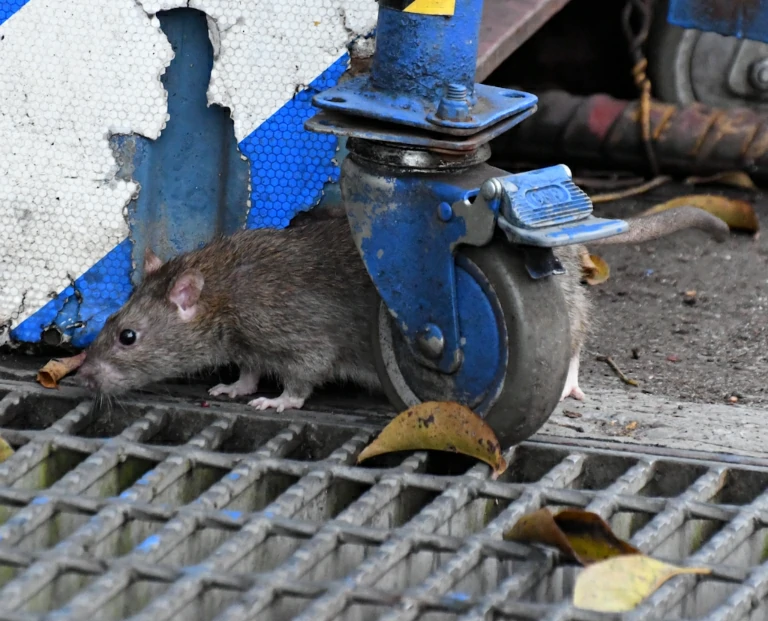
When most people think of rats, they picture them crawling around in dark, smelly sewers. This image is everywhere in movies, cartoons, and urban legends. It’s become so common that “sewer rat” is practically a standard phrase for describing something gross or unwanted.
But why are sewers such popular homes for rats in the first place? What makes these underground tunnels so appealing to an animal that could technically live almost anywhere? Why do rats live in sewers?
Rats live in sewers because they provide everything rats need to survive: abundant food from human waste, constant access to water, protection from predators and weather, safe nesting areas, consistent warm temperatures, and an extensive network of tunnels for travel. Sewers are essentially perfect rat habitats that humans have accidentally created, connecting entire cities and providing unlimited resources with very few threats.
Sewers aren’t just convenient for rats, they’re like five-star hotels with endless room service. Once you understand what rats need to survive and what sewers provide, it makes perfect sense why these underground networks are packed with them.
The relationship between rats and sewers is actually a relatively recent development in human history, but it’s been so successful that it’s hard to imagine one without the other.
Sewers Provide Unlimited Food Sources
The main reason any animal lives anywhere is food, and sewers are loaded with it. Everything that goes down drains, toilets, and garbage disposals ends up in the sewer system, and rats will eat almost all of it.
Human waste contains a lot of undigested food particles. Rats aren’t picky eaters, and they’ll happily consume this material. It might sound disgusting to us, but to a rat, it’s just food.

Beyond human waste, there’s also food waste from sinks and garbage disposals. Bits of vegetables, meat, grease, and other scraps wash down drains constantly, especially from restaurants and commercial kitchens.
Rats have incredibly strong stomachs and can digest things that would make most animals sick. They’ve evolved to be scavengers that can eat almost anything organic, which makes sewers perfect for them.
The food supply in sewers is constant. Unlike natural environments where food availability changes with seasons, sewers provide a steady stream of nutrition all year long. Humans produce waste every day, so rats never have to worry about going hungry.
This reliable food source allows rat populations in sewers to grow much larger than they could in natural habitats. When food is unlimited, the main limit on population growth is space, and sewers have plenty of that too.
Some sewer systems also have grease traps and collection points where fat and oil accumulate. These are especially attractive to rats because the high-fat content provides lots of calories.
Water Is Always Available
Rats need water every day to survive, and sewers obviously have plenty of it. The constant flow of water through sewer pipes means rats never have to search for drinking water or worry about droughts.
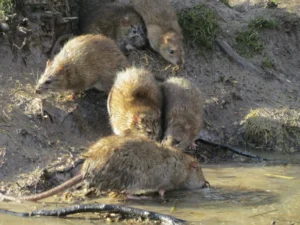
Even in dry climates where natural water sources might be scarce, sewers maintain moisture and running water. This makes cities with sewer systems viable habitats for rats even in places that would otherwise be too dry.
The humidity in sewers also helps rats regulate their body temperature and keeps their skin from drying out. Rats can get dehydrated quickly in very dry environments, but sewers prevent this problem.
Standing water in some parts of sewer systems also provides breeding grounds for insects, which rats will eat as an additional food source. The ecosystem in sewers is actually more complex than most people realize.
Protection From Predators
Above ground, rats have to worry about cats, dogs, hawks, owls, snakes, and other predators. In sewers, they’re protected from almost all of these threats.
Most predators can’t or won’t enter sewer systems. The environment is too wet, too dark, and too difficult to navigate for animals that hunt rats above ground.
Cats, one of the main natural predators of rats, rarely go into sewers. Even feral cats that live outdoors generally stick to the surface. While a cat might occasionally catch a rat near a sewer entrance, they won’t pursue them underground.
Birds of prey obviously can’t hunt in sewers, and snakes, while they could potentially enter sewer systems, rarely do in most urban environments.
This protection from predators is huge for rat survival and reproduction. In natural habitats, predation is one of the main things that keeps rat populations in check. In sewers, that pressure is almost completely removed.
Without significant predation, rats can live longer and raise more babies to adulthood. A female rat that might only successfully raise a few litters above ground could potentially raise many more in the safety of sewers.
The lack of predators also means rats can be more relaxed and spend more time eating and reproducing rather than being constantly vigilant for threats.
Sewers Offer Shelter From Weather
Weather is another survival challenge that sewers help rats avoid. Rain, snow, extreme heat, and extreme cold all become non-issues underground.
Sewer temperatures stay relatively stable year-round. They’re warmer than the surface in winter and cooler than the surface in summer. This temperature regulation is really valuable for rats.
Rats can handle cold temperatures to a point, but they prefer warmth and can suffer in extreme cold. Sewers provide a consistently moderate environment that’s never too hot or too cold.

This protection from weather means rats can be active and reproduce year-round in sewers, while surface-dwelling rats might have reduced activity or reproduction during harsh winters or summers.
The shelter also protects rat pups, which are born hairless and very vulnerable to temperature extremes. A nest in a sewer is much safer than a nest exposed to the elements.
During storms or flooding at the surface, sewers can actually provide safe refuge (though sewers themselves can flood, which can be catastrophic for rats living in them).
Extensive Networks For Travel and Territory
Sewer systems in cities aren’t just individual pipes, they’re vast interconnected networks that can span miles. These tunnels give rats the ability to travel long distances underground, safe from surface dangers.
Rats can move between neighborhoods, find new food sources, and establish territories all within the sewer system. A rat might travel several blocks through sewers in a single night without ever coming to the surface.

This network allows rat populations to spread throughout an entire city. If one area becomes overcrowded or resources become limited, rats can simply move through the tunnels to find better conditions.
The complexity of sewer systems also provides countless places to nest and hide. There are side pipes, junction points, cracks, and cavities throughout the system where rats can build nests and raise young.
Different rats and rat groups can establish territories in different sections of the sewer without necessarily coming into conflict. The system is large enough to support many separate colonies.
This connectivity also means that trying to eliminate rats from one section of sewer is nearly impossible. Even if you successfully remove rats from an area, more will move in from connected sections.
Safe Nesting Areas Throughout the System
Rats need safe, dry places to build nests and raise their young. Sewers provide countless options for nest sites that are protected from disturbance.
Areas where pipes join, corners, ledges above water level, and cracks in sewer walls all make good nesting spots. Rats can build nests using materials they find in the sewers or bring down from the surface.

These nests are rarely disturbed by humans. Most people never go into sewers, and even maintenance workers only access limited sections occasionally. This means rats can raise multiple generations in the same spot without interruption.
The safety of sewer nests contributes to high survival rates for rat pups. In surface environments, nests are often destroyed by predators, weather, or human activity. In sewers, nests can remain intact and safe for long periods.
Female rats can have multiple litters per year, and in the stable environment of sewers, more pups survive to adulthood than would in natural habitats.
Humans Keep Making Sewers Better for Rats
The irony is that as cities improve and expand their sewer systems to better serve human needs, they’re also creating better habitats for rats. Modern sewer systems are more extensive and better maintained than old ones, which actually benefits rats.
Repairs and maintenance can temporarily disrupt rat populations, but the overall trend is toward creating more accessible, more extensive sewer networks. Every new building connected to the sewer system potentially adds more rat habitat.

Cities also can’t just shut down sewer systems to deal with rats. Sewers are critical infrastructure that has to keep operating no matter what. This means rats have guaranteed access to these resources indefinitely.
Some cities have tried various methods to control sewer rat populations, from poison to introducing predators to using barriers and traps. But these measures have generally had limited success because the sewer environment is so favorable to rats.
As long as humans live in cities and produce waste that goes into sewers, rats will have reasons to live there too.
Not All Rats Live in Sewers
It’s worth noting that while many urban rats do use sewers, not all rats live underground. The species most commonly associated with sewers is the Norway rat (also called the brown rat), which is comfortable in wet, underground environments.
Black rats (also called roof rats) prefer higher, drier locations and are more likely to live in buildings, attics, and trees than in sewers. They can access sewers but don’t typically make them their primary habitat.

Even Norway rats don’t exclusively live in sewers. Many live in basements, crawl spaces, garbage dumps, and other surface locations. The sewer is just one option, though it’s a popular one.
The number of rats living in sewers versus above ground varies by city and depends on factors like sewer system design, building construction, and available food sources at the surface.
Some estimates suggest that for every rat you see above ground in a city, there might be several more living underground in the sewers. But exact numbers are almost impossible to determine because surveying sewer rat populations is extremely difficult.
How Rats Get Into Sewers
Rats access sewers through multiple routes. The most obvious is through drain openings and catch basins on streets. These openings are designed to let water in, but they also let rats in.
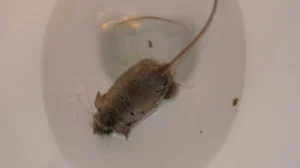
Rats can climb up through toilet pipes in buildings, though this is less common than people fear. It’s technically possible and does happen occasionally, but most rats prefer to stay in the sewer system rather than climbing up into occupied buildings.
Cracks and breaks in sewer pipes provide entry points from the soil around the pipes. As sewer infrastructure ages and deteriorates, these entry points become more common.
Connection points between buildings and the main sewer line can also have gaps that rats can squeeze through. Remember that rats can fit through holes as small as a quarter, so even small gaps are enough.
Once a few rats find their way into a sewer system, they reproduce and create a population that never needs to leave. The population becomes self-sustaining with new generations born and raised entirely underground.
The Health Concerns of Sewer Rats
Rats living in sewers have more exposure to disease-causing bacteria and parasites than rats in cleaner environments. They’re living in human waste and other contaminated materials constantly.
This makes sewer rats potential vectors for diseases like leptospirosis, salmonellosis, and other infections. When rats move between sewers and the surface (or into buildings), they can potentially spread these diseases.

Their fur, feet, and bodies can carry bacteria and parasites from the sewer into places where humans live and work. This is one reason why rat infestations in buildings are such serious health concerns.
Rat droppings and urine in sewer systems can contaminate water if there are leaks or breaks in pipes. This is why maintaining sewer infrastructure is so important for public health.
The diseases rats carry aren’t limited to bacteria. They can also harbor parasites like fleas, mites, and worms, which can spread to other animals and potentially to humans.
Cities Have Limited Options for Control
Controlling rat populations in sewers is incredibly difficult. The environment is hard for humans to access, treatments are hard to apply consistently, and new rats can always move in from other areas.
Poison baiting is one common approach, but it has limited effectiveness in sewers. Rats have plenty of food available, so they’re not desperate enough to eat bait that might taste suspicious. There’s also the problem of dead rats decomposing in sewers and creating odor and sanitation issues.
Trapping is even less practical because of the scale of sewer systems. You’d need thousands of traps, and they’d need to be checked and reset constantly. It’s not feasible for most cities.
Some cities have tried using birth control for rats, distributing bait that makes them sterile rather than killing them. This is still experimental and has mixed results.
Improving sewer infrastructure to make it less rat-friendly is probably the most effective long-term solution, but it’s also the most expensive. Sealing entry points, improving drainage, and maintaining pipes can reduce rat populations over time.
However, no city has successfully eliminated rats from their sewer system entirely. The best most cities can do is manage populations and try to keep them from becoming overwhelming.
The Relationship Is Probably Permanent
The relationship between rats and sewers has become so established that it’s unlikely to change. Rats have adapted to sewer life, and sewer systems continue to provide everything they need.
From an evolutionary perspective, sewer rats are becoming increasingly specialized for this environment. Rats that are better at navigating darkness, swimming, and finding food in sewers are more successful and pass those traits to their offspring.
Over time, this could lead to sewer rats becoming distinctly different from surface-dwelling rats, though they’re still the same species for now.

Cities will continue to need sewer systems for sanitation, and as long as sewers exist, they’ll provide habitat for rats. The two have become inseparable parts of urban infrastructure.
Understanding why rats live in sewers helps us understand why controlling them is so difficult and why they’re such a persistent feature of city life.
Conclusion
Rats live in sewers because these underground systems provide ideal living conditions: unlimited food from human waste, constant water access, protection from predators and weather, safe nesting sites, and extensive tunnel networks for travel.
Sewers accidentally create perfect rat habitat.
The environment is so favorable that rat populations in sewers can grow much larger than they could in natural habitats. Without major predation pressure and with year-round resources, sewers support huge numbers of rats in cities worldwide.
This relationship between rats and sewers is probably permanent. As long as cities have sewer systems, they’ll have sewer rats.
Understanding this helps explain why urban rat control is such a persistent challenge and why rats are such a successful species in human environments.

Hi, my name is Ezra Mushala, i have been interested animals all my life. I am the main author and editor here at snakeinformer.com.