
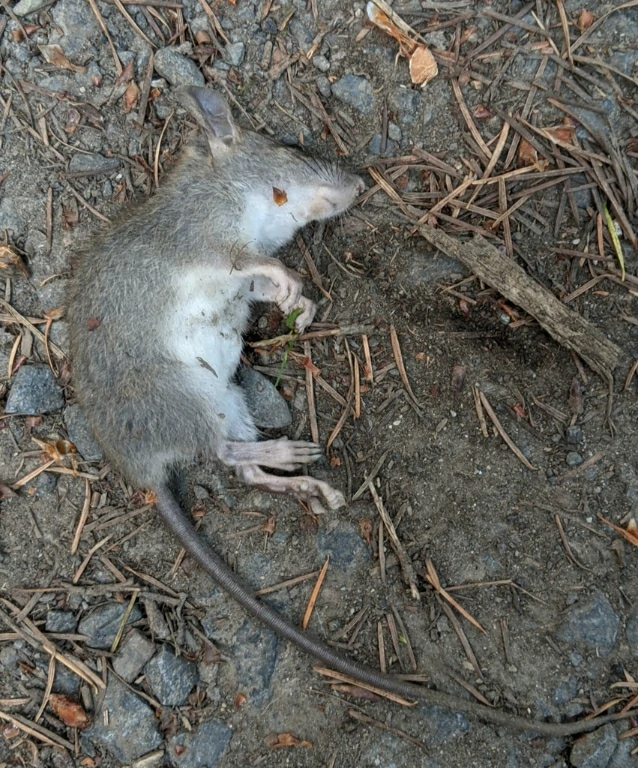
If you’ve ever had a rat die somewhere in your walls, attic, or crawl space, you know the smell is absolutely terrible. It’s one of those odors that seems to get into everything and won’t go away no matter how many candles you light or how much air freshener you spray. But why do dead rats smell so bad?
Dead rats smell because of the gases and chemicals released during decomposition. When a rat dies, bacteria in its body start breaking down tissues, producing foul-smelling compounds like putrescine, cadaverine, and sulfur-based gases that create that horrible rotting odor.
The smell from a dead rat is actually a mix of different chemical compounds that bacteria produce as they feed on the rat’s body. This process starts almost immediately after death and can last for weeks depending on the conditions.
What Actually Causes the Smell From Dead Rats
When a rat dies, its body doesn’t just sit there unchanged. Bacteria that were already living in the rat’s digestive system and on its skin start breaking down the body tissues right away.
These bacteria need to eat, and dead tissue is their food source. As they consume the rat’s body, they release various gases and chemical compounds as waste products. Think of it like how your own digestion produces gas, but on a much more intense and unpleasant level.
The main culprits behind the terrible smell are compounds with names like putrescine and cadaverine. These are aptly named because they’re literally the chemicals of decay. They’re what give rotting flesh its distinctive, gag-inducing odor.
Sulfur compounds also play a big role. These create smells similar to rotten eggs or sewage. When combined with the other decomposition chemicals, you get that unmistakable dead animal smell that’s really hard to forget once you’ve experienced it.
How Long Does a Dead Rat Smell Last?
The smell from a dead rat doesn’t last forever, but it can feel like it does when you’re living with it. The timeline depends on several things.
In warm, humid conditions, a dead rat will smell stronger and decompose faster. The bacteria work overtime in warm temperatures, breaking down the body more quickly. This means the smell peaks faster but also goes away sooner.

In cooler, drier conditions, decomposition happens more slowly. The smell might not be as immediately overpowering, but it can linger for much longer because the body takes more time to fully break down.
Generally, you’re looking at about two to three weeks for the worst of the smell. The first few days after death, the smell starts building. By the end of the first week, it’s usually at its peak and absolutely terrible.
After that peak period, the smell gradually starts to fade as the body dries out and there’s less tissue for bacteria to break down. By week three or four, the smell is usually much weaker, though you might still notice it in certain conditions.
Temperature really is the biggest factor here. A rat that dies in your air-conditioned house in winter might smell for longer but less intensely. A rat that dies in your hot, humid attic in summer will smell absolutely horrible but for a shorter time.
Why the Smell Seems to Get Everywhere
One of the most frustrating things about a dead rat smell is how it seems to spread throughout your entire house. This happens because the gases released during decomposition are volatile, meaning they easily become airborne.
These gas molecules are tiny and can travel through your ventilation system, through small cracks and gaps in walls, and basically anywhere air can flow. If the dead rat is near an air vent, the smell gets distributed to every room connected to that duct system.
The smell can also absorb into porous materials. Things like wood, drywall, insulation, fabrics, and carpets can actually soak up the odor molecules. This is why the smell can linger in a room even after the dead rat has been removed.
Your nose is also incredibly sensitive to these particular compounds. Humans evolved to find the smell of decay disgusting because it signals danger (disease, contamination). So even tiny amounts of these chemicals in the air are enough for your brain to register a strong, unpleasant odor.
Can You Speed Up How Fast a Dead Rat Decomposes
You can’t really speed up decomposition from the outside without actually finding and removing the rat. The bacteria doing the work are inside the body, and they’ll work at whatever pace the temperature and humidity dictate.
Some people try using products that claim to speed up decomposition or neutralize odors. Most of these don’t work very well because they can’t actually reach the source of the smell inside your walls or wherever the rat died.
The only real solution is to find the dead rat and remove it. Once the source is gone, you can clean and deodorize the area properly. Everything else is just masking the smell temporarily.
If you absolutely can’t find the rat, your best bet is to improve ventilation in the affected area, use activated charcoal or baking soda to absorb odors, and just wait it out. The smell will eventually go away on its own as the body fully decomposes and dries out.
Where Do Rats Usually Die in Homes
Rats don’t typically die out in the open where you can easily find them. They usually die in hidden spots, which is why the smell becomes such a problem.
Common places include inside walls, particularly near where they’ve been traveling regularly. Rats create runways along wall studs and between floors, and if they die while using these paths, they’re basically unreachable without tearing into the wall.
Attics and crawl spaces are also popular death spots. Rats love these areas because they’re usually undisturbed, and if a rat gets sick or injured up there, it might not make it back out.
Behind appliances is another common spot. The warm area behind refrigerators, water heaters, or furnaces can attract rats, and if they eat poison bait, they might die right there in that cozy spot.
Inside insulation is particularly problematic. Rats will burrow into insulation for warmth, and if they die there, the insulation absorbs the smell like a sponge. You might have to replace the insulation even after removing the body.
How Rat Poison Affects Where Rats Die
There’s a common myth that rats will go outside looking for water after eating poison and die outside. This isn’t really true for most modern rat poisons.
Most rodenticides work by preventing blood clotting. The rat doesn’t feel sick right away, so it doesn’t change its behavior much. It just keeps doing rat things until the internal bleeding becomes severe enough to kill it.

This means the rat usually dies wherever it happens to be when the poison finally takes full effect. If it’s in your walls when that happens, that’s where it dies. If it’s in the attic, it dies there.
Some people think using poison is easier than traps because you don’t have to deal with the body. But the reality is that poison often creates the dead rat smell problem because you lose control of where the rat dies.
With traps, you find the dead rat right away and can remove it. With poison, the rat might die in the most inconvenient spot possible, and you’re stuck with the smell for weeks.
Health Risks From Dead Rat Smell
The smell itself, while absolutely horrible, isn’t usually dangerous to your health. You’re just smelling gas molecules, and while they’re unpleasant, they won’t hurt you in the concentrations you’d experience from one dead rat.
However, a dead rat does pose some real health risks beyond the smell. The body can attract other pests like flies, beetles, and other insects that feed on dead animals. These insects can then spread bacteria around your home.
Bacteria from the decomposing rat can also contaminate nearby areas. If the rat died near your ventilation system, bacteria could potentially spread through your ducts. If it died where fluids could leak down into living spaces, that’s definitely a contamination concern.
Diseases that the rat carried don’t just disappear when it dies. Fleas and mites will leave a dead rat looking for a new host, and they might find your pets or even you. This is actually one of the ways plague spread historically, when fleas left dead rats and bit humans instead.
If you have to handle a dead rat or clean up after one, you should definitely wear gloves and a mask. Wash your hands thoroughly afterward, and disinfect any tools or surfaces that came into contact with the body.
How to Find a Dead Rat in Your House
Finding a dead rat can be really challenging, especially if it died inside a wall or other hidden space. But there are some strategies that can help.
Follow your nose. This sounds obvious, but the smell is strongest closest to the source. Walk around slowly and try to pinpoint where the odor is most intense. Check along baseboards, near vents, and anywhere you notice the smell getting stronger.
Look for flies. Blow flies and flesh flies can detect a dead animal from far away and will gather around the body to lay eggs. If you see a concentration of flies in one area, especially near walls or vents, there’s probably something dead nearby.
Check common rat pathways. Look along walls, especially in corners and behind furniture. Check around pipes and wires where they enter walls, since rats often travel along these routes.
Use a flashlight in dark spaces. Dead rats in attics, crawl spaces, or behind appliances might be visible if you look carefully with a good light source.
Sometimes you just can’t find it without opening up walls. If the smell is clearly coming from inside a wall and you can’t locate the rat any other way, you might need to cut an access hole. Try to do this strategically in a spot that’s easy to repair later.
What to Do After You Find the Dead Rat
Once you’ve located the dead rat, you need to remove it safely and clean up properly. Don’t just grab it with your bare hands.
Put on disposable gloves first. If the rat has been dead for a while and is really decomposed, you might also want to wear a mask to avoid breathing in bacteria or unpleasant particles.

Use a plastic bag to pick up the rat. You can put your gloved hand inside the bag, grab the rat, and then turn the bag inside out around it. This keeps you from directly touching the body and contains it in one motion.
Double bag if the rat is really decomposed or if fluids have leaked. You don’t want any contamination leaking through during transport to your outdoor trash.
After removing the rat, clean the area thoroughly with a disinfectant. If the rat was on a hard surface, you can use a bleach solution or commercial disinfectant. If it was on carpet or other fabric, you might need to use an enzyme cleaner designed for biological contamination.
Dispose of the rat in your outdoor trash immediately. Don’t leave it sitting around in your garage or anywhere else. The sooner it’s out of your property entirely, the better.
If there are maggots or other insects around where the rat died, vacuum them up and dispose of the vacuum bag or empty the canister outside right away.
How to Get Rid of the Lingering Smell
Even after you’ve removed the dead rat, the smell often lingers. This is because the odor has absorbed into surfaces and materials around where the rat died.
Ventilation is your first line of defense. Open windows and use fans to move fresh air through the affected area. This helps dilute the odor and carries the smell molecules outside.
Activated charcoal is really effective at absorbing odors. You can buy it in bags designed for odor control, or just put some loose charcoal in bowls around the affected area. Leave it there for several days to absorb the lingering smell.
Baking soda works similarly. Sprinkle it on carpets or soft surfaces, let it sit for several hours or overnight, then vacuum it up. It absorbs odor molecules rather than just masking them.
Enzyme cleaners are designed to break down organic compounds, including the ones that cause dead animal smells. These work better than regular cleaners for this type of odor. Spray them on hard surfaces or use them according to directions for fabrics.
White vinegar is another natural odor neutralizer. Put bowls of vinegar around the room, or mix it with water in a spray bottle and mist the air. The vinegar smell will fade and take other odors with it.
Air purifiers with HEPA filters and activated carbon can help clean the air and remove odor molecules. They won’t fix the problem instantly, but they’ll speed up the process.
For really stubborn smells that have absorbed into walls or subfloors, you might need to use a specialty product like an odor-sealing primer before repainting. These primers lock in odors so they can’t continue leaching out.
Why Some Dead Rats Smell Worse Than Others
Not all dead rats produce the same level of stench. Several factors affect how bad the smell gets.
Size matters. A larger rat has more body mass, which means more tissue for bacteria to break down and more gases produced. A big Norway rat will smell much worse than a small mouse.
How the rat died also plays a role. A rat that died from poison might have internal bleeding, and blood is particularly prone to creating strong odors as it decomposes. A rat that died from a trap might have less internal damage and potentially smell slightly less awful.
What the rat ate before dying can influence the smell too. Rats that have been eating garbage or decaying food already have different bacteria in their digestive systems, and these bacteria contribute to the decomposition smell.
The location and airflow matter a lot. A rat that died in a sealed wall cavity will smell different than one that died in a ventilated attic. Enclosed spaces trap the gases and concentrate the smell.
Moisture and humidity speed up decomposition and intensify odors. A rat that dies in a damp basement will smell worse faster than one that dies in a dry area.
Conclusion
Dead rats smell terrible because of the chemical compounds released when bacteria break down their body tissues. The smell comes from things like putrescine, cadaverine, and sulfur gases that are produced during decomposition. It’s nature’s way of signaling that something has died and could pose a health risk.
The smell usually lasts two to three weeks, with the worst of it happening around the end of the first week. How long it actually takes depends on temperature, humidity, and how big the rat was.
The best solution is always to find and remove the dead rat as quickly as possible. Once you’ve removed it, you can clean and deodorize the area properly.
If you can’t find it, improve ventilation and use odor absorbers like activated charcoal or baking soda while you wait for the smell to fade on its own.

Hi, my name is Ezra Mushala, i have been interested animals all my life. I am the main author and editor here at snakeinformer.com.