
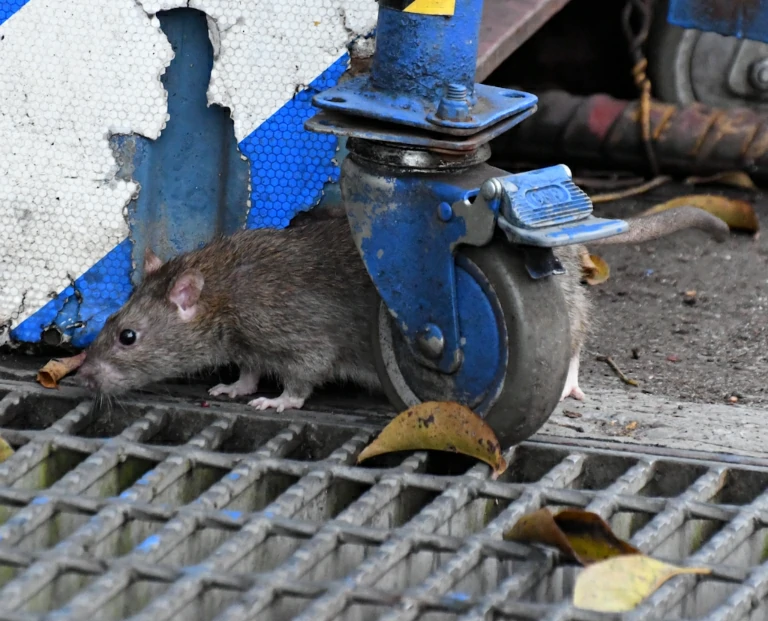
Finding rat droppings around your house is unsettling. These small, dark pellets seem to show up everywhere rats travel, from kitchen counters to hidden corners in your attic. But why do rats leave droppings everywhere they go?
Rats leave droppings constantly because they can’t control their bowel movements like humans can. They poop while walking, eating, and exploring, producing 40 to 50 droppings per day. Rats also use their droppings to mark territory and communicate with other rats through scent chemicals in their waste.
The sheer number of droppings rats produce and their inability to hold waste means anywhere a rat goes, droppings will follow. This is actually one of the main ways people discover they have a rat problem.
Rats Can’t Control When They Poop
Unlike humans and many other mammals, rats don’t have strong sphincter muscles that allow them to hold their bowel movements until they reach a specific bathroom spot. They basically poop whenever waste is ready to come out.
This means a rat moving through your house is continuously leaving a trail of droppings behind them. They’re not choosing to do this or being deliberately dirty. Their digestive system just works differently than ours.
A single rat can produce 40 to 50 droppings in a 24-hour period. Some sources say it can be even higher, up to 80 droppings per day for a particularly active or well-fed rat. When you multiply this by even a small rat population (say, 5 rats), you’re looking at 200 to 250 droppings per day.
This constant elimination is one reason rat droppings are such a reliable sign of infestation. If rats are present, they’re physically incapable of not leaving evidence behind.
The Digestive Speed of Rats
Rats have really fast digestive systems. Food moves through their gut quickly, which means they need to eliminate waste frequently. From eating to pooping can be just a few hours.

This rapid digestion serves rats well in the wild. They can eat quickly when they find food, then move on without spending too much time vulnerable in one spot. The waste gets eliminated as they go about their business.
The type of food affects how often rats poop. Rats eating fresh vegetables and fruits (which have high water and fiber content) will poop more than rats eating mostly dry seeds or grains. More bulk going in means more waste coming out.
Baby rats and young juveniles poop even more frequently than adults relative to their size because they’re eating constantly to fuel their growth. A litter of baby rats in your walls or attic will produce a surprising amount of droppings.
Territorial Marking Through Droppings
Besides the involuntary aspect, rats also use droppings intentionally for communication. Rat droppings contain pheromones and scent chemicals that other rats can detect and interpret.
Male rats especially use droppings to mark territory. They’ll often poop in the same spots repeatedly to build up scent markers that tell other rats “this area is claimed.” You might notice concentrated piles of droppings in certain locations, which are likely marking spots.
Female rats respond to these scent markers. They can tell from the smell of droppings whether a male is healthy, well-fed, and a good potential mate. The chemical composition of droppings actually conveys information about the rat’s physical condition.
Droppings also mark trails and safe paths. When rats establish regular routes through their territory (along walls, under furniture, through holes), they leave droppings along these paths. Other rats can follow these scent trails to find reliable routes and food sources.
What Rat Droppings Look Like
Rat droppings are pretty distinctive once you know what to look for. Fresh droppings are dark brown or black, soft, and shiny. They’re shaped like small grains of rice but with pointed ends, about 1/2 to 3/4 inch long.
As droppings age, they dry out and change appearance. After a few days, they become hard and lose their shine. After a week or more, they turn grayish and might crumble when touched.
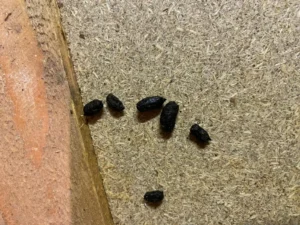
The size varies depending on the rat species and the individual rat’s size. Norway rats (the most common house rat) leave larger droppings, about 3/4 inch long. Roof rats leave slightly smaller, more curved droppings.
You can actually estimate how recently rats were present by checking the droppings. Soft, shiny droppings mean rats were there within the last day or two. Hard, gray droppings mean the area might not be actively used anymore.
Where Rats Leave the Most Droppings
Rats leave droppings everywhere they go, but you’ll find more in certain areas. The highest concentration is usually near food sources because rats spend a lot of time eating and food attracts them to specific spots.
Along travel routes, you’ll see trails of scattered droppings. Rats run along the same paths repeatedly (usually along walls or other edges), and droppings accumulate along these routes.

Inside and around nesting areas, droppings pile up heavily. Rats spend many hours in their nests sleeping and grooming, and droppings accumulate there over time.
You’ll also find lots of droppings in corners, on rafters or beams, inside cabinets, in drawers, and in any enclosed spaces rats explore. Basically, if a rat can reach a spot, droppings will be there.
Health Risks from Rat Droppings
Rat droppings aren’t just unpleasant to look at, they’re actually dangerous. They can spread diseases even when the rats themselves aren’t directly present anymore.
Hantavirus is one of the most serious concerns. This virus lives in rat urine and droppings, and humans can get infected by breathing in airborne particles when disturbing old droppings. Hantavirus can cause serious respiratory illness and even death.

Salmonella bacteria are common in rat droppings. If droppings contaminate food preparation surfaces or food storage areas, people can get salmonella poisoning, which causes severe diarrhea, fever, and stomach cramps.
Leptospirosis is another bacterial disease spread through rat waste. The bacteria can survive in droppings and can infect humans through contact with contaminated surfaces, especially if you have any cuts or breaks in your skin.
Besides direct disease transmission, rat droppings attract other pests. Insects like cockroaches and flies are attracted to droppings and can spread the bacteria even further around your home.
Why Droppings Pile Up in Some Spots
Even though rats poop continuously while moving, you’ll notice some areas have much larger accumulations than others. These concentrated piles usually form in spots where rats spend extended time.
Near food sources, rats might sit and eat for 15 to 30 minutes at a time. All that eating while stationary means droppings pile up right there. Check around pantries, kitchen cabinets, and anywhere food is stored.
Nesting sites accumulate the most droppings because rats spend many hours there daily. A nest might be buried under a huge pile of droppings mixed with nesting materials.
Rats also have preferred spots along their travel routes where they pause. Maybe there’s a knot hole in the wall where they stop to check for danger, or a corner where two walls meet. These pause points collect more droppings than straight paths.
Some rats even develop what seem like bathroom areas where they deliberately go to eliminate, though this is less common than the constant-elimination pattern. These spots will have very concentrated droppings.
The Difference Between Rat and Mouse Droppings
People often confuse rat and mouse droppings, but there are clear differences. Rat droppings are much larger, about 1/2 to 3/4 inch long. Mouse droppings are tiny, only 1/8 to 1/4 inch long.
The shape is different too. Rat droppings are more oval with blunt or slightly pointed ends. Mouse droppings are like tiny grains of rice with pointed ends on both sides.
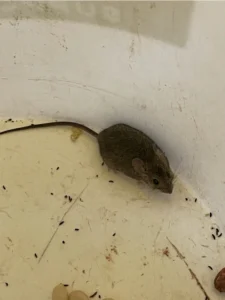
The quantity differs as well. While rats produce 40 to 50 droppings per day, mice can produce 50 to 80 per day. However, since mouse droppings are so much smaller, the total volume of waste is still less than rats produce.
Location can also help identify which rodent you’re dealing with. Mice tend to leave droppings in small scattered groups. Rats leave more continuous trails and larger piles.
How Fresh Droppings Help Track Activity
Pest control professionals use dropping freshness to map out rat activity. By checking droppings in different areas and noting which are fresh versus old, they can figure out where rats are currently active.
If you find fresh droppings in your kitchen but only old droppings in your basement, it tells you the rats have shifted their focus to the kitchen. This helps target control efforts where they’ll be most effective.
You can do a simple test to track activity yourself. Clean up all the droppings you find, then check the same areas in 24 hours. Fresh droppings tell you where rats are currently traveling and feeding.
This is also how you can tell if pest control efforts are working. After setting traps or making other changes, if new droppings stop appearing, you know you’re making progress.
Cleaning Up Rat Droppings Safely
Never vacuum or sweep rat droppings dry. This launches particles into the air that you can breathe in, potentially exposing you to diseases like hantavirus.
Instead, spray droppings with a disinfectant solution or a mixture of bleach and water (1 part bleach to 10 parts water). Let it soak for at least 5 minutes to kill any pathogens.

After soaking, use paper towels to pick up the droppings and dispose of them in sealed plastic bags. Wipe down the entire area with disinfectant.
Wear gloves during cleanup, and consider wearing a mask, especially if you’re dealing with large amounts of droppings or very old, dried droppings that might produce dust.
Wash your hands thoroughly after cleanup, even if you wore gloves. Droppings are contaminated, and you don’t want to transfer any bacteria or viruses to your face or food.
How Many Droppings Mean You Have a Problem
Finding a few droppings doesn’t automatically mean you have a major infestation. A single rat passing through might leave 5 to 10 droppings before moving on.
However, if you’re finding dozens of droppings, fresh droppings appearing daily, or droppings in multiple rooms, you definitely have rats living in or around your house, not just visiting.
The math is pretty simple: each rat produces 40 to 50 droppings per day. If you’re finding 100 fresh droppings daily, you have at least 2 to 3 rats. Finding 200 droppings suggests 4 to 5 rats, and so on.
Large piles or trails of droppings indicate an established population that’s been there for a while. Rats don’t produce massive quantities overnight, it takes time for droppings to accumulate to obvious levels.
Why You Find Droppings in Weird Places
You might find rat droppings in places that seem random or don’t make sense. This is because rats are exploratory animals that investigate everything in their territory.

Rats will climb into drawers, cupboards, closets, and boxes just to see what’s there. While exploring, they poop, leaving droppings in surprising places like inside your stored clothing or on your dishes.
Attics and wall voids are common dropping locations that people don’t notice until they go up there for some reason. Rats travel through these spaces constantly, and droppings accumulate out of sight.
You might also find droppings on high surfaces like the tops of cabinets or along pipes and wires near the ceiling. Rats are excellent climbers and use these elevated paths to avoid predators and move around safely.
Conclusion
Rats leave droppings constantly because they can’t control their bowel movements like humans can, producing 40 to 50 droppings per day while walking, eating, and exploring.
They also use droppings intentionally to mark territory and communicate with other rats through scent chemicals.
This constant elimination means anywhere a rat goes, droppings follow, making droppings one of the most reliable signs of rat infestation.
Rat droppings are dangerous because they can spread diseases like hantavirus, salmonella, and leptospirosis even after the rats are gone.
Never vacuum or sweep droppings dry. Instead, spray them with disinfectant solution, let it soak for 5 minutes, pick them up with paper towels, and dispose in sealed plastic bags.
Finding dozens of fresh droppings daily or droppings in multiple rooms means you have an active infestation that needs immediate attention.

Hi, my name is Ezra Mushala, i have been interested animals all my life. I am the main author and editor here at snakeinformer.com.