
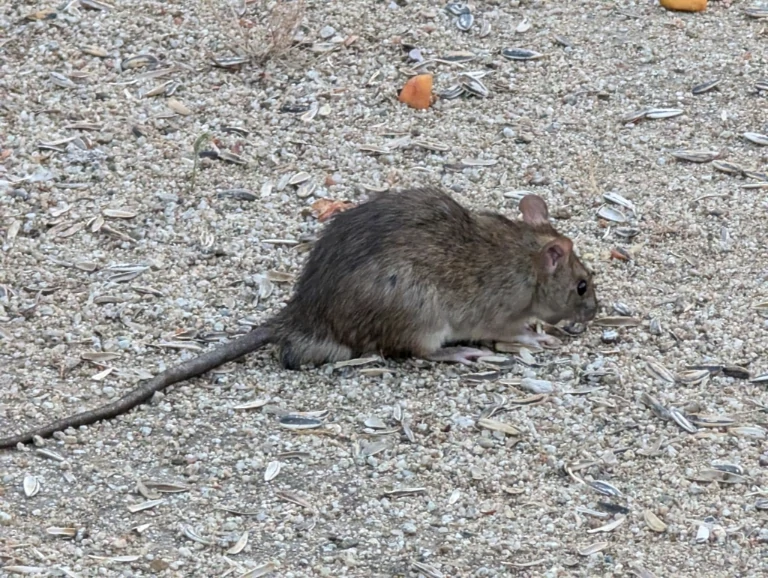
If you’ve ever seen a male rat, you’ve probably noticed something striking about their anatomy. Their testicles are shockingly large compared to their body size, sometimes looking almost comically oversized.
This isn’t a medical problem or mutation, it’s completely normal for rats. So why do rats have huge balls?
Male rats have large testicles because they produce huge amounts of sperm to compete with other males. Rats live in colonies where multiple males mate with the same females, so having bigger testicles that make more sperm gives a male rat a better chance of fathering offspring.
This is all about reproduction and competition. The size of a rat’s testicles directly relates to how successful he’ll be at passing on his genes to the next generation.
Sperm Competition Is Intense in Rat Colonies
Rats are social animals that live in groups called colonies. In these colonies, multiple males compete for the chance to mate with females.
When a female rat is ready to breed, she doesn’t just mate with one male. She typically mates with several different males during her fertile period.

This means sperm from multiple males is all inside the female at the same time, competing to fertilize her eggs.
The male who produces the most sperm has the best chance of being the father. It’s literally a numbers game.
Having larger testicles means a male rat can produce more sperm per mating session. More sperm equals a better chance of winning the fertilization race.
This type of competition has been going on for millions of years of rat evolution. Males with bigger testicles had more babies, and those babies inherited the genes for large testicles.
The Size Comparison Is Really Shocking
To understand just how big rat testicles are, you need to compare them to other animals and to the rat’s own body size.
A rat’s testicles can be about three to four percent of his total body weight. That might not sound like much, but it’s actually enormous.
To put this in perspective, if human males had testicles that were proportionally as large as a rat’s, they would each weigh about five to six pounds.
In some individual rats, the testicles are so large they drag on the ground when the rat walks. They’re visible even from above, sticking out on either side of the tail.
Compared to other rodents, rats are on the extreme end. Mice have smaller testicles relative to body size, and so do guinea pigs and hamsters.
Only a few other animals have testicles this proportionally large. Some species of bats and primates also show this extreme trait.
It’s All About Mating Strategy
Different animals have different reproductive strategies, and these strategies determine testicle size.
Animals where one male controls multiple females and doesn’t face competition don’t need huge testicles. Gorillas are a good example of this.
A dominant male gorilla mates with all the females in his group, and other males don’t get the chance. Because there’s no sperm competition, gorillas have relatively small testicles.
But rats live in a completely different system. No single male controls all the females, and females mate with multiple partners.
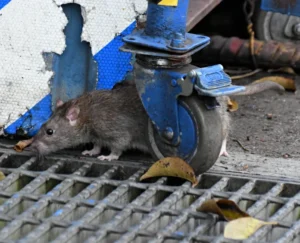
This creates what scientists call “sperm competition.” The males aren’t fighting with teeth and claws, they’re fighting with sperm quantity.
The rat who can produce the most sperm per mating has the advantage. Natural selection strongly favored males who could make lots of sperm quickly.
Over thousands of generations, this pressure resulted in male rats evolving increasingly larger testicles.
Larger Testicles Produce More Sperm
The direct relationship between testicle size and sperm production is well documented in scientific research.
Larger testicles contain more tissue dedicated to sperm production. This tissue, called seminiferous tubules, is where sperm cells are made.
More tissue means more sperm cells can be produced at the same time. A rat with larger testicles can literally manufacture millions more sperm cells per day.
Male rats also need to replenish their sperm quickly because they mate frequently. A rat might mate multiple times per day during breeding season.
Without large testicles producing sperm constantly, a male rat would run out and couldn’t compete with other males.
Studies have shown that males with larger testicles have higher sperm counts in their ejaculate. This has been measured and confirmed many times.
The quality of the sperm also matters, but quantity is the primary factor when multiple males are competing.
Female Rats Mate with Multiple Partners
Understanding female rat behavior helps explain why males evolved such large testicles. Female rats don’t pair bond with one male.
When a female goes into heat, which happens every four to five days, she becomes receptive to mating. She’ll mate with any males who are available.
In a colony, this means she might mate with three, four, or even more males in quick succession. Each male deposits his sperm inside her.
All that sperm from different males then competes inside the female’s reproductive tract to reach and fertilize her eggs.
The male who deposited the most sperm has the best statistical chance of being the father when she gives birth.
Female rats also sometimes show preference for males who mate multiple times. The repeated mating deposits even more sperm.
This female behavior created the evolutionary pressure for males to develop larger testicles that could produce more sperm.
Temperature Regulation Affects Testicle Size
Testicles hang outside the body in a sac called the scrotum because sperm production requires cooler temperatures than normal body temperature.
In rats, the testicles hang even lower and larger than in many other mammals. This positioning helps keep them cool.
When a rat is cold, the scrotum contracts and pulls the testicles closer to the body for warmth. When hot, the scrotum relaxes and lets them hang lower for cooling.
You might notice that a rat’s testicles look bigger during warm weather. This isn’t actual growth, it’s just the scrotum relaxing.
The large size of rat testicles means they have more surface area, which actually helps with cooling. More surface area means heat dissipates better.
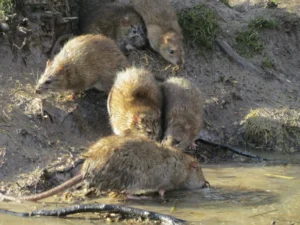
Keeping testicles at the right temperature is really important for healthy sperm production. Too hot or too cold, and sperm quality suffers.
The prominent positioning of rat testicles serves both reproductive competition and temperature control purposes.
This Trait Is Common in Animals with Promiscuous Mating
Rats aren’t the only animals with disproportionately large testicles. This trait appears in many species across the animal kingdom.
Chimpanzees have very large testicles for similar reasons. Female chimps mate with multiple males, creating sperm competition.
Certain species of bats also show this trait. In bat colonies where females mate with many males, the males have enormous testicles.
Some insects and fish also have proportionally huge reproductive organs for the same evolutionary reasons.
The pattern is clear across species. Wherever females mate with multiple males, males evolve larger testicles to produce more sperm.
Scientists use testicle size as one indicator of a species’ mating system. Large testicles suggest promiscuous mating and sperm competition.
This makes rats a textbook example of how reproductive strategy shapes physical anatomy over evolutionary time.
Age and Health Affect Testicle Size
While adult male rats normally have large testicles, there’s variation based on age and health status.
Young male rats who haven’t reached sexual maturity yet have much smaller testicles. These grow rapidly as the rat reaches puberty around five to six weeks of age.
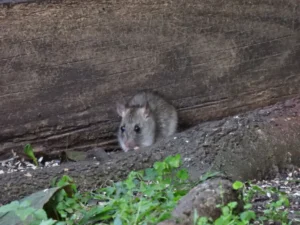
By three to four months old, a male rat’s testicles should be fully developed and at their maximum size.
As rats age, testicle size can actually increase slightly. Older males sometimes have even larger testicles than younger adults.
Health problems can affect testicle size. Tumors, infections, or hormonal issues might cause one or both testicles to swell even larger than normal.
Alternatively, if a rat is sick, malnourished, or stressed, his testicles might shrink temporarily. Poor health reduces sperm production.
A sudden change in testicle size, especially if one side changes but not the other, can indicate a medical problem that needs veterinary attention.
Testicle Size Varies Between Rat Species
Not all rats have the same size testicles. Different species of rats show variation in this trait.
Norway rats, also called brown rats, have particularly large testicles. These are the rats most commonly found in cities and kept as pets.
Roof rats, also called black rats, have slightly smaller testicles relative to their body size. But they’re still large compared to most other animals.
Wild rats tend to have larger testicles than domesticated pet rats. This might be because pet rats have been bred in captivity where sperm competition is eliminated.
Fancy rats, the domesticated pet variety, come from Norway rat stock. Breeders control which males mate with which females, removing natural competition.
Over many generations of controlled breeding, there might be slight reduction in testicle size in pet rats. But they’re still noticeably large.
Different rat populations within the same species can also show variation based on their local breeding competition and population density.
Castration and Neutering Change This
Many rat owners choose to neuter their male rats by surgically removing the testicles. This procedure is called castration.
After castration, the scrotum shrinks significantly. The empty sac becomes much less noticeable, though it doesn’t completely disappear.
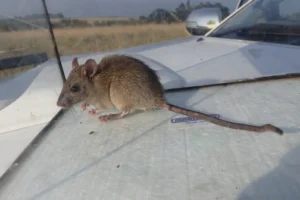
Neutered males can’t produce sperm anymore, and their testosterone levels drop dramatically. This changes their behavior and body condition.
Neutered males often become calmer and less aggressive toward other rats. They also smell less musky because testosterone drives scent production.
The recovery time from neutering surgery is usually quick. Most rats are back to normal activity within a few days.
Some owners neuter males to prevent unwanted breeding, especially if they keep mixed-gender rat groups. Others do it to reduce aggression.
However, neutering isn’t without risks. Any surgery carries potential complications, and rats are small animals that can be sensitive to anesthesia.
Large Testicles Don’t Mean Better Pets
The size of a rat’s testicles doesn’t make him a better or worse pet. It’s just a normal part of male rat anatomy.
Some people are put off by the visible testicles and find them unappealing. This is a personal preference, not a reflection on the rat’s quality as a pet.
Male rats are just as affectionate, intelligent, and trainable as females. The testicles don’t affect personality or behavior much.
If the appearance bothers you, neutering is an option. Many owners feel more comfortable with neutered males.
From the rat’s perspective, his testicles are perfectly normal. He’s not self-conscious or bothered by them at all.
Some potential rat owners choose females specifically to avoid dealing with visible male anatomy. That’s a valid choice, but males make wonderful pets too.
If you can get past the initial surprise of seeing such large testicles, male rats are loving, playful companions.
Why Don’t Female Rats Have Obvious Reproductive Organs
Female rats have reproductive organs too, obviously, but they’re all internal. This creates a striking visual difference between male and female rats.
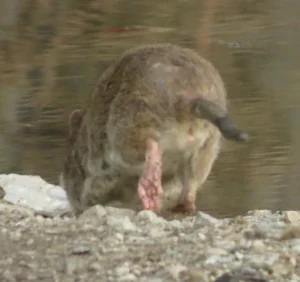
Female rats have ovaries, a uterus, and a vaginal opening, but none of these are externally visible under normal circumstances.
The only external sign of female anatomy is the genital opening, which is very close to the anus. It’s barely noticeable unless you’re specifically looking.
This is common in mammals. Internal female reproductive organs are protected inside the body, while male organs hang outside.
The reason males evolved external testicles while females keep everything internal relates to temperature needs and reproductive strategy.
Eggs don’t require the cooler temperature that sperm needs. Female reproductive organs work fine at normal body temperature.
Also, females don’t face the same competition pressure that males do. They don’t need to produce massive quantities of reproductive cells.
Conclusion
Male rats have huge testicles because they produce large amounts of sperm to compete with other males in their colony. When female rats mate with multiple males, the male who produces the most sperm has the best chance of fathering offspring.
This intense sperm competition over millions of years of evolution resulted in male rats developing testicles that can be three to four percent of their body weight. While shocking to humans, this is completely normal and healthy for rats.
The large size serves an important evolutionary purpose, giving males a competitive advantage in reproduction. It’s just another example of how mating strategies shape physical characteristics in the animal kingdom.

Hi, my name is Ezra Mushala, i have been interested animals all my life. I am the main author and editor here at snakeinformer.com.