
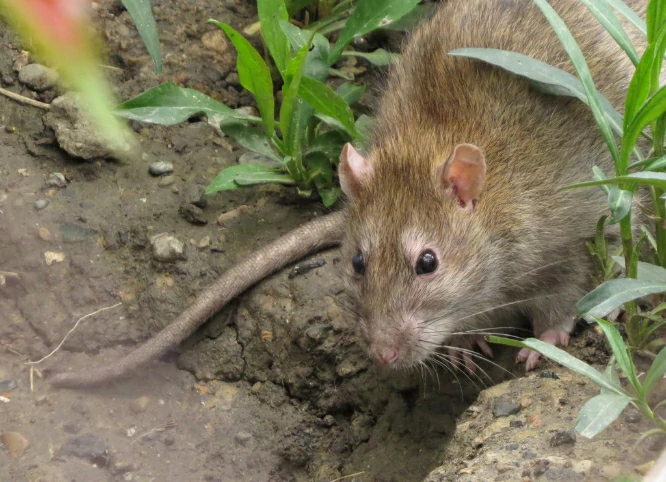
If you’ve ever watched a rat closely, you might have noticed its eyes doing something strange. They seem to pulse in and out of the eye sockets, almost like they’re popping out and then going back in repeatedly.
This eye-bulging behavior looks weird and even a little alarming if you’ve never seen it before. Some people worry their rat is having a seizure or experiencing some kind of medical emergency.
So why do rats bulge their eyes?
Rats bulge their eyes (called boggling) when they’re grinding their teeth in contentment. The jaw muscles used for tooth grinding are connected to the muscles around the eyes, so when rats brux hard, their eyes pulse in and out of their sockets in rhythm with the grinding.
This might look strange, but it’s actually a sign your rat is happy and relaxed. It’s completely normal and doesn’t hurt the rat at all.
Boggling And Bruxing Go Together
Eye bulging (boggling) almost always happens alongside tooth grinding (bruxing). These two behaviors are physically connected and happen at the same time.
When a rat grinds its teeth, it uses powerful jaw muscles to move the upper and lower teeth against each other. These same muscles are attached to the area around the eye socket.
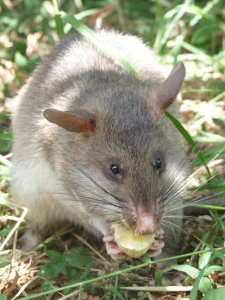
As the jaw muscles contract and relax during grinding, they pull on the tissues around the eyes. This pulling motion makes the eyes bulge forward slightly, then relax back into place.
The result is a pulsing motion where the eyes seem to pop in and out in perfect rhythm with the tooth grinding. If you watch closely, you’ll see the eyes move with each grind of the teeth.
This is why you’ll rarely see boggling without hearing or feeling bruxing at the same time. They’re two parts of the same physical process.
Why The Jaw And Eye Muscles Are Connected
The connection between the jaw muscles and eye area isn’t unique to rats. Many animals have muscles in these areas that interact with each other because they’re so close together in the skull.
In rats, the masseter muscles (the main chewing muscles) are particularly large and powerful relative to their skull size. This is because rats need strong jaws to gnaw through hard materials like wood, nuts, and seeds.

These muscles extend up along the side of the skull and connect to areas very close to the eye socket. When these muscles flex during intense grinding, they physically move the structures around the eyes.
Think of it like how your scalp moves when you wiggle your ears. The muscles are connected, so moving one area affects the other. It’s just anatomy.
The good news is this connection doesn’t cause any harm to the rat. The eye itself isn’t being squeezed or damaged, it’s just being gently pushed forward and released by the muscle movement.
Boggling Means Your Rat Is Very Content
Just like bruxing, boggling is usually a sign that your rat is extremely happy and relaxed. Rats don’t boggle when they’re stressed or scared, they only do it when they feel safe and content.
You’ll most often see boggling when you’re petting your rat in a spot it really loves, when it’s eating a favorite treat, or when it’s cuddling with you or another rat.

The intensity of the boggling matches the intensity of the contentment. A rat that’s just mildly happy might brux quietly without much boggling. But a rat that’s absolutely blissed out will brux hard and boggle dramatically.
Some rat owners call this “eye popping” because the eyes really do seem to pop out. But don’t worry, the eyes aren’t actually in danger of popping out completely. The movement is controlled by muscles and happens within normal anatomical limits.
Not All Rats Boggle The Same Way
Some rats boggle a lot with very dramatic eye movement, while others barely boggle at all even when they’re bruxing hard. This varies from rat to rat based on their individual anatomy.
Rats with eyes that sit slightly more forward in their skulls tend to boggle more noticeably. Rats with deeper-set eyes might brux just as hard but show less visible eye movement.
Young rats often boggle more than older rats because they’re more excitable and tend to brux more intensely. As rats age, their bruxing and boggling might become more subtle.
If you have multiple rats, you might notice that one boggles dramatically while another almost never does, even though both are equally happy. This is just individual variation and nothing to worry about.
The important thing is the overall behavior, not whether the boggling is dramatic or subtle. A rat that’s relaxed, eating well, and interacting normally is healthy regardless of how much it boggles.
When Boggling Happens Most Often
Boggling typically happens in situations where the rat feels completely safe and comfortable. These include during petting sessions (especially when you hit the “sweet spot” behind the ears or under the chin), while eating favorite foods, during cuddle time with you or other rats, and when settling down to sleep in a cozy spot.
You’re most likely to see boggling when the rat is in its comfort zone. This might be in its cage, on your shoulder, or in another familiar place where it feels secure.
Rats won’t usually boggle in new or scary environments. If you take your rat somewhere unfamiliar, it’ll be too alert and cautious to relax enough for boggling to happen.
This is why boggling is such a good indicator of trust. When your rat boggles around you, it means it sees you as a safe person and feels comfortable enough to completely let its guard down.
How To Tell If Boggling Is Normal
Normal boggling is smooth and rhythmic. The eyes pulse in and out at a steady pace that matches the tooth grinding. There’s no jerking, twitching, or irregular movement.
The rat’s overall body language should be relaxed. The rat should look calm, its breathing should be normal, and it should be in a comfortable position (not hunched or tense).
If the eye movement looks irregular, if only one eye is moving, or if the rat seems distressed, that’s not normal boggling. That could be a sign of a health problem that needs veterinary attention.
Also, normal boggling always happens with bruxing. If you see eye movement without the teeth grinding sound, something else is going on (possibly a respiratory issue or neurological problem).
Context matters too. Boggling during petting or eating is normal. Boggling while the rat is gasping for air or acting sick is not normal and requires immediate vet care.
Boggling Doesn’t Mean The Rat Is In Pain
One common worry among new rat owners is that boggling means the rat is in pain or discomfort. This isn’t true in the vast majority of cases.
When rats are in pain, they usually show different behaviors: hunched posture, puffed-up fur, reduced appetite, hiding, reduced activity, grinding teeth in a harsh, aggressive way (not the soft, rhythmic bruxing that causes boggling).
Pain-related tooth grinding sounds and looks different from contentment bruxing. It’s louder, more erratic, and the rat’s body language clearly shows distress.
If your rat is boggling while also eating, playing, and acting normal, it’s definitely not in pain. The boggling is just a side effect of happy bruxing.
However, if a rat suddenly starts grinding its teeth aggressively with no boggling, and it’s showing other signs of illness, that could indicate pain. When in doubt, check with a vet.
What Boggling Looks Like In Different Situations
When a rat is being petted and boggles, you’ll often see it close its eyes partially, lean into your hand, and settle into a relaxed posture. The boggling might start slow and build as you continue petting.
During eating, boggling is usually less intense because the rat is focused on the food. But if it’s something the rat really loves, you might see dramatic boggling between bites.
When cuddling with other rats, boggling often happens during mutual grooming. One rat will groom another, and the rat being groomed will brux and boggle in contentment.
Some rats will even boggle when they’re falling asleep. You might see their eyes pulse a few times as they settle in, then the boggling stops as they drift off.
Can You Make Your Rat Boggle?
You can’t force a rat to boggle, but you can create situations where it’s more likely to happen. The key is making your rat feel safe, comfortable, and happy.
Regular gentle handling builds trust, which makes rats more likely to relax around you. The more comfortable your rat is with you, the more likely it’ll brux and boggle during interactions.
Finding your rat’s favorite petting spots helps too. Most rats have specific areas they love being scratched. When you hit these spots, bruxing and boggling often follow.
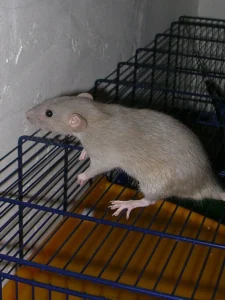
High-value treats can also trigger boggling. If your rat absolutely loves a certain food, it might boggle while eating it. This is a fun way to see the behavior and figure out what treats your rat likes best.
But remember, not all rats boggle frequently, and that’s fine. Some rats show happiness in other ways, like through body language, vocalizations, or playful behavior.
Why Some Rats Never Boggle
Some perfectly happy, healthy rats just don’t boggle very much. This could be because of their individual anatomy (eye placement, muscle structure), personality (some rats are less expressive than others), age (very young or very old rats might boggle less), or just preference (different rats show contentment differently).
If your rat doesn’t boggle but shows other signs of being happy (plays, eats well, seeks out interaction, has normal energy levels), there’s nothing to worry about.
Different rats are different. One might boggle at the slightest touch, while another might only do it during the most intensely happy moments, or not at all.
The absence of boggling doesn’t mean your rat isn’t happy or doesn’t trust you. Look at the whole picture of your rat’s behavior, not just one specific action.
Boggling In Wild Rats Versus Pet Rats
Wild rats almost never boggle because they rarely experience the kind of deep relaxation and contentment that causes it. Life in the wild is too stressful and dangerous for that level of letting their guard down.
Pet rats, on the other hand, live in safe environments where they don’t have to worry about predators or finding food. This security allows them to relax fully and experience the contentment that leads to bruxing and boggling.

This difference is one of many that shows how domestication has changed rats over generations. Pet rats are much more relaxed and trusting than their wild counterparts.
If you ever see a wild rat boggling, it’s more likely sick or injured than happy. Healthy wild rats stay alert and don’t relax enough for this behavior to happen.
What To Do When Your Rat Boggles
When you notice your rat boggling, just keep doing whatever triggered it. If you’re petting the rat, continue with the same gentle rhythm. If you’re offering a treat, let the rat enjoy it.
Don’t make sudden movements or loud noises that might startle the rat out of its relaxed state. Let it enjoy the moment.
You can talk softly to your rat while it’s boggling. Many rats respond well to gentle verbal interaction, and it can strengthen your bond.
Take it as a compliment. When your rat boggles around you, it’s telling you it trusts you and feels safe with you. That’s one of the best things a rat can communicate.
Conclusion
Rats bulge their eyes (boggle) when they grind their teeth in contentment. The jaw muscles used for grinding are connected to muscles around the eyes, which makes the eyes pulse in and out with each grind.
This behavior looks strange, but it’s actually a very positive sign. It means your rat is extremely happy, relaxed, and comfortable. Boggling almost always happens alongside bruxing (tooth grinding) and shows up most often during petting, eating favorite foods, or cuddling.
If your rat boggles around you, it’s showing you the highest level of trust and contentment a rat can express. It’s basically the rat equivalent of a cat purring and kneading.

Hi, my name is Ezra Mushala, i have been interested animals all my life. I am the main author and editor here at snakeinformer.com.