
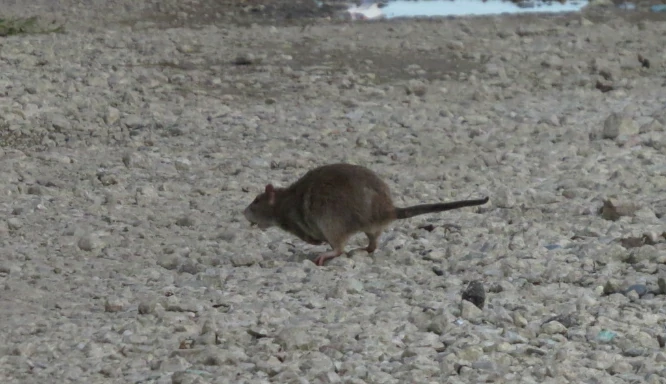
Rats have lived alongside humans for thousands of years, but if you’ve ever tried to get close to one, you’ve probably noticed they don’t stick around for long. Whether it’s a wild rat in your backyard or one that’s made its way into your home, these animals tend to bolt the second they spot you coming.
This escape behavior isn’t random or just happening by chance. So why do rats run away from humans?
Rats run away from humans because they see us as predators and a direct threat to their survival. Their instinct tells them that anything larger than them could kill and eat them, so running is their best chance at staying alive.
When a rat spots you, its brain doesn’t see a person going about their day. It sees a giant predator that could end its life in seconds.
This fear response is hardwired into their DNA from thousands of years of evolution, and it kicks in automatically whenever they sense danger nearby.
Rats Are Prey Animals Built For Escape
In the wild, rats sit pretty low on the food chain. They’re hunted by cats, dogs, birds of prey, snakes, and even larger mammals like foxes and coyotes.

Because of this, rats have evolved to be extremely cautious and quick to run. Their entire body is designed for fast escapes, with powerful hind legs that let them sprint, jump, and squeeze through tiny openings in just seconds.
Their first instinct when they sense danger is always to run and hide. Fighting back is only a last resort when escape isn’t possible.
This is why you’ll rarely see a rat just sitting around in the open, especially during the day when predators are most active.
How Rats Detect Humans Before We Even See Them
Rats have incredibly sharp senses that help them detect threats long before those threats get close. Their hearing is especially impressive, and they can pick up sounds at frequencies humans can’t even hear.
This means a rat can often hear you walking toward it before you’ve even entered the room. They can also detect vibrations through the ground, so even your footsteps give away your position.
Their sense of smell is also very strong. Rats can pick up human scent from quite a distance, and they learn to associate that smell with danger.
If a rat has had a bad experience with humans before (like being chased or nearly caught), it’ll be even more sensitive to your presence. Once they pick up your scent, they’re already planning their escape route.
Size Matters When It Comes To Fear
From a rat’s perspective, humans are absolutely massive. An average rat weighs less than a pound, while even a small human is hundreds of times heavier.
To a rat, you look like a giant predator. It doesn’t matter if you’re trying to help or harm it, the size difference alone triggers their fear response.
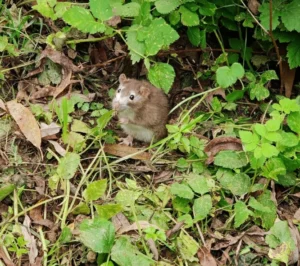
This is the same reason rats will run from dogs, cats, and other large animals. Anything that towers over them is seen as a potential threat.
Even if you move slowly or try to appear non-threatening, your size alone is enough to send most rats running. They’re not sticking around to find out if you’re dangerous or not.
Past Experiences Shape How Rats React To Humans
Not all rats react to humans the same way. Wild rats that have never had positive interactions with people will almost always run when they see you.
But rats that have been raised around humans (like pet rats) can learn that people aren’t a threat. These rats don’t usually run because they’ve been handled gently and fed by humans their entire lives.
Wild rats, on the other hand, have often been chased, trapped, or hurt by people. These negative experiences get stored in their memory, and they pass that fear response down to their babies through learned behavior.
If a mother rat is terrified of humans, her babies will pick up on that fear and act the same way. This cycle continues, which is why wild rats stay so fearful of people even after generations of living near us.
Running Is The Safest Option For Survival
For a rat, running away isn’t cowardice. It’s smart survival strategy.
In the wild, animals that hesitate or try to investigate potential threats often end up dead. Rats that run first and ask questions later are the ones that survive long enough to reproduce.

This behavior has been naturally selected for over thousands of years. The rats that were too curious or too slow didn’t make it, but the cautious, fast ones passed their genes on to the next generation.
So when a rat sees you and immediately bolts, it’s doing exactly what its instincts tell it to do. That split-second decision to run has kept its ancestors alive for centuries.
Rats Prefer To Stay Hidden During The Day
Rats are naturally nocturnal, which means they’re most active at night when predators (including humans) are less likely to be around. During the day, they prefer to stay hidden in burrows, walls, or other safe spots.
If you see a rat during daylight hours, it’s usually because something has forced it out of hiding. Maybe it’s looking for food, or maybe its nest was disturbed.
Either way, a rat caught out in the open during the day is already stressed and on high alert. It knows it’s vulnerable, so it’ll run even faster than usual.
This is why you’ll often see rats darting across your yard or kitchen at night. They feel safer moving around when it’s dark and quiet.
What Happens When A Rat Can’t Escape
Sometimes a rat finds itself in a situation where running isn’t an option. Maybe it’s cornered in a small space, or maybe you’ve accidentally blocked its escape route.
When this happens, the rat’s behavior can change dramatically. Instead of running, it might freeze completely and hope you don’t notice it.
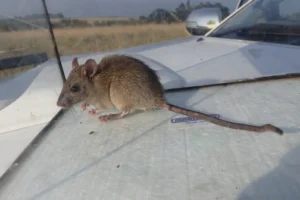
If you get too close or try to grab it, the rat may switch to defensive mode. It’ll puff up its fur to look bigger, chatter its teeth as a warning, and might even lunge or bite if it feels like it has no other choice.
This isn’t the rat being aggressive for no reason. It’s terrified and fighting for its life because escape isn’t possible anymore.
Why Pet Rats Don’t Run From Their Owners
If you’ve ever owned a pet rat, you know they can be incredibly friendly and even seek out human contact. So why don’t they run like wild rats do?
The answer is socialization and trust. Pet rats are handled gently from a very young age, usually when they’re just a few weeks old.
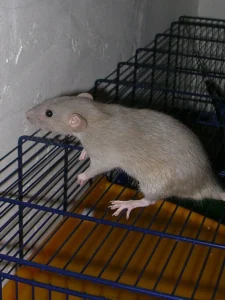
During this time, they learn that humans provide food, shelter, and comfort. Instead of associating people with danger, they associate them with safety and positive experiences.
Over time, this builds trust. A well-socialized pet rat sees its owner as a source of good things, not a predator to fear.
Wild rats don’t get this socialization, so they never develop that trust. Every interaction they’ve had with humans has likely been negative, which is why they keep running.
Can Wild Rats Ever Stop Being Afraid Of Humans?
It’s extremely difficult to get a wild rat to stop fearing humans, but it’s not completely impossible. If a wild rat is caught young enough and handled very gently and consistently, it might eventually learn that people aren’t always dangerous.
However, this takes a lot of time and patience. Wild rats are much more nervous than pet rats, and they’ll hold onto their fear response much longer.

Even if a wild rat does start to tolerate human presence, it’ll probably never be as relaxed and trusting as a rat that was bred to be a pet. The survival instincts are just too strong.
Most experts don’t recommend trying to tame wild rats anyway. They can carry diseases, and handling them puts both you and the rat at risk.
How Rats Choose Their Escape Routes
When a rat runs from you, it’s not just bolting in a random direction. Rats are incredibly smart and always have an escape plan ready.
Before a rat even enters a new area, it scouts out all the possible exits. It memorizes where the holes, cracks, and hiding spots are so that if danger shows up, it knows exactly where to go.
This is why rats seem to disappear so quickly when you spot them. They’re not just fast, they’re also following a mental map they’ve already created.
If you block one escape route, the rat will immediately switch to another. They’re always thinking several steps ahead, which makes them very hard to catch.
Why Rats Run Even When You’re Not Moving
You might notice that rats will sometimes run away from you even if you’re standing completely still. This seems odd, but there’s a good reason for it.
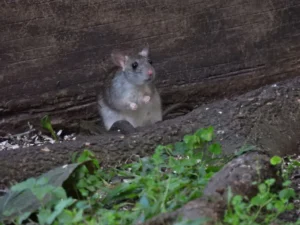
Rats don’t just rely on movement to detect threats. They use all their senses together, including smell and sound.
Even if you’re not moving, the rat can still smell you and hear you breathing. It might also pick up on subtle vibrations or changes in air pressure that tell it something big is nearby.
To the rat, your presence alone is enough of a threat. It doesn’t need to see you moving to know you’re dangerous.
What This Means For Dealing With Rats In Your Home
If you have rats in your home and you’re trying to get rid of them, understanding why they run is actually really useful. You can use their fear response to your advantage.
Rats avoid areas where they feel exposed or unsafe. If you remove their hiding spots and keep areas well-lit, they’ll be less likely to hang around.
You can also use their escape routes against them by placing traps along the paths they use to run. Since rats follow the same routes over and over, you can predict where they’ll go.
Just remember that chasing rats around won’t solve the problem. It’ll only make them more cautious and harder to catch.
Conclusion
Rats run from humans because we trigger every survival instinct they have. To them, we’re massive predators that could end their lives in an instant, and running is the only logical response.
This fear is built into their DNA from thousands of years of being hunted by larger animals. Even though some rats (like pets) can learn to trust humans, wild rats will almost always choose to run rather than stick around.
If you’re dealing with rats in your home, understanding this behavior can help you handle the situation more effectively. And if you’re just curious about why these animals are so skittish, now you know it’s not personal, it’s just survival.

Hi, my name is Ezra Mushala, i have been interested animals all my life. I am the main author and editor here at snakeinformer.com.