
Whether you’re trying to catch rats, avoid them, or just understand how these rodents move so quickly, knowing their reaction time helps explain why rats are so hard to trap and why they seem to disappear in the blink of an eye. So, what is a rat’s reaction time, and how fast can these animals really respond to threats?
A rat’s reaction time is extremely fast, typically between 0.05 to 0.15 seconds (50 to 150 milliseconds). This is significantly faster than human reaction time, which averages around 0.25 seconds (250 milliseconds).
This lightning-fast response time is one reason rats have survived as a species for millions of years and why they’re so difficult to eliminate once they’ve invaded your property. Their speed gives them a huge advantage over predators and pest control efforts.
How Rat Reaction Time Compares to Other Animals
Understanding where rats fall in the animal kingdom’s reaction speed hierarchy helps you appreciate just how quick they really are.
Humans react in about 0.25 seconds on average. When you see something and respond, a quarter of a second passes. Rats react in half that time or less, giving them a significant edge in any interaction.
Cats, natural rat predators, have reaction times around 0.20 to 0.30 seconds. This is why you’ll sometimes see a cat miss a rat that seemed to be right there – the rat’s faster reaction time lets it escape even from these skilled hunters.
Snakes strike with incredible speed, around 0.05 to 0.10 seconds. Rats match this speed in their defensive reactions, which explains why even snakes don’t catch rats every time they strike.

Dogs have reaction times similar to humans, around 0.25 seconds. This is one reason rats can outmaneuver dogs unless the dog has them cornered. The rat simply reacts faster to the dog’s movements.
Flies have even faster reactions than rats, responding in about 0.03 to 0.05 seconds. However, among mammals, rats are at the upper end of reaction speed.
What Makes Rats React So Quickly
Several biological factors combine to give rats their impressive reaction speed. Understanding these helps explain why rats seem to move before you even see them.
Their nervous system is optimized for speed. Rats have relatively short nerve pathways between their sensory organs and muscles. Signals travel these short distances faster than they would in larger animals.
Rat brains process threats and opportunities at incredible speeds. The parts of their brain responsible for detecting danger and initiating movement work together seamlessly and quickly.
Their small body size actually helps with reaction time. There’s less mass to move, so once the brain sends the signal, the body can respond almost instantly. A rat can change direction mid-jump faster than larger animals can even start moving.
High metabolic rates support quick reactions. Rats burn energy fast, which means their muscles are always ready to respond. They don’t need a “warm up” period – they’re constantly prepared for action.
Excellent sensory systems give rats early warning. Their whiskers detect air movements, their hearing picks up ultrasonic sounds, and their sense of smell detects threats before visual confirmation. This advance notice effectively extends their reaction time even further.
Visual Reaction Time in Rats
How quickly rats respond to what they see is particularly important for understanding their behavior around humans and traps.
Rats detect movement faster than static objects. Their eyes are optimized to notice motion, and they can react to a moving threat in as little as 0.05 seconds after the movement begins.
Peripheral vision triggers faster reactions than direct vision in rats. They can detect threats from the side and react before they even turn to look directly at the danger.
Low light actually doesn’t slow rat reaction time much. Rats are naturally nocturnal and their eyes work well in darkness. Their reaction speed in dim light is nearly as fast as in bright light.
Sudden bright lights can temporarily slow reactions. Rats are adapted to darkness, so a sudden flash can cause a brief hesitation of 0.1 to 0.2 seconds before they react. This is why some rat deterrent devices use strobe lights.
Color doesn’t affect rat reaction time significantly. Rats have limited color vision compared to humans, but they don’t need color information to react quickly to threats.
Auditory Reaction Time in Rats
Rats respond to sounds with incredible speed, often faster than they react to visual stimuli. This makes sense for a nocturnal animal that relies heavily on hearing.
Sudden loud noises trigger reactions in about 0.05 to 0.08 seconds. This is faster than their visual reaction time because sound processing requires less brain work than interpreting visual information.
Rats can detect and react to ultrasonic sounds humans can’t even hear. They respond to these high-frequency sounds (above 20 kHz) just as fast as they respond to normal sounds.
Familiar sounds trigger slower reactions than novel sounds. A rat that hears the same noise repeatedly learns it’s not a threat and may take 0.15 to 0.20 seconds to react, or not react at all.
The direction of sound affects reaction speed. Rats can locate sound sources very accurately and react appropriately – running away from threatening sounds or moving toward interesting sounds like food-related noises.
Tactile Reaction Time Through Whiskers
Rat whiskers (called vibrissae) are incredibly sensitive and trigger some of their fastest reactions. Understanding this helps explain why rats navigate so well in darkness.
Whisker contact triggers reactions in as little as 0.03 to 0.05 seconds. This might be their fastest reaction pathway because whiskers connect directly to sensitive parts of the brain.
Rats constantly move their whiskers back and forth (called whisking) to gather information. They can detect and react to objects before actually touching them by sensing air currents and vibrations.

Different whiskers trigger different responses. Front whiskers detecting an obstacle might cause the rat to stop or change direction, while side whiskers detecting movement might trigger a jump or rapid retreat.
Whisker reactions don’t require conscious thought. These responses are so fast they happen before the rat “thinks” about what it touched – they’re automatic reflexes.
How Age Affects Rat Reaction Time
Like most animals, rat reaction speed changes as they age. Understanding these differences helps explain behavioral patterns in rat populations.
Young juvenile rats (4 to 8 weeks old) have slightly slower reactions than adults. Their reaction time might be 0.10 to 0.20 seconds as they’re still developing coordination and experience.
Adult rats (3 to 12 months old) are at peak reaction speed. This is when rats are fastest, with reactions in the 0.05 to 0.10 second range for most stimuli.
Older rats (over 18 months) start showing slower reactions. An elderly rat might react in 0.15 to 0.25 seconds, which is still faster than humans but slower than younger rats.
Experience partially compensates for age-related slowdown. Older rats that have lived longer know what threats look and sound like, so they can start reacting earlier even if the actual reaction is slower.
Why Fast Reactions Make Rats Hard to Catch
The practical implications of rat reaction speed become very clear when you’re trying to trap or eliminate them. Their speed creates multiple challenges.
Rats can dodge snap traps if they see them closing. The typical snap trap closes in about 0.03 to 0.05 seconds, which matches rat reaction time. If a rat gets any advance warning, it might pull back fast enough to avoid the trap.
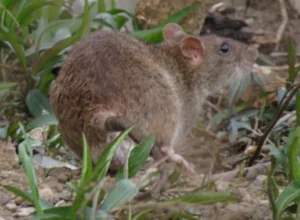
They react to human movement before you fully process seeing them. When you and a rat spot each other, the rat is already moving to escape while you’re still registering what you saw.
Chasing rats is basically impossible. By the time you react to where a rat is, it’s already somewhere else. Their reaction advantage makes pursuit futile without trapping them somehow.
Even fast predators struggle to catch healthy adult rats. The combination of quick reactions and agile movement means only sick, injured, or very unlucky rats get caught by most predators.
Startle Response and Reaction Speed
The startle reflex in rats is one of their fastest reactions and represents their absolute minimum response time to unexpected stimuli.
The acoustic startle reflex happens in about 0.008 to 0.015 seconds from stimulus to initial muscle response. This is one of the fastest reactions in the animal kingdom.
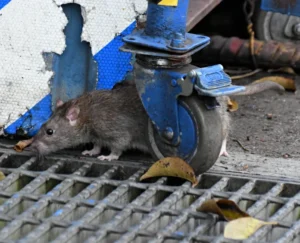
However, full movement takes longer. While the initial muscle twitch happens almost instantly, actually jumping away or running takes the full 0.05 to 0.15 seconds.
Repeated exposure to the same stimulus reduces startle response. If you startle a rat with a loud noise, it might jump the first time but respond more slowly or not at all on subsequent exposures.
The startle response can’t be controlled consciously. Even rats that have learned a sound is harmless will still show the initial muscle response, though they may not follow through with full escape behavior.
Environmental Factors That Affect Reaction Time
Rat reaction speed isn’t constant – several environmental and physical factors can slow or speed their responses.
Temperature affects reaction time significantly. Cold rats react more slowly, with reaction times increasing by 50% or more when body temperature drops below normal.

Fatigue slows reactions. A rat that has been active all night has slower reactions by morning compared to a well-rested rat. The difference might be 0.05 seconds slower when tired.
Hunger can actually speed up reactions slightly. Desperate, hungry rats seem to have faster reactions to potential food sources, possibly due to heightened alertness.
Illness dramatically slows reaction time. Sick rats might react 2 to 3 times slower than healthy rats, which is why predators often target sick individuals.
Drugs and poisons affect reaction speed. This is actually how some rodenticides work – they slow rat reactions making them more vulnerable to predators even before the poison kills them.
Learning and Reaction Time
Rats don’t just have fast built-in reactions – they also learn to react faster to specific situations through experience.
Conditioned responses can be faster than natural reactions. A rat trained to respond to a specific sound might react in 0.03 to 0.05 seconds, faster than its normal reaction to novel sounds.

Trap-shy rats react faster to trap-related stimuli. Once a rat has experienced a trap or near-miss, it becomes hypersensitive and reacts even faster to anything trap-like in the future.
Familiar environments allow faster reactions. Rats that know their territory well can react and move appropriately faster because they already know where to escape to.
Novel situations may slow reactions slightly. When rats encounter something completely new, there might be a brief 0.05 to 0.10 second hesitation while they assess the situation.
Reaction Time in Different Rat Species
While all rats are quick, there are slight differences between common species that explain some behavioral variations.
Norway rats (Rattus norvegicus) have slightly slower reactions than roof rats, averaging 0.08 to 0.15 seconds. They compensate with stronger bodies and more aggressive behavior.
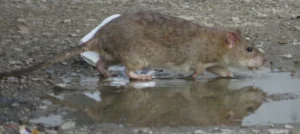
Roof rats (Rattus rattus) react in about 0.05 to 0.10 seconds on average. Their faster reactions suit their arboreal lifestyle where quick responses prevent falls.
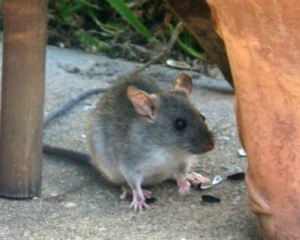
Both species are still much faster than humans, but the difference might affect which trapping methods work best on each species.
Wild rats react faster than laboratory rats. Domesticated rats bred for research have lost some of the edge that wild rats maintain through constant survival pressure.
Implications for Pest Control
Understanding rat reaction time helps explain why some pest control methods work and others don’t.
Slow-acting traps are more effective than they might seem. While rats can react fast enough to avoid snap traps, they’re less cautious around traps that don’t trigger immediately, like glue boards or certain cage traps.
Poison baits work partly because rats can’t react to them. The poison doesn’t trigger their fast reactions because there’s no immediate danger to detect.
Motion-activated deterrents need to be extremely fast. Any device trying to scare rats needs to activate in well under 0.05 seconds to have any effect before the rat escapes.
Multiple traps increase success because they overwhelm reaction capacity. A rat can react fast to one trap, but several traps in sequence might catch them even with their quick reactions.
The Role of Reaction Time in Rat Survival
Fast reactions are a key reason rats have thrived as a species and spread across the entire world. This one trait has huge survival value.
Predator avoidance depends heavily on reaction speed. Rats survive encounters with cats, owls, snakes, and other predators primarily because they react and move before the predator can complete an attack.
Finding food requires quick reactions too. When multiple rats compete for food, the fastest to react gets the meal. This creates evolutionary pressure for faster and faster reactions.
Avoiding human threats keeps rat populations stable despite control efforts. Rats that react quickly to traps, poisons, and people are more likely to survive and breed, passing on their quick reactions to offspring.
Social interactions benefit from quick reactions. Rats in groups need to respond quickly to aggressive behaviors from other rats, and faster reactions help establish dominance.
Conclusion
A rat’s reaction time of 0.05 to 0.15 seconds makes them one of the fastest-reacting mammals on Earth, significantly quicker than humans and even most of their natural predators.
This incredible speed results from optimized nervous systems, excellent sensory organs, small body size, and evolutionary pressure to survive in dangerous environments.
Understanding rat reaction time helps explain why these rodents are so difficult to catch and control. They simply react faster than most threats can reach them, whether those threats are predators, traps, or people trying to eliminate them.
Their speed advantage is a major factor in their success as a species.
If you’re dealing with rats, this knowledge should inform your approach. Quick reactions mean you can’t rely on speed or surprise to catch them.
Instead, you need methods that don’t trigger their fast reactions or that work regardless of how quickly they respond.
Patience, proper trap placement, and understanding their behavior patterns matter more than trying to move faster than an animal that’s fundamentally quicker than you are.

Hi, my name is Ezra Mushala, i have been interested animals all my life. I am the main author and editor here at snakeinformer.com.