
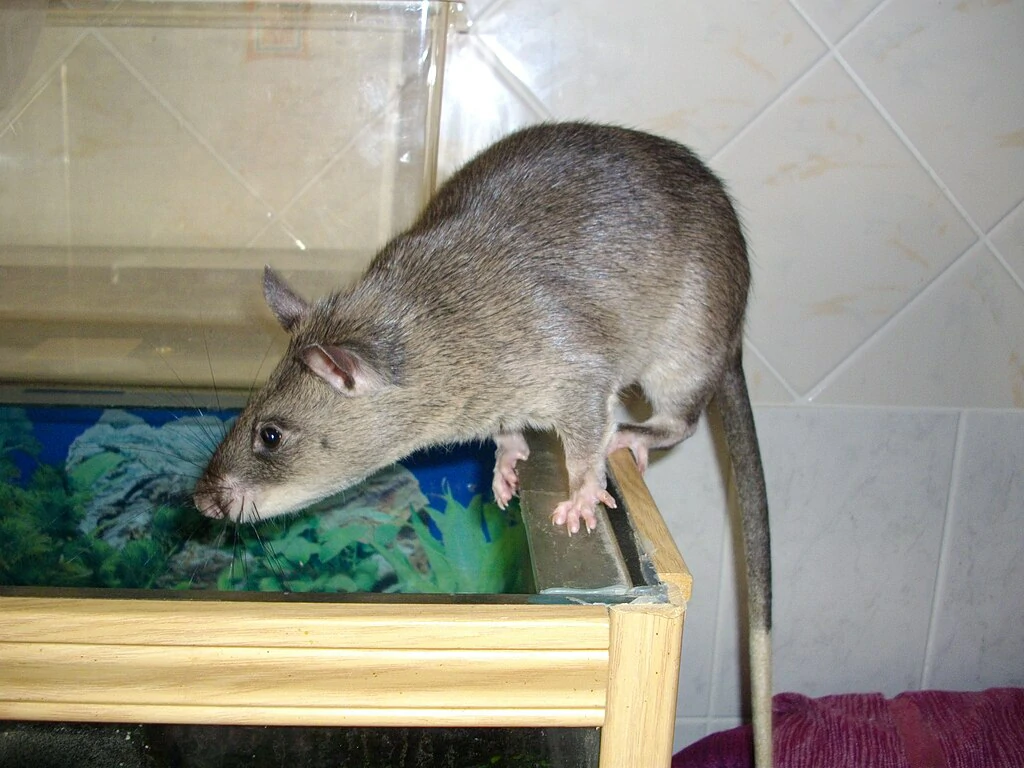
When people talk about dog or cat breeds, everyone knows what they mean. But when it comes to rats, things get a bit confusing because the term “breed” doesn’t work quite the same way.
Rats come in tons of different colors, patterns, and even ear and tail types, but these aren’t separate breeds in the traditional sense. Instead, they’re all variations of the same species that have been selectively bred for different looks. So, how many rat breeds are there actually?
There’s only one breed of domesticated pet rat (Rattus norvegicus, also called the fancy rat or Norway rat), but there are over 40 different varieties based on coat type, color, pattern, and physical features. These varieties include different fur textures (like rex or hairless), colors (like blue, black, or champagne), and patterns (like hooded or berkshire).
All pet rats, no matter how different they look, are the same species and same breed. The different “types” you see are just variations in appearance that breeders have developed over time through selective breeding.
Understanding Rat Breeds vs. Varieties
The confusion about rat breeds comes from how we use the word “breed.” In dogs, different breeds are genetically distinct groups that have been separated and bred for specific purposes over hundreds or thousands of years.
Rats are different. All domesticated pet rats belong to the same breed (Rattus norvegicus), and they can all breed with each other. What people often call different “breeds” are actually just varieties or variations in appearance.

Think of it like human hair color. A person with blonde hair and a person with black hair aren’t different breeds of human, they’re just humans with different traits. The same goes for rats with different colors or fur types.
These varieties are created through selective breeding, where breeders choose rats with specific traits and breed them together to make those traits more common in future generations.
The One True Rat Breed: Rattus Norvegicus
The fancy rat, which is the scientific name for domesticated pet rats, is the species Rattus norvegicus. This is the brown rat or Norway rat, even though it probably didn’t originally come from Norway.
These rats were domesticated from wild brown rats during the 1800s, originally for rat-baiting (a cruel sport) and laboratory research. Eventually, people started keeping them as pets and breeding them for friendly temperaments and interesting colors.
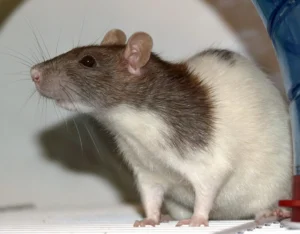
All pet rats you see today, whether they’re hairless, have curly fur, or come in unusual colors, are descended from these original domesticated brown rats. They’re all the same breed at the genetic level.
This is very different from wild rat species. There are over 60 different species of rats in the world, but only Rattus norvegicus has been domesticated as a common pet.
Rat Varieties Based on Coat Type
One of the main ways rats differ is in their coat type, which refers to the texture and length of their fur. Here are the main coat varieties you’ll see:
Standard coat rats have short, smooth, glossy fur that lies flat against their body. This is the most common and natural coat type.
Rex coat rats have curly or wavy fur that’s shorter and coarser than standard fur. Their whiskers are also curly, which looks pretty funny. The rex gene affects the structure of the hair shaft, making it curl.
Double rex rats have an even curlier coat than regular rex rats, and their fur grows in patches. They often look partially hairless because the fur falls out and regrows throughout their life.
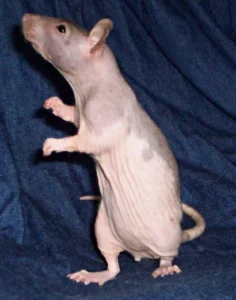
Hairless rats (also called Sphinx rats) have little to no fur at all. They might have a tiny bit of fuzzy hair on their face and feet, but they’re basically bald. They need extra care because they can’t regulate temperature as well.
Velveteen rats have very short, plush fur that feels like velvet. It’s denser than standard fur and has a unique soft texture.
Satin rats don’t have a different fur structure, but their fur has an extra shiny, metallic-looking sheen to it. It’s really striking in person.
Rat Varieties Based on Coat Color
Rats come in a huge range of colors, way more than most people realize. Here are some of the most common color varieties:
Black rats are solid black all over, though some might have white markings depending on their pattern variety.
Blue rats have a soft gray-blue color. It’s a dilute form of black and looks really pretty, almost like blue-gray stone.
Beige rats (also called champagne) have a warm, peachy-tan color. They often have red or ruby eyes.
Mink rats are a warm gray-brown color, like the fur of a mink animal. It’s darker than beige but lighter than chocolate.
Chocolate rats are a rich, dark brown color. Combined with certain patterns, they look like they’ve been dipped in chocolate.
Agouti rats have the wild-type coloring where each hair has bands of different colors. They look brown from a distance but have a ticked appearance up close.
Albino rats are pure white with pink or red eyes. They lack all pigmentation due to a genetic mutation.
PEW (pink-eyed white) rats look similar to albinos but might carry color genes that don’t show. True albinos can’t carry hidden color genes.
Black-eyed white (BEW) rats are pure white but have black eyes instead of pink. These often have better vision than pink-eyed rats.
There are many more colors like platinum, lilac, Russian blue, pearl, and cinnamon. Breeders are always working on developing new color variations.
Common Color Varieties Table
Here’s a table showing some of the most popular rat color varieties:
| Color Name | Description | Eye Color |
|---|---|---|
| Black | Solid deep black | Black or dark ruby |
| Blue | Soft gray-blue, dilute black | Black or ruby |
| Agouti | Wild-type, banded hairs, ticked appearance | Black |
| Mink | Warm gray-brown | Black or ruby |
| Beige/Champagne | Peachy-tan, warm tone | Ruby or pink |
| Chocolate | Rich dark brown | Black or ruby |
| Platinum | Silvery-gray with dove undertones | Black or ruby |
| Albino | Pure white, no pigment | Pink or red |
| Black-Eyed White | Pure white | Black |
| Russian Blue | Cool-toned blue-gray | Black |
| Lilac | Pinkish-gray, dilute chocolate | Ruby |
| Cinnamon | Rusty orange-brown | Ruby |
This table only scratches the surface. There are dozens more color varieties that breeders have developed.
Rat Varieties Based on Markings and Patterns
Beyond solid colors, rats can have different patterns of white markings mixed with their base color. These pattern varieties are some of the most popular:
Hooded rats have color on their head and a stripe down their back, with the rest of their body white. The hood covers their whole head like a hood on a jacket.
Berkshire rats have colored top halves and white bellies, with a clear line between the two colors. They also usually have white feet.
Irish rats are mostly colored but have a white spot on their chest, kind of like wearing a white shirt under a colored jacket.
Blazed rats have a white stripe running down the center of their face, between their eyes. This can appear on any base color.
Variegated rats have random spots and patches of color on a white background. No two variegated rats look exactly the same.
Capped rats have color only on their head (the cap) with a completely white body. It looks like they’re wearing a colored hat.
Bareback rats have a colored head with white bodies except for some colored spots on their back and rump.
Dalmatian rats have spots scattered all over like a dalmatian dog. The spots are usually uneven and randomly placed.
Masked rats have color on their face like a mask, with the rest of their body white or a different color.
Coat Types and Patterns Combined
Things get really interesting when you combine different coat types with different colors and patterns. You can have a blue rex hooded rat, or a mink satin berkshire, or a black double rex variegated.
The possibilities are almost endless, which is why rat fancy (the hobby of breeding and showing rats) has become so popular. Breeders love creating new combinations of existing varieties.

Some combinations are rarer than others. For example, a hairless rat with specific marking patterns is rare because you obviously can’t see the color pattern on skin as clearly as on fur.
Certain color and coat combinations can also be linked to health issues, which responsible breeders have to watch out for. For example, some very light dilute colors can come with weaker immune systems.
Rat Varieties Based on Ear Type
Rats can also differ in their ear type, which is another physical variety that breeders select for:
Standard ears are the normal rat ears, they’re large, thin, and hairless, positioned on top of the head.
Dumbo ears are set lower on the sides of the head and are rounder and larger than standard ears. They’re named after Dumbo the elephant because of how they stick out. Dumbo rats often look more “cute” to people.
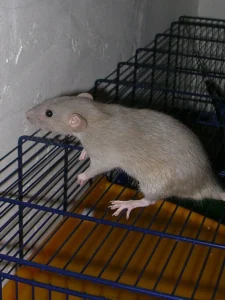
The dumbo trait is a recessive genetic mutation, which means both parents need to carry the gene for babies to have dumbo ears.
Rat Varieties Based on Tail Type
Most rats have long, scaly tails, but there are a couple of tail varieties too:
Standard tails are long (usually as long as the rat’s body), hairless, and covered in scales. This is the normal rat tail.
Tailless rats (also called Manx rats after the tailless cat breed) are born without tails or with very short stubs. This is a genetic mutation that some breeders work with.
However, breeding for tailless rats is controversial because the same gene that removes the tail can cause spinal problems and other health issues. Many responsible breeders avoid breeding tailless rats for this reason.
Other Physical Varieties
There are a few other physical traits that can vary in rats:
Odd-eyed rats have two different colored eyes, like one black eye and one ruby eye. This is pretty rare and looks really striking.
Ruby-eyed rats have deep red or pink eyes that glow ruby-colored in certain lighting. This is linked to certain color genes.
Black-eyed rats have solid black eyes. This is the most common eye color and is found in most dark-colored rats.
Standard rats have straight whiskers, while rex rats have curly whiskers that often look kinked or bent.
How New Varieties Are Created
New rat varieties are created through selective breeding. Breeders choose rats with specific traits they want to emphasize, breed them together, and then select the offspring that best show those traits.
Sometimes new traits appear spontaneously through genetic mutations. When a breeder notices a rat with an unusual color or coat type, they might breed that rat to see if they can reproduce and stabilize the new trait.
It can take many generations to create a new, stable variety. The breeder has to breed the rats carefully to make sure the trait breeds true (shows up consistently) without bringing in unwanted health problems.
Responsible breeders also test for health issues and temperament. There’s no point in creating a beautiful new variety if those rats are sickly or mean.
The Difference Between Pet Rats and Wild Rats
It’s important to understand that pet rats (fancy rats) are very different from wild rats, even though they’re technically the same species. Centuries of selective breeding have made them different in behavior and appearance.
Pet rats have been bred for docile, friendly temperaments. They’re comfortable around humans and enjoy being handled. Wild rats are terrified of people and will bite if cornered.
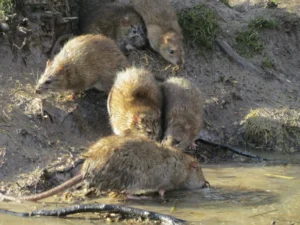
Pet rats come in all the varieties we’ve discussed. Wild rats are almost always agouti or black, the colors that help them blend into their environment. You won’t find a wild blue berkshire rat running around.
Pet rats also tend to be a bit larger and stockier than wild rats because they’ve been bred in captivity with unlimited food. Wild rats are usually leaner and more muscular from constantly moving and searching for food.
Why Rat Fancy Has Become Popular
The rat fancy community (people who breed and show rats) has grown a lot over the past few decades. Part of the appeal is the huge variety of looks you can create through breeding.
Unlike dogs or cats where creating new breeds takes generations and lots of oversight, rat varieties can be developed much faster because rats breed quickly and have large litters.
Rat shows, similar to dog shows, have become popular in many countries. Rats are judged on how well they match the standard for their variety, plus their health and temperament.
The American Fancy Rat and Mouse Association (AFRMA) and other organizations have established standards for different rat varieties, which helps breeders know what they’re working toward.
Health Considerations for Different Varieties
Not all rat varieties are equally healthy. Some varieties are linked to health problems that responsible breeders need to watch out for.
Hairless rats can’t regulate their body temperature as well as furred rats. They need warmer environments and can get cold easily. They’re also more prone to skin problems and injuries.
Double rex rats often have eye problems because their curly eyelashes can irritate their eyes. They might need occasional help keeping their eyes clean.
Very light dilute colors (like very light blue or champagne) are sometimes linked to weaker immune systems. These rats might get sick more easily.
Megacolon is a serious digestive disorder that’s more common in certain color patterns, especially heavily marked white rats. It can be fatal and there’s no cure.
Dumbo rats don’t generally have health problems related to their ear type, but some lines have issues if bred improperly.
Tailless rats can have spinal and balance problems because the tail is important for a rat’s balance and communication.
Responsible breeders avoid breeding rats with serious health issues and work to keep their lines healthy.
Choosing the Right Variety for You
If you’re getting pet rats, the variety you choose is mostly about personal preference. Most varieties have similar personalities and care needs.
However, there are some practical considerations. Hairless rats need more warmth, so if you live in a cold place, they might not be the best choice unless you can keep them extra warm.
Rex and double rex rats might need a bit more grooming attention, especially around their eyes. Their curly fur can also be sparser, so they might get cold more easily than standard coat rats.
Very long-haired varieties (which are less common) might need occasional brushing to prevent mats, though rats are pretty good at grooming themselves.
Color and pattern don’t really affect personality or care needs. A black rat acts the same as a blue rat or a beige rat. Choose whatever looks you find most appealing.
The Future of Rat Varieties
Breeders are constantly working on developing new varieties. Some are trying to create new colors, while others are working on perfecting existing varieties.
There’s also work being done to breed healthier rats overall. Some breeders focus on breeding for longevity and disease resistance rather than just appearance.
As genetic testing becomes more accessible, breeders might be able to screen for health problems before breeding, which could help eliminate some of the genetic issues that affect certain varieties.
The rat fancy community continues to grow, and with it, the number of different varieties available to pet owners. What’s considered rare now might be common in ten years.
Conclusion
There’s only one breed of domesticated pet rat (Rattus norvegicus), but there are over 40 different varieties based on coat type, color, markings, and physical features. These varieties range from standard black rats to hairless sphinx rats to blue rex hooded rats and everything in between.
All these different-looking rats are the same species and can breed with each other. The different appearances have been created through selective breeding over many generations. Whether you prefer the classic look of a black hooded rat or the unique appearance of a hairless dumbo, all pet rats make equally good companions.
When choosing a rat variety, focus more on finding healthy, well-socialized rats from responsible breeders than on getting a specific rare color. A healthy, friendly rat of any variety will make a better pet than a beautiful rat with health or temperament problems.

Hi, my name is Ezra Mushala, i have been interested animals all my life. I am the main author and editor here at snakeinformer.com.