
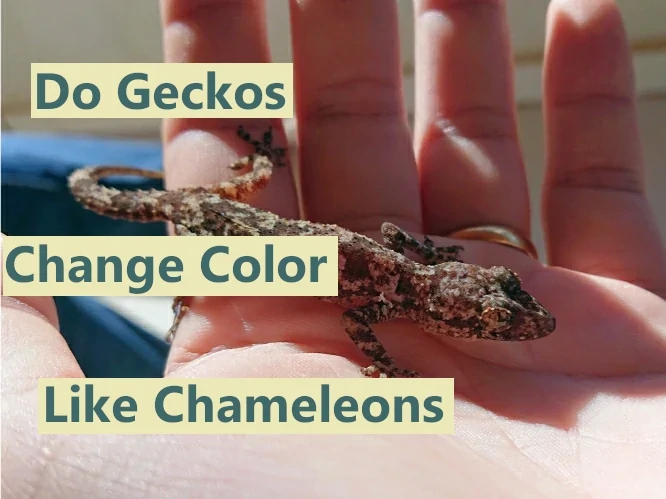
If you’ve ever seen a gecko sitting on a sunny wall or hiding under a leafy branch, you might have noticed something interesting.
Some geckos seem to shift their colors a little, going from bright green to a duller brown, or a pale gray to a slightly warmer tone. It’s subtle, but you can see it if you pay attention.
And if you’ve thought about chameleons, you might wonder: can geckos actually change colors like chameleons do?
Yes and no. Geckos can change colors, but not in the dramatic, magical way chameleons do. Most gecko species can adjust their skin tone slightly depending on things like temperature, light, mood, or stress, but they can’t make the vivid rainbow transformations that chameleons are famous for.
That doesn’t make it boring, geckos’ color changes are interesting in their own way, and they’re just one of the ways these little reptiles interact with their environment and communicate with each other.
From blending into leaves to signaling stress, color changes have real survival purposes.
Why Geckos Change Color At All
Geckos aren’t trying to put on a show like a chameleon. Most of the time, their color changes are about survival and comfort. Temperature is a big factor.
For example, many day-active geckos will darken their skin when it’s cool to absorb more heat, and lighten it when it’s hot to avoid overheating.
Light matters too. Geckos in sunny areas may look brighter during the day and duller in the shade. Some species even change their color slightly at night to hide from predators or avoid scaring prey.
Imagine a gecko on a sunlit tree branch: its green scales almost glow in the sun, but as shadows pass, the green softens to brownish tones that blend with bark and leaves.
Mood and stress can cause small changes as well. A gecko that’s scared, threatened, or trying to show dominance may shift its color a little to send signals to other animals.
It’s a quiet, natural way to communicate without words. Pet owners often notice geckos darkening when handling is stressful or when the gecko feels threatened.
Some scientists think these color shifts also help regulate metabolism. Darker skin absorbs more heat, helping a gecko stay active in cooler times, while lighter skin prevents overheating in hot conditions.
It’s a clever balance that nature has fine-tuned over millions of years.
How Geckos’ Color-Changing Works (But Not Like a Chameleon)
Unlike chameleons, which have special cells called iridophores that reflect light to create vivid colors, geckos mostly rely on melanophores (cells with pigment) and sometimes xanthophores or erythrophores to shift shades slightly.
These pigment cells expand or contract depending on temperature, light, or stress. When a melanophore spreads its pigment, the gecko’s skin looks darker; when the pigment contracts, the skin looks lighter.
It’s not the rainbow effect of a chameleon, but it helps geckos blend with their surroundings.
Some species, like the Leopard Gecko, can even change patterns a little, usually just subtle shifts in brightness or contrast rather than full color swaps.
For example, a Leopard Gecko basking under a warm lamp may show brighter yellow highlights, while cooling off may make it look more muted.
Interestingly, geckos’ color changes are slower and more gradual than chameleons.
While chameleons can switch colors almost instantly to communicate or intimidate, geckos’ changes mostly help with camouflage and adapting to the environment rather than putting on a flashy display.
Do All Geckos Change Color The Same Way?
Not at all. Some geckos barely change, while others are very adaptable. Day geckos, like Phelsuma species, are usually bright green and can shift to slightly darker or lighter shades depending on light and mood.
Crested geckos, on the other hand, can show a surprising range of browns, oranges, and grays, influenced by temperature and stress.
Even within the same species, individual geckos differ. Genetics, age, and environment all matter. A gecko on darker bark may develop darker tones over time, while one in a sandy place may look lighter.
This subtle adaptation helps them survive in many habitats, from rainforests to rocky areas.
Young geckos may show more noticeable color changes as they adjust to their environment, while older geckos usually settle into colors that give them the best camouflage for their long-term home.
How Color Changes Help Geckos Hide
One of the main reasons geckos change color is camouflage. While it’s not as dramatic as a chameleon blending into a rainbow of flowers, geckos can shift enough to match leaves, tree bark, or rocks.
Picture a gecko on a mossy wall. During the day, it may look bright green, matching the moss. As shadows move and the sun dims, it may fade to brownish-gray, blending with dead leaves or bark. Predators might not notice it at all.

This blending can be life-saving. Birds, snakes, and mammals all hunt geckos, and even a small color shift can mean the difference between being seen and staying hidden.
In cities, geckos may adapt to walls, fences, or roof tiles, adjusting shades to match concrete, brick, or plaster.
Some studies suggest color change can also reduce a gecko’s heat signature, making it less visible to predators that sense infrared. Camouflage helps with both looking hidden and staying safe from heat-sensitive predators.
Do Geckos Change Color To Communicate?
Yes, sometimes. While not as flashy as chameleons, geckos can use color to send messages. For example:
-
Stress or fear: A darkening gecko may be showing it feels threatened.
-
Aggression or dominance: Slight color shifts can warn rivals during territory disputes.
-
Breeding readiness: Some geckos subtly brighten or show patterns during courtship to attract mates.
These shifts are usually small and mostly visible to other geckos, though humans can sometimes notice them too.
Watching a gecko during mating or territorial behavior can reveal these delicate changes, showing how geckos communicate without words.
Why Geckos Don’t Change Colors Like Chameleons
Chameleons have a highly specialized system of cells that reflect light in ways geckos can’t. Geckos mostly rely on pigment changes, which are slower and less dramatic.
Chameleons often use color to communicate mood in a very vivid way. Geckos do communicate with color too, but it’s subtle. More about hiding and survival than putting on a show.
Geckos are small, often active at night, and focused on avoiding predators, so subtle camouflage and temperature adjustments matter more than flashy colors.
Energy use is another factor. Quick, bright color changes like chameleons use would cost a small gecko extra energy. Subtle shifts let them adapt without wasting energy.
Examples Of Geckos That Can Change Color
Some geckos are known for shifting colors:
-
Crested Gecko (Correlophus ciliatus): Can go from light gray to dark brown, sometimes showing orange or red depending on temperature and mood.
-
Day Geckos (Phelsuma species): Bright green during the day, may darken slightly at night or when stressed.
-
Leopard Gecko (Eublepharis macularius): Can show darker spots when warm and lighter skin when cooler.
Even these changes are subtle compared to chameleons, but they’re impressive since geckos don’t have the reflective cells that make chameleons’ colors so vivid. Watching these geckos in the wild or in captivity shows how survival and subtle signaling shape their behavior.
How Fast Do Geckos Change Color?
Speed depends on the species and reason for the change:
-
Temperature: Usually gradual over several minutes. A gecko darkens as it warms or lightens as it cools.
-
Stress or mood: Can happen faster, sometimes in a few seconds, especially if threatened or interacting with another gecko.
-
Light: Gradual shifts as the day goes from bright sunlight to shade.
Unlike chameleons, which can switch colors almost instantly, geckos’ changes are subtle and slower. This slow change helps geckos stay hidden while adapting to their environment.
Do Gecko Colors Affect Pet Owners?
For gecko owners, color changes can be useful clues. For example:
-
Health: A gecko that looks duller than usual may be stressed or ill.
-
Mood: Darkening can show stress, fear, or discomfort.
-
Temperature comfort: Color can show if the gecko is too cold or too warm.
By watching color shifts, owners can learn what a gecko is feeling or needing. This helps prevent health problems, keep the environment right, and guide social interactions with other geckos.
Can You Make A Gecko Change Color?
Not really on command. Geckos respond to things like temperature, light, and stress, but not to human instructions.
You can adjust their environment to see changes naturally:
-
Move them from bright to shaded areas.
-
Slightly adjust the temperature in their enclosure.
-
Watch during interactions with other geckos.
These changes can prompt shifts, but they’ll always be subtle and safe. Forcing extreme changes or stress is harmful, so gentle observation is key.
Why Geckos’ Color Changes Are Intresting
Even without rainbow displays, geckos’ color changes show evolution at work. They have just enough flexibility to survive, hide, and communicate without wasting energy on dramatic displays.
It’s also proof that reptiles don’t need bright colors to be interesting. Sometimes subtle shifts are just as amazing.
Watching a gecko darken as the sun sets, or change slightly when nervous, shows how they interact with their environment.
These slow, pigment-based changes let geckos balance survival, camouflage, and communication without using extra energy.
Conclusion
So, can geckos change colors like chameleons? Not exactly, but they have their own subtle, fascinating ways of shifting skin tones.
These changes are usually small, influenced by temperature, light, mood, and stress, but they help geckos survive and communicate.
While chameleons stun with dramatic colors, geckos quietly adjust, blend in, and signal to other geckos in ways that fit their tiny, predator-filled worlds.
For pet owners and nature watchers, noticing these subtle shifts can tell a lot about a gecko’s health, comfort, and mood.
Next time you see a gecko on a wall or tree, take a moment to watch. Even if it doesn’t flash bright reds and blues like a chameleon, its gentle tone shifts are a quiet, clever kind of magic all their own.

Hi, my name is Ezra Mushala, i have been interested animals all my life. I am the main author and editor here at snakeinformer.com.