
It almost always starts with a blur of movement. You’re sitting on the couch or walking into the kitchen, and out of the corner of your eye, you see your cat drop into that low stalking pose they use when something small catches their attention.
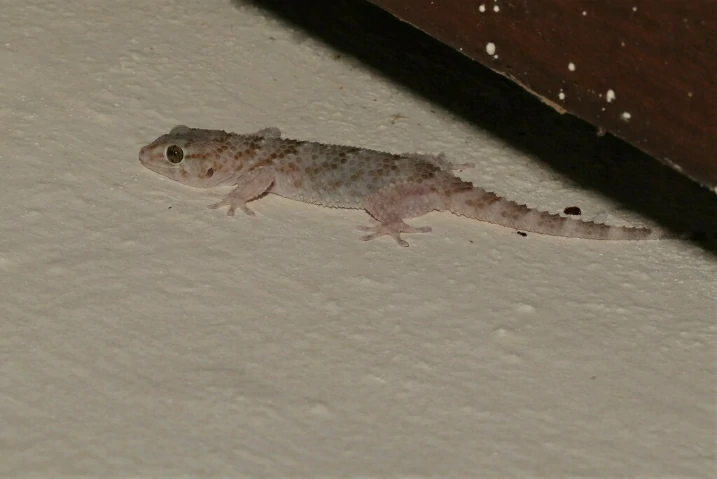
Before you even realize what’s happening, your cat lunges forward, paws scooping something tiny off the floor, and a second later you see that familiar tail flick… except this time, it isn’t your cat’s tail. It’s a gecko’s.
By the time you get close enough to stop things, your cat is already chewing, crunching, or swallowing, and the gecko is pretty much gone. And in that moment, every cat owner has the exact same thought: What happens if a cat eats a gecko?
Most cats are totally fine after eating a gecko. Geckos aren’t poisonous, and cats usually only get mild stomach irritation at worst. The real risks come from salmonella or parasites the gecko might be carrying, not from any natural toxins.
Geckos Aren’t Poisonous To Cats At All
A lot of people mix up reptiles and amphibians. Frogs and toads can have toxins in their skin. Some species are genuinely dangerous. But geckos are reptiles, and they’re built completely differently.
Their skin is dry and covered in scales. They don’t produce poison. They don’t secrete toxins. They don’t release chemicals when they’re eaten.
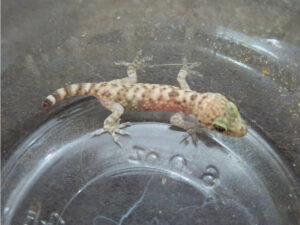
So when a cat swallows a gecko, nothing toxic enters their system. There’s no venom, no gland secretion, no chemical reaction inside your cat’s mouth or stomach.
The gecko is just like any other small prey item in nature.
This is why so many cats eat a gecko and then walk away proudly as if they’ve just done something heroic. They don’t feel any burning, stinging, or irritation in their mouth, and they don’t immediately get sick from toxins.
Cats have been eating small lizards in the wild for thousands of years, and their bodies know how to handle it.
Why Cats Love Chasing Geckos In The First Place
Cats are wired to react to movement. It doesn’t matter how well-fed they are. That quick little darting motion a gecko makes is irresistible to them.
A few things combine to trigger the hunting instinct:
-
The fast, unpredictable movement
-
The tiny size
-
The sound of claws tapping across a wall or floor
-
The stop-and-go scurrying pattern
Even indoor cats who never hunt anything bigger than a dust bunny still get fired up the second a gecko appears. You can call their name all day, but once they lock in, it’s game over.
For the cat, it’s exciting. For the gecko, it’s not great. And for the owner, it becomes a whole new round of Googling symptoms and hoping your cat is fine.
If Geckos Aren’t Poisonous, What Makes Some Cats Sick?
Cats usually react to bacteria and parasites, not toxins. When a cat eats a gecko and later vomits or has diarrhea, it’s almost always because of one of the following:
-
Internal parasites
-
Simple stomach irritation
Cats’ stomachs are sensitive. Even a perfectly harmless prey item can upset things for a bit, especially if it’s the first time your cat has eaten something like that.
Mild stomach upset is the most common reaction. This might look like:
-
One-time vomiting
-
A single loose stool
-
Eating grass afterward
-
Extra drinking
None of these mean your cat is in danger. It’s just your cat’s stomach saying, “That was weird. Let’s get it out.”
How Salmonella From A Gecko Can Affect A Cat
Geckos can carry salmonella in their gut and on their skin, and cats can pick it up when they swallow them. Not every gecko has it, and not every cat gets sick from it, but it’s a possibility worth understanding.
Symptoms of salmonella might include:
-
Repeated vomiting
-
Ongoing diarrhea
-
Tiredness
-
Loss of appetite
-
Mild fever in some cases
Healthy adult cats usually fight it off on their own. But kittens, seniors, and cats with weaker immune systems are more likely to show symptoms.
The good news is that cats have extremely acidic stomachs. Their digestive system destroys most bacteria before it becomes a real problem.
But it’s still something to keep an eye on.
Can A Gecko Give A Cat Parasites?
Yes, it can happen. The most common parasite linked to geckos and cats is liver flukes (specifically Platynosomum species).
This is sometimes called lizard poisoning disease in cats, though the name is misleading because it’s not poison at all.
It’s just a parasite infection that builds up over time.
This is more common in tropical and warm regions where wild geckos and skinks are everywhere.
Early symptoms can be very mild:
-
Occasional loose stool
-
Small appetite dips
-
A bit of vomiting now and then
More advanced cases may show:
-
Weight loss
-
Jaundice (yellow gums or eyes)
-
Swollen belly
Most cats who eat a gecko once won’t get parasites. Parasite infections usually come from eating reptiles regularly, especially outdoor cats who hunt daily. But it helps to be aware of the possibility.
What Happens Inside A Cat’s Stomach After Eating A Gecko
Let’s break this down in a simple, step-by-step way so you can picture what’s really going on inside your cat.
Minutes 1–10
The gecko enters the stomach. Your cat might lick its lips, stretch, or act completely normal. Some cats instantly groom afterward like nothing strange happened.
Hour 1–3
The stomach breaks down skin, bones, and tissue. Cat stomach acid is incredibly strong, so digestion starts quickly.
Hour 4–12
If your cat is going to vomit, it usually happens during this timeframe. This doesn’t mean something is “wrong.” It just means the stomach didn’t like what just happened.
Hour 12–24
Some cats get soft stool or one episode of diarrhea. Others act totally normal.
24–48 hours
If your cat is still eating, drinking, grooming, and using the litter box normally, the gecko incident is officially over.
Are Certain Geckos More Risky For Cats Than Others?
Yes, depending on size and environment.
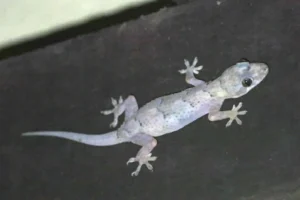
Common house geckos
Small, gray, and harmless. These are the ones cats catch most often. Biggest risks: mild bacteria or minor parasites.
Tokay geckos
Bigger and capable of biting. The bite is the danger, not the body. A tokay gecko can latch onto a cat’s nose or mouth pretty hard.
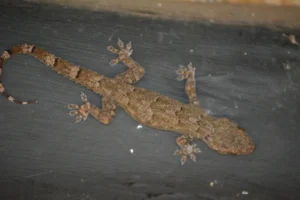
Wild outdoor geckos
More likely to carry parasites if they’re eating insects from soil, drains, compost piles, old wood, and outdoor surfaces.
Captive geckos from reptile tanks
Usually clean and disease-free. Cats rarely get access to these unless someone accidentally leaves the lid open.
Why Some Cats Throw Up After Eating A Gecko
This is extremely common, and it doesn’t automatically mean there’s an infection.
The reasons are very simple:
-
The gecko’s texture is unusual
-
Bones and skin can irritate the stomach
-
Cats can be sensitive to new foods
-
Your cat may have eaten too fast
-
Stress or excitement can trigger vomiting
If your cat vomits once and goes back to normal, you don’t need to worry.
If they vomit repeatedly, that’s when you keep an eye on things.
What You Should Do Right After Your Cat Eats A Gecko
You don’t need to sprint to the vet or panic. Just follow these simple steps.
1. Watch your cat for 24–48 hours
Signs to monitor for:
-
Vomiting
-
Diarrhea
-
Lethargy
-
Appetite changes
2. Don’t try to make your cat vomit
Forcing vomiting is dangerous and can cause choking or aspiration.
3. Provide fresh water
Some cats drink extra after eating something odd.
4. Keep their environment calm
Excitement or stress can irritate the stomach more.
5 . Take notes if symptoms appear
If a vet visit becomes necessary, details help them diagnose things faster.
When You Should Call The Vet
Most of the time, your cat won’t need medical help at all. But you should call your vet if:
-
Your cat vomits repeatedly over several hours
-
Diarrhea lasts more than 24 hours
-
Your cat refuses food for more than a day
-
There’s visible blood in stool or vomit
-
Your cat becomes unusually quiet or withdrawn
-
Your cat ate a very large gecko (like a tokay)
-
Your cat hunts and eats geckos frequently
Frequent gecko-eating increases the chances of parasites, especially liver flukes.
Why Kittens And Senior Cats Need Closer Watching
Kittens have delicate digestive systems, and seniors have weaker immune systems. Something mild for a healthy adult cat can hit them harder.
They’re more likely to experience:
-
Ongoing diarrhea
-
Dehydration
-
Infections
-
Appetite loss
If a kitten or older cat eats a gecko, it doesn’t mean danger, but it does mean you should watch them a bit more carefully.
Should You Worry About Cats Who Eat Geckos Often?
A one-time incident usually isn’t a big deal. But frequent hunting changes things.
A cat that eats geckos regularly is more likely to develop:
-
Parasite infections
-
Bacterial infections
-
Stomach inflammation
Outdoor cats and indoor-outdoor cats are most at risk because they encounter geckos every day.
If you know your cat is a “serial gecko hunter,” your vet might recommend:
-
More frequent deworming
-
Occasional stool tests
-
Monitoring liver function if flukes are a concern in your area
This doesn’t mean you need to panic. It just means prevention helps.
Can Cats Get Sick From Just The Gecko’s Tail?
Some geckos drop their tail when scared. The tail wiggles on the ground for several seconds, and this movement is irresistible to cats. Many cats swallow just the tail.
Good news:
-
The tail is harmless.
-
It’s mostly soft cartilage and fat. It doesn’t carry toxins, and it’s easier to digest than the whole body.
-
The only risk is mild stomach irritation, which usually shows up as one-time vomiting.
Does Eating A Gecko Make Cats More Likely To Hunt Them Again?
Absolutely. Cats learn through experience, and hunting is incredibly rewarding for them. The movement, the chase, the pounce, it all lights up every instinct they have.
If your cat successfully catches a gecko once, they may start:
-
Staring at walls more
-
Patrolling windows
-
Sitting under porch lights
-
Sneaking into corners and closets
To them, catching a gecko is like winning a game. They’ll want to play again.
If you’d like to discourage this, you can:
-
Add cat toys that mimic fast movement
-
Block common gecko hiding spots
-
Keep indoor lights off near windows at night
-
Use humane gecko deterrents outdoors
It won’t stop the instinct completely, but it helps.
If Your Cat Shows No Symptoms, Are They 100% Fine?
Pretty much, yes.
If your cat:
-
Eats normally
-
Drinks normally
-
Uses the litter box
-
Grooms like usual
-
Walks around comfortably
Then the situation is over. The gecko has been digested, and the risk window has passed.
Conclusion
Seeing your cat swallow a gecko is always a surprise, and honestly, it can be a little unsettling. But the truth is simple: geckos aren’t poisonous, and most cats handle the whole situation just fine.
The biggest concerns aren’t toxins but things like salmonella or parasites, and even those rarely cause serious problems after a single incident.
Most cats act completely normal afterward. At worst, they might vomit once or have a loose stool.
And after a short period of watching them and making sure they’re eating, drinking, and behaving like themselves, you can usually relax.
Cats have been hunting and eating small reptiles for thousands of years.
Their bodies are built for it. With a little monitoring and some common-sense care, everything usually turns out totally fine.

Hi, my name is Ezra Mushala, i have been interested animals all my life. I am the main author and editor here at snakeinformer.com.