
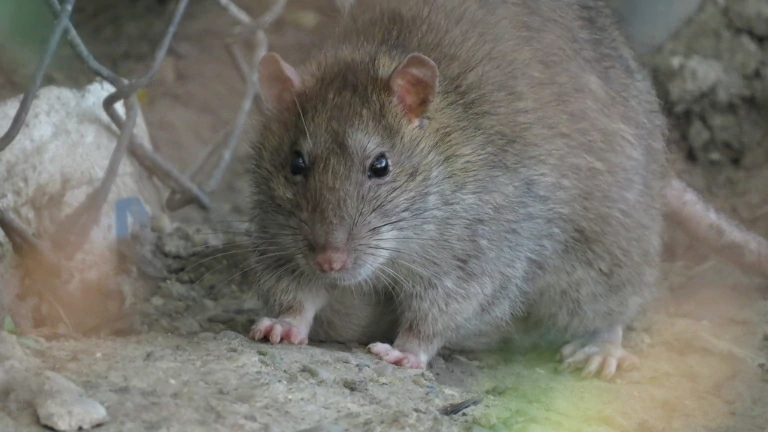
You’ve probably seen a rat at some point and been surprised by just how large it was. Maybe you spotted one in a city alley, or maybe you’ve heard stories about rats the size of cats living in the sewers.
Whether those sewer monster stories are true or not, rats can definitely get pretty big compared to what most people expect. So why do rats get so big?
Rats get so big because they keep growing throughout their entire lives, they have access to unlimited food in human environments, and they’re built with strong bones and muscles that support larger body sizes. Male rats especially can reach impressive sizes, sometimes weighing over a pound.
This continuous growth, combined with easy access to food and good genetics, means rats can get way bigger than most people realize. When conditions are right, these rodents can reach sizes that genuinely surprise anyone who comes across them.
Rats Never Stop Growing
One of the main reasons rats can get so big is that they never truly stop growing. Unlike humans, who stop growing taller once they reach adulthood, rats keep growing their entire lives.
This type of growth is called indeterminate growth. It means that as long as a rat is alive and has enough food, it’ll keep getting bigger (though the growth does slow down a lot as they get older).

A baby rat might weigh just a few grams when it’s born. By the time it’s a few months old, it could weigh 200-300 grams (about half a pound). But if that rat lives for two or three years and has plenty to eat, it might reach 500-600 grams or even more.
The rate of growth slows down significantly after the first year. A young rat grows really fast, putting on weight and size quickly. An older rat still grows, but much more slowly. Still, over the course of several years, this adds up to a pretty substantial size difference.
This is why really old rats (if they manage to survive that long in the wild) can be shockingly large. They’ve literally had years and years to keep growing.
How Big Can Rats Actually Get?
So what’s the actual size we’re talking about here? Can rats really get as big as cats like some urban legends claim?
The common brown rat (also called the Norway rat) is the species most people encounter in cities. Males typically grow to about 9-11 inches long, not counting the tail. Add in the tail, and you’re looking at a total length of around 16-20 inches from nose to tail tip.

Weight-wise, most adult male brown rats weigh somewhere between 350-650 grams (roughly 0.75 to 1.4 pounds). But some extra-large individuals can exceed 700 grams or even reach close to 1 kilogram (2.2 pounds) in rare cases.
Female rats are generally smaller, usually weighing about 250-450 grams (0.5 to 1 pound). They’re built lighter and don’t reach the same massive sizes that males can.
For comparison, a typical house cat weighs between 8-10 pounds. So while rats can get pretty big, they’re not quite reaching cat size except in the wildest exaggerations. Still, a 1.5-pound rat is definitely large enough to startle someone who wasn’t expecting it.
Black rats (also called roof rats) are generally smaller and more slender than brown rats, usually maxing out around 250-350 grams.
Why Male Rats Get Bigger Than Females
If you look at rat populations, you’ll notice the biggest rats are almost always males. This isn’t a coincidence – there are biological reasons why male rats grow larger.
It comes down to hormones and reproduction. Male rats produce testosterone, which promotes muscle growth and bone density. This allows them to build bigger, heavier bodies.

In the wild, bigger males have advantages when it comes to mating. They can fight off other males more easily and are often preferred by females. Over thousands of generations, this has led to evolution favoring larger body sizes in male rats.
Female rats, on the other hand, don’t benefit as much from being super large. Actually, being smaller can be an advantage for females because it takes less energy to maintain a smaller body, leaving more energy for pregnancy and raising babies.
This size difference between males and females is called sexual dimorphism, and it’s common in many animal species. In rats, it’s especially noticeable – a large adult male can easily be twice the weight of a female from the same litter.
Food Access Makes a Huge Difference
Rats that live around humans can get much bigger than rats living in areas without easy food access. This makes perfect sense when you think about it.
In cities, rats have access to an almost unlimited food supply. Garbage bins, food waste, restaurants, grocery stores, sewers carrying food scraps – there’s food everywhere. A city rat can eat as much as it wants, whenever it wants.
When a rat has unlimited food, it can grow to its maximum potential size. It doesn’t have to worry about lean times or going hungry. Every day is a buffet.
Rural or wild rats that live away from human settlements have a much harder time finding food. They might have to work hard just to get enough calories to survive. These rats use most of their energy just staying alive, so they don’t grow as large.
Studies have shown that rats living in areas with high food availability can be 30-50% heavier than rats of the same age living in food-scarce environments. That’s a massive difference.
Genetics Play a Role Too
Just like some people are naturally taller or bigger-boned than others, some rats are genetically programmed to be larger.
Different rat populations can have different average sizes based on their genetics. Rats that have been living in cities for many generations might have evolved slightly larger body sizes because the big individuals survived better and had more babies.

Within any rat population, there’s also natural variation. Some rats are just born with genes that make them grow larger, the same way some dogs from the same litter end up bigger than their siblings.
Breeding also plays a role. Pet rats have been selectively bred for various traits, and some breeding lines produce consistently larger rats. Fancy rats (the kind sold as pets) can sometimes be bigger than wild rats because breeders have selected for size over many generations.
Wild rats don’t have breeders controlling who mates with who, but natural selection still favors certain traits. In an environment where being big is an advantage, bigger rats will have more babies, and over time the population’s average size might increase.
Health and Age Affect Size
A rat’s health throughout its life has a big impact on how large it grows. A rat that gets sick frequently or deals with parasites and infections won’t grow as large as a healthy rat.
This is another reason why city rats can get so big. Despite living in pretty gross conditions, rats are tough animals with strong immune systems. If they avoid getting seriously sick, they can keep growing steadily.
Age is obviously important too. A rat that only lives six months won’t get nearly as big as one that lives three years. In the wild, most rats don’t live very long because of predators, disease, and harsh conditions. But the ones that do survive can reach impressive sizes.
Pet rats often get bigger than wild rats for this exact reason. They live in safe, clean environments with regular food, no predators, and veterinary care when they’re sick. This lets them live longer and grow larger than they would in the wild.
The oldest pet rats (some live up to 4 years or occasionally even longer) can be noticeably bigger than younger rats, even if they’re from the same genetic background.
Why City Rats Are Especially Large
Urban environments are like paradise for rats when it comes to growing large. Cities provide everything a rat needs to reach maximum size.
First, there’s the food situation we already talked about. Cities have food waste everywhere, and it’s available 24/7. Rats don’t have to hunt or forage much – they just need to know where the good garbage bins are.

Second, cities provide shelter and warmth. Rats living in sewers, subways, and buildings don’t have to deal with harsh weather. They’re protected from extreme cold in winter and excessive heat in summer. This means more energy can go toward growth instead of maintaining body temperature.
Third, while cities have plenty of dangers, they often lack the natural predators that keep rat populations in check in the wild. No hawks, owls, foxes, or snakes hunting them. This means more rats survive to old age, giving them more time to grow.
Some cities are particularly famous for their large rat populations. New York City, London, Paris, and other major cities all have stories about especially large rats. These aren’t just myths – in cities with long-established rat populations, the rats really can be notably bigger than average.
The Role of Competition
Interestingly, competition among rats can actually drive them to grow larger. In areas with high rat populations, being bigger gives you an advantage.
Bigger rats can dominate feeding areas and push smaller rats away from the best food sources. They’re also better at defending nesting sites and territory.
This creates pressure for rats to grow as large as possible. The rats that reach bigger sizes get better access to food, which lets them grow even larger. It’s a cycle that can lead to some impressively sized individuals.
In areas where rat populations are dense (like cities), this competition is intense. You might think this would mean less food for everyone and smaller rats, but actually the opposite can happen. The rats that win the competition eat very well and grow quite large, while the losers either stay small or don’t survive.
Are Giant Sewer Rats Real?
You’ve probably heard stories about rats the size of small dogs living in sewers. These stories pop up in almost every major city. But are they true?
The short answer is: mostly no, but rats can still get surprisingly big. There’s no evidence of rats reaching the massive sizes described in urban legends (like 20-pound monsters). Those stories are exaggerations.

However, sewer rats can definitely grow larger than average. Sewers provide constant warmth, shelter, and access to food waste. Rats living their entire lives in this environment, with no predators and unlimited food, can reach the upper end of the size range for their species.
A 1.5 to 2-pound rat is genuinely large and would look pretty shocking to someone who’s only seen mice or small rats before. When you encounter one in a dark sewer or alley, it might look even bigger than it really is because of fear and surprise.
The “giant rat” stories also get exaggerated with each telling. Someone sees a large (but normal-sized) rat, estimates it was “at least a foot long,” and by the time the story spreads, it’s become “the size of a cat” or “bigger than a small dog.”
What This Means for Pest Control
The fact that rats can grow so large is actually important for pest control efforts. Bigger rats are harder to control in several ways.
Large rats are stronger and can chew through tougher materials. A big rat can gnaw through wood, plastic, and even some metals that a smaller rat couldn’t get through. This makes it harder to rat-proof buildings.
Big rats are also smarter and more experienced (since they’ve survived longer). They’re more cautious about new objects in their environment, which makes trapping harder. They might avoid traps and poison bait that younger, less experienced rats would fall for.
On the flip side, larger rats need more food, which means they might take more risks to get it. This can sometimes make them easier to catch if you know what you’re doing.
Pest control professionals often focus on limiting food access first. If you can reduce the available food in an area, rats won’t grow as large, and the population will decrease overall. It’s more effective than just trying to trap or poison them.
Conclusion
Rats get so big because of a combination of factors working together. They grow continuously throughout their lives, never really stopping.
They’re built with strong skeletons and muscles that can support large body sizes. And when they have access to unlimited food (like in cities), they can reach their maximum genetic potential.
Male rats grow especially large because of hormones and evolution favoring bigger males for reproduction. Add in the fact that city rats often live longer because of fewer predators and constant food supplies, and you get some genuinely impressive-sized rodents.
While rats don’t actually reach the massive sizes described in urban legends, a well-fed, healthy adult male rat can easily exceed a pound in weight and reach nearly two feet in total length. That’s definitely big enough to surprise anyone who comes across one unexpectedly.

Hi, my name is Ezra Mushala, i have been interested animals all my life. I am the main author and editor here at snakeinformer.com.