
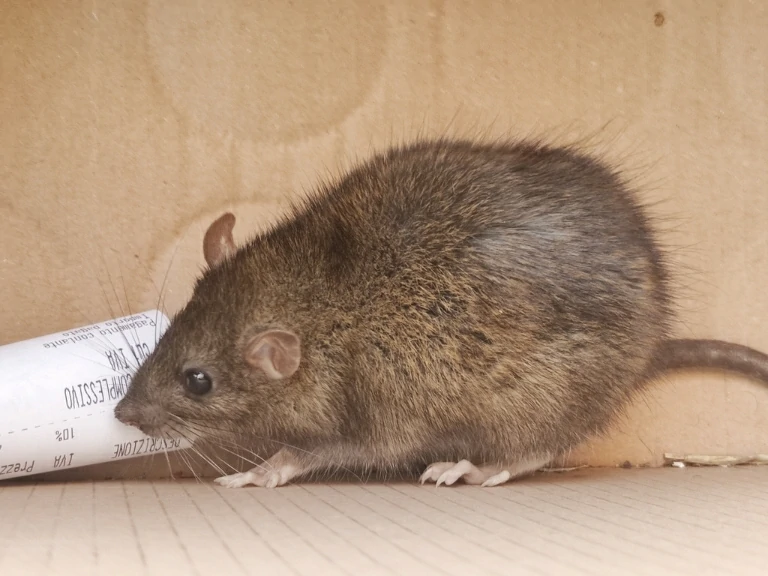
Snakes and rats have one of nature’s most well-known predator-prey relationships. If you’ve ever seen a snake in the wild or kept one as a pet, you know that rats are a major part of their diet.
From small garden snakes to massive pythons, many snake species rely on rats as a primary food source. But what makes rats such perfect prey for snakes? Why do snakes eat rats?
Snakes eat rats because they provide the right size, nutrition, and availability that snakes need to survive. Rats are warm-blooded prey that give snakes protein, fats, and essential nutrients in a single meal. They’re also abundant in many environments where snakes live, making them an easy and reliable food source.
When you think about what a snake needs from its food, rats check almost every box. They’re packed with nutrients, they’re the right size for many snake species to swallow whole, and they’re common enough that snakes don’t have to waste energy searching for food.
This perfect match between predator and prey has been shaped by millions of years of evolution.
The Nutritional Benefits Rats Provide to Snakes
Rats are incredibly nutritious for snakes. As mammals, they’re warm-blooded creatures with high protein content, healthy fats, and essential vitamins and minerals that snakes need to stay healthy.
A single rat can provide everything a snake needs for days or even weeks, depending on the snake’s size.
The protein in rats helps snakes build and maintain muscle tissue, heal injuries, and support their immune systems.
Fats give snakes the energy they need for digestion, movement, and maintaining their body temperature (even though they’re cold-blooded, they still use energy for temperature regulation through basking and seeking shade).
Rats also contain calcium from their bones, which snakes digest along with the rest of the body. This calcium is important for snakes, especially for female snakes that need extra calcium to produce eggs.
The organs inside a rat (like the liver, heart, and kidneys) provide vitamins and minerals that snakes can’t get from muscle tissue alone.
When a snake eats a rat whole, it gets what’s called a “complete” meal. This means the snake doesn’t need to hunt multiple prey items or seek out different food sources to get balanced nutrition. One rat contains everything the snake needs.
Why Rats Are the Perfect Size for Many Snakes
One of the biggest reasons snakes eat rats is simple mechanics. Snakes can’t chew their food. They have to swallow prey whole, which means the size of their prey really matters.
Rats come in a range of sizes from tiny pinkie mice (newborn mice) to large adult rats, and this variety means there’s a rat-sized meal for almost every snake.
For small snakes like corn snakes, garter snakes, or young ball pythons, a mouse or small rat is the perfect size. For medium snakes like adult ball pythons or king snakes, an adult rat works perfectly.
For large snakes like boa constrictors or reticulated pythons, multiple rats or very large rats provide the meal size they need.
The general rule for snake feeding is that the prey should be roughly the same width as the widest part of the snake’s body. Rats naturally come in sizes that match this requirement for many popular snake species.
This is one reason why rats (and mice, which are just smaller versions of rats) are the most common feeder animals for pet snakes.
If prey is too large, a snake might choke, regurgitate, or injure itself trying to swallow it. If prey is too small, the snake isn’t getting enough nutrition and will need to eat more frequently, which uses up more energy.
Rats hit that sweet spot for a huge range of snake species.
How Snakes Hunt and Catch Rats
Different snake species use different hunting methods to catch rats, but most rely on a combination of patience, stealth, and specialized hunting adaptations. The two main hunting strategies are constriction and envenomation (using venom).
Constrictor snakes like pythons, boa constrictors, and king snakes kill rats by wrapping their bodies around them and squeezing. This doesn’t actually crush the rat or break its bones like many people think.
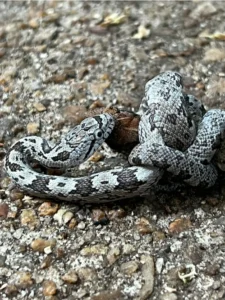
Instead, the constriction stops the rat’s blood flow and prevents it from breathing. Each time the rat exhales, the snake tightens its grip slightly, and eventually the rat loses consciousness and dies.
Venomous snakes like rattlesnakes, copperheads, and vipers use a different approach. They strike quickly, injecting venom through their fangs, then release the rat and wait for the venom to take effect.
The venom breaks down tissues and can cause paralysis, making it safe for the snake to approach and eat the rat without risking injury from the rat’s teeth and claws.
Both methods work incredibly well on rats. Rats are quick and alert, but snakes have evolved to be patient hunters. They’ll wait motionless for hours until a rat comes close enough to strike.
Rats rely heavily on their sense of smell and hearing, but they don’t always detect a perfectly still snake until it’s too late.
Where Snakes and Rats Cross Paths
Snakes and rats often live in the same types of environments, which is another big reason why this predator-prey relationship is so common.
Both prefer areas with cover, like tall grass, rock piles, wood piles, abandoned buildings, and areas near water sources.

In urban and suburban areas, rats are drawn to human structures because of food and shelter. Snakes follow the rats because that’s where the food is.
This is why you might find snakes in barns, sheds, garages, or basements. They’re not there because they like being around people. They’re there because rats are there.
In rural and wild areas, rats and mice live in fields, forests, and wetlands. Snakes hunt in these same habitats.
A snake might hide under a fallen log or in a burrow during the day, then come out at dusk or dawn to hunt when rats are most active.
This habitat overlap makes rats a reliable food source. A snake doesn’t need to travel long distances or search in unusual places to find rats.
They’re right there in the same environment, going about their business, and the snake just has to wait for the right moment.
The Energy Efficiency of Eating Rats
Snakes are incredibly energy-efficient predators. They don’t need to eat every day like mammals do. Depending on the species and the size of the meal, a snake might only eat once a week, once every two weeks, or even once a month.
Rats provide a lot of calories and nutrients in a single package, which fits perfectly with this low-energy lifestyle.

After eating a rat, a snake can spend days or weeks digesting the meal, extracting every possible bit of nutrition. During this time, the snake doesn’t need to hunt, which conserves energy.
This is especially important because snakes are cold-blooded (ectothermic). They don’t burn calories to maintain a constant body temperature like mammals do.
This means they need far less food overall, but when they do eat, they need meals that are worth the effort. A rat provides exactly that.
Hunting is risky for snakes. They could get injured by defensive prey, they burn energy moving and striking, and they’re vulnerable to predators when they’re focused on hunting
. By eating calorie-dense prey like rats, snakes minimize how often they need to take these risks.
Why Rats Are More Nutritious Than Other Prey
When compared to other common snake prey like birds, lizards, frogs, or insects, rats come out on top nutritionally. Birds can be hard to catch and don’t have as much body mass relative to their size because of their hollow bones.
Lizards and frogs have less fat content and more indigestible parts like scales or skin toxins. Insects are too small for most snakes and don’t provide enough nutrition to be worth the energy of hunting them.
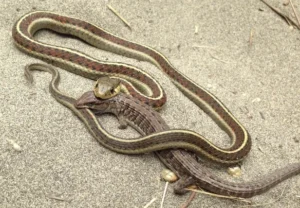
Rats have dense muscle tissue, a good layer of fat (especially wild rats), and bones that provide calcium.
Their organs are nutrient-rich, and their skin is relatively thin and easy to digest. There’s very little waste when a snake eats a rat. Almost everything gets broken down and absorbed.
For snakes that specialize in eating mammals (called mammal specialists), rats represent the ideal prey type.
These snakes have evolved specific adaptations like heat-sensing pits (in pit vipers like rattlesnakes) that detect the body heat of warm-blooded prey. This makes them incredibly effective rat hunters.
How Pet Snakes and Rats Created a Feeding Industry
The relationship between snakes and rats has created an entire industry around breeding rats specifically as food for pet snakes. These “feeder rats” are raised in controlled environments, properly fed, and humanely killed before being frozen and sold to snake owners.
This system works well for several reasons. It’s safer than feeding live rats, which can injure snakes with their teeth and claws. It’s more convenient than catching wild rats. And it gives snake owners control over the size and quality of the prey.
Feeder rats are usually categorized by size: pinkies (newborn rats with no fur), fuzzies (young rats with some fur), hoppers (young rats that are starting to jump around), weanlings (rats just weaned from their mother), and adult rats.
This size variety lets snake owners match the prey to their specific snake’s needs.
The popularity of rats as snake food has also driven research into snake nutrition. We now know a lot about what snakes need to be healthy in captivity, and that knowledge comes largely from studying snakes that eat rats.
What Happens When Snakes Don’t Have Access to Rats?
In environments where rats aren’t available, snakes adapt and eat whatever prey is accessible. Some snakes are generalists and will eat almost anything they can catch (birds, frogs, other snakes, eggs). Others are specialists and have evolved to eat very specific prey types.

For example, some snakes eat only slugs and snails. Others eat only fish. Some eat only other snakes. These specialists often live in environments where their preferred prey is abundant, so they don’t need the versatility that generalist snakes have.
But for the many snake species that can eat rats, the absence of rats usually means they’ll switch to mice, voles, squirrels, or other small mammals.
The nutritional profile is similar enough that the snake can adapt. However, rats are often preferred when available because of their size and calorie content.
In captivity, if a snake refuses rats, owners sometimes need to try different prey items. Some snakes prefer the scent of certain animals, and switching from rats to mice (or vice versa) can sometimes solve feeding problems.
The Ecological Role of Snakes as Rat Predators
Snakes play an important role in controlling rat populations in many ecosystems. Without predators like snakes, rat populations could explode and cause serious problems.
Rats reproduce quickly (a female rat can have up to 12 litters per year with 6 to 12 babies each time), so they need natural predators to keep their numbers in check.

In agricultural areas, snakes that eat rats help protect crops from rat damage. Rats destroy grain stores, eat seeds, and damage crops in the field. A healthy population of rat-eating snakes can reduce these losses significantly.
In urban areas, snakes help control rat populations around human structures. While most people don’t want snakes in their yards, the presence of snakes often means fewer rats, which can reduce the spread of rat-borne diseases and property damage.
This ecological balance has existed for millions of years. Rats evolved to reproduce quickly and hide effectively. Snakes evolved to hunt patiently and eat efficiently.
The two species push each other to adapt and survive, creating a natural check-and-balance system.
How Snakes Detect Rats in Their Environment
Snakes have several specialized senses that help them find rats. Many snakes have heat-sensing organs (called pit organs) that can detect the infrared radiation given off by warm-blooded animals like rats.
These organs are so sensitive that a snake can detect a rat in complete darkness just from its body heat.

Snakes also have an incredible sense of smell, but it works differently than ours. They use their tongue to collect scent particles from the air, then insert their tongue into an organ on the roof of their mouth called the Jacobson’s organ (or vomeronasal organ).
This organ analyzes the scent chemicals and tells the snake what it’s smelling and which direction it’s coming from.
When a rat walks through an area, it leaves behind scent trails from its feet and body. A snake can follow these trails to find where the rat went.
Some snakes will even wait near areas where rat scent is strongest, knowing that rats frequently travel those paths.
Vibrations also help snakes detect rats. When a rat moves across the ground, it creates vibrations that snakes can feel through their body. This gives the snake information about where the rat is and how big it might be.
Conclusion
Snakes eat rats because they’re the perfect prey in almost every way. They provide complete nutrition with protein, fats, vitamins, and minerals all in one package.
They come in a range of sizes that match what different snake species need. They’re abundant in many environments where snakes live, making them a reliable food source that doesn’t require long hunts or risky searches.
The relationship between snakes and rats has been refined over millions of years of evolution, creating a predator-prey dynamic that benefits both species in the long run.
Rats have become excellent at reproducing quickly and hiding, while snakes have become patient, efficient hunters.
This balance keeps ecosystems healthy and helps control rat populations that could otherwise become serious pests. Whether in the wild or in captivity, rats remain the gold standard of snake food.

Hi, my name is Ezra Mushala, i have been interested animals all my life. I am the main author and editor here at snakeinformer.com.