
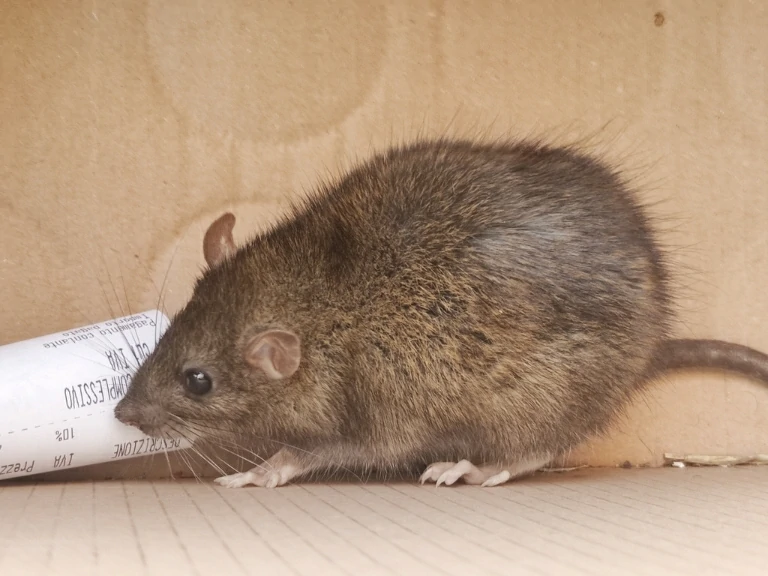
Walk into almost any research laboratory studying medicine, psychology, or biology, and you’ll probably find rats. They’re everywhere in scientific research, from cancer studies to behavioral experiments.
You’ve probably seen news about rat studies testing new drugs or treatments. But why do scientists use rats for experiments instead of other animals?
Scientists use rats for experiments because they’re biologically similar to humans, breed quickly, are easy to care for, and have well-documented genetics. Their short lifespan allows researchers to study entire lifetimes in just a few years, and decades of previous rat research provides a huge database for comparison.
Rats have become the gold standard for many types of research, and there are very specific reasons why they’ve earned this position in science. Understanding these reasons helps explain why so much medical progress has been built on rat studies.
Genetic Similarity to Humans
The biggest reason scientists use rats is because they’re surprisingly similar to humans at the genetic level.
Rats and humans share about 90% of their genes. This means the basic biological processes in rats work very much like they do in humans.
When testing how a drug affects the body, or how a disease progresses, rats provide a good model for predicting what might happen in humans.

The organs in rats function similarly to human organs. Their hearts, lungs, kidneys, and other systems work on the same basic principles as ours.
This biological similarity makes rats incredibly valuable for medical research. A treatment that works in rats has a decent chance of working in humans too.
The genetic closeness isn’t just about having similar genes. It’s about how those genes work together to create similar biological responses.
Rats develop many of the same diseases humans do, including cancer, diabetes, heart disease, and neurological disorders. This makes them perfect for studying these conditions.
Their Genome Is Fully Mapped
In 2004, scientists finished mapping the complete rat genome. This was a huge deal for research.
Having the full genetic map means researchers know exactly what every gene does and where it’s located. This makes genetic studies much more precise.

Scientists can now create genetically modified rats with specific traits. They can add genes, remove genes, or alter genes to study their effects.
This genetic manipulation helps researchers understand what specific genes do. If you remove a gene and the rat develops a disease, you know that gene was important for preventing that disease.
The mapped genome also allows researchers to compare rats to other species, including humans. This helps identify which genes are responsible for which traits or diseases.
Having decades of genetic data on rats means new studies can build on previous work. Researchers don’t have to start from scratch every time.
Quick Breeding and Short Lifespan
Rats reach sexual maturity really fast, at just 6 to 8 weeks old. This means researchers can start breeding them quickly.
A female rat can have up to 6 litters per year, with each litter containing 6 to 12 babies. This rapid reproduction creates large populations for studies.

When you need hundreds or thousands of subjects for a study, rats can provide them in a relatively short time.
Their short lifespan (2 to 3 years) is actually an advantage for research. Scientists can study an entire lifetime in just a couple of years.
This is especially important for aging research, cancer studies, and other conditions that develop over time. You can see the whole disease process in a manageable timeframe.
Studying multiple generations is also possible. Researchers can look at parents, children, and grandchildren all within a few years to study inherited traits.
The quick generation time allows scientists to test multiple variations of an experiment much faster than with longer-lived animals.
Easy to House and Care For
Rats are small animals that don’t need huge amounts of space. This makes them practical for laboratory settings.
A research facility can house hundreds or thousands of rats in the same space that would fit maybe a dozen larger animals.
The cost of caring for rats is relatively low compared to bigger animals. They don’t eat much, their bedding is cheap, and their housing is simple.
Rats are also pretty hardy animals. They don’t get sick easily when kept in clean conditions, which means less lost data from animals dying unexpectedly.
They adapt well to laboratory environments. Unlike some animals that get stressed in captivity, rats can thrive in research settings when properly cared for.
The standardized care protocols for rats are well-established. Every research facility knows exactly how to house, feed, and maintain healthy rat populations.
This reliability is important for research. You need your subjects to be healthy and consistent to get good data.
Well-Understood Behavior and Biology
Scientists have been using rats for research since the 1850s. That’s over 170 years of accumulated knowledge.
This massive database of previous rat studies means researchers understand rat biology better than almost any other animal except mice.

When you run a new study, you can compare your results to hundreds of previous studies. This helps validate findings and spot unusual results.
Rat behavior is extremely well-documented. Scientists know exactly how rats normally behave, so they can quickly spot when something is different.
This behavioral knowledge is especially important for psychology and neuroscience research. Rats can be trained to do complex tasks that reveal how their brains work.
The standardization of rat strains also helps. Different rat strains have been bred for specific traits, giving researchers consistent subjects for different types of studies.
If you need rats that are prone to high blood pressure, there’s a strain for that. Need rats that are particularly good at learning? There’s a strain for that too.
Intelligence Makes Them Good Test Subjects
Rats are actually quite smart animals. Their intelligence makes them perfect for certain types of research.
They can learn complex tasks and remember them over time. This is critical for behavioral studies and learning research.
Rats can navigate mazes, press levers for rewards, and understand cause-and-effect relationships. These abilities let researchers study cognition and decision-making.
Their social intelligence is also valuable. Rats have complex social structures and communication, which helps in studying social behavior and mental health.
The ability to train rats means researchers can test very specific hypotheses about learning, memory, and behavior.
Rats show emotional responses to situations. They can experience stress, fear, and even joy. This emotional range makes them good models for studying mental health conditions.
Their problem-solving abilities allow for sophisticated experiments that wouldn’t be possible with less intelligent animals.
Size Is Just Right
Rats hit a sweet spot in terms of size. They’re small enough to be practical but large enough to work with easily.
They’re big enough that you can do surgical procedures, take blood samples, and perform other medical interventions that would be too difficult on smaller animals.

Unlike mice, which are even more common in research, rats have larger brains. This makes them better for neuroscience research where you need to study specific brain regions.
The larger size also means more tissue samples. When you need to test multiple things from one animal, rats provide enough material.
But they’re still small enough that housing them doesn’t require massive facilities or huge budgets. The size balance is ideal for research purposes.
Their blood volume is sufficient for multiple tests without harming the animal. This is important for studies that require repeated blood sampling.
Specific Rat Strains for Specific Research
Over the years, researchers have developed many specialized rat strains, each bred for particular research purposes.
The Wistar rat is one of the oldest laboratory strains, developed in 1906. It’s used for general research and toxicology studies.
Sprague-Dawley rats are the most widely used strain. They’re good for general research because they’re docile and breed well.
The Long-Evans rat has a hooded coat pattern and is particularly popular for behavioral and neuroscience research because of its intelligence.
Zucker rats are bred to be obese and are used specifically for obesity and diabetes research.
Spontaneously Hypertensive Rats (SHR) naturally develop high blood pressure, making them perfect for cardiovascular research.
Nude rats lack immune systems and are used for cancer research because you can transplant human tumors into them.
Having these specialized strains means researchers can choose exactly the right type of rat for their specific study.
Ethical Considerations Are More Manageable
This is a sensitive topic, but it’s part of why rats are chosen. Research ethics committees generally consider rodent research more acceptable than using primates or other animals.
Rats are not protected by the Animal Welfare Act in the United States, which covers many other research animals. This makes regulatory approval simpler.

The public perception of rats is also a factor. Most people are more comfortable with rat research than research on dogs, cats, or monkeys.
This doesn’t mean rat research is unethical or that rats don’t matter. Responsible researchers follow strict ethical guidelines to minimize suffering.
But the ethical calculations are different than with animals that are more emotionally connected to humans or more cognitively advanced.
Research facilities must still justify their use of rats and show that the potential benefits outweigh the harm to the animals.
The goal is always to use the minimum number of animals necessary and to treat them as humanely as possible.
Lower Cost Than Other Options
Research funding is limited, and rats are one of the most cost-effective research animals available.
Buying rats for research costs much less than larger animals. A research rat might cost $20 to $50, while a research primate can cost thousands.
Housing costs are minimal. Rats don’t need large enclosures, expensive specialized food, or intensive care.
The ability to study many generations quickly means you get more data per research dollar spent.
Veterinary care is simpler and cheaper for rats than for larger or more exotic animals.
This cost efficiency means research budgets can go further. A study that might only afford 20 dogs could potentially use hundreds of rats.
More subjects generally means better statistical power and more reliable results. The low cost of rats enables larger, more robust studies.
Regulatory and Historical Precedent
There’s a practical reason rats continue to be used. Regulatory agencies like the FDA are familiar with rat data.
When developing new drugs, companies know that rat studies will be accepted by regulators because there’s so much historical precedent.

If you want to get a new medication approved, showing it works and is safe in rats is a standard requirement.
This creates a self-reinforcing cycle. Because rats have always been used, regulators trust rat data, so researchers keep using rats.
Changing to a completely different model animal would mean validating it against decades of existing rat research.
The standardization makes comparing new research to old research much easier. Everything is in the same “language” so to speak.
Comparison to Computer Models and Alternatives
People often ask why we can’t just use computer models instead of animal testing. The answer is that biology is incredibly complex.
We simply don’t understand all the interactions in a living system well enough to model them perfectly on a computer.
Computer models are getting better and are used more often, but they can’t fully replace living subjects yet.
Cell cultures (testing on cells in a dish) are another alternative, but they don’t show how a whole organism responds. You miss the interactions between different organ systems.
Human trials are the ultimate goal, but you can’t ethically test potentially dangerous treatments on people without animal data first.
Rats serve as a bridge between cell cultures and human trials. They’re complex enough to be meaningful but not so similar to humans that testing feels wrong.
The goal in research is to use the “3 Rs”: Replace animal testing when possible, Reduce the number of animals used, and Refine methods to minimize suffering.
What Rat Research Has Given Us
The medical advances that came from rat research are honestly staggering. Much of modern medicine was developed using rats.
Cancer treatments, including chemotherapy drugs, were tested in rats. Many of these treatments wouldn’t exist without rat research.
Organ transplant techniques were developed and refined using rats. This saved countless human lives.
Diabetes research relied heavily on rats. Insulin therapy and other diabetes treatments came from rat studies.
Vaccines for diseases like polio were tested on rats before going to human trials.
Most psychiatric medications were developed using rats to understand brain chemistry and test drug effects.
Heart disease research, including blood pressure medications and surgical techniques, depended on rat studies.
The list goes on and on. It’s hard to find an area of medicine that hasn’t benefited from rat research in some way.
The Future of Rats in Research
Rat research isn’t going anywhere soon, but it is evolving. Scientists are working to make it more humane and more efficient.
Gene editing technologies like CRISPR are making it easier to create rats with very specific genetic changes for research.
Better imaging technology means researchers can study living rats without invasive procedures as often.
Increased focus on animal welfare has led to improved housing and care standards for research rats.
The development of “organs-on-chips” and other alternatives might reduce rat use in the future, but we’re not there yet.
Rats will likely remain important in research for decades to come, but the methods will keep improving.
Conclusion
Scientists use rats for experiments because they offer an ideal combination of biological similarity to humans, practical advantages like size and breeding speed, well-understood genetics and behavior, and cost-effectiveness.
After more than 170 years of research, we have an enormous database of rat studies to compare new findings against.
While the ethics of animal research remain complex and important to consider, rats have contributed to virtually every major medical advance of the past century.
Understanding why researchers choose rats helps us appreciate both the value they provide to science and the responsibility we have to treat them humanely.
The goal moving forward is to continue benefiting from rat research while developing alternatives, reducing the number of animals used, and ensuring the best possible care for the rats that do contribute to scientific progress.

Hi, my name is Ezra Mushala, i have been interested animals all my life. I am the main author and editor here at snakeinformer.com.