
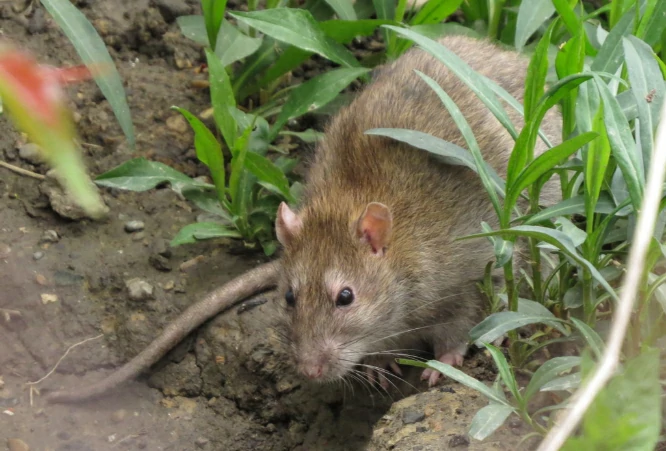
Most people think of tail wagging as a dog behavior. When a dog wags their tail, everyone knows it means they’re happy and excited.
But rats also wag their tails, and it can mean completely different things depending on the situation. If you’ve seen your rat’s tail moving back and forth and wondered what it means, you’re not alone. So why do rats wag their tails?
Rats wag their tails for several reasons, and unlike dogs, tail wagging in rats doesn’t always mean happiness. Rats wag their tails when they’re agitated or annoyed, when they’re focused and hunting, when they’re stressed or uncertain, and sometimes when they’re playful. The meaning depends on the context, body language, and speed of the wagging.
Understanding what your rat’s tail wagging actually means requires looking at the whole situation, not just the tail movement itself.
Tail Wagging as a Sign of Irritation
The most common reason rats wag their tails is actually annoyance or irritation, which is basically the opposite of what it means when dogs do it.
If you’re doing something your rat doesn’t like (like trying to pick them up when they want to be left alone), you might see their tail start to wag back and forth.
This is a warning signal. Your rat is saying “I don’t like this, please stop” before they escalate to more serious communication like nipping or biting.
The tail wag gives you a chance to back off and respect their boundaries before they feel the need to defend themselves more aggressively.
The Speed and Intensity Matters
Not all tail wags look the same. A slow, lazy wag means something different than a fast, intense wag.
A slow tail wag often means mild annoyance or uncertainty. Your rat isn’t sure how they feel about something, but they’re not thrilled about it.

A fast, vigorous tail wag usually indicates stronger irritation or even the beginnings of aggression. This is a more serious warning sign.
Very rapid tail vibration (where the tail almost blurs with movement) can happen right before a rat lunges or bites. It’s a “final warning” before defensive action.
Gentle, slow tail movement combined with relaxed body language might actually indicate focus or interest rather than irritation.
Tail Wagging During Play vs Aggression
Learning to tell the difference between playful tail wagging and aggressive tail wagging is important for understanding your rats’ interactions.
During play fighting, rats might wag their tails, but the overall body language is loose and bouncy. They’ll take turns chasing and being chased.
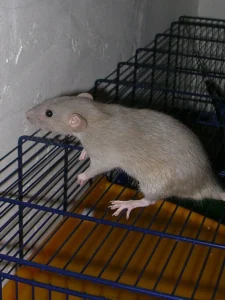
During real fighting, tail wagging comes with puffed-up fur, arched backs, and sustained aggression rather than back-and-forth play.
If two rats are playing and one starts tail wagging more intensely, it might mean the play is getting too rough and one rat is getting annoyed.
The Hunting and Stalking Connection
Wild rats wag their tails when they’re hunting or stalking prey. This behavior carries over to pet rats even though they’re not hunting for survival.
If your rat is intensely focused on a toy, a treat, or even a bug they spotted, you might see their tail wag as they prepare to pounce.
This stalking tail wag is different from an irritation wag. It’s usually accompanied by a crouched, alert body posture and very focused attention on the target.
Some rats will do this with their favorite toys, stalking and pouncing on them repeatedly. The tail wagging is part of the predatory behavior sequence.
Stress and Uncertainty Tail Wagging
Rats in new or uncertain situations often wag their tails as they try to figure out what’s going on and whether they’re safe.
You might see this when you introduce your rat to a new environment, a new person, or a new cage mate for the first time.
The tail wagging in this context seems to be a way for the rat to process stress and prepare for possible action (either running away or defending themselves).
It’s similar to how some people pace or fidget when they’re nervous. The movement helps the rat deal with the stress of the unknown.
Tail Position and Movement Combined
Looking at the position of the tail along with the wagging gives you more information about what your rat is feeling.
A tail held high and wagging usually indicates alertness and possibly some irritation or excitement. The rat is confident but not relaxed.
A tail held low or dragging while wagging might mean the rat is uncertain or submissive. They’re not sure about the situation.
A tail sticking straight out behind the rat while wagging often happens during stalking behavior or when the rat is very focused on something.
A tail tucked between the legs (rare in rats but it happens) with no wagging means fear. The rat feels threatened and is trying to make themselves small.
Individual Rat Personality Differences
Just like with other behaviors, some rats wag their tails more than others. It’s partly about personality and partly about how expressive individual rats are.
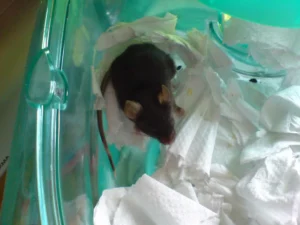
Some rats are very communicative with their tails. They’ll wag at the slightest annoyance or during any focused activity.
Other rats rarely wag their tails at all. They might show their feelings through other body language instead, like ear position or vocalizations.
Neither is better or worse, it’s just individual variation. Learning your specific rats’ tail language helps you understand them better.
Tail Wagging in Baby Rats vs Adults
Young rats often wag their tails during play much more than adult rats. It’s part of their developing motor skills and social communication.
Baby rats might wag their tails when they’re excited about food, when they’re playing with siblings, or when they’re exploring new things.
As rats mature, tail wagging tends to become more specific to certain situations like irritation or hunting focus rather than general excitement.
However, some rats keep their playful tail-wagging behavior into adulthood, especially if they maintain a generally playful, energetic personality.
The Neurological Control of Tail Movement
Rat tail movement is controlled by muscles that run along the length of the tail, connected to nerves that go all the way back to the spinal cord and brain.
The tail can move in multiple directions (side to side, up and down, in circles) because of the complex muscle structure.
Tail wagging in response to emotions happens automatically, kind of like how humans might frown when they’re upset without consciously deciding to.
But rats also have voluntary control over their tails. They can decide to move their tail to help with balance or to position it in a certain way.
Tail Wagging as Temperature Regulation
This is less common, but rats sometimes move their tails to help regulate body temperature, similar to how they wiggle their ears.
Rat tails have blood vessels close to the surface. Moving the tail through the air can help dissipate heat when a rat is too warm.
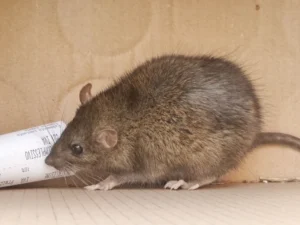
You probably won’t see rapid wagging for this purpose, more like slow repositioning or general tail movement to increase air circulation.
If your rat is too cold, they might wrap their tail around their body instead of wagging it. The tail helps conserve heat in this position.
What to Do When Your Rat Wags Their Tail at You
If you’re interacting with your rat and their tail starts wagging, pay attention to what you’re doing and how they’re reacting overall.
Check their body language. Are their ears back? Is their fur puffed up? Are they leaning away from you or trying to retreat?
If the tail wagging seems like irritation, stop what you’re doing and give your rat some space. Respect their communication.
If the tail wagging is accompanied by playful body language (bouncing, gentle nibbling, coming back for more), you might be seeing playful excitement rather than annoyance.
When in doubt, back off. It’s better to give your rat space they didn’t need than to push them into biting because you ignored their warning signals.
Tail Wagging in Multi-Rat Households
When you have multiple rats, you’ll see tail wagging during social interactions. Understanding what it means in these contexts helps you know if your rats are getting along.
If one rat is grooming another and the rat being groomed starts tail wagging, it might mean they’re done with the grooming and want the other rat to stop.
During feeding time, a dominant rat might wag their tail at subordinate rats who get too close to a favorite food. It’s a warning to back off.
Two rats meeting after being separated might show some tail wagging as they re-establish their relationship and figure out where they stand with each other.
The Difference Between Species
Different rodent species use their tails differently for communication. Understanding how rats compare to other animals is interesting.
Mice wag their tails too, but their tails are proportionally thinner and the movement is less noticeable than in rats.
Gerbils use their tails for balance while standing on their hind legs, but they don’t wag them for communication the same way rats do.
Squirrels (also rodents) use their bushy tails for balance, communication, and temperature control, but the specific signals are different from rat tail language.

Dogs wag their tails primarily to show positive emotions, which is almost opposite to how rats use the behavior.
Medical Issues That Affect Tail Movement
Sometimes changes in tail movement can signal health problems rather than just emotional communication.
If your rat’s tail suddenly goes limp and they can’t move it normally, that could indicate an injury or neurological problem. This needs vet attention.
Excessive tail wagging combined with other signs of distress (like breathing problems, lethargy, or loss of appetite) might mean your rat is in pain.
If one specific area of the tail seems sensitive and your rat wags their tail whenever that spot is touched, they might have an injury you can’t see.
Tail injuries are actually pretty common in rats, especially in multi-rat households where tails can get accidentally bitten or stepped on.
Tail Wagging and Hormonal Influence
Hormones, especially in unneutered male rats, can affect how much and how intensely they wag their tails.
Intact males tend to be more territorial and aggressive, which can lead to more frequent tail wagging during interactions with other rats or even with humans.
During breeding season or when exposed to female scents, male rats might show increased tail wagging as part of their heightened arousal and focus.
Neutering often reduces some of the more aggressive tail wagging in males, though it doesn’t eliminate the behavior entirely since it’s also used for non-aggressive communication.
Reading Context Clues
The key to understanding tail wagging is never looking at it in isolation. Always consider the full context:
What was happening right before the tail wagging started? Did you touch your rat in a certain spot, introduce something new, or interrupt something they were doing?
What is your rat’s overall body posture? Tense or relaxed? Leaning toward you or away?
What are their vocalizations? Is the tail wagging accompanied by any sounds like chattering, squeaking, or hissing?
What happens after the tail wagging? Does your rat calm down, escalate to more aggressive behavior, or just move away?
All these factors together tell you what the tail wag actually means in that specific moment.
Tail Wagging During Veterinary Visits
Many rats will wag their tails at the vet, which is unsurprising given that vet visits are stressful and often involve procedures rats don’t enjoy.
This tail wagging is clearly stress and irritation-related. Your rat is in an unfamiliar place, smelling unfamiliar smells, and being handled by a stranger.
Some rats will tail wag throughout the entire visit. Others might start off calm and only begin tail wagging when the actual examination starts.
Understanding that this is your rat’s way of saying “I don’t like this” can help you provide comfort through gentle words and familiar scents.
Training and Tail Wagging Responses
If you’re training your rat to do tricks or tasks, tail wagging can actually give you feedback about how they’re feeling about the training session.
A rat who starts tail wagging during training might be getting frustrated with a difficult task or tired of practicing.
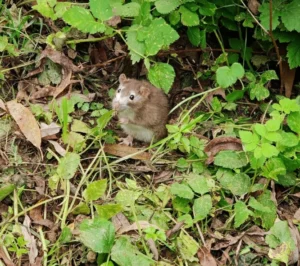
This is a good signal to take a break, offer an easy success, or end the session on a positive note.
Ignoring tail wagging during training can lead to your rat becoming more stressed and less willing to participate in future sessions.
The best trainers watch for these subtle communication signals and adjust their approach accordingly.
Tail Wagging and Age-Related Changes
As rats age, you might notice changes in how and when they wag their tails.
Older rats might wag their tails more readily because they have less patience or tolerance for things they don’t like. They’re set in their ways.
Alternatively, very old or sick rats might stop tail wagging as much because they have less energy overall for any kind of expressive behavior.
Joint problems or arthritis in the tail can make movement painful, which would reduce tail wagging even in situations that would normally trigger it.
Cultural Differences in Rat Groups
Interestingly, different groups of rats can develop slightly different “dialects” in their body language, including tail wagging.
Rats raised together from birth might use tail wagging slightly differently than rats who were raised separately and introduced later.
The baseline frequency of tail wagging can vary between groups too. Some rat colonies are generally more relaxed with less tail wagging, while others are more reactive.
This shows that while the basic instinct to wag tails is biological, the specific ways rats use this behavior can be influenced by social learning.
Tail Wagging in Relation to Other Communication
Rats have a whole toolkit of communication methods. Tail wagging is just one piece of the puzzle.
They also use vocalizations (both audible and ultrasonic), scent marking, ear position, body posture, and direct physical contact to communicate.
Tail wagging often happens in combination with these other signals. A rat might wag their tail while also chattering their teeth and pulling their ears back.
Learning to read all these signals together gives you a much more complete picture of what your rat is trying to tell you.
The Evolutionary Purpose of Tail Wagging
From an evolutionary perspective, tail wagging probably developed as a visual warning signal that could be seen from a distance.
In dim light (where rats often live), movement stands out more than static images. A wagging tail is easier to spot than just an aggressive posture.

This gave rats a way to communicate warnings to both predators and other rats without having to vocalize (which might attract additional unwanted attention).
The behavior was useful enough that it stuck around through thousands of generations of rat evolution.
Can You Train Away Tail Wagging?
Since tail wagging is often a stress or irritation response, you can reduce it by reducing the things that stress or annoy your rat.
If your rat always tail wags when you pick them up a certain way, try changing your handling technique to something they’re more comfortable with.
Positive reinforcement training can help build positive associations with things that currently cause tail wagging.
But you can’t (and shouldn’t try to) eliminate tail wagging entirely. It’s an important communication tool your rat needs to express their feelings.
Conclusion
Rats wag their tails for multiple reasons, and unlike dogs, it’s rarely a sign of pure happiness. Most commonly, tail wagging indicates irritation, stress, or focused concentration during hunting or stalking behavior.
Understanding what your rat’s tail wag means requires looking at the full context including body language, ear position, vocalizations, and the situation. The speed and intensity of the wagging also provide important clues.
By paying attention to your rat’s tail wagging and responding appropriately (usually by giving them space when they’re annoyed), you can build better communication and trust with your pet. Learning to read this important signal helps you meet your rat’s needs and keep interactions positive for both of you.

Hi, my name is Ezra Mushala, i have been interested animals all my life. I am the main author and editor here at snakeinformer.com.