
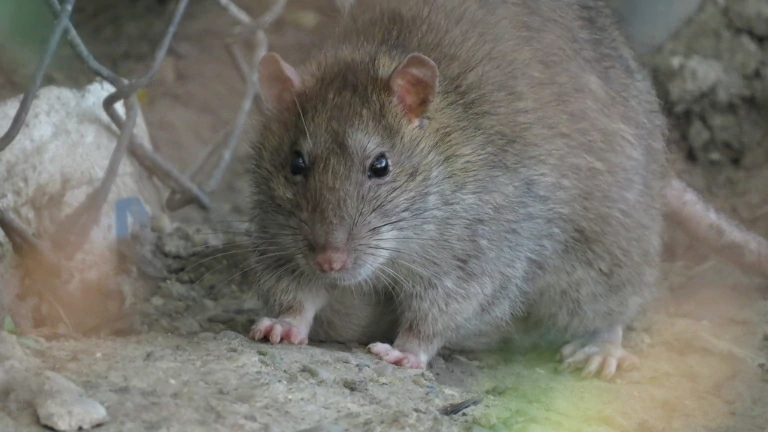
Death is never easy to watch, and seeing a rat twitch as it dies can be really upsetting.
Whether it’s a pet rat you’ve loved for years or a wild rat you’ve found, those final movements can be disturbing and confusing. So why do rats twitch when they die?
Rats twitch when they die because their nervous system is shutting down and sending random electrical signals to their muscles. This causes involuntary muscle contractions. The twitching can also be caused by the brain’s final bursts of activity, lack of oxygen, or the release of stored energy in the muscles.
These movements aren’t voluntary and the rat isn’t feeling pain during these twitches.
It’s just the body’s biological systems shutting down. Understanding what’s happening can make this difficult moment a bit easier to handle.
The Nervous System Shuts Down Chaotically
When a rat dies, its nervous system doesn’t just switch off cleanly like flipping a light switch.
Instead, it shuts down in stages, and during this process, the brain and nerves send out random electrical signals. These signals reach the muscles and cause them to contract.
Think of it like a machine that’s breaking down. As it falls apart, it might spark and jerk before it finally stops completely.
The rat’s body is doing something similar. The nerves are firing in an uncontrolled way because the systems that normally regulate them are failing.
These muscle contractions can look like twitching, jerking, or even paddling movements with the legs. Sometimes the whole body will convulse.
It’s important to know that these aren’t conscious movements. The rat isn’t trying to move or struggling at this point.
The brain activity that creates consciousness and feeling has already stopped or is in the process of stopping. What you’re seeing is just the mechanical result of nerve signals.
Lack of Oxygen Causes Muscle Spasms
As a rat dies, oxygen stops flowing to its muscles and brain.
When muscles don’t get enough oxygen, they can spasm and twitch. This happens because the chemical processes in muscle cells start to fail.
Muscles need oxygen to work properly and to relax. When oxygen is cut off, the muscles can’t complete their normal contraction and relaxation cycle.
They get stuck in a state where they’re contracting randomly. This creates visible twitching that can last for several seconds or even a minute or two.
The muscles that twitch most are usually the ones in the legs, face, and tail. These are areas where you’ll notice the movement most easily.
Sometimes the twitching is really subtle and you can barely see it. Other times, it’s more dramatic and the rat’s body might jerk pretty strongly.
The Brain’s Final Activity Creates Movement
Even after a rat’s heart stops beating, the brain can still have some electrical activity for a short time.
This residual brain activity can send signals down the spinal cord to the muscles. When this happens, you see twitching or movement.
Scientists call this “agonal” activity, which just means it’s happening during the dying process. It’s a normal part of death for many animals, not just rats.
The movements can sometimes look purposeful, but they’re not. The rat isn’t trying to do anything; it’s just electrical noise from a dying brain.
This is one of the hardest things to watch because the movements can make it look like the rat is still alive and suffering. But by this point, the rat is beyond awareness.
The parts of the brain that process pain and consciousness have already shut down. What’s left is just basic electrical activity that will stop soon.
Stored Energy in Muscles Gets Released
Muscles store energy in the form of a chemical called ATP (adenosine triphosphate).
When a rat dies, this stored energy doesn’t just disappear immediately. As the muscle cells break down, this energy gets released.
When ATP is released in an uncontrolled way, it can cause the muscle fibers to contract. This creates twitching movements.
It’s similar to what happens with rigor mortis (when a dead body gets stiff), but this happens in the first few minutes after death. Rigor mortis comes later.
The amount of twitching depends partly on how much energy was stored in the muscles. A young, healthy rat might twitch more than an old, sick rat.
This is because younger rats have more muscle mass and more stored energy. There’s simply more ATP to release.
Different Ways Rats Die Affect the Twitching
How a rat dies can change how much twitching you see and how long it lasts.
If a rat dies suddenly from something like a heart attack or severe injury, you might see more dramatic twitching. The systems shut down fast and chaotically.
If a rat dies slowly from old age or illness, the twitching might be much less obvious. The body has been shutting down gradually, so there’s less chaos in the final moments.
Rats that die from poison (like rat poison) can have really severe twitching and convulsions. Many poisons affect the nervous system directly.
This makes the dying process especially traumatic to watch. The poison is interfering with normal nerve function, which causes intense muscle spasms.
If a rat dies from lack of oxygen (like from carbon dioxide euthanasia), the twitching is usually minimal. The rat loses consciousness first, then the body shuts down more peacefully.
How Long Does the Twitching Last?
The twitching usually doesn’t last very long, but it can feel like forever when you’re watching it.
In most cases, the twitching will stop within 30 seconds to 2 minutes after the heart stops beating. Sometimes it’s even faster than that.
In rare cases, you might see very subtle twitching for up to 5 minutes. This is less common, but it can happen.
The timing depends on a lot of factors. The rat’s age, size, health, and how it died all play a role.
Once the twitching stops, you might still see the chest move slightly for a bit longer. This is leftover air escaping from the lungs, not breathing.
It’s just the passive movement of air as the body settles. This isn’t a sign that the rat is still alive.
This Happens to Other Animals Too
Rats aren’t the only animals that twitch when they die.
Almost all animals with nervous systems can show this behavior. Dogs, cats, birds, fish, and even insects can twitch as they die.
It’s a universal feature of how complex nervous systems shut down. The more complex the nervous system, the more likely you’ll see twitching.
Humans can twitch when they die too. Doctors and nurses see this in hospitals and they know it’s a normal part of the dying process.
Understanding that this is natural and happens across species can help you realize it’s not unusual or wrong. It’s just biology.
Seeing This in a Pet Rat Is Traumatic
If you’re watching a pet rat die, seeing them twitch can be incredibly upsetting.
You might worry that they’re in pain or suffering. You might feel like you should do something to stop it, but you can’t.
It’s important to know that the rat isn’t feeling this. By the time the twitching starts, consciousness is gone.
The rat doesn’t know what’s happening to its body. There’s no awareness, no fear, and no pain during these final muscle movements.
If your rat is being euthanized by a vet, the vet will usually give them an anesthetic first. This ensures the rat is completely unconscious before anything else happens.
Any twitching you see after that point is just the body’s automatic response. The rat’s mind is already gone; they’re not experiencing anything.
Knowing this doesn’t make it easy to watch, but it can give you some comfort. Your rat isn’t suffering during those final moments.
What to Do When You See a Rat Twitching
If you’re with a rat that’s dying and you see twitching, the kindest thing you can do is stay calm.
Your presence can be comforting even if the rat isn’t fully conscious anymore. Talk softly to them if it makes you feel better.

Don’t try to hold them down or stop the twitching. You can’t control it, and trying to restrain the rat won’t help.
If the rat is still conscious and showing signs of distress before the twitching starts, that’s different. At that point, you should get them to a vet immediately for humane euthanasia.
But once the twitching has started and the rat is clearly dying, the kindest thing is to let it happen. Stay with them, keep them warm, and wait for it to pass.
After the twitching stops and you’re sure the rat has passed, you can hold them if you want to say goodbye. Some people find this comforting.
Signs a Rat Is Actually Dead
Sometimes the twitching can make you think the rat is still alive when they’re not.
There are a few ways to check if a rat has actually died. Look at their eyes; if they’re open and not blinking, and the pupils are dilated and not responding to light, they’re gone.
Check for breathing. Put your ear close to their chest or watch their sides. If there’s no movement and no sound of breathing for several minutes, they’re not breathing.
Feel for a heartbeat. You can put your fingers on their chest, but rat heartbeats are really small and hard to find even when they’re alive.
A better method is to watch for any chest movement at all. If there’s been no movement for 3-5 minutes, the heart has stopped.
The body will also start to cool down pretty quickly after death. Rats have small bodies and they lose heat fast.
If the body feels noticeably cooler than normal (and you’re in a regular room temperature), that’s another sign. Within 10-15 minutes, a dead rat will feel cool to the touch.
Humane Euthanasia Reduces Twitching
If you need to euthanize a pet rat, having it done professionally at a vet can reduce the twitching you’ll see.
Vets use a two-step process for small animals like rats. First, they give the rat anesthetic gas to make them unconscious.
Once the rat is fully unconscious and can’t feel anything, they give a final injection that stops the heart. This is much more peaceful than letting a rat die naturally from illness.
The twitching with proper euthanasia is usually minimal because the rat’s nervous system is already sedated. There’s less chaotic nerve activity.
Some vets will let you be in the room during euthanasia, and some won’t. It’s a personal choice whether you want to be there.
If you do choose to be there, knowing about the twitching beforehand can prepare you. You’ll understand what you’re seeing and know that your rat isn’t in pain.
Wild Rats vs. Pet Rats
The twitching happens the same way whether it’s a wild rat or a pet rat.
The biology is identical. Both have the same nervous system, muscles, and brain structures that cause twitching during death.
However, you’re more likely to see this in a pet rat because you’re with them at the end. Wild rats usually die alone, hidden somewhere safe.
If you find a dying wild rat, the same principles apply. The twitching doesn’t mean they’re conscious or suffering at that point.
With wild rats, it’s usually best not to interfere unless you’re trained in wildlife rehabilitation. A dying wild rat can still bite out of fear or pain if they’re still conscious.
If you find a wild rat that’s clearly dying, you can contact a wildlife rehabilitator for advice. They can tell you whether to bring the rat in or let nature take its course.
Cultural Beliefs About Death Twitching
Different cultures have different beliefs about what it means when an animal (or person) twitches after death.
Some believe it’s the soul leaving the body. Others think it’s a sign the death wasn’t peaceful.
From a scientific standpoint, it’s just biology. There’s no spiritual or emotional meaning to the twitching itself.
But what you believe is personal. If it helps you to think of it in spiritual terms, that’s okay.
The important thing is understanding that the physical twitching is normal and doesn’t mean the animal is suffering. What you make of it beyond that is up to you.
Taking Care of Yourself After
Watching any animal die is hard, and it can stick with you for a while.
If the twitching really bothered you, it’s okay to talk to someone about it. Friends, family, or even online pet loss support groups can help.
Some people feel guilty, like they should have done something to prevent the twitching. But remember, you can’t prevent it; it’s automatic.
You didn’t fail your rat by not stopping the twitching. You were there for them, and that’s what mattered.
Give yourself time to grieve. Losing a pet rat can hurt just as much as losing any other pet.
The twitching is just one small part of the whole experience of loss. Try not to let that one moment overshadow all the good times you had with your rat.
Conclusion
Rats twitch when they die because their nervous system is shutting down and sending random signals to their muscles.
It’s caused by lack of oxygen, the brain’s final electrical activity, and the release of stored energy in the muscles. The twitching isn’t voluntary and doesn’t mean the rat is in pain.
Understanding this can make a really hard experience a little bit easier. If you’re with a rat at the end of their life, know that those final movements are just biology, not suffering.
Your presence and care in those final moments is what truly matters, even if the rat is beyond awareness.

Hi, my name is Ezra Mushala, i have been interested animals all my life. I am the main author and editor here at snakeinformer.com.