
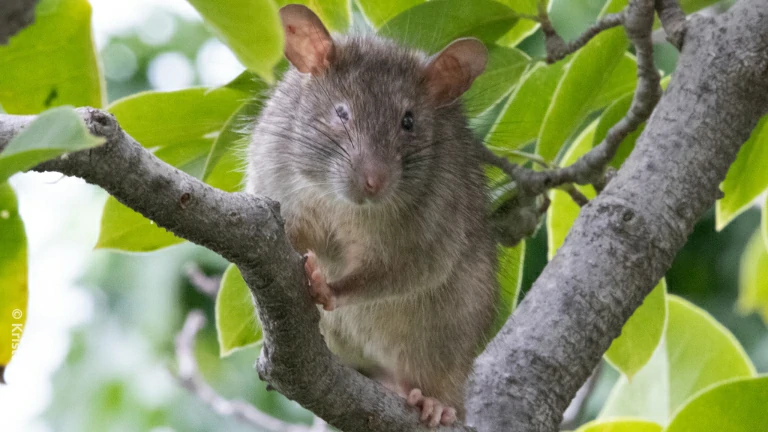
If you watch rats closely, you’ll notice their ears are almost never completely still.
They’re constantly twitching, moving, and rotating in different directions. Sometimes both ears move together, and sometimes they move independently. It’s one of those small behaviors that’s easy to miss, but once you notice it, you’ll see it all the time. So why do rats twitch their ears?
Rats twitch their ears to locate sounds and gather information about their environment. Each ear can move independently to pinpoint where a sound is coming from. This helps them detect predators, find food, and communicate with other rats. Ear twitching is a critical survival behavior that keeps rats aware of what’s happening around them.
This constant ear movement is completely normal and healthy.
A rat with still ears is actually more unusual than one with twitching ears. It means the rat is either deeply relaxed or possibly sick.
Rats Use Their Ears Like Radar Dishes
The main reason rats twitch their ears is to locate sounds more accurately.
Each ear can move independently and rotate to point in different directions. This lets rats pinpoint exactly where a sound is coming from.
When a rat hears something, their ears will swivel toward that sound. They’re basically aiming their ears at the noise source to hear it better.
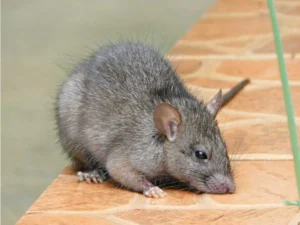
If the sound is behind them, the ears rotate backward. If it’s to the side, one ear points that way while the other might point somewhere else.
This independent ear movement gives rats an amazing ability to track multiple sounds at once. One ear can listen to something on the left while the other ear focuses on the right.
Humans can’t do this. Our ears are fixed in place, so we have to turn our whole head to focus on a sound.
Rats can keep their body still and just move their ears. This is really useful when they’re trying to stay hidden but need to know what’s going on around them.
Detecting Predators Is Critical
For rats, hearing a predator before it gets close can mean the difference between life and death.
Cats, owls, hawks, snakes, and even dogs all hunt rats. These predators are often really quiet, but they’re not completely silent.
By constantly moving their ears and scanning for sounds, rats can detect the tiniest noise that might signal danger. A slight rustle in the grass or the soft padding of paws can alert a rat.
The ear twitching isn’t random. Rats are actively listening for specific sounds that indicate threats.
When they hear something suspicious, the ears will focus on that direction and the rat will freeze or stand up (periscoping) to gather more information.
Pet rats still have this instinct even though they don’t have predators to worry about. If you drop something or make a sudden noise, watch their ears.
They’ll immediately swivel toward the sound to figure out what it was. It’s an automatic response that’s hardwired into them.
Rats Can Hear Frequencies Humans Can’t
Rats have a much wider range of hearing than humans do.
Humans can hear sounds from about 20 Hz to 20,000 Hz. Rats can hear from about 200 Hz all the way up to 90,000 Hz.
That means rats can hear ultrasonic sounds (frequencies above 20,000 Hz) that are completely silent to us. These high-frequency sounds are really important for rat communication.
Baby rats make ultrasonic calls when they’re separated from their mother or when they’re cold or hungry. The mother rat can hear these calls and respond.
Adult rats also use ultrasonic vocalizations to communicate with each other. These include sounds made during play, mating, and social interactions.
The constant ear twitching helps rats pick up these ultrasonic sounds from other rats. They’re listening to conversations we can’t even hear.
This is another reason why rats seem to react to things that we don’t notice. They’re hearing stuff that’s beyond our range.
Ear Position Shows Emotion and Intent
The position and movement of a rat’s ears can tell you a lot about how they’re feeling.
When a rat is relaxed and happy, their ears are usually in a neutral position, gently twitching as they casually listen to their environment.
When a rat is alert or curious, the ears perk up and point forward. They’re focused on something that has their attention.
You’ll see this when you’re offering a treat or doing something interesting near their cage. The ears point right at you because you’re the focus of their attention.
Scared or defensive rats often pull their ears back against their head. This makes them look sleeker and smaller.
It’s a defensive posture that rats use when they feel threatened. Combined with other body language (like crouching or chattering teeth), it clearly signals fear or aggression.
Angry rats might have ears that are forward but also tensed. The twitching becomes more rapid and focused.
If you’re familiar with your rat’s normal ear behavior, you’ll start to recognize these subtle differences. It becomes another way to understand what your rat is feeling.
Temperature Regulation Through Ears
Rats use their ears for temperature control, similar to how they use their tail.
Rat ears are thin and have a lot of blood vessels running through them. When a rat is too hot, blood flows to the ears.
The blood releases heat through the thin skin of the ear, helping to cool the rat down. The ears might look pinker or redder when this is happening.

The ear twitching can actually help with this cooling process. Moving the ears creates tiny air currents around them.
These air currents help carry heat away from the ear surface more efficiently. It’s like having a built-in fan.
When a rat is cold, blood flow to the ears reduces. The ears might look paler and feel cool to the touch.
Less twitching might also happen when a rat is trying to conserve heat, though this is less noticeable than the temperature-related changes in tail behavior.
Investigating New Environments
When rats are in a new place, you’ll see their ears moving almost constantly.
They’re gathering as much auditory information as possible about this unfamiliar environment. Every sound is being processed and categorized.
Is that a threatening sound? A neutral sound? Something worth investigating? The rat is trying to build a mental map of the area using their ears.
You’ll notice this a lot when you first bring a pet rat home or move them to a new cage. Their ears will be working overtime.
They’re learning the normal sounds of their new environment. The hum of electronics, footsteps from upstairs, voices, other pets; everything is new and needs to be assessed.
After a few days, the constant intense ear twitching usually calms down. The rat has learned what the normal sounds are and they’re less vigilant.
But they’ll still twitch their ears regularly. They’re just not as focused on every single sound anymore.
Social Communication and Ear Movement
Rats are social animals and they pay attention to each other’s ears.
When rats interact, they watch each other’s body language, and ear position is part of that. Ears pointed forward during play means the rat is engaged and having fun.

Ears pulled back might signal that the play is getting too rough or that the rat wants to stop. Other rats can read these signals and adjust their behavior.
During grooming sessions (called allogrooming), rats will often twitch their ears as they’re being groomed. This seems to be a response to the sensation.
When one rat grooms another rat’s face and head, the rat being groomed will often move their ears to give better access to different areas.
Mother rats pay close attention to the ultrasonic calls and ear movements of their babies. If a baby’s ears are pulled back and they’re calling, the mother knows something is wrong.
This communication system helps keep the whole group coordinated and safe. Ears are just one part of it, but they’re an important part.
Ear Twitching and Overall Health
The amount and pattern of ear twitching can actually tell you about a rat’s health.
A healthy rat’s ears should move frequently and smoothly. The movements should look natural and effortless.
If a rat suddenly stops moving their ears much, or if the ears seem stiff or awkward, it could signal a health problem. Ear infections can affect ear movement.
Neurological problems can also change how ears move. If one ear moves normally but the other doesn’t, that’s a red flag.
This could indicate a stroke, head injury, or infection affecting one side of the brain. It needs immediate veterinary attention.
Respiratory infections can sometimes affect ear movement too. If a rat is having trouble breathing, they might keep their ears in one position more than usual.
This is because they’re focused on breathing and not as alert to their environment. It’s one of many signs that something is wrong.
If your rat’s ear movement changes suddenly or gradually decreases, it’s worth getting them checked by a vet. It’s often one of the first subtle signs that something isn’t right.
The Physical Mechanics of Ear Movement
Rats have really complex ear muscles that allow all this movement.
There are several different muscles attached to each ear that can pull it in different directions. These muscles work together to create precise movements.
The ear itself is made of cartilage covered by thin skin. This makes it light and easy to move while still being sturdy enough to hold its shape.

The ears attach to the skull in a way that allows a wide range of motion. They can rotate almost 360 degrees if needed.
This flexibility is way beyond what humans have. Our ear muscles have mostly atrophied because we don’t use them.
Some people can wiggle their ears a tiny bit, but it’s nothing compared to what rats can do. For rats, ear movement is a critical survival skill.
The nerves in the ears are also highly developed. Rats can feel when something touches their ear, and they can sense air movement around the ear.
All of this sensory information combines with the hearing information to give rats a complete picture of their auditory environment.
Ear Twitching During Sleep
Even when rats sleep, their ears often keep twitching.
This is because rats don’t sleep deeply for long periods like humans do. They take lots of short naps throughout the day and night.
During these naps, rats stay somewhat alert. Their ears continue to move and monitor the environment even while they’re resting.
This makes sense from a survival standpoint. A sleeping rat with still ears would be incredibly vulnerable to predators.
By keeping their ears active even during sleep, rats can wake up instantly if they hear danger approaching. It’s like having a security system that never shuts off.
You might notice that your pet rat’s ears twitch less during sleep than when they’re awake, but they rarely stop completely.
When rats are in deep REM sleep (which is rare and brief), the ear twitching might stop for a minute or two. But as soon as they shift to lighter sleep, the ears start moving again.
Ear Size and Twitching Differences
Different types of rats have slightly different ears, and this can affect how much they twitch.
Standard fancy rats have relatively large ears that stand upright. These ears are very mobile and twitch a lot.
Dumbo rats have ears that are set lower on the head and stick out to the sides. These ears can still move independently, but the movement looks different.
Because dumbo ears are positioned differently, they move in slightly different patterns. They can’t rotate quite as much as standard ears.
But they’re still fully functional for hearing and sound location. Dumbo rats are just as good at using their ears to detect things as standard rats.
Hairless rats (like Sphinx rats) have ears that are more visible because there’s no fur to hide them. You can really see the ear twitching clearly on these rats.
The mechanics are the same across all varieties though. Whether the rat has standard ears, dumbo ears, or is hairless, the basic ear twitching behavior is identical.
Wild Rats vs. Pet Rats
Wild rats and pet rats twitch their ears for the same reasons and in the same ways.
The main difference is that wild rats are generally more vigilant. Their ears move more intensely and more constantly because they have real threats to watch for.
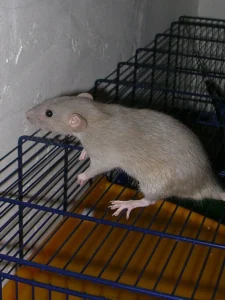
A wild rat’s ears are always working. They can’t afford to relax completely because danger could come from anywhere at any time.
Pet rats in safe, comfortable homes can afford to be more relaxed. Their ears still twitch, but the intensity is usually lower.
They’ve learned that their environment is safe and they don’t need to be on high alert all the time. But the instinct is still there.
If you take a pet rat outside or introduce them to a new, less controlled environment, you’ll see their ear twitching intensity increase.
They’re back in a situation where they need to be more aware, and their ears reflect that. It’s fascinating to watch the difference.
Can You Tell What a Rat Is Hearing?
Sometimes you can figure out what a rat is hearing by watching their ears.
If both ears suddenly swivel to point at your kitchen and the rat becomes very alert, they probably heard you opening a treat bag.
Rats learn to associate certain sounds with positive things (like treats) or negative things (like going to the vet). Their ears will react to these learned sounds.
If your rat’s ears are constantly moving in random directions, they’re probably just monitoring the general environment. Nothing specific has caught their attention.
When ears lock onto one direction and stay there, that’s when the rat has detected something specific that they’re focusing on.
You might not hear what they hear, especially if it’s in the ultrasonic range. But you can tell that something has their full attention.
Conclusion
Rats twitch their ears to locate sounds and gather information about their environment.
Each ear can move independently to pinpoint where sounds are coming from, which is critical for detecting predators and finding food. The constant ear movement is completely normal and shows the rat is alert and healthy.
Understanding ear twitching helps you read your rat’s body language better and appreciate how differently they experience the world. Those constantly moving ears are doing serious work, even when it looks like they’re just being cute.

Hi, my name is Ezra Mushala, i have been interested animals all my life. I am the main author and editor here at snakeinformer.com.