
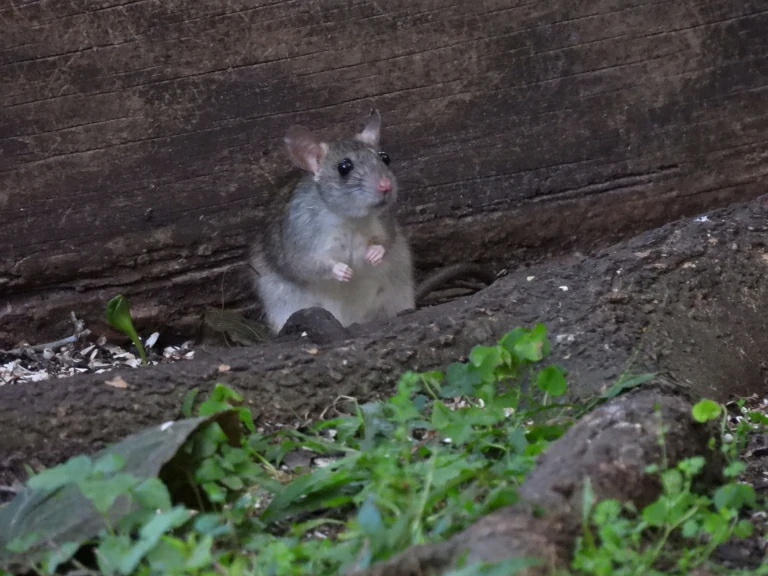
If you’ve ever watched rats, you’ve probably noticed they stand up on their back legs pretty often.
They look almost like tiny kangaroos or prairie dogs when they do it. It’s actually kind of cute, but there’s a lot more going on than just looking adorable. So why do rats stand on their hind legs?
Rats stand on their hind legs to get a better view of their surroundings and check for danger. This behavior is called “periscoping.” They also stand up to reach food, investigate new things, and communicate with other rats. It’s one of their most important survival behaviors.
When a rat stands up, it’s basically trying to see what’s going on around it.
Rats are pretty small animals, and their view from ground level is really limited. Standing up gives them a huge advantage.
Periscoping Helps Rats Spot Danger
The most common reason rats stand on their hind legs is to look for threats.
In the wild, rats have a lot of predators. Cats, dogs, owls, hawks, snakes, and even larger rats all want to eat them.
When a rat stands up, it can see much farther and spot these dangers before they get too close. This gives the rat time to run and hide.

You’ll see this behavior a lot when rats are in a new place. They’ll stand up, look around, sniff the air, and try to figure out if it’s safe.
Even pet rats do this all the time. It’s instinct from thousands of years of trying not to get eaten.
The term “periscoping” comes from the way rats look when they do this. They stretch their bodies up as tall as they can, just like a submarine periscope coming out of the water.
Their head moves from side to side as they scan the area. They’re taking in everything they can see, hear, and smell.
Standing Up Gives Rats Better Sensory Information
When rats stand on their hind legs, they’re not just using their eyes.
Their whiskers, ears, and nose are all getting better information from up high. Rats actually rely on their sense of smell and hearing more than their vision.
By getting their nose higher off the ground, they can smell things that are farther away. Air currents carry scents better at higher levels.
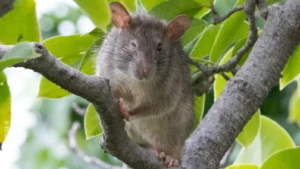
This helps them find food, detect predators, and even locate other rats. Smell is one of the most important senses for rats.
Their ears also work better when they’re standing up. Rats can move their ears independently and point them in different directions.
When they’re standing tall, sounds don’t get blocked as much by things on the ground. They can hear what’s happening around them more clearly.
Their whiskers also play a role. Rats use their whiskers to sense air movement and feel objects around them.
When they stand up and move their head around, their whiskers are touching and sensing things in a larger area. It’s like they’re mapping out the space around them.
Rats Stand Up to Reach Things
Another really common reason rats stand on their hind legs is to reach stuff.
If there’s food on a shelf, a table, or somewhere above them, they’ll stand up to try to get it. They can stretch pretty far when they’re on their back legs.
Pet rats do this constantly. If you’re holding a treat, your rat will stand up and reach for it.
They’ll even put their front paws on your hand or arm to steady themselves while they grab the food. It’s one of the cutest things rats do.
In the wild, rats stand up to reach seeds, fruits, or other food sources that are higher up. They’re really good climbers, but sometimes standing up is easier than climbing.
They can also use this position to pull things down toward them. If there’s something they want but can’t quite reach, they’ll stand up and use their front paws to grab it.
Rats are surprisingly strong for their size. They can pull down items that are pretty heavy compared to their body weight.
Standing Shows Curiosity and Investigation
Rats are naturally curious animals, and standing on their hind legs is part of how they explore.
When they encounter something new, they’ll stand up to get a better look at it. They want to figure out what it is and whether it’s dangerous, edible, or useful.
You’ll see this a lot with pet rats. If you put a new toy in their cage or rearrange things, they’ll immediately stand up to check it out.
They’ll sniff it, look at it from different angles, and sometimes even reach out and touch it with their front paws. It’s their way of learning about their environment.
Wild rats do the same thing. If there’s a new object in their territory (like a trap or bait station), they’ll stand up to investigate it from a safe distance first.
This cautious behavior actually makes rats really hard to trap. They don’t just rush in and grab bait. They check it out carefully first.
This investigative behavior is one reason rats are so good at surviving in all kinds of environments. They learn fast and adapt to new situations.
Social Communication Through Standing
Rats also stand on their hind legs to communicate with each other.
When two rats meet, especially if they don’t know each other well, they might both stand up. This is part of their social interaction.
They’re sizing each other up, figuring out who’s bigger and potentially more dominant. It’s not always aggressive, but it’s definitely a way of establishing social rank.

In some cases, one rat will stand up really tall to look more intimidating. This can happen before a fight or when a rat is defending its territory.
The rat that can stand taller and look bigger has an advantage. Sometimes the other rat will back down without any actual fighting.
Pet rats also stand up when they’re playing with each other. You might see them “boxing” where they both stand on their hind legs and push at each other with their front paws.
This looks aggressive, but it’s usually just play. They’re practicing the same behaviors they’d use in a real fight, but in a fun, safe way.
Mother rats will stand up when interacting with their babies too. It helps them see all the pups at once and make sure everyone is okay.
How Long Can Rats Stand on Their Hind Legs?
Rats are actually pretty good at balancing on their back legs.
They can stay up for several seconds at a time, and some rats can even walk short distances on just their hind legs. It depends on how strong and balanced the individual rat is.
Young, healthy rats are better at this than older rats. Just like with people, age can affect balance and strength.
Pet rats that are well-fed and get plenty of exercise tend to be better at standing and balancing. Wild rats might be even better because they use these skills constantly for survival.
Some rats can stand up and eat at the same time. They’ll hold food in their front paws and munch away while balanced on their back legs.
This is actually really impressive when you think about it. They’re balancing, holding food, and eating all at once.
If a rat feels unsteady, it’ll drop back down to all fours right away. They’re not going to risk falling just to stay standing.
The Physical Ability to Stand Upright
Rats are built in a way that makes standing on their hind legs pretty natural for them.
Their back legs are strong and muscular compared to the rest of their body. This gives them the power they need to lift themselves up and hold the position.
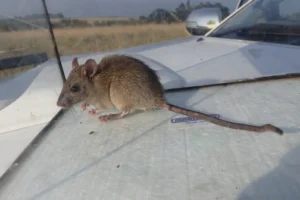
Their tail also plays a big role in balance. When a rat stands up, its tail acts like a counterweight.
You’ll notice the tail often curves or shifts position to help the rat stay balanced. Without their tail, rats would have a much harder time standing upright.
Their spine is also really flexible, which helps them adjust their posture while standing. They can lean forward or back to maintain balance.
The way their hind feet are shaped helps too. Rats have relatively long hind feet with good grip, which gives them a stable base when they stand.
All of these physical features work together to make standing up a natural and easy behavior for rats. It’s not something they have to learn; they’re born knowing how to do it.
When Rats Stand Up More Often
There are certain situations where you’ll see rats standing on their hind legs more frequently.
In new environments, they’ll stand up constantly. Every few seconds, they’ll pop up to check if everything is still safe.
This is really obvious if you put a rat in a new cage or let it explore a new room. They’ll be up and down, up and down, checking everything out.
When there are loud noises or sudden movements, rats will immediately stand up to see what’s happening. It’s an automatic response to potential danger.
If you have pet rats and you drop something or make a loud sound, watch them. They’ll all stand up at the same time to figure out what that noise was.
During feeding time, rats stand up more because they’re reaching for food and checking to see if more food is coming. Pet rats learn that standing up often gets them treats from their owners.
At night, wild rats stand up more often because that’s when they’re most active. They’re hunting for food and exploring, so they need to check their surroundings frequently.
What It Means for Pet Rat Owners
If you have pet rats, seeing them stand on their hind legs is totally normal and healthy.
It means they’re alert, curious, and engaged with their environment. A rat that never stands up might actually be sick or depressed.
You can encourage this natural behavior by giving your rats interesting things to explore. New toys, boxes, and safe objects will get them standing up to investigate.
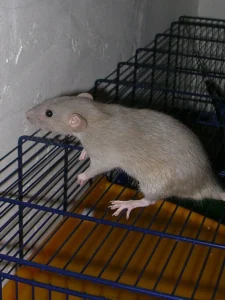
Holding treats up high is another way to encourage standing. Just don’t make them work too hard for their food; it should be fun, not frustrating.
If your rat suddenly stops standing up as much as it used to, it could be a sign of a health problem. Older rats with arthritis might have trouble standing.
Rats with respiratory issues might not want to stand up because it’s harder to breathe in that position. If you notice this change, it’s worth checking with a vet.
Standing Behavior in Different Rat Species
While most people are familiar with the common brown rat (also called the Norway rat), there are actually many species of rats.
All of them stand on their hind legs, but some do it more than others. It depends on their natural environment and what they evolved to do.
Rats that live in areas with lots of predators tend to stand up more often. They need to be extra vigilant to survive.
Rats that live in trees or elevated areas might stand up less because they already have a good view from where they are. They don’t need to add extra height.
The black rat (also called the roof rat) is a good example. These rats spend a lot of time in trees and high places.
They still stand on their hind legs, but not as much as Norway rats that spend more time on the ground. Their environment is different, so their behavior adapted.
Pet rats are usually descended from brown rats, so they have all the same standing behaviors. Even though they don’t have predators to worry about, the instinct is still there.
Standing vs. Other Rat Postures
Standing on hind legs is just one of many postures rats use.
When they’re relaxed and feel safe, they’ll often lie flat on their stomach or side. This is called “splooting” and it’s a sign that the rat feels comfortable and isn’t worried about danger.
If a rat is scared, it might crouch down low and freeze. This is the opposite of standing up; they’re trying to make themselves small and invisible.
When rats are grooming themselves, they often sit back on their haunches (kind of half-standing) and use their front paws to clean their face and ears. This is different from full periscoping.
Aggressive rats might arch their back and puff up their fur to look bigger. They might combine this with standing on their hind legs to look even more threatening.
Each of these postures tells you something about what the rat is feeling and what it’s trying to do. Learning to read rat body language helps you understand them better.
Conclusion
Rats stand on their hind legs mainly to see what’s around them and stay safe from predators.
It’s called periscoping, and it’s one of their most important survival behaviors. They also stand up to reach food, investigate new things, and communicate with other rats.
This behavior is completely natural and you’ll see it in both wild and pet rats. If you have pet rats and they’re standing up often, it’s a good sign that they’re healthy, alert, and curious about their world.
Understanding why rats do this helps us appreciate how smart and adaptable these little animals really are.

Hi, my name is Ezra Mushala, i have been interested animals all my life. I am the main author and editor here at snakeinformer.com.