

If you’ve ever seen a rat dash across a room or sprint along a wall, you know just how fast these little animals can move. One second they’re there, the next they’re gone in a blur of fur.
Rats can reach speeds that seem impossible for such small animals, and they can go from standing still to full sprint in an instant. Why do rats run so fast?
Rats run fast because they’re prey animals that evolved to escape predators through speed and agility. Their body structure, muscle composition, powerful hind legs, and lightweight build all work together to create incredible acceleration and top speeds of up to 8 miles per hour. Speed is their main defense against being eaten.
For a rat, being fast isn’t just impressive, it’s the difference between life and death. Predators are everywhere, and the only way a rat survives is by being faster than whatever’s trying to catch it.
Everything about a rat’s body is built for explosive speed and quick escapes.
How Rats Are Built for Speed
Rats have a body structure that’s perfectly designed for running fast. Every part of their anatomy contributes to their speed.
Their bodies are long and streamlined with a low center of gravity. This shape reduces air resistance and makes it easier to dart through tight spaces at high speed. They can slip through gaps and race along narrow paths without slowing down.

Rats have incredibly powerful hind legs compared to their body size. These legs provide the main thrust when running. The muscles in the back legs are dense and strong, capable of generating a lot of force very quickly.
Their front legs are lighter and more flexible. While the back legs push, the front legs steer and help maintain balance. This division of labor makes rats incredibly agile while running at top speed.
The rat’s spine is extremely flexible. It can arch and flex dramatically, which extends the rat’s stride length. With each step, the spine curves and straightens, adding extra distance to every bound.
Their tail acts as a counterbalance and rudder. When a rat makes sharp turns at high speed, the tail swings to the opposite side to maintain balance. Without their tail, rats would be much slower and clumsier.
Lightweight bones keep the rat’s overall weight down. Rat bones are thin but strong, providing structure without adding unnecessary mass. Less weight means less energy needed to accelerate.
The Muscle Composition That Powers Speed
The type of muscle fibers rats have plays a huge role in their running ability.
Rats have a high proportion of fast-twitch muscle fibers. These fibers contract quickly and powerfully but tire out faster than slow-twitch fibers. They’re perfect for short bursts of maximum speed.
Fast-twitch muscles give rats explosive acceleration. They can go from zero to their top speed in just a fraction of a second. This instant acceleration is critical for escaping sudden threats.

The muscles in a rat’s hind legs are packed with these fast-twitch fibers. When a rat runs, these muscles fire rapidly, creating a powerful pumping motion that drives the rat forward.
Rats also have good muscle endurance for their size. While they specialize in sprints, they can maintain a decent running pace for several minutes if they need to. This comes from a mix of fast-twitch and slow-twitch fibers working together.
Their small size relative to muscle mass creates a great power-to-weight ratio. Rats aren’t just fast for small animals; they’re fast period. Pound for pound, their muscles generate impressive force.
Why Being Prey Makes Rats Fast
Rats are prey animals that face constant threats from predators. Being fast isn’t optional; it’s required for survival.
In the wild, rats are hunted by cats, dogs, foxes, weasels, snakes, hawks, owls, and many other predators. These predators are all bigger and stronger than rats, so fighting back isn’t an option. Running away is the only defense.
Predators evolved to be fast hunters, so prey had to evolve to be even faster. It’s an evolutionary arms race, and rats are on the running-away side. Over millions of years, the fastest rats survived and passed on their genes.

Every rat you see today is descended from rats that were fast enough to escape predators. The slow rats got eaten and didn’t reproduce. Natural selection has fine-tuned rats for maximum speed.
Even a fraction of a second can make the difference between life and death. A rat that reacts and runs just a tiny bit faster than another rat has a better chance of surviving a predator attack.
This constant pressure means speed is always being selected for. Rats can never afford to be slow because predators are always getting better at catching them.
How Fast Can Rats Actually Run?
Different sources give slightly different numbers, but rats are consistently fast regardless of the exact measurement.
Most experts agree rats can run between 6 to 8 miles per hour at top speed. That might not sound like much compared to a car or even a human sprinter, but it’s incredibly fast for an animal that only weighs about a pound.
To put that in perspective, 8 miles per hour means a rat covers about 12 feet per second. In a typical room, a rat can cross from one wall to another in less than two seconds.
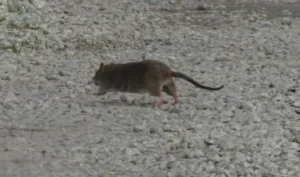
Young, healthy rats tend to be faster than older or sick rats. A prime adult rat in good condition will hit the higher end of the speed range, while an elderly or unhealthy rat might be noticeably slower.
Rats can maintain near-top speed for short distances of 50 to 100 feet. After that, they start to slow down as their fast-twitch muscles fatigue. But for quick escapes, this distance is more than enough.
In comparison to other rodents, rats are among the faster species. Mice are slightly slower, while squirrels can match or beat rats. But rats are definitely in the upper tier of rodent speed.
The Role of Adrenaline in Rat Speed
When a rat is scared or threatened, its body releases adrenaline, which temporarily boosts its speed even further.
Adrenaline increases heart rate and blood flow to muscles. This delivers more oxygen and nutrients to the muscles, allowing them to work harder and faster than normal.
It also triggers the fight-or-flight response. For rats, it’s almost always flight. The adrenaline surge prepares the body for maximum running performance within seconds.
Under adrenaline, rats can push beyond their normal top speed for very short bursts. You might see a rat move so fast it’s almost a blur when it’s genuinely terrified. This is adrenaline giving it that extra boost.
The boost doesn’t last long, maybe 30 seconds to a minute at most. After the adrenaline wears off, the rat will be tired and need to rest. But in that critical moment of danger, it provides the speed needed to escape.
This is why rats that are cornered or suddenly surprised seem to move faster than rats that are just casually exploring. The fear response literally makes them faster.
How Terrain Affects Rat Speed
Rats don’t run at the same speed on all surfaces. The terrain makes a big difference in how fast they can move.
Smooth, flat surfaces allow for maximum speed. Hardwood floors, concrete, and tile give rats good traction without obstacles. On these surfaces, rats can hit their top speeds easily.
Rough or uneven terrain slows rats down slightly. Gravel, dirt, or surfaces with lots of texture create more resistance and make it harder to maintain balance at high speed.

Running uphill obviously slows rats down. Their powerful hind legs help, but gravity still works against them. They’ll be noticeably slower going up stairs or ramps compared to running on flat ground.
Downhill, rats can actually move faster than on flat ground. Gravity helps them accelerate, and they use their tail and low center of gravity to maintain control while going downhill at high speed.
Wet surfaces reduce traction and slow rats down. They’re more cautious on wet floors because slipping at high speed could result in injury. You’ll see rats move more carefully when surfaces are damp.
Inside walls and tight spaces, rats can still move fast but not at their absolute top speed. The confined space limits their stride length and ability to make long bounds.
Why Rats Need Quick Reflexes Too
Speed alone isn’t enough. Rats also have incredibly quick reflexes that work with their speed to keep them safe.
Rats can react to threats in milliseconds. Their nervous system processes danger signals extremely fast, allowing them to start running almost instantly when they sense a threat.
The combination of fast reflexes and fast running makes rats very hard to catch. By the time you see a rat and react, it’s already moving. By the time you could grab it, it’s gone.
Quick direction changes are just as important as straight-line speed. Rats can pivot and change direction while running at full speed without slowing down much. This lets them dodge around obstacles and evade pursuers.
Their whiskers help with reflexes by detecting obstacles before the rat even touches them. This gives the rat advance warning to adjust its path without breaking stride.
The ability to go from full speed to complete stop is also important. Rats can brake suddenly when they reach safety, using their tail and low center of gravity to avoid tumbling or overshooting their hiding spot.
How Running Speed Changes with Age
Like most animals, rats get slower as they age. Understanding this helps explain some rat behaviors.
Baby rats are not very fast when they first start moving around. They’re clumsy and uncoordinated, and their muscles haven’t fully developed yet. They stay close to the nest because they can’t run away from danger effectively.

Young adult rats between three months and one year old are the fastest. This is when they’re at peak physical condition with fully developed muscles, good health, and lots of energy.
As rats reach middle age (around one and a half years), they start slowing down slightly. The decline isn’t dramatic at first, but it’s noticeable compared to younger rats.
Elderly rats (two years and older) are noticeably slower. Their muscles weaken, their joints might have arthritis, and they just don’t have the same explosive power they once did.
Injured or sick rats of any age will be slower. A rat with an injured leg, respiratory infection, or other health problem can’t run at full speed even if it’s otherwise young and healthy.
This age-related speed decline affects survival in the wild. Older rats face higher predation rates because they can’t escape as easily. In homes, older rats might be easier to catch in traps.
Why Rats Can Outrun Many Predators
Despite being prey animals, rats can actually outrun some of the things that hunt them.
Rats can outrun many humans, at least in short sprints. An average person running at full speed might hit 12-15 mph, but by the time they accelerate, the rat has already reached safety.
Some dog breeds aren’t fast enough to catch rats. Large, heavy dogs or breeds not bred for speed often can’t match a rat’s quickness, especially in tight spaces where the rat has the advantage.
Rats are much more agile than bigger predators. They can dart under furniture, into holes, and around corners that larger animals can’t navigate at speed. This agility combined with speed is a powerful defense.

However, cats are generally faster than rats and more agile too. This is why cats are such effective rat hunters. They can match the rat’s speed and agility, making them one of the rat’s most dangerous predators.
Weasels and stoats are even more dangerous because they’re fast AND can follow rats into tight spaces. These predators have evolved specifically to hunt rodents and can match them move for move.
Birds of prey like hawks and owls don’t chase rats; they dive and grab them. Speed doesn’t help against an aerial attack that’s over in seconds.
How Speed Helps Rats Find Food
Speed isn’t just for escaping predators. Rats also use their running ability to forage more effectively.
Fast movement allows rats to cover more ground while foraging. They can search larger areas in less time, increasing their chances of finding food.
When rats find a food source in an exposed location, speed lets them grab food and get back to safety quickly. The less time they spend exposed, the lower their risk of being attacked.
Rats can make multiple quick trips to move food from where they find it to their nest. They’ll grab a piece of food, run to their nest, drop it off, and run back for more. Speed makes this process efficient.
In competitive situations with other rats, the fastest rats get first access to food. Dominant rats might be bigger, but fast subordinate rats can dart in, grab food, and escape before the dominant rat can react.
Speed also helps rats escape if they encounter danger while foraging. If a cat appears while a rat is eating, the rat’s ability to sprint away immediately could save its life.
Why City Rats Seem Faster Than Country Rats
People often say city rats seem faster and more aggressive than rural rats. There’s actually some truth to this.
City rats face more constant threats. Cars, people, dogs, and constant activity mean urban rats need to be fast just to survive daily life. This creates strong selection pressure for speed.

Urban environments have more hard, smooth surfaces that are ideal for running. Concrete sidewalks, building floors, and paved areas let rats reach their maximum speed more easily than soft dirt or grass.
City rats often have better nutrition from garbage and human food waste. Better-fed rats have more energy and stronger muscles, which can translate to faster running speeds.
The rats you see in cities are also the boldest, fastest ones. Slower, more cautious rats stay hidden and you never see them. The rats you encounter are the ones confident enough in their speed to be active in exposed areas.
Country rats still need to be fast, but they face different pressures. They have more places to hide and often more space to maneuver, so pure speed might be slightly less critical than in cramped urban environments.
Conclusion
Rats run fast because millions of years of evolution shaped them to escape predators through speed and agility. Their streamlined body, powerful hind legs, flexible spine, fast-twitch muscles, and lightweight build all work together to create impressive acceleration and top speeds up to 8 miles per hour.
For prey animals like rats, speed is the primary defense that keeps them alive. Every part of a rat’s anatomy and physiology is optimized for explosive sprints and quick escapes.
Their ability to go from zero to full speed instantly, combined with excellent agility and quick reflexes, makes rats incredibly hard to catch even for experienced predators.
Understanding why rats are so fast helps explain their behavior and why they’re so successful as a species. Speed isn’t just one of their traits; it’s the foundation of their survival strategy.

Hi, my name is Ezra Mushala, i have been interested animals all my life. I am the main author and editor here at snakeinformer.com.