
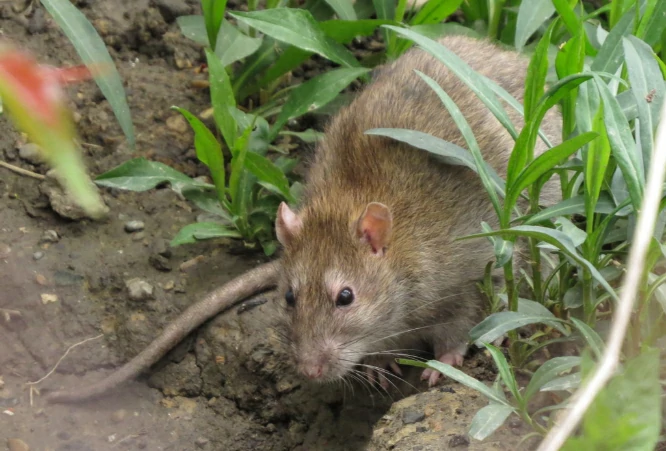
If you think rats and mice are basically the same animal just in different sizes, you might be surprised to learn that rats will actually hunt, kill, and eat mice.
These two rodents might look similar and even live in the same environments, but they’re not friends. In fact, rats are one of the biggest threats mice face in urban and wild settings. Why do rats kill and eat mice?
Rats kill and eat mice because they’re opportunistic predators that will consume any protein source they can catch. Mice provide an easy, nutritious meal that’s high in protein and fats. Rats are bigger, stronger, and more aggressive than mice, which makes mice vulnerable prey when the two species cross paths.
While rats are often thought of as scavengers that eat garbage and leftovers, they’re actually omnivores with strong predatory instincts.
When a rat comes across a mouse, it sees food, not a relative or neighbor. This predator-prey relationship between rats and mice is common in nature and has important effects on where these rodents live and how they behave.
The Size and Strength Advantage Rats Have
One of the main reasons rats can successfully hunt mice is simple biology. Rats are significantly larger and stronger than mice.
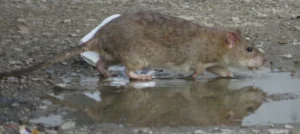
An adult rat typically weighs between 200 to 500 grams (7 to 18 ounces), while an adult mouse usually weighs only 20 to 40 grams (less than 2 ounces). This means a rat can be 10 to 25 times heavier than a mouse.
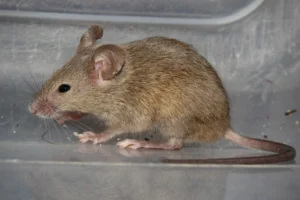
This size difference translates to a major physical advantage. Rats have bigger teeth, stronger jaws, more powerful muscles, and longer claws. In a confrontation, a mouse doesn’t stand much of a chance against an adult rat.
Rats are also more aggressive by nature. They’re territorial and will defend their space from intruders, including mice.
Even if a rat isn’t actively hunting for food, it might kill a mouse simply for entering its territory.
Young rats or smaller rat species might not be able to take down adult mice as easily, but any adult rat from common species like the Norway rat or roof rat can easily kill and eat a mouse.
What Nutritional Benefits Mice Provide to Rats
From a nutritional standpoint, mice are actually excellent food for rats. They’re packed with protein, which rats need for building and maintaining muscle, supporting their immune system, and staying healthy overall.
The muscle tissue in a mouse is dense with amino acids that rats can’t get from plant-based foods.
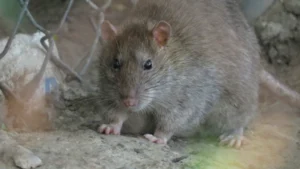
Mice also contain fats that give rats energy. These fats are especially valuable because they’re calorie-dense, meaning rats get a lot of energy from a relatively small meal.
This is important for rats because they have fast metabolisms and need to eat frequently.
When a rat eats a mouse, it typically consumes the entire body, including the organs, bones, and fur. The organs like the liver, heart, and kidneys provide vitamins and minerals.
The bones provide calcium. Even the fur gets digested to some degree and can provide trace nutrients.
This makes a mouse a “complete” meal in the same way a rat is a complete meal for a snake. The rat doesn’t need to hunt for multiple food items to get balanced nutrition. One mouse contains everything the rat needs.
How Rats Hunt and Kill Mice
Rats don’t hunt mice the same way a cat might stalk a bird. They’re not patient stalkers that wait for the perfect moment. Instead, rats rely on their superior size and aggression to overwhelm mice.
When a rat encounters a mouse, it usually attacks quickly and decisively. The rat will rush at the mouse, bite it with its powerful jaws, and shake it violently.
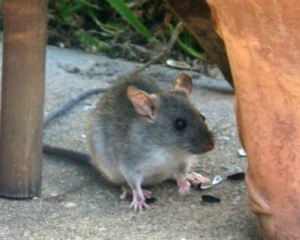
This shaking breaks the mouse’s neck or spine and kills it almost instantly. Rats target the head and neck area specifically because these are the most vulnerable spots.
Sometimes rats will grab mice with their front paws while biting, using their body weight to pin the mouse down. Once the mouse stops moving, the rat will start eating, usually beginning with the head.
The whole process is usually over very quickly. Mice are fast and can sometimes escape if they’re near cover or a hiding spot, but in open spaces or enclosed areas, they rarely get away from a determined rat.
Where Rats and Mice Encounter Each Other
You might wonder why rats and mice would even cross paths if rats are such a threat to mice. The answer is that both species are attracted to the same types of environments and food sources.
In urban settings, both rats and mice live near human structures where food and shelter are available. They both raid garbage cans, get into pantries, nest in walls or attics, and scavenge in the same locations. This overlap means encounters are common.
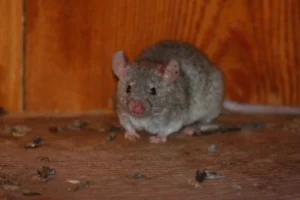
In the wild, rats and mice both prefer areas with ground cover like tall grass, brush piles, or rock formations. They both need water sources nearby. They both eat similar foods like seeds, grains, and insects.
However, when rats move into an area, mouse populations usually drop. Mice can sense that rats are present (through scent marking and other cues), and they’ll often avoid those areas if possible.
But in places where food is concentrated and options are limited, mice sometimes take the risk.
Buildings and structures actually force rats and mice into closer contact than they’d have in the wild. When both species are living inside the same building, mice can’t easily avoid rats, making them more vulnerable to predation.
Why Rats Choose Mice Over Other Foods
Given that rats can eat almost anything, you might wonder why they’d bother hunting mice when easier food sources are available. The answer is that rats are opportunistic.
They’ll eat whatever is most rewarding in terms of energy gained versus energy spent.
If a rat has easy access to garbage, pet food, or stored grains, it might not actively hunt mice. But if those food sources dry up or if a rat happens to encounter a mouse while searching for food, it’ll absolutely take advantage of the opportunity.

Mice are also relatively easy prey compared to other animals rats might encounter. Rats sometimes eat birds, but birds can fly away and are harder to catch.
Rats might eat insects, but insects don’t provide as much nutrition. Mice are land-based, relatively slow (compared to rats), and packed with calories.
In times when food is scarce, rats become even more aggressive about hunting mice. During winter months or in areas where human food waste isn’t readily available, rats rely more heavily on predation to survive.
The Cannibalistic Nature of Rats
It’s worth mentioning that rats don’t just eat mice. They’ll also eat other rats under certain circumstances. This cannibalistic behavior usually happens when a rat dies from natural causes, injury, or illness, and other rats in the area consume the body.
Rats will also sometimes kill and eat weaker rats in their own colony, especially if the weak rat is sick, injured, or a newborn that the mother has rejected.
This might seem cruel, but it’s actually a survival strategy. Removing sick individuals from the colony helps prevent disease spread, and consuming the body provides nutrition.
Baby rats are particularly vulnerable to being eaten by adult rats that aren’t their parents. Male rats will sometimes kill and eat babies, especially if they’re trying to mate with the mother.
By removing her current litter, the male can cause the female to go into heat again sooner.
This same predatory behavior that rats show toward their own species extends to mice. If rats will eat other rats, they’ll certainly eat mice.
How This Affects Mouse Behavior and Populations
The threat of rat predation has a significant impact on how mice behave and where they choose to live. Mice are naturally cautious animals, but they become even more careful in areas where rats are present.
Mice will avoid open spaces and prefer to travel along walls or under cover. They’re most active at night when they can use darkness for protection.

They build nests in hidden locations that are hard for rats to access.
When rats move into an area, mouse populations often decline sharply. Some of this is direct predation (rats killing and eating mice), but some is also indirect (mice avoiding the area or failing to reproduce because of stress).
In buildings with rat infestations, you’ll rarely see mice. The mice either get eaten or move to areas of the building where rats aren’t present.
This is one reason why pest control professionals can sometimes tell what type of rodent problem you have just by the patterns of activity they see.
Interestingly, when rats are removed from an area through pest control efforts, mouse populations often explode. With their main predator gone, mice can reproduce freely and their numbers increase rapidly.
The Ecological Role This Predation Plays
In natural ecosystems, the predator-prey relationship between rats and mice serves an important function. Rats help control mouse populations, which prevents mice from becoming too numerous and overwhelming their food sources.
This is similar to how foxes, owls, and hawks prey on mice. The difference is that rats live in the same ground-level environments as mice and can access the same hiding spots, making them especially effective predators.
In some ecosystems, rats are actually considered an invasive species that disrupts natural balances. This is especially true on islands where rats were introduced by humans.
In these environments, rats don’t just eat mice. They also eat native birds, eggs, insects, and plants, often causing serious damage to local wildlife.
However, in urban environments where rats are already established, their predation on mice can actually be seen as beneficial from a human perspective.
Fewer mice means less property damage, less food contamination, and reduced disease transmission (although rats themselves carry diseases too).
Why You Don’t Want Either Rats or Mice
Even though rats eat mice, you shouldn’t think of rats as a solution to a mouse problem. Both species are pests that can cause serious problems in homes and buildings.
Rats are actually more destructive than mice in many ways. They’re bigger, so they eat more food and create more waste.
They chew through stronger materials, including electrical wires (which can cause fires), water pipes, and structural wood. They’re more aggressive and more likely to bite if cornered.
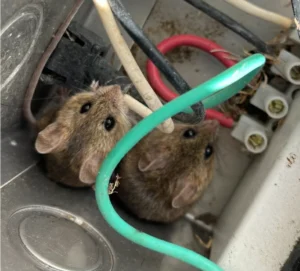
Rats also carry serious diseases that can be transmitted to humans, including leptospirosis, hantavirus, rat-bite fever, and salmonellosis. They spread these diseases through their urine, droppings, and bites.
Mice carry diseases too, including similar ones. Even though they’re smaller and might seem less threatening, a mouse infestation can contaminate large amounts of food, damage insulation and wiring, and create unsanitary conditions.
The best approach is to prevent both rats and mice from entering your home in the first place through proper sanitation, sealing entry points, and eliminating food sources.
What Happens When Pet Rats and Pet Mice Interact?
People who keep rodents as pets sometimes wonder if they can house rats and mice together. The answer is almost always no. Even domesticated pet rats retain their predatory instincts toward mice.
While individual pet rats might have different temperaments, and some might ignore mice, it only takes one predatory incident for a mouse to be killed.
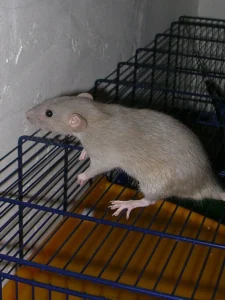
The size difference means that even playful roughhousing from a rat can injure or kill a mouse.
Pet rat owners who also keep mice need to house them in completely separate cages in different areas of the home. Even the scent of rats can stress mice, potentially affecting their health and lifespan.
There are rare exceptions where rats and mice have been raised together from infancy and seem to coexist peacefully, but these situations are risky and not recommended by animal care experts.
The Intelligence Factor in Rat Predation
Rats are highly intelligent animals, and this intelligence helps them hunt mice effectively. Rats learn quickly and can remember successful hunting strategies.
If a rat catches a mouse in a particular location, it’ll return to that spot repeatedly because it’s learned that mice can be found there. Rats can also learn to recognize signs that mice are present, like droppings, scent trails, or sounds.
This intelligence makes rats persistent predators. They don’t give up easily, and they’ll problem-solve to access areas where mice are hiding. If a mouse nest is behind a thin wall or barrier, a rat will chew through it to reach the mice inside.
Rats also learn from watching other rats. If one rat in a colony successfully hunts mice, other rats might adopt similar strategies. This social learning makes rat colonies more effective at controlling mouse populations in their territory.
Conclusion
Rats eat mice because they’re opportunistic predators with a significant size and strength advantage. Mice provide excellent nutrition with high protein and fat content, making them worthwhile prey when rats encounter them.
The two species often compete for the same resources and living spaces, bringing them into conflict where rats almost always come out on top.
This predator-prey relationship affects how both species behave and where they choose to live.
Understanding this dynamic is important for anyone dealing with rodent problems, as it shows why you rarely see both rats and mice in the same location at the same time.
The presence of rats naturally suppresses mouse populations, though this doesn’t make rats a desirable solution to mouse infestations since rats create even bigger problems of their own.

Hi, my name is Ezra Mushala, i have been interested animals all my life. I am the main author and editor here at snakeinformer.com.