
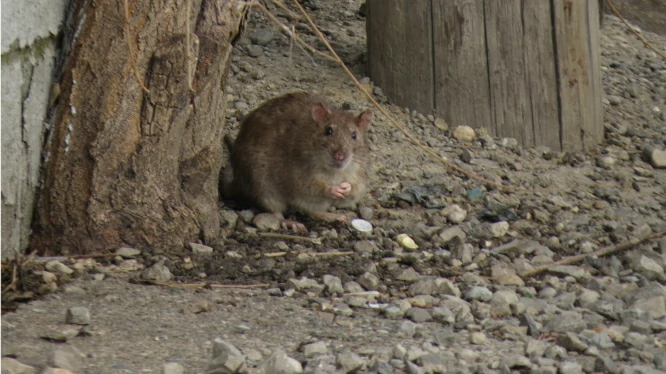
You might have noticed that when something startles a rat, they don’t just run away. They often jump first, sometimes straight up in the air, sometimes to the side, before they start running.
This jumping reaction happens fast and looks almost automatic. Why do rats jump when they’re scared?
Rats jump when scared because it’s a survival reflex that helps them escape predators. The sudden upward or sideways movement confuses attackers, gets them quickly out of striking range, and gives them time to assess the threat and choose an escape route.
This isn’t a conscious decision the rat makes. It’s an automatic response hardwired into their nervous system through millions of years of evolution. When danger strikes, jumping first and thinking later keeps rats alive.
The Startle Response in Rats
The startle response is an automatic reaction that happens in the brainstem before the thinking part of the brain even gets involved. When a rat detects a sudden threat, their body reacts instantly.
The jump happens within milliseconds of detecting danger. A loud noise, sudden movement, or unexpected touch triggers nerves that send signals straight to the muscles, bypassing normal decision-making processes.
This response is so fast because it has to be. In the wild, a rat’s survival often depends on reacting to threats in fractions of a second. The ones who jumped fast lived to reproduce. The ones who hesitated didn’t.
During the startle jump, a rat’s entire body tenses. Their muscles contract powerfully, launching them into the air or to the side. Their heart rate spikes, adrenaline floods their system, and they’re instantly ready for intense physical activity.
After the initial jump, the rat’s higher brain functions kick in. They assess the situation, identify the threat, and decide on their next move (usually running to safety).
Even domesticated pet rats who’ve never faced a real predator show this response. It’s so deeply ingrained in rat biology that it persists even when it’s not needed for survival.
Evolutionary Advantage of Jumping When Threatened
Rats are prey animals, which means lots of other animals want to eat them. Owls, hawks, snakes, cats, dogs, foxes, and many other predators hunt rats in the wild.
When a predator strikes at a rat, it’s usually aiming for where the rat currently is. If the rat jumps suddenly, the predator’s attack misses because the rat is no longer in that spot.

Many predators strike downward at rats (like owls dropping from above or cats pouncing). A rat that jumps upward gets momentarily out of range, even if just by a few inches. Those few inches can mean the difference between life and death.
The unpredictability of the jump is key. Rats don’t jump the same direction every time. Sometimes they go up, sometimes sideways, sometimes they twist in mid-air. Predators can’t predict the movement, making it harder to adjust their attack.
Jumping also gives rats time to locate the threat. In that split second airborne, their eyes, ears, and nose are gathering information about where the danger is coming from.
After landing from the jump, the rat is already in motion. They can transition immediately into a sprint toward safety without having to overcome inertia from a standing start.
Rats who had strong startle jump reflexes survived more often than rats with weaker responses. Over thousands of generations, this created rats with hair-trigger jumping reactions.
Types of Threats That Trigger Jumping
Different types of scary situations trigger the jumping response in different ways. Rats have evolved to react to various forms of danger.
Sudden loud noises are major triggers. A door slamming, something dropping, or even a loud voice can make a rat jump. Their hearing is more sensitive than ours, so sounds we consider moderate might be startling to them.
Visual threats also cause jumping. A sudden movement in their peripheral vision, a shadow passing overhead, or something approaching quickly will trigger the jump reflex.
Unexpected physical contact makes rats jump intensely. If you touch a rat who didn’t know you were there, they’ll often jump straight up. They can’t tell if the touch is from a friendly hand or a predator’s paw.
Vibrations in the ground or surface they’re on can trigger jumping. Rats feel vibrations through their sensitive paws and whiskers, and unusual vibrations signal potential danger.
Novel or unfamiliar smells sometimes cause jumping, especially if the smell is introduced suddenly. Rats rely heavily on scent, and an unexpected new odor suggests something in their environment has changed.
Even other rats can trigger the jump response. If one rat suddenly moves or makes a loud squeak, nearby rats might jump in response to the alarm signal.
The Physiology Behind the Jump
What’s happening inside a rat’s body when they execute that startled jump is a complex cascade of neurological and muscular events.
The startle pathway starts with sensory organs. Eyes, ears, or touch receptors detect something unusual and send signals to the brainstem at incredible speed.
The brainstem contains the neural circuits for the startle response. These circuits are ancient, evolutionarily speaking. Even very simple animals have startle responses because they’re so critical for survival.
From the brainstem, signals shoot to the spinal cord and then to muscles throughout the body. The major muscles in the hind legs receive particularly strong signals, since these muscles provide the jumping power.
The adrenal glands dump adrenaline (epinephrine) into the bloodstream almost instantly. This hormone increases heart rate, dilates airways, and sends extra blood to muscles.
The rat’s pupils dilate to take in more visual information. Their whiskers become more rigid and sensitive. All their senses sharpen to gather maximum information about the threat.
Glucose floods into the bloodstream, providing instant energy for the muscles. This is why rats can go from completely relaxed to explosive movement in milliseconds.
Differences Between Pet Rats and Wild Rats
Pet rats still jump when scared, but their threshold for what counts as scary is often different from wild rats due to their environment and socialization.
Wild rats live in constant awareness of predators. They’re more sensitive to potential threats and jump more readily at smaller provocations.
Pet rats raised around humans from birth become habituated to many stimuli that would terrify wild rats. They don’t jump as much at normal household sounds or human movements.
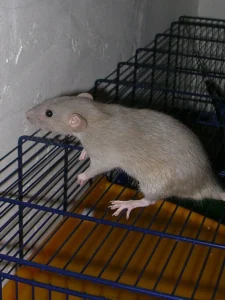
However, pet rats still retain the startle jump reflex for truly unexpected events. Even a very tame rat will jump if genuinely surprised or frightened.
Some pet rats are naturally more nervous than others due to genetics or early life experiences. These rats jump more frequently and at smaller triggers.
Rats who’ve had bad experiences (rough handling, attacks from other animals, injuries) often develop stronger startle responses. They’ve learned the world can be dangerous and react accordingly.
Well-socialized pet rats who feel safe usually show the startle jump only for truly unexpected events. Their baseline stress level is lower, so it takes more to trigger the fear response.
How Jumping Protects Rats in Different Scenarios
The jumping response works differently depending on what kind of threat the rat faces. It’s a flexible defense mechanism that helps in multiple situations.
Against aerial predators like owls or hawks, jumping upward momentarily gets the rat out of the strike zone. It also makes the rat a moving target, which is harder to catch.
When threatened by ground predators like cats or snakes, a jump to the side or backward creates distance. The predator has to recalculate and restart their attack.
If trapped in a confined space, jumping allows rats to potentially leap over the threat or reach higher ground where some predators can’t follow.
The jump often startles the predator too. A sudden explosive movement from prey can cause a predator to hesitate for just a moment, giving the rat extra time to escape.
In some cases, the jump is a feint. The rat jumps one direction, and when they land, they immediately run another direction. This misdirection confuses predators.
Against multiple threats, jumping gives the rat a way to quickly assess their surroundings from a different position. While airborne, they can see or sense which direction offers the best escape route.
The Role of Body Language and Posture
Before and after the jump, a scared rat’s body language tells you a lot about their emotional state and what they’re likely to do next.
Right before a threat appears, a relaxed rat has smooth fur, a loose tail, and moves at a normal pace. They’re not expecting danger.
The moment they detect a threat, their posture changes instantly. Ears perk up and orient toward the threat. Eyes widen. The body tenses, ready to jump.

During the jump itself, you’ll often see the rat’s tail whip around for balance. Their legs extend fully to generate maximum height or distance.
After landing, a scared rat often freezes briefly. This freeze response lets them assess whether the threat is still present and where it is.
If the threat persists, the rat’s fur puffs up slightly (piloerection). This makes them look bigger and is an automatic fear response.
The tail position after jumping tells you how scared the rat is. A tail held low or tucked suggests high fear. A tail that quickly relaxes means the rat has decided the threat wasn’t serious.
Breathing becomes rapid and visible. You can see a scared rat’s sides heaving as they take quick breaths, fueling their muscles with oxygen for potential escape.
Reducing Startle Jumping in Pet Rats
While you can’t and shouldn’t eliminate the startle response completely (it’s protective), you can help pet rats feel secure enough that they jump less often.
Approach rats slowly and from the front where they can see you. Approaching from behind or above triggers stronger fear responses because that’s how predators attack.
Make noise as you approach their cage so they know you’re coming. Talk to them softly. This prevents the surprise that causes jumping.
Handle rats gently and predictably. Rough or unpredictable handling increases their baseline anxiety and makes them more likely to jump at anything unexpected.
Keep their environment relatively calm. Constant loud noises, chaotic activity, or frequent sudden disturbances keep rats in a heightened state of alert.
Socialize young rats early to various sights, sounds, and experiences. Rats who’ve been exposed to many stimuli in positive contexts become less reactive.
Never use the startle response to “play” with rats. Deliberately scaring them for amusement creates chronic stress and anxiety.
Provide hiding places in their cage. When rats have safe spots to retreat to, they feel more secure and are less likely to be in a constant state of high alert.
When Excessive Jumping Indicates a Problem
Some jumping is normal, but excessive startle responses can indicate that something’s wrong with the rat’s environment or health.
If a rat jumps at everything, even mild stimuli that shouldn’t be threatening, they might be living in chronic stress. This level of anxiety isn’t healthy.

Rats who’ve been attacked by predators or other animals sometimes develop trauma responses. They become hyper-vigilant and jump excessively even when safe.
Some neurological conditions can heighten the startle response. If a rat’s jumping seems disproportionate to the stimulus and is increasing over time, health issues might be involved.
Poor eyesight or hearing can make rats more reactive. When they can’t clearly detect what’s around them, they’re more likely to be surprised and jump.
Rats in pain often become more reactive and jumpy. The stress of chronic pain puts their nervous system on high alert.
If you’ve recently moved a rat to a new environment and they’re jumping constantly, they might need more time to acclimate. But if weeks pass and they’re still extremely jumpy, the environment might be too stressful.
The Connection Between Jumping and Other Fear Behaviors
The startle jump is just one part of a rat’s fear response toolkit. Understanding how it connects to other fear behaviors gives you a complete picture.
After jumping, rats often freeze. This freeze response makes them less visible to predators who track movement. The rat is basically hoping the threat will pass.
If freezing doesn’t work, rats run to the nearest safe place. The jump gives them a head start on this escape run.
Some rats vocalize when scared, making high-pitched alarm squeaks. This warns other rats about danger. The jump often happens simultaneously with the squeak.

Scared rats seek enclosed spaces. After jumping, they’ll often run under or into something. This satisfies their instinct to hide from threats.
Rats might release stress pheromones when frightened. Other rats can smell these chemical signals, which puts them on alert too.
In extreme fear, some rats will defecate or urinate. This sometimes happens mid-jump or immediately after landing. It’s an automatic stress response.
Understanding the full sequence helps you interpret your rat’s emotional state. If they jump, freeze, then quickly relax and continue what they were doing, the scare was minor. If they jump, run, hide, and take a long time to emerge, they were genuinely frightened.
Jumping vs. Other Escape Strategies
Jumping isn’t the only way rats respond to fear, and sometimes they use other strategies instead. Understanding when and why they choose different responses is helpful.
In open areas with visible escape routes, rats often run without jumping first. The jump is most useful when they need to change elevation or direction quickly.
When cornered with no escape route, rats might turn and face the threat rather than jumping. This defensive posture includes showing teeth and making aggressive vocalizations.
Very small spaces don’t allow for jumping, so rats in tight quarters will try to back up or push through gaps instead.
Some rats are climbers rather than jumpers. When scared, they’ll climb straight up rather than jumping. This is especially common in rats comfortable with vertical movement.
Freezing is sometimes chosen over jumping. If a rat believes they haven’t been seen yet, staying completely still might work better than drawing attention with movement.
The choice between these strategies depends on what the rat perceives about the threat and their environment. Jumping is preferred when quick repositioning offers the best survival advantage.
Conclusion
Rats jump when scared because it’s a highly effective survival strategy that’s been refined over millions of years of evolution. The sudden, unpredictable movement helps them avoid predators by getting out of striking range and confusing attackers.
This response is automatic and happens faster than conscious thought. It’s controlled by ancient brain structures that prioritize survival over everything else.
While pet rats are safer than wild rats, they retain this protective reflex. You can help reduce unnecessary startle jumping by approaching predictably, handling gently, and creating a calm environment, but you shouldn’t try to eliminate the response completely.
Understanding why rats jump when scared helps you provide better care and interpret their behavior correctly. A rat who jumps occasionally at unexpected events is showing normal, healthy survival instincts.
Only excessive, constant jumping suggests a problem that needs addressing.

Hi, my name is Ezra Mushala, i have been interested animals all my life. I am the main author and editor here at snakeinformer.com.