
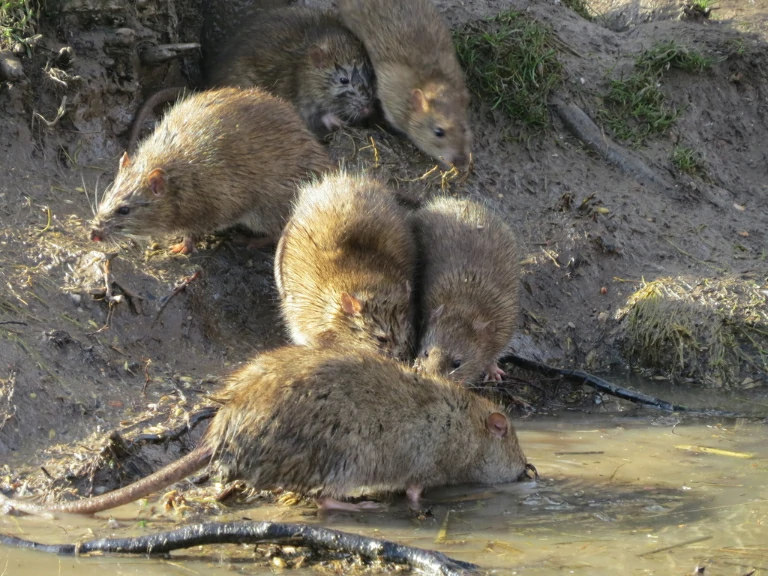
You’re looking at your security camera footage or watching your pet rats, and you notice something strange. The rats are moving in a single-file line, each one following directly behind the other like a tiny train.
It looks coordinated and purposeful, almost like they’re marching. So why do rats form a line and follow each other like this?
Rats form a line and follow each other because they’re using scent trails and established pathways to navigate safely. The lead rat leaves a scent trail, and the others follow it to find food, water, or shelter. This behavior helps them move efficiently, stay safe, and communicate routes to other members of their group.
This line-following behavior is actually a really smart survival strategy that rats have developed over millions of years. It’s not random, and it serves several important purposes in their daily lives.
Scent Trails Guide the Way
The main reason rats follow each other in lines is because of scent marking. Rats leave chemical signals everywhere they go.
They have scent glands on their feet, body, and other areas that constantly release pheromones. Every step a rat takes leaves a tiny scent marker.
When one rat finds a good food source or safe route, other rats can follow that exact path by smelling the trail the first rat left.
This is incredibly useful because it means every rat doesn’t have to figure out the best routes on their own. One rat discovers something, and everyone benefits.
The scent trails tell rats multiple things. They can smell which direction another rat went, how long ago they passed through, and even what emotional state they were in.
A stressed rat leaves different scent markers than a calm rat. So the followers can tell if the path ahead is safe or if the lead rat encountered danger.
Rats also urinate along their travel routes to reinforce the scent trails. This creates a chemical map that all the rats in a group can read and follow.
Following Established Pathways
Rats are creatures of habit. Once they establish a safe route between important locations, they use it over and over.
These pathways usually run along walls, edges, and other boundaries. Rats feel safer traveling along edges rather than crossing open spaces.
You’ll often see rat trails along baseboards, fence lines, or the edges of buildings. The rats follow these exact same paths every single night.

When multiple rats use the same pathway repeatedly, they wear down the surface. In houses, you might see dark, greasy marks along walls where rats constantly run.
In nature, you can sometimes see actual worn paths in grass or dirt where rats have traveled the same route so many times they’ve created a visible trail.
Following established pathways in a line is safer than each rat wandering randomly. The lead rat checks for danger, and the others follow knowing the route has just been cleared.
This behavior is so ingrained that even if you block a rat’s usual path, they’ll often try to follow the same general route rather than finding a completely new way.
Safety in Numbers and Following
Moving in a line provides protection for rats. There’s safety in numbers, and following behavior keeps the group together.
The lead rat acts like a scout. If it encounters danger, the rats behind it can immediately turn around and flee.
Younger or less experienced rats learn safe routes by following older, more experienced rats. This is how rat knowledge gets passed down through generations.
Baby rats learning to move around outside the nest will often follow their mother in a line. She teaches them where it’s safe to go.
In the wild, predators are less likely to attack a group of rats moving together than a single rat traveling alone.
The line formation also makes it harder for predators to pick out a single target. The movement of multiple rats in sequence can be confusing to predators.
If one rat in the line spots danger and runs, all the others immediately follow. The group response is faster than each rat having to assess the threat individually.
Communication Through Movement
The line formation is actually a form of communication. Rats are telling each other “this is a safe, proven route.”
When you see rats following each other, they’re not just randomly trailing behind. They’re actively choosing to follow because the lead rat’s path has value.
The rats in the line are also communicating with body language and subtle sounds that reinforce the group movement.
Slight squeaks or chirps that humans might not hear help keep the group coordinated as they move in their line.
The tail position and movement of the rat in front provides visual cues to the rats behind. They can tell if the lead rat is confident or nervous.
This communication happens constantly and automatically. The rats don’t consciously think about it, it’s just part of their social behavior.
If the lead rat suddenly changes direction or speed, the message travels back through the line almost instantly.
Finding Food Sources Together
One of the most important uses of line-following is getting to food. When one rat finds food, others follow the scent trail to share in the discovery.
Rats are smart enough to remember where they found food before. When they return to that location, they often follow the same path they used previously.

Other rats smell the successful food-finding trail and follow it. This is why you’ll often see multiple rats visiting the same food source one after another.
The line formation is especially common when rats are traveling from their nest to a feeding area and back. It’s like a highway between home and the grocery store.
In urban environments, you might see rats forming lines as they travel to dumpsters, garbage cans, or other reliable food sources.
The rat in front might have its cheeks stuffed with food it’s carrying back to the nest. The rats behind are learning the route so they can make the same trip.
This cooperative food-finding is one reason rat infestations can grow so quickly. One rat’s discovery becomes the whole colony’s benefit.
Nest to Food Route Memorization
Rats have excellent spatial memory. They create mental maps of their environment and remember exact routes between important locations.
The path from nest to food to water becomes hardwired in their brain. Following this path in a line becomes almost automatic.
Each rat in a colony learns the same routes through repeated following. Eventually, any rat can lead the line because they all know the way.
This memorization is so precise that rats can navigate their established routes in complete darkness using just their whiskers and memory.
The line formation reinforces the route learning. Young rats following older ones are basically getting a guided tour of the important pathways.
If something changes in the environment (like furniture being moved), rats will often still try to follow the old route until they adjust their mental map.
The more often a route is used, the stronger the scent trail becomes, which makes it even easier for rats to follow in the future.
Dominant Rats Lead, Others Follow
Rat social structure plays a role in who leads and who follows. Dominant rats typically take the lead position more often.
The dominant rat has usually proven itself as capable and successful. Other rats trust its choices and follow willingly.
Subordinate rats benefit from following because they get access to food and resources without taking the risk of being the first to explore.

In a colony, you’ll often see the same rat leading most of the time. This is usually the most dominant or most experienced individual.
However, leadership can change based on the situation. A rat that knows a particular route really well might lead even if it’s not the most dominant.
Female rats that are mothers often lead baby rats. The babies instinctively follow their mother’s scent and movements.
Young rats learning the ropes will follow any adult rat. This helps them learn safe routes and proper rat behavior.
How Rats Stay in Formation
Maintaining the line formation requires coordination. Rats use several methods to stay together while moving.
They regulate their speed to match the rat in front. If the leader slows down, everyone slows down.
The spacing between rats in a line is usually pretty consistent. They stay close enough to follow but far enough to have room to move.
Rats use their whiskers to sense the rat ahead of them in low light or darkness. This helps them maintain the formation even when they can’t see well.
If a rat gets separated from the line, it’ll often circle back and try to find the scent trail to catch up with the group.
The line can navigate tight spaces and obstacles because each rat follows the exact path of the rat before it.
This coordination isn’t conscious or planned. It’s instinctive behavior that’s been refined over thousands of generations.
When You’ll See This Behavior Most
Line-following happens most often during specific rat activities and times.
Nighttime is when you’ll see the most line behavior. That’s when rats are most active and moving between their nest and food sources.
After a new rat discovers a good food source, you’ll see heavy line traffic as other rats follow the trail to check it out.
In environments with lots of rats (like infestations), line behavior is more common because there are more scent trails to follow.
During breeding season, you might see mother rats leading lines of babies. This teaching behavior is crucial for the babies’ survival.
In new environments, rats explore more individually at first. But once they establish safe routes, the line-following behavior increases.
If you’ve ever watched pet rats, you might notice them following each other in lines when they’re playing or exploring together.
Wild Rats vs. Pet Rats
The line-following behavior exists in both wild and domestic rats, but it looks a bit different.
Wild rats use this behavior primarily for survival. Finding food, avoiding predators, and navigating dangerous environments.
Pet rats in cages still follow each other in lines even though they don’t face the same survival pressures. It’s instinctive behavior they can’t turn off.
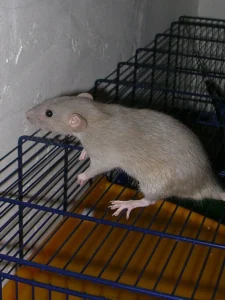
Pet rats might form lines while exploring during playtime outside their cage. They’re using the same instincts their wild cousins use.
The line behavior in pet rats can just be playful or social. They enjoy following each other as part of their normal interaction.
Wild rats tend to be more cautious and deliberate in their line movements. Every step could mean the difference between survival and death.
Pet rats are often more relaxed in their line-following. They’ll break formation easier because they don’t face real threats.
Different Types of Line Formations
Not all rat lines look the same. The formation changes based on what the rats are doing.
A tight, close-following line usually means rats are being cautious and moving through an area they consider potentially dangerous.
A more spaced-out line happens when rats are relaxed and moving through familiar, safe territory.
Mother rats leading babies often have the tightest formations. The babies stay really close to their mother’s tail.
Feeding lines, where rats are traveling to food, might have some rats carrying food in their cheeks while others are empty-handed.
Exploration lines tend to be slower and more hesitant, with the lead rat pausing frequently to check for danger.
Retreat lines (when rats are fleeing danger) are fast and tight, with rats practically running over each other to escape.
What This Tells You About Rat Intelligence
The line-following behavior actually shows how smart rats are. It’s not simple or mindless behavior.
Rats have to learn routes, remember them, leave appropriate scent markers, and respond to other rats’ signals. That’s complex problem-solving.
The ability to follow scent trails requires good sensory processing and decision-making. Rats are constantly evaluating information as they move.
Teaching younger rats the routes shows knowledge transfer between generations. That’s a sign of advanced intelligence.
Rats can modify their behavior based on circumstances. They’ll change routes if they encounter danger, showing flexible thinking.
The social coordination required to maintain line formations demonstrates rats understand group dynamics and cooperation.
Scientists have found that rats can even learn mazes faster when they can follow another rat that already knows the way.
How to Use This Knowledge for Rat Control
Understanding line-following behavior can help you deal with rat problems more effectively.
If you see one rat, assume there are more following the same routes. Set traps along the pathways you observe.
Look for the dark, greasy marks along walls that indicate rat pathways. These are the routes they’ll keep using.
Disrupting established routes can confuse rats. Blocking pathways or changing the environment forces them to explore new routes, making them more vulnerable to traps.
Place bait stations along obvious rat highways. Since multiple rats use the same paths, you’ll catch more rats.
If you eliminate the lead rat in a colony, it might temporarily disrupt the group’s movements. Other rats will be more hesitant without their experienced leader.
Understanding that rats follow scent trails means you need to clean areas thoroughly after removing rats. Otherwise, new rats will follow the old scent trails and reinfest.
Why Some Rats Break Formation
Not all rats follow the line all the time. Individual personality and circumstances affect this behavior.
More confident or dominant rats are more likely to break off and explore on their own. They don’t need to follow others as much.
Young rats exploring their independence might leave the line to investigate something interesting.
If a rat is very hungry, it might break formation to grab food it spots along the way.
Rats that sense danger might scatter from the line instantly. The line formation isn’t worth maintaining if a predator appears.
In less threatening environments, rats are more likely to wander and explore independently rather than strictly following lines.
Some rats are just more independent by nature. Individual personality variation exists in rats just like in any other animal.
Conclusion
Rats form lines and follow each other because it’s an efficient, safe way to navigate their environment using scent trails and established pathways. This behavior helps them find food, avoid danger, teach younger rats, and communicate important routes to their colony members.
The line-following behavior demonstrates rat intelligence, social cooperation, and survival instincts all working together. Understanding this behavior gives you insight into how rats think and move, which is valuable whether you’re dealing with a rat problem or just curious about these fascinating animals.
Next time you see rats moving in formation, you’ll know they’re not just randomly following each other. They’re using a sophisticated navigation system that’s been refined over millions of years of evolution.

Hi, my name is Ezra Mushala, i have been interested animals all my life. I am the main author and editor here at snakeinformer.com.