
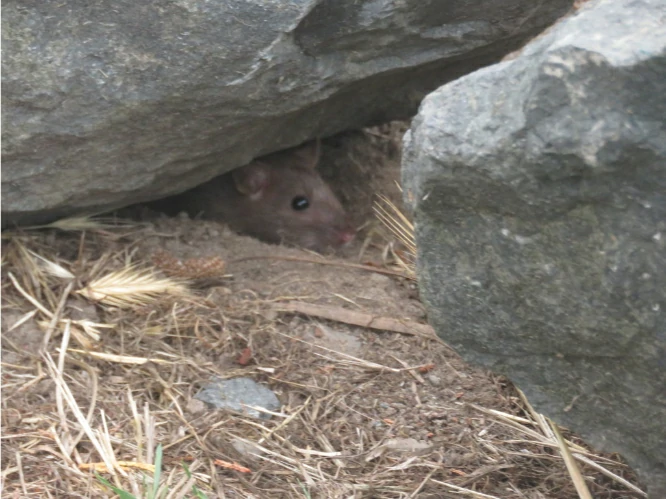
If you’ve ever spotted a rat disappearing into a hole in your yard or found a network of tunnels under your shed, you’ve discovered one of their most important survival behaviors. Rats are natural diggers who create complex underground systems wherever they live. So why do rats burrow?
Rats burrow to create safe shelters that protect them from predators, extreme weather, and other dangers. These underground tunnels provide secure nesting areas for raising babies, storing food, and escaping threats. Burrowing is an instinctive behavior that helps rats survive in both wild and urban environments.
For rats, burrows aren’t just holes in the ground, they’re complete living systems with multiple purposes. Understanding why and how rats burrow helps explain their success as a species.
Burrows Provide Protection from Predators
In the wild, rats face constant threats from animals that want to eat them. Birds of prey, snakes, cats, dogs, foxes, and many other predators hunt rats.
A burrow gives rats a safe retreat where most predators can’t reach them. Underground, they’re hidden from sight and protected by earth.
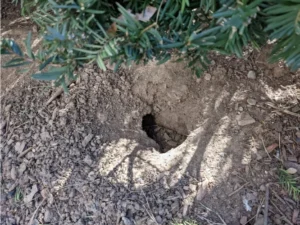
The entrance holes to rat burrows are usually just big enough for a rat to squeeze through. Larger predators can’t follow them inside.
Many rat burrows have multiple entrances and exits. If a predator finds one opening, the rat can escape through another.
This network of tunnels acts like a maze that confuses predators and gives rats multiple escape routes.
Rats are most vulnerable when they’re above ground searching for food. Having a burrow nearby means they’re never far from safety.
Young rats and pregnant females especially need the security burrows provide. They can’t run as fast and are easier targets for predators.
The instinct to burrow is so strong that even pet rats will dig and create tunnels in their bedding if given the chance.
Underground Spaces Stay at Stable Temperatures
Temperature regulation is a serious survival issue for rats. They’re warm-blooded mammals that need to maintain constant body temperature.
Above ground, temperatures can swing dramatically between day and night, and between seasons.
Underground, temperatures stay much more stable. The earth acts as natural insulation.
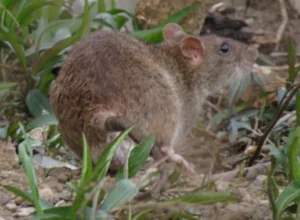
In summer, burrows stay cooler than the surface. Rats can escape dangerous heat by going underground.
In winter, burrows are warmer than outside. The earth retains heat and blocks cold wind.
This temperature stability is really important for baby rats who can’t regulate their own body temperature yet.
Even a difference of a few degrees can mean life or death for newborn rat pups.
Adult rats also benefit from the controlled environment. They don’t have to spend as much energy heating or cooling their bodies.
Burrows Create Safe Nesting Sites for Babies
Female rats need secure, protected locations to give birth and raise their young.
A rat burrow provides the perfect nursery. It’s dark, quiet, temperature-controlled, and hidden from threats.
Pregnant rats often expand existing burrows or dig new chambers specifically for nesting before giving birth.

The nesting chamber is usually the deepest, most protected part of the burrow system.
Baby rats are born completely helpless. They’re blind, deaf, and can’t move well for the first couple weeks.
Without the protection of a burrow, these vulnerable babies would die quickly from exposure or predators.
The mother rat can leave the burrow to find food, knowing her babies are safe underground.
She can also defend the burrow entrance more easily than she could defend babies in an exposed nest.
Rats Use Burrows for Food Storage
Rats are hoarders who like to stockpile food for later. Burrows provide perfect storage facilities.
Many rat burrows have dedicated food storage chambers where rats keep seeds, nuts, and other non-perishable items.
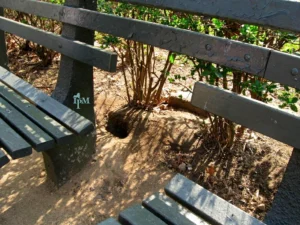
The cool, dark environment of a burrow helps preserve food longer than storing it above ground.
This stored food becomes really important during winter when finding food above ground is harder.
It also helps during times when the rat is injured, sick, or caring for babies and can’t leave as often.
Rats will actively transport food from above ground into their burrows, sometimes carrying items many times their body weight.
The storage behavior shows planning and intelligence. Rats aren’t just reacting to immediate hunger, they’re preparing for future needs.
In urban environments, rats still exhibit this storage behavior in their burrows, filling chambers with garbage and food scraps.
Burrowing Is Natural Instinct
Rats have been burrowing for millions of years. It’s hardwired into their genetics and behavior.
Even rats raised in captivity with no exposure to other rats will attempt to burrow if given suitable material.
This instinct appears early in life. Young rats start showing digging behaviors as soon as they’re old enough to move around well.
The behavior doesn’t require teaching. It’s automatic, like breathing or eating.
Different rat species show varying levels of burrowing behavior based on their native habitats.
Norway rats, also called brown rats, are especially accomplished burrowers. They can dig extensive tunnel systems.
Roof rats, also called black rats, are more likely to nest above ground in trees or buildings, but they’ll still burrow if conditions favor it.
The instinct is so strong that pet rats often show frustration if they can’t dig and burrow in their enclosures.
Burrows Offer Protection from Weather
Beyond temperature control, burrows shield rats from harsh weather conditions that could kill them.
Heavy rain and flooding can drown rats caught in the open. Burrows, especially those on higher ground, provide dry shelter.

Strong winds can’t reach rats underground. Wind chill that would be dangerous above ground doesn’t affect burrowed rats.
Snow and ice can make finding food impossible and can cause hypothermia. Rats retreat to their burrows during severe winter weather.
Extreme heat that causes heatstroke above ground can be avoided by staying in cool burrows during the hottest parts of the day.
The burrow entrance often has a slight overhang or is positioned to prevent water from flooding in during rain.
Rats are smart about choosing burrow locations. They avoid areas prone to flooding and prefer slightly elevated spots.
Complex Burrow Systems Support Entire Colonies
Rats are social animals that live in groups called colonies. A single burrow system can house dozens of rats.
These tunnel networks can be surprisingly complex, with multiple levels, chambers, and interconnecting passages.
Different chambers serve different purposes: nesting areas, food storage, latrine areas, and escape routes.
The burrow has a social structure too. Dominant rats claim the best, safest areas deep in the burrow.
Lower-ranking rats have to settle for less desirable spots closer to entrances where danger is higher.
Young rats grow up in these burrow communities, learning social behaviors and territory from older rats.
The burrow itself becomes a valuable territory that rats will defend from other rat colonies.
Fights between colonies often happen when one group tries to take over another group’s burrow system.
How Rats Actually Dig Their Burrows
Watching a rat burrow is fascinating. They use a combination of techniques to move earth efficiently.
Rats dig primarily with their front paws, which have strong claws perfect for moving soil.
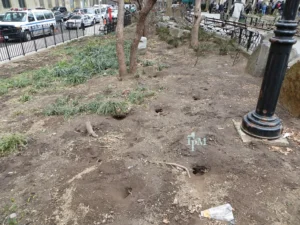
They scrape and push loose dirt backward under their bodies as they dig forward.
Their back legs kick the dirt behind them, moving it away from the digging area.
When there’s too much dirt piled up, the rat turns around and pushes it out of the tunnel with their head and front paws.
Rats can move surprisingly large amounts of earth. A single rat can dig several feet of tunnel in one night.
Their teeth also come into play. Rats will gnaw through roots, hard soil, and other obstacles blocking their path.
The tunnel is usually about three to four inches in diameter, just big enough for an adult rat to pass through comfortably.
Signs of Rat Burrows in Your Property
Knowing what to look for helps you identify rat problems early.
The most obvious sign is the burrow entrance itself. It’s usually a smooth, round hole about two to four inches across.
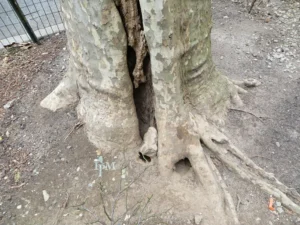
You’ll often see fresh dirt piled near the entrance where rats have been excavating or maintaining the tunnel.
Well-used burrows have smooth, worn edges. Fresh burrows might have rougher edges.
Look for burrows along foundations, under sheds or decks, in overgrown areas, and near food sources.
Rat burrows often have one main entrance and several smaller emergency exits scattered around the area.
The main entrance might show tracks or a worn path leading to it from regular rat traffic.
You might also find rat droppings near burrow entrances, about the size of a raisin, dark and pellet-shaped.
Where Rats Prefer to Dig Burrows
Location selection is important for rats. They choose spots that meet specific needs.
Near food sources is a top priority. Rats don’t like traveling far from their burrow to eat.
Areas with cover like vegetation, woodpiles, or structures give rats confidence to dig without feeling exposed.
Next to buildings and foundations is common. The structure provides one solid wall for the burrow, meaning less digging.
Well-drained soil is preferred. Rats avoid areas that flood or hold water because wet burrows are uncomfortable and dangerous.
Loose, easy-to-dig soil is better than hard, rocky ground. Clay soil is more difficult but rats will work with it if necessary.
Elevated areas or slight hills provide natural protection from flooding.
South-facing slopes might be preferred in cold climates because they receive more sun and stay warmer.
The Difference Between Rat Burrows and Other Animal Holes
Many animals dig holes, so how do you know if it’s rats?
Rat burrow entrances are typically two to four inches in diameter. Larger holes suggest bigger animals like groundhogs.
Smaller holes might be mice, voles, or moles. Mouse holes are usually one inch or less.
Rat burrows have very smooth, worn edges from constant use. They look almost polished.
There are usually multiple openings in the same area, connected underground. Rats create networks, not single holes.
You’ll find rat droppings near the entrances. Other animals leave different types of scat.
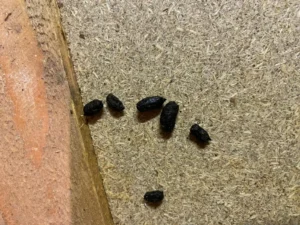
Rats often kick dirt and debris out of the entrance, creating a fan-shaped pile. Other animals might not do this.
Time of activity helps too. Rats are mostly nocturnal. If you see activity at dawn or dusk, it might be rats.
How Deep and Extensive Are Rat Burrows
Rat burrows can be surprisingly elaborate for such small animals.
Most burrows go down about 18 inches to 2 feet deep, though some can reach 4 feet in ideal conditions.
The horizontal extent is often more impressive than the depth. Tunnels can run 10 to 15 feet in various directions.
A well-established burrow might have a dozen or more chambers and connecting tunnels.
The layout isn’t random. Rats create intentional designs with specific chambers for specific purposes.
Escape tunnels are usually shorter and more direct than main tunnels. They’re for quick exits only.
Nesting chambers are deeper and more protected than other areas.
Food storage chambers are often in drier, cooler sections of the burrow where food keeps better.
Problems Rat Burrows Cause for Property Owners
Rat burrows create several serious issues for homeowners and businesses.
Burrows under foundations can undermine structural stability, especially if the tunnel system is extensive.

Water damage happens when burrows channel rainwater toward foundations, creating moisture problems.
Lawn and garden damage is obvious. The tunnels collapse over time, leaving unsightly depressions and holes.
Plant roots get disturbed or damaged by burrowing, potentially killing trees and shrubs.
Walkways and patios can sink or crack when burrows underneath cause the ground to settle.
Burrows near utility lines pose risks. Rats might damage electrical, water, or gas lines while digging.
The rats themselves are a health hazard. Burrows near homes mean rats are close by, increasing disease risk.
Property value can decrease if rat infestations and damage are visible or known to potential buyers.
Urban Rats Adapt Their Burrowing Behavior
Rats in cities can’t always dig traditional burrows, but they adapt their behavior.
They’ll create burrow-like spaces in foundations, under concrete slabs, and in gaps between structures.
Abandoned buildings offer opportunities for rats to dig into walls, creating protected spaces similar to burrows.
Sewer systems become artificial burrows. Rats use these existing tunnels as homes and travel routes.
Parks and green spaces in cities are prime locations for traditional burrows because they have soil to dig in.
Railroad tracks often have extensive rat burrows in the gravel and dirt alongside the rails.
Even in places where digging is impossible, rats still exhibit nesting behaviors that mirror what they’d do in a burrow.
They create hidden nests in walls, attics, and other enclosed spaces that serve the same protective purposes as underground burrows.
How to Deal with Rat Burrows on Your Property
Finding rat burrows requires immediate action to prevent the problem from getting worse.
Don’t just fill the holes with dirt. Rats will dig them out again within hours.
First, you need to eliminate the rats using traps or professional pest control. Killing or removing the rats comes before dealing with the burrows.
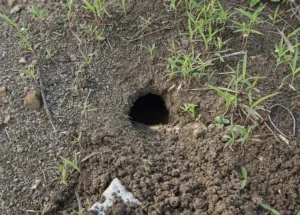
Once rats are gone, fill burrows with steel wool or wire mesh, then pack dirt on top. Rats can’t chew through metal.
Consider pouring concrete into major burrow systems to permanently block them.
Remove attractants that brought rats to your property: garbage, pet food, bird seed, fallen fruit.
Eliminate cover near your home. Cut back vegetation, remove woodpiles, and clean up debris where rats feel safe.
Monitor the filled burrows. If rats return and start digging again, you haven’t solved the underlying problem.
Preventing Rats from Burrowing Near Your Home
Prevention is always easier than removal once rats have established burrows.
Create a vegetation-free zone around your foundation. Rats prefer cover and will avoid open spaces.
Install gravel or stone barriers around foundations. Rats can dig through these but they usually choose easier locations.
Keep grass short and remove weeds regularly. Overgrown areas attract burrowing rats.
Store firewood and building materials away from your house, elevated off the ground on racks.
Remove potential food sources. Secure garbage, don’t leave pet food out, clean up fallen fruit and bird seed.
Fix any water leaks. Rats need water and are attracted to damp areas.
Inspect your property regularly for signs of new burrows and address them immediately.
Consider installing underground barriers made of hardware cloth buried around vulnerable areas.
Seasonal Changes in Burrowing Activity
Rat burrowing behavior changes throughout the year based on weather and breeding cycles.
Spring sees increased burrowing as rats expand territories and prepare nests for breeding season.
Summer activity focuses on maintaining existing burrows and using them for temperature control.
Fall brings intense burrowing as rats prepare food storage and winter shelter.
Winter sees the least burrowing because frozen ground is too hard to dig. Rats stick to existing burrows.
You might notice more visible burrow activity in spring and fall when rats are most active above ground.
Breeding season drives a lot of burrowing behavior as females need safe nests for babies.
Conclusion
Rats burrow because it’s a survival strategy that provides protection from predators, stable temperatures, safe nesting sites for babies, and food storage areas. This instinctive behavior has helped rats survive for millions of years in diverse environments.
The complex tunnel systems rats create serve entire colonies, with different chambers for different purposes. While burrowing is natural rat behavior, it creates serious problems for property owners when it happens near foundations, lawns, and structures.
Understanding why rats burrow helps you recognize the signs of rat activity on your property and take appropriate action to eliminate the rats and prevent future burrowing near your home.

Hi, my name is Ezra Mushala, i have been interested animals all my life. I am the main author and editor here at snakeinformer.com.