
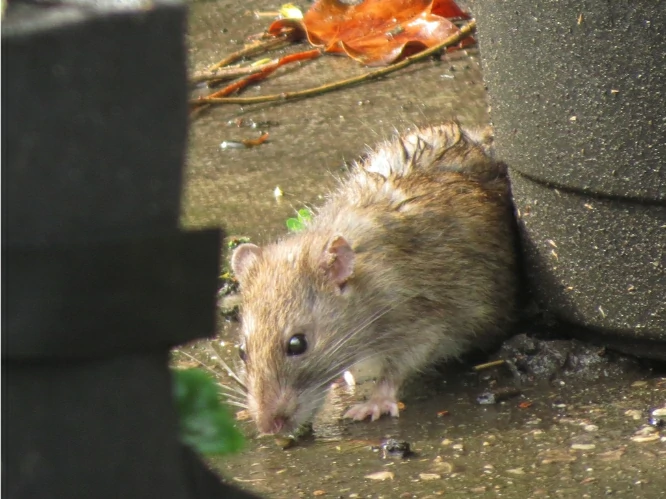
If you’ve ever watched a cat stalk and catch a rat, you’ve witnessed behavior that goes back thousands of years. Even well-fed house cats will hunt, kill, and sometimes eat rats when given the opportunity. This might seem strange or cruel, but it’s deeply rooted in their biology and evolution. So why do cats hunt, kill, and eat rats?
Cats hunt, kill, and eat rats because they’re natural predators with instincts that evolved over millions of years. Hunting is hardwired into their brain, and they’ll chase small animals even when they’re not hungry. Rats are the perfect size and movement pattern to trigger a cat’s prey drive.
This hunting behavior isn’t something cats learn from their mothers, though practice does make them better hunters. Even cats raised completely indoors with no exposure to prey will try to hunt if they encounter a rat. It’s as natural to them as breathing.
Cats Are Obligate Carnivores Built to Hunt
Unlike dogs and humans who can survive on various diets, cats are obligate carnivores. This means they must eat meat to survive. Their entire body is designed for hunting and eating other animals.
A cat’s teeth are sharp and pointed, perfect for grabbing and tearing flesh. They don’t have flat molars for grinding plants like omnivores do. Every tooth in their mouth serves the purpose of catching and consuming prey.
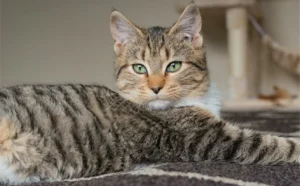
Their digestive system is short and simple compared to animals that eat plants. Cats can’t digest plant matter very well because their bodies evolved to process meat quickly and efficiently. They need nutrients that only come from animal tissue.
Their eyes are positioned forward on their face, giving them excellent depth perception for judging distances when pouncing. Their pupils can open very wide to catch more light, allowing them to hunt in very low light conditions when rats are most active.
Cats have retractable claws that stay sharp because they’re protected when not in use. These claws are perfect weapons for grabbing and holding struggling prey. Combined with their flexible spine and powerful leg muscles, cats are incredibly efficient hunters.
The Hunting Instinct Doesn’t Turn Off When They’re Full
One of the most confusing things for cat owners is seeing their well-fed pet kill a rat and leave it uneaten. This seems wasteful or cruel, but it’s actually completely normal behavior.
The drive to hunt is separate from the drive to eat. A cat’s brain releases dopamine (a feel-good chemical) during the hunt itself, not just from eating. Stalking, chasing, and catching prey is rewarding on its own, regardless of whether the cat is hungry.
This is an evolutionary advantage. Wild cats never knew where their next meal would come from, so they couldn’t afford to pass up hunting opportunities just because they’d recently eaten. Cats that hunted whenever possible, not just when hungry, were more likely to survive and pass on their genes.
Your house cat’s ancestors survived by taking every chance to catch prey. That instinct is still there, even though your cat has a full food bowl at home. The hunting drive is so strong that it overrides the feeling of being full.
This explains why cats often kill more than they can eat. In the wild, this behavior made sense. Extra kills could be saved for later or fed to kittens. The instinct to kill available prey remains even though your house cat doesn’t need to stockpile food.
Why Rats Trigger a Cat’s Prey Drive
Not all moving objects trigger a cat’s hunting instinct equally. Rats happen to have all the characteristics that make a cat’s brain scream “prey.”
Size matters a lot. Rats are in the perfect size range for a cat to see as prey rather than as a threat or competitor. They’re small enough to catch and kill but large enough to be worth the effort. Objects that are too small (like ants) or too large (like big dogs) don’t trigger the same response.
Movement patterns are critical. Rats move in quick, erratic bursts with frequent stops. This stop-and-go movement is exactly what activates a cat’s prey drive. Slow, steady movement doesn’t trigger hunting behavior as strongly as quick, jerky motions do.
Rats are also ground-dwelling creatures that run along walls and hide in tight spaces. This matches the hunting patterns that cats evolved to exploit. Cats are ambush predators that wait for ground animals to come within striking distance.
The sounds rats make also attract cats. Squeaking, scratching, and rustling noises all signal to a cat that potential prey is nearby. Cats have excellent hearing and can detect high-pitched sounds that humans can’t hear.
Even the smell of rats can trigger hunting behavior. Cats have a very sensitive sense of smell, and they can detect the scent of rats from quite far away. This smell activates their hunting instincts before they even see the rat.
How Cats Actually Hunt and Kill Rats
Watching a cat hunt a rat reveals a very specific sequence of behaviors that’s consistent across all cats. This hunting pattern is instinctive and follows predictable steps.
First comes the stalk. When a cat spots a rat, it’ll lower its body close to the ground and move very slowly and deliberately. The cat’s pupils dilate, its ears turn forward, and its entire body focuses on the target.
During the stalk, the cat’s rear end will wiggle back and forth. This isn’t playfulness. It’s the cat adjusting its footing and preparing its leg muscles for the explosive burst of speed that’s coming.
The pounce happens in a split second. Cats can leap several times their body length from a standstill. They launch themselves at the rat with their front paws extended and claws out, trying to pin the rat down or grab it.
If the pounce is successful, the cat will bite the rat, usually at the back of the neck. This bite serves two purposes. First, it gives the cat a firm grip. Second, if the bite is placed correctly, it can sever the rat’s spinal cord, causing instant paralysis or death.
Cats often play with rats before killing them, which looks cruel but serves a purpose. By batting the rat around and letting it run a short distance before catching it again, the cat tires out the rat and reduces the risk of getting bitten.
The killing bite comes when the rat is exhausted and can’t fight back effectively. Cats typically bite the rat’s neck or head, crushing the skull or breaking the neck. This is usually quick, though not always immediate.
Why Some Cats Eat Rats and Others Don’t
Whether a cat eats the rat it kills depends on several factors, including the cat’s hunger level, how it was raised, and even its individual personality.
Hungry cats are more likely to eat their kill. Feral cats and outdoor cats that hunt for survival will almost always eat what they catch. For them, rats are an important food source, not just a toy.
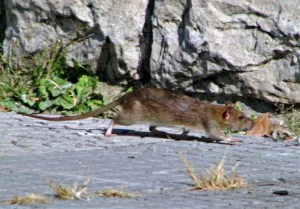
Well-fed house cats might kill rats but not eat them because they’re not motivated by hunger. They were hunting for the thrill of the chase and the satisfaction of the kill, not because they needed food.
Cats that were taught to hunt by their mothers are more likely to eat their prey. Mother cats bring back prey to teach their kittens what to eat and how to kill effectively. Kittens that missed this education might kill rats but not recognize them as food.
Some cats are just picky eaters. They might kill a rat but find the taste or smell unappealing. House cats used to commercial cat food might not like the taste of wild prey.
The condition of the rat also matters. Cats usually won’t eat rats that smell sick or unusual. Their instincts warn them away from diseased prey that could make them sick.
If a cat does eat a rat, it’ll usually eat most of it, leaving behind the stomach, intestines, and sometimes the head. This is normal and instinctive. Cats avoid eating organs that might contain parasites or indigestible plant material from the rat’s last meal.
The Risks of Cats Eating Rats
While cats are natural rat hunters, eating rats comes with real health risks that cat owners should understand.
Rats can carry parasites that transfer to cats when eaten. Common parasites include roundworms, tapeworms, and toxoplasmosis. These parasites can make cats sick and some can even spread to humans who handle infected cats.
If the rat had eaten poison, the cat can be poisoned too. This is called secondary poisoning. Rat poison doesn’t kill instantly, so a poisoned rat might still be moving around for hours or days before dying. If a cat eats this poisoned rat, the toxins transfer to the cat.
Symptoms of rat poison in cats include bleeding from the nose or mouth, difficulty breathing, lethargy, and pale gums. If you suspect your cat ate a poisoned rat, get to a veterinarian immediately. Many rat poisons are anticoagulants that cause internal bleeding, which can be fatal.
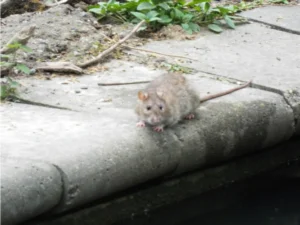
Rats can also carry diseases like leptospirosis, rat-bite fever, and plague (yes, the bubonic plague still exists, though it’s rare). While cats are less susceptible to some of these diseases than humans, they can still get sick.
Even healthy rats can injure cats. Rats have sharp teeth and will fight back when cornered. A rat bite can cause serious infections, especially if the wound isn’t cleaned and treated properly.
If your cat hunts and eats rats regularly, make sure it’s up to date on all vaccinations and gets regular veterinary checkups. Your vet can test for parasites and catch any problems early.
Not All Cats Are Good Rat Hunters
The stereotype that all cats are excellent ratters isn’t entirely true. Some cats are much better hunters than others, and some show almost no interest in hunting at all.
Genetics play a role. Some cat breeds were specifically developed for their hunting skills. Farm cats, barn cats, and certain breeds like the American Shorthair were bred partly for their ability to control rodent populations.
Early experience matters too. Cats that grew up around prey and learned to hunt from their mothers are typically better hunters than cats raised entirely indoors with no exposure to small animals.
Individual personality is huge. Some cats are naturally more aggressive and prey-driven, while others are more laid-back and content to watch rats from a safe distance. You can’t force a non-hunting cat to become a hunter.

Age affects hunting ability. Young adult cats (1 to 5 years old) are usually the most active hunters. Kittens lack the skill and coordination, while older cats might not have the energy or interest.
Physical condition matters. Overweight or out-of-shape cats might want to hunt but lack the speed and agility to catch quick-moving rats. Cats with health problems or injuries might not be physically capable of hunting.
Hunger level influences hunting motivation but doesn’t determine hunting ability. A well-fed skilled hunter will still catch rats, while a hungry but unskilled cat might fail repeatedly.
How Humans Have Used Cats as Rat Control
The relationship between cats and humans began partly because of their rat-hunting abilities. This partnership has existed for thousands of years and shaped both species.
Cats were first domesticated around 10,000 years ago in the Middle East when humans started farming and storing grain. Stored grain attracted rats and mice, which in turn attracted wild cats. Humans realized that having cats around kept the rodent population under control.
This was a mutually beneficial relationship. Humans got free pest control, and cats got easy access to concentrated prey and eventually food and shelter from humans. Unlike dogs, which were actively bred and trained, cats sort of domesticated themselves by hanging around human settlements.

Throughout history, cats were valued primarily for their hunting skills. On ships, cats controlled rat populations that would otherwise eat stored food and spread diseases. Ship’s cats were common on naval and merchant vessels for centuries.
Farms and grain stores kept cats specifically to control rodents. Before modern chemical pest control, cats were one of the most effective methods available. Large farms might keep dozens of cats to protect stored crops.
Even today, some businesses use cats for rodent control. Breweries, warehouses, and some farms still keep working cats to manage rat and mouse populations naturally without using poisons.
However, cats alone aren’t enough to control serious rat infestations. Rats reproduce so quickly that even skilled hunting cats can’t keep up with a large population. Cats work best as part of a prevention strategy, not as a cure for existing infestations.
Conclusion
Cats hunt, kill, and eat rats because millions of years of evolution have made them perfect predators for small mammals. Their bodies, senses, and instincts are all designed for hunting, and rats trigger all the right responses in a cat’s brain.
This hunting behavior is natural and normal, but it comes with risks when cats eat their prey. Parasites, diseases, and secondary poisoning are real dangers that every cat owner should be aware of if their cat hunts rats.
While cats can help control small rat populations, they’re not a complete solution to serious infestations. Prevention, professional pest control, and proper sanitation are more effective than relying on cats alone. If you do have a hunting cat, make sure it gets regular veterinary care to stay healthy and safe.

Hi, my name is Ezra Mushala, i have been interested animals all my life. I am the main author and editor here at snakeinformer.com.