
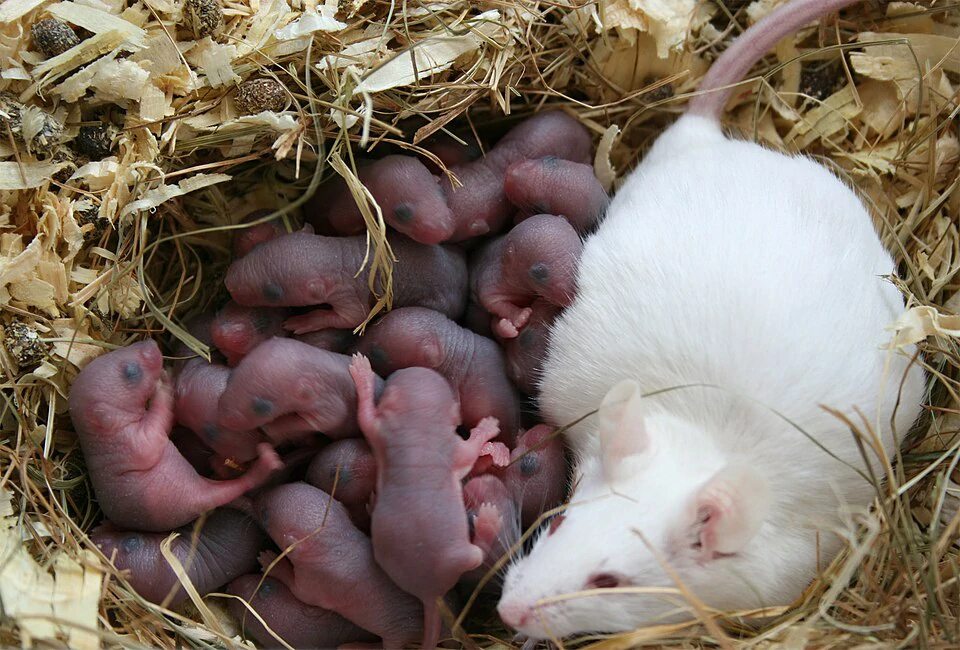
If you’ve ever seen a white rat with pink or red eyes, you’ve probably wondered what makes them look so different from the brown or gray rats you usually see.
These rats aren’t just a different color – they’re actually albino, which means their bodies don’t produce the pigment that gives most animals their color. But why are some rats albino?
Some rats are albino because they inherited two copies of a mutated gene that stops their bodies from making melanin, the pigment that gives color to skin, fur, and eyes. This genetic mutation can happen naturally in wild rats, but most albino rats you see today were bred on purpose by humans for use in laboratories and as pets.
Albinism in rats works the same way it does in other animals. When a rat gets two copies of the albino gene (one from each parent), its body can’t produce melanin at all.
This is why albino rats have pure white fur and pink or red eyes. You’re actually seeing the blood vessels behind their eyes since there’s no pigment to cover them.
How the Albino Gene Works in Rats
The albino trait in rats is what scientists call a recessive gene. This means a rat needs to inherit the mutated gene from both its mother and father to actually be albino.

If a rat only gets one copy of the albino gene, it’ll look completely normal. These rats are called carriers because they carry the gene but don’t show it.
When two carrier rats have babies together, there’s a 25% chance each baby will be albino.
This is different from dominant genes, which only need one copy to show up. The recessive nature of albinism is why you don’t see albino rats as often in the wild. Both parents need to have the gene, and then the babies need to inherit it from both sides.
Albino Rats in the Wild Are Extremely Rare
In nature, albino rats almost never survive long enough to have babies of their own.
Their white fur makes them stand out like a bright flag to predators, and they can’t hide in the shadows or blend into their surroundings like their colored relatives can.
Predators like hawks, owls, cats, and snakes can spot an albino rat from much farther away.
This means albino rats in the wild usually get eaten before they’re old enough to reproduce and pass on their genes.

Their pink eyes also cause problems. Albino rats have much worse vision than normal rats, and they’re very sensitive to bright light.
In the wild, this poor eyesight makes it harder for them to find food, avoid danger, and get around safely.
Why Humans Started Breeding Albino Rats on Purpose
The story of albino rats as we know them today started in the early 1900s. Scientists needed animals they could study in laboratories, and rats were perfect. They’re small, breed quickly, and are easy to take care of.
Researchers specifically chose albino rats for their experiments because the white color made it easier to see things happening under the rat’s skin.
You can see blood vessels, tumors, and other changes much more clearly on a white rat than on a brown or black one.
Over time, scientists bred these albino rats with each other for generations. This created stable lines of albino rats that always produced albino babies.
These laboratory rats became the ancestors of most pet albino rats you see today.
The Different Types of Albinism in Rats
Not all albino rats are created equal. There are actually different types of albinism that can affect rats, though they all result in white fur and light-colored eyes.
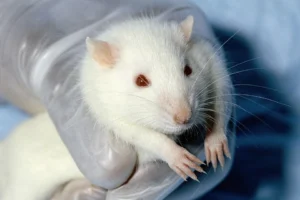
The most common type is called tyrosinase-negative albinism (or c-albinism). Rats with this type can’t produce any melanin at all. They have pure white fur and bright pink or red eyes.
Some rats have what’s called partial albinism or leucism. These rats might have very pale cream or off-white fur instead of pure white, or they might have some color in certain areas.
Their eyes might be lighter pink or even pale ruby red instead of the bright red you see in full albinos.
There’s also a type called Himalayan (or pointed white), where rats are mostly white but have darker points on their nose, ears, feet, and tail.
These rats have pink eyes like albinos, but they can produce some pigment in the cooler parts of their body.
Health Problems That Come with Being Albino
Albino rats face several health challenges because of their lack of pigment. The biggest problem is their eyesight. Albino rats are partially blind compared to colored rats, and they’re very sensitive to bright lights.
This happens because melanin normally helps protect the eye and improves vision. Without it, too much light gets into the eye, which can be painful and makes it hard for them to see clearly. Albino rats do much better in dim lighting.
They’re also more likely to get skin problems and sunburn. Melanin protects skin from UV damage, so albino rats kept outdoors or in bright sunlight can develop skin issues.
This is why pet albino rats should always be kept indoors with gentle lighting.
Some studies suggest albino rats might have weaker immune systems and shorter lifespans than colored rats, though this is still being researched.
The lack of melanin might affect more than just appearance – it could impact their overall health in ways scientists are still trying to understand.
Why Albino Rats Make Popular Pets
Despite their health challenges, albino rats are actually some of the most popular pet rats around. There are several reasons why people love them.
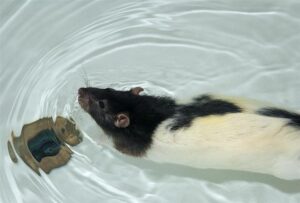
First, they’re usually calmer and easier to handle than wild-type colored rats. This isn’t because of the albino gene itself, but because albino rats have been bred in captivity for over 100 years. All that breeding selected for rats that were gentle and comfortable around humans.
Many people also find them beautiful. Their pure white fur is striking, and even though their red eyes can look strange at first, many owners grow to love this unique feature.
Albino rats are also easy to find at pet stores because they’ve been bred so extensively. They’re usually cheaper than fancy colored rats too, which makes them a good choice for first-time rat owners.
How to Care for an Albino Rat’s Special Needs
If you have an albino rat or you’re thinking about getting one, you’ll need to make some adjustments to help them live their best life.
Keep their cage away from bright lights and direct sunlight. Albino rats do best with soft, indirect lighting. If you notice your rat squinting or keeping its eyes half-closed, the lighting is probably too bright.
Give them plenty of hiding spots in their cage. Because albino rats can’t see as well, they feel safer when they have boxes, tunnels, and other enclosed spaces where they can retreat. This also helps them avoid light when they want to.
Use strong-smelling foods to help them find their meals. Since their vision isn’t great, albino rats rely more heavily on their sense of smell. Foods with strong scents make it easier for them to locate their dinner.
Watch for signs of skin irritation, especially if your rat gets any sun exposure. If you see redness or flaking on their ears, tail, or feet, move them to a spot with less light.
Albino Rats vs. White Rats – They’re Not the Same Thing
A lot of people think all white rats are albino, but that’s not true. There are several ways a rat can have white fur without being albino.
The key difference is the eyes. True albino rats always have pink or red eyes because they have no pigment at all. White rats with black eyes are not albino – they have a different gene that makes their fur white while still allowing their eyes to produce pigment.
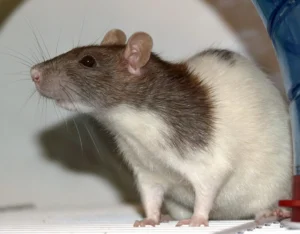
These black-eyed white rats (sometimes called PEW for “pink-eyed white” vs. BEW for “black-eyed white”) don’t have the vision problems albino rats have. They can see just as well as any colored rat.
Some white rats also have small patches of color on their head or body. If you see any colored fur at all, or if the rat has dark eyes, it’s definitely not albino.
The Science Behind Why Albinism Keeps Showing Up
Even though albino rats don’t survive well in the wild, the albino gene never completely disappears from wild rat populations. This is because carrier rats (rats with one copy of the gene) look and act completely normal.
These carrier rats can pass the gene to their babies without anyone knowing. When two carriers happen to mate, some of their babies will be albino.
This keeps the gene circulating in the population, even though albino rats themselves rarely survive.
In captive populations, like pet rats or lab rats, the albino gene is extremely common. This is because humans have been breeding albino rats with each other for generations. In these populations, almost every rat either is albino or carries the albino gene.
Scientists have studied the exact mutation that causes albinism in rats. The gene is called the tyrosinase gene (or c gene), and when it’s mutated, it can’t make the enzyme needed to produce melanin
. Understanding this has helped researchers learn about albinism in other animals, including humans.
Famous Albino Rats in Research and Pop Culture
Albino rats have played a huge role in scientific research. Some of the most important medical discoveries of the past century were made using albino laboratory rats.
These rats have been used to study everything from cancer to nutrition to behavior. The first rat genome that was sequenced came from an albino laboratory rat. This research has helped scientists understand genetics and develop treatments for human diseases.
In pop culture, white rats (often portrayed as albino even when they’re not) frequently show up as the pets of scientists, wizards, or villains.
While this sometimes gives rats a bad reputation, it also shows how connected albino rats are with intelligence and experimentation in people’s minds.
The laboratory rat is actually considered one of the most important animals in modern medicine. Almost all of these lab rats are albino or descended from albino lines.
Can You Breed Albino Rats with Colored Rats?
Yes, you can breed albino rats with colored rats, but understanding what babies you’ll get requires knowing some basic genetics.
When you breed an albino rat with a colored rat that doesn’t carry the albino gene, all the babies will be colored. However, every single baby will carry one copy of the albino gene hidden in their DNA.
If you then breed two of these babies together (both carriers), you’ll get a mix in the next generation. About 25% will be albino, 50% will be colored carriers, and 25% will be colored non-carriers.
Many rat breeders do this on purpose to add the albino gene to their lines. This gives them the option to produce albino rats in the future while also maintaining colored rats in their breeding program.
Conclusion
Albino rats exist because of a genetic mutation that stops their bodies from making melanin, the pigment that gives color to skin, fur, and eyes.
While this mutation makes them stand out in the wild (usually in a bad way for their survival), humans have bred albino rats intentionally for over a century.
Today, most albino rats you’ll see are either laboratory rats used in research or pets descended from those lab lines. They face some challenges like poor eyesight and light sensitivity, but with proper care, they make wonderful pets.
The albino gene is recessive, which means it can hide in rat populations for generations before showing up again. This is why albinism keeps appearing even in wild rats, though these wild albino rats rarely survive long enough to reproduce.
Whether you’re fascinated by the genetics behind albinism or you just think white rats with red eyes are beautiful, understanding why some rats are albino helps you appreciate these unique animals even more.
If you decide to bring an albino rat into your home, just remember to give them the gentle lighting and extra care they need to thrive.

Hi, my name is Ezra Mushala, i have been interested animals all my life. I am the main author and editor here at snakeinformer.com.