
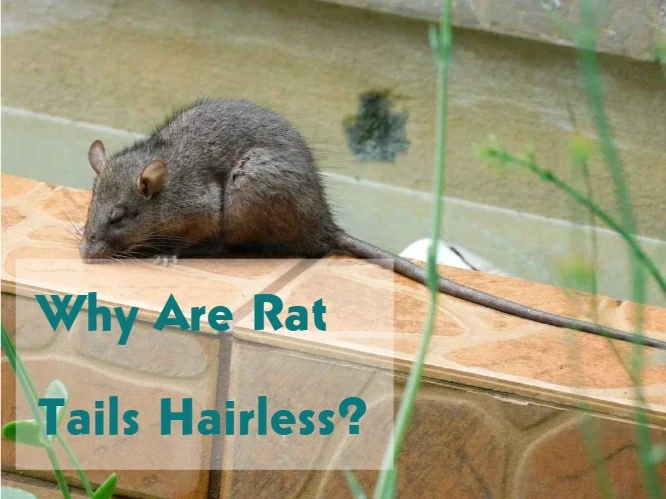
If you’ve ever seen a rat up close, you’ve probably noticed something unusual about their tails. While their bodies are covered in soft fur, their tails are completely bare and scaly.
It’s kind of strange when you think about it. Why would rats have furry bodies but hairless tails?
Rats tails are hairless because they help with temperature control. The bare skin allows rats to release excess body heat quickly, which is really important since rats can’t sweat like humans do. The hairless tail also gives rats better grip and balance when they’re climbing.
This design isn’t just random. A hairless tail actually gives rats some pretty useful advantages that help them survive in different environments and situations.
Rats Tails Help Control Body Temperature
Rats don’t have sweat glands like we do, so they can’t cool down by sweating. This is a big problem for small animals that are always on the move.
Their hairless tails solve this issue. When a rat gets too hot, blood flows to the tail where heat can escape through the bare skin.

Think of it like a built-in radiator. The tail has lots of tiny blood vessels close to the surface, and when warm blood flows through them, the heat radiates out into the air.
This is especially helpful when rats are active or stressed. Their body temperature can rise quickly, and the tail helps them cool down fast.
In cold weather, rats can actually reduce blood flow to their tails to keep warmth in their core body.
Rats also adjust how they hold their tails depending on the temperature. On hot days, they might stretch their tails out to let more heat escape.
When it’s chilly, they curl them close to their bodies to keep warmth in. Even these small movements make a noticeable difference in keeping their body temperature just right.
It’s a pretty smart system that works both ways.
The Hairless Tail Gives Rats Better Balance
Rats are really good climbers, and their tails play a huge role in that. A hairless tail is more flexible and sensitive than a furry one would be.
When a rat is walking along a narrow surface (like a wire or tree branch), the tail acts like a counterbalance. It can wrap around objects for extra stability.
If the tail had fur, it would be thicker and less flexible. The rat wouldn’t be able to feel surfaces as well or wrap the tail as tightly around things.
You can see this when rats climb. They use their tails almost like a fifth limb, constantly adjusting position to keep their balance.
The bare skin also lets them feel textures and surfaces better. This gives them more information about their environment as they move around.
The tail also helps when rats jump or make sudden turns. So the tail isn’t just for climbing, it’s like an extra stabilizer for every kind of movement.
Hairless Tails Give Rats Extra Grip
The scales on a rat’s tail aren’t just for show. They actually provide grip when the rat wraps its tail around something.
These scales overlap slightly, kind of like shingles on a roof. When the tail wraps around a branch or wire, the scales catch on the surface and help hold the rat in place.
If you look closely at a rat’s tail, you’ll see it’s not smooth. Those little ridges between scales create friction.

This is really useful when rats are climbing vertically or hanging from things. The tail can grip surfaces that would be too slippery for just their paws alone.
Some rats can even support part of their body weight with just their tail for short periods. That’s how strong the grip can be.
Scientists have tested rats climbing rods in labs. They found that if a rat’s tail is trimmed or injured, it slips more often and struggles to stay on narrow surfaces. That little scaly tail really is a secret superpower for gripping tight spots.
The Tail Protects Against Injuries
A hairless tail is actually more durable than you might think. The thick, scaly skin is pretty tough and can handle rough surfaces.
If a rat had a furry tail, the fur could get caught on things or torn off easily. This would be painful and could lead to infections.
The bare skin heals faster too. If a rat scrapes its tail, there’s no fur to get dirty or matted with blood.
The scales also provide a protective layer against minor cuts and scratches. They’re made of the same stuff as your fingernails (keratin), so they’re pretty resilient.
Rats often drag their tails through tight spaces, dirty areas, and rough terrain. A hairless tail holds up better to this kind of wear and tear.
Blood Vessels in the Tail Are Easy to Access
This might sound weird, but having a hairless tail is actually helpful for the rat’s circulatory system. The tail contains major blood vessels that are close to the surface.
When a rat needs to warm up cold blood or cool down hot blood, the tail is the perfect place to do it. The blood vessels can expand or contract based on what the rat needs.
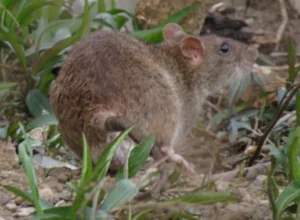
If the tail had fur, it would insulate these blood vessels and make temperature control much harder. The bare skin allows for quick heat exchange.
This is similar to how elephants use their large ears to cool down. The blood vessels are right near the surface where air can cool them.
You can actually see the blood vessels through a rat’s tail if you look closely in good light. They show up as slightly pink or red lines under the skin.
Why Don’t All Animals Have Hairless Tails?
Not all animals need the same features that rats do. Animals with furry tails usually have them for different reasons.
Squirrels, for example, have big bushy tails that help them stay warm and balance when jumping. They live in trees and need different adaptations than rats.

Cats and dogs have furry tails for communication and balance, but they can sweat through their paw pads and pant to cool down. Rats can’t do either of these things effectively.
Rats evolved in environments where they needed to be flexible climbers, quick movers, and able to handle temperature changes. A hairless tail does all of this.
Different animals solve the same problems in different ways. For rats, a hairless tail just happens to be the best solution.
The Tail Can Show Health Problems
Because a rat’s tail is hairless, it’s actually easier to spot health issues. Any cuts, swelling, or color changes are obvious right away.
A healthy rat tail should be pink (in light-colored rats) or darker (in dark-colored rats), with smooth, even scales. The tail should be warm to the touch and move freely.

If a rat’s tail looks pale or feels cold, it might mean there’s a circulation problem. If it’s swollen or has sores, there could be an infection.
Some rats can also develop a condition called “ringtail,” where the tail gets constricted and parts of it can die. This usually happens when the air is too dry.
Pet rat owners need to watch their rats’ tails for any signs of injury or illness. Because there’s no fur to hide problems, issues are usually easy to catch early.
The Tail Can Show How Rats Feel
Rats hairless tails actually use them to show how they feel. A little flick or twitch can mean excitement, curiosity, or even irritation.
You might notice a rat flicking its tail when it’s exploring a new corner of its cage or meeting another rat for the first time.
Tail movements also help rats communicate with each other. When two rats are grooming or playing, subtle twitches can signal friendliness or interest.

If a tail suddenly stiffens or jerks, it can warn other rats to back off.
Even though it’s hairless, the tail works together with whiskers, body posture, and tiny squeaks to send messages.
It’s a quiet but important way for rats to stay in sync and avoid misunderstandings in their social world.
Are Baby Rats Are Born With Hairless Tails?
Rat pups are born pretty helpless. They’re blind, deaf, and mostly hairless all over, including their tails.
As they grow, fur develops on their bodies, but the tail stays bare. This happens over the first few weeks of life.
By the time a baby rat is ready to start exploring and climbing (around 2-3 weeks old), its tail is already functioning as a balance and temperature control tool.
The tail grows along with the rest of the rat’s body. An adult rat’s tail is usually about the same length as its body, or sometimes even a bit longer.

Some people think baby rat tails look weird or creepy, but they’re just doing the same job adult rat tails do, just on a smaller scale.
Even before their eyes open, baby rats can feel surfaces with their tails as they crawl toward their mother or siblings.
It’s like a little guide that helps them move safely and learn about their surroundings in those first few weeks.
Different Rat Species Have Similar Tails
Most rat species have hairless tails, whether they’re wild rats or fancy pet rats. This includes both Norway rats and roof rats, the two most common types.

The basic design is the same across species because it works so well. Evolution kept this feature because it gives rats a real advantage.
Some other rodents have hairless tails too, like opossums (though they’re not actually rodents) and some mouse species. But many rodents have furry tails instead.

The hairless tail is particularly common in rodents that climb a lot or live in areas with temperature extremes. It’s an adaptation that makes sense for their lifestyle.
Even domesticated fancy rats, which have been bred for generations as pets, still have the same type of hairless tail. It’s too useful to lose.
The Tail Isn’t Completely Hairless
If you look really closely at a rat’s tail, you might notice it’s not 100% bare. There are actually tiny, fine hairs scattered across the surface.
These hairs are so small and sparse that you usually can’t see them unless you’re looking carefully. They don’t provide insulation like body fur does.

These tiny hairs are actually sensory hairs. They help the rat feel things touching its tail and give it more information about its surroundings.
Think of them kind of like whiskers, but much smaller. They’re connected to nerve endings and help the rat navigate in tight spaces.
They can pick up subtle changes in air movement or vibrations. This helps rats notice nearby obstacles or predators, adding another layer of “feelers” beyond their whiskers.
So while we call rat tails “hairless,” they technically have hair, just not enough to make any real difference in how the tail looks or functions.
Rat Tails Can Regenerate to Some Extent
If a rat injures its tail, the skin can heal and even regenerate to some degree. The scales will grow back over healed areas.
However, if part of the tail is completely lost (like if it gets cut off), that part won’t grow back. Rats can’t regenerate entire sections of tail like some lizards can.

A rat can survive with part of its tail missing, but it will have a harder time with balance and temperature control. The more tail it loses, the bigger the impact.
In the wild, rats with damaged tails are at a disadvantage. They can’t climb as well or regulate their temperature as effectively.
Pet rats with tail injuries usually adapt pretty well, especially if they’re in a controlled environment where climbing isn’t as necessary for survival.
Tail Injuries Can Affect Behavior
If a rat loses part of its tail or injures it, the effects go beyond just balance or temperature control. Rats with tail injuries often become more cautious, avoiding climbing or risky jumps.
They may take slower, more careful steps, especially on narrow surfaces where a tail normally acts like a stabilizer.
In the wild, a damaged tail can affect a rat’s social life too. Agility is important for escaping predators, finding food, and even showing dominance.

A rat with a shortened or injured tail might become less confident or lose some status in its group.
Even pet rats show subtle changes in behavior after a tail injury. They might explore less, rely more on their paws for gripping, or stick to safer paths in their cage.
The tail really is more than just a body part, it can influence how a rat interacts with the world every day.
Conclusion
Rat tails are hairless for some really practical reasons. The bare skin helps rats control their body temperature when they can’t sweat, gives them better balance and grip when climbing, and makes it easier to spot health problems.
This design has worked for rats for millions of years, and it’s why you’ll see the same hairless tail on pretty much every rat you come across. It’s not just how they look, it’s actually a key part of how they survive.
Whether you think rat tails are creepy or cool, you can’t deny they’re pretty well-designed for what rats need to do every day.

Hi, my name is Ezra Mushala, i have been interested animals all my life. I am the main author and editor here at snakeinformer.com.