
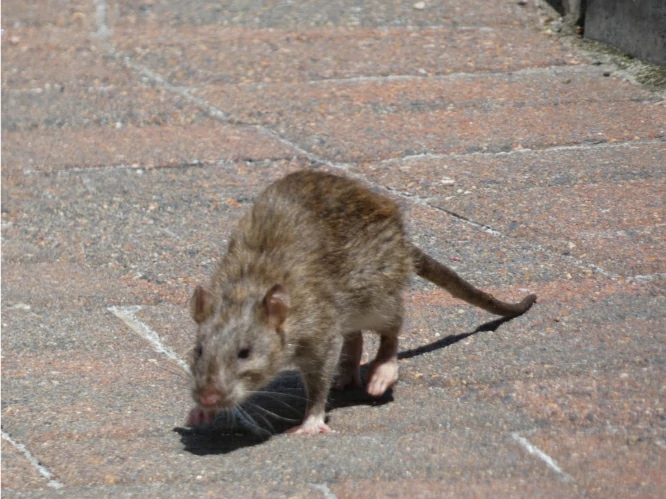
Anyone who’s walked through New York City at night has probably seen them. Rats the size of small cats, waddling across subway tracks or digging through garbage bags like they own the place.
Videos of these giant rodents go viral regularly, with people shocked at just how massive they are. Some look more like small dogs than the mice-sized rats people expect.
It’s become part of the city’s identity, but it raises a real question. Why are rats in New York so big?
New York rats are so big because they have unlimited access to high-calorie food from restaurants and garbage, face fewer predators than rural rats, and have been breeding in ideal conditions for generations, with the largest rats passing on their size to their babies.
The city is basically a rat paradise. Everything they need to grow huge is right there, and nothing stops them from getting as big as their genetics allow.
How Big Are New York Rats Actually?
Let’s start with some real numbers. A typical wild rat in a rural area weighs between 5 to 10 ounces and measures about 9 to 11 inches long (not counting the tail).
New York City rats often weigh 12 to 16 ounces, with some getting even bigger. The biggest ones can hit a pound or more. Add in a tail that’s as long as their body, and you’ve got a rodent that’s genuinely shocking when you see it up close.

The length is impressive too. Some NYC rats measure 15 to 18 inches from nose to tail base. Their tails add another foot or more on top of that.
These aren’t freaks or mutations either. Big rats are common enough in the city that seeing one doesn’t even make the news anymore. It’s just part of living there.
What Do New York Rats Eat That Makes Them So Large?
Food is the biggest factor in rat size. New York City produces about 14 million tons of garbage every year. That’s an insane amount of food waste, and rats get first dibs on a lot of it.
The quality of food matters too. Rats aren’t just eating scraps. They’re getting pizza crusts, bagels, chicken bones, french fries, and everything else New Yorkers throw away. This is high-calorie, high-fat food that packs on weight fast.
Restaurants are everywhere in NYC, and health codes require them to throw out food regularly. Even perfectly good food hits the trash because it’s been sitting out too long. Rats benefit from these regulations in a big way.
The constant supply matters too. In rural areas, food comes and goes with seasons. City rats eat well year-round. They never go through lean periods where they might lose weight or fail to grow.
Rats also aren’t picky. They’ll eat meat, grains, vegetables, dairy, and sweets. This varied diet gives them all the nutrients they need to grow as large as possible.
Do New York Rats Have Fewer Predators?
In nature, predators keep rat populations in check and tend to catch the slowest, weakest rats. This naturally selects for smaller, quicker rats that can escape better.
New York City doesn’t have many natural rat predators. There are some hawks and cats, but not nearly enough to make a dent in the rat population. The city has millions of rats and maybe thousands of cats and a few hundred hawks.

Without predation pressure, rats can get big and slow without paying a survival cost. A fat rat in the wild might get caught by a fox or owl. A fat rat in NYC just waddles around eating garbage with basically no consequences.
The few predators that do exist often go after easier prey. Pigeons and smaller rodents are less dangerous to catch than a big, aggressive rat that might fight back.
This lack of predation has been going on for generations. Rats that would’ve been eliminated in the wild survive in the city, breed, and pass on their genes (including genes for large size).
How Does City Infrastructure Help Rats Grow?
New York’s subway system, sewers, and old buildings create perfect rat habitat. These structures protect rats from weather and give them safe places to live and breed.
The subway stays warm in winter. Heat from trains and people keeps the temperature comfortable year-round. Rats don’t have to burn calories staying warm like outdoor rats do, so more energy goes toward growth.
Sewers provide shelter and water. Rats need water daily, and sewers offer unlimited amounts. They also offer protection from the elements and from the few predators that exist above ground.
Old buildings have gaps, cracks, and hollow walls where rats can nest safely. These spaces are close to food sources (restaurants, apartments, stores) but protected from disturbance.
The density of the city means rats don’t have to travel far for anything. Food, water, and shelter are all within a small territory. Less energy spent traveling means more energy for growth.
Does Breeding Play a Role in Rat Size?
Bigger rats have advantages in the city environment. They can push smaller rats away from food sources, defend better nesting spots, and fight off threats more effectively.
Bigger males often win fights for mating opportunities. This means large rats have more babies, and those babies inherit genes for large size. Over generations, this pushes the average size up.

Female rats also benefit from being larger. Bigger females can have more babies per litter and defend their nests better. Their babies are more likely to survive, especially the bigger ones.
There’s no pressure pushing sizes back down either. In nature, being too big can be a disadvantage (you’re easier to spot, need more food, can’t squeeze through tight spaces). In the city, these disadvantages don’t matter as much.
This selective breeding has been happening for decades. NYC has had a major rat problem since at least the early 1900s. That’s over a hundred years of rats breeding for size in ideal conditions.
Are New York Rats Getting Bigger Over Time?
It’s hard to say for certain because nobody was measuring rats consistently decades ago. But long-time New Yorkers and pest control experts say the rats seem bigger now than they used to be.
If food availability and safety have improved for rats over time (and they probably have), then average rat size should increase. Better conditions mean bigger rats.
Some experts think we’re seeing the results of multiple generations of selective breeding. Each generation, the biggest rats have the most babies, slowly pushing the average size upward.
Climate change might play a small role too. Warmer winters mean rats don’t have to burn as many calories staying warm. More of their food energy goes to growth and reproduction.
Better rat poison resistance has also led to more rats surviving overall. If poison is less effective, more rats (including big ones) live long enough to breed.
How Do Other Cities Compare?
New York gets the most attention, but other major cities have big rats too. Chicago, Washington DC, and Los Angeles all report large rat populations.
The pattern is consistent though. Cities with tons of food waste, mild climates (or warm subway systems), and lots of old infrastructure tend to have bigger rats. The more ideal the conditions, the bigger the rats get.

London has famously large rats for the same reasons as New York. Paris, Tokyo, and Mumbai all report similar issues. It’s not unique to NYC, but New York might have the perfect combination of factors.
Smaller cities and towns generally have smaller rats. There’s less food, more predators, harsher conditions, and less infrastructure for rats to exploit. Rural rats are even smaller because conditions are tougher.
What About Genetic Mutations?
Some people wonder if radiation, pollution, or chemicals are mutating NYC rats into giants. This makes for good horror movie plots but isn’t what’s actually happening.
The rats are just normal Norway rats (Rattus norvegicus) that are well-fed and living in great conditions. They’re not mutants. They’re just really, really well taken care of by the environment humans created.
Lab studies have shown that well-fed rats in safe conditions grow bigger than rats in harsh environments. New York rats are basically living in a giant lab experiment where everything favors large size.
There’s no evidence of genetic mutations causing increased size. DNA studies of NYC rats show they’re genetically similar to rats from other places. The difference is environmental, not genetic in the mutation sense.
Can Anything Be Done About Giant Rats?
Reducing rat size means making the city less hospitable for them. That’s easier said than done in a place like New York.
Better garbage management would help. Sealed containers, more frequent pickup, and stricter enforcement of sanitation rules would cut off food supply. Rats that can’t eat as much won’t grow as large.
Reducing food waste from restaurants and stores would matter too. But New York produces food waste as a natural part of feeding 8+ million people. Eliminating it completely isn’t realistic.
Fixing infrastructure could help. Sealing up buildings, closing gaps in subway systems, and improving sewers would give rats fewer safe places to live. But NYC infrastructure is old, and fixing everything would cost billions.
Introducing more predators isn’t practical. You can’t release hawks or foxes into the city. The cats that are there already aren’t making much difference.
Poison and traps can kill individual rats but don’t change the overall population much. New rats move into empty territories quickly, and if conditions are good, they’ll grow just as large.
Do Big Rats Pose Different Dangers Than Small Ones?
Bigger rats aren’t necessarily more dangerous, but they can cause more damage and are definitely more intimidating. A 16-ounce rat is harder to ignore than a 6-ounce one.
They can chew through tougher materials. Their bigger teeth and stronger jaws mean they can damage things smaller rats couldn’t. Wiring, pipes, and building materials are all at greater risk.
Big rats are more aggressive when cornered. They have less reason to run away because they can fight off cats and small dogs. This makes them more likely to bite if threatened.
They carry the same diseases as smaller rats, but a bigger rat can potentially harbor more pathogens. Their droppings are larger too, meaning more contamination per rat.
The psychological impact matters too. Seeing a rat the size of a small cat is genuinely frightening for most people. It makes the rat problem feel worse even if the actual health risks are similar.
What Do Pest Control Experts Say?
People who deal with NYC rats professionally aren’t surprised by the size. They see it every day and understand why it happens.
Most pest control workers say the biggest rats they catch are in areas with lots of restaurants. The correlation between available food and rat size is obvious when you’re working in the field.

They also note that rats in subway stations and sewers tend to be larger than rats in residential areas. The infrastructure provides better shelter, and the food sources are more reliable.
Many exterminators say traditional methods (traps and poison) barely make a difference in areas with really big rats. The rats are well-fed enough that they’re not desperate for bait, and they’re smart enough to avoid obvious traps.
Some pest control experts think the problem will get worse before it gets better. As long as conditions favor large rats, they’ll keep getting bigger and more numerous.
Are There Benefits to Studying Large Urban Rats?
Scientists study NYC rats to understand urban ecology, disease transmission, and how animals adapt to cities. The size of the rats is part of what makes them interesting.
Big rats are easier to track and observe. Researchers can fit them with small GPS devices or identification tags more easily than smaller rats. This helps study their movement patterns and behavior.
Understanding what makes city rats so successful might help with pest control. If we know exactly which factors lead to large, healthy rats, we can target those factors more effectively.

Disease research benefits too. NYC rats carry various pathogens, and studying them helps scientists track disease spread in urban environments. The fact that they’re large and numerous makes them significant from a public health perspective.
Climate research even uses rats as indicators. How rat populations respond to temperature changes, food availability, and human activity can tell us things about urban ecosystems in general.
How Do New Yorkers Feel About Giant Rats?
Ask a hundred New Yorkers about rats and you’ll get a hundred different answers. But most people have accepted them as part of city life, even if they don’t like it.
Long-time residents are less shocked by big rats than visitors are. When you see them regularly, they become just another part of the urban landscape, like pigeons or graffiti.
Social media has made NYC rats famous. Videos of particularly large rats go viral, with people both disgusted and oddly impressed by their size. Some rats have become minor celebrities online.
There’s also a weird sense of pride for some New Yorkers. The attitude of “our rats are tougher than your rats” fits into the general New York identity of everything being bigger and tougher than anywhere else.
But plenty of people are genuinely upset about it. Rats damage property, spread disease, and are disturbing to encounter. Many New Yorkers want the city to do more about the problem.
Conclusion
New York rats are so big because the city gives them everything they need to reach maximum size. Unlimited food, safe shelter, warm conditions, and almost no predators create a perfect environment for rats to thrive.
This isn’t a mystery or a mutation. It’s just basic biology playing out in an urban setting. Well-fed animals with good living conditions grow larger than stressed animals in harsh environments. New York rats have won the lottery in evolutionary terms.
The problem won’t go away on its own. As long as the city produces mountains of garbage and provides countless places for rats to live, they’ll stay big and keep multiplying.
Whether New Yorkers like it or not, giant rats are part of the deal when you live in one of the world’s biggest cities. They’re here to stay, and they’re probably not getting any smaller.

Hi, my name is Ezra Mushala, i have been interested animals all my life. I am the main author and editor here at snakeinformer.com.