
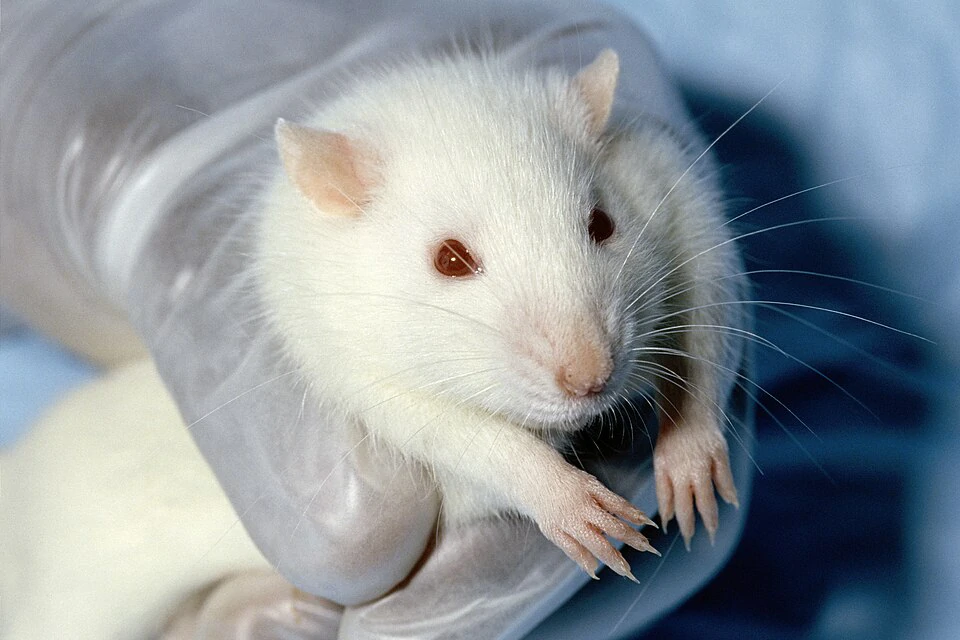
Walk into any biomedical research lab and you’ll probably see rats. These animals are used in millions of experiments every year across the world, from testing new medicines to studying behavior and brain function.
Rats have been a staple of scientific research for over a century.
They’ve helped develop treatments for diseases, test the safety of products, and advance our understanding of how bodies and brains work.
But with so many animals to choose from, why do scientists keep coming back to rats? Why are rats chosen for experiments?
Rats are chosen for experiments because their biology is remarkably similar to humans, they’re small and easy to house, they breed quickly, they’re relatively inexpensive, and scientists have built up extensive genetic and biological knowledge about them over decades. Their size also makes them better than mice for certain procedures while still being manageable.
The decision to use rats isn’t random or just about convenience. Scientists choose them for specific reasons that make them particularly valuable for answering research questions.
Understanding these reasons helps explain why rats remain so central to medical and scientific research.
Biological Similarity to Humans
The main reason rats are used in experiments is how much their biology resembles ours. This similarity means results from rat studies often translate well to human applications.
Rats are mammals, just like humans. This means we share the same basic body systems including cardiovascular, nervous, digestive, and reproductive systems.
The way these systems work in rats is similar enough to humans that studying them provides useful information.

At the genetic level, rats share about 90% of their genes with humans. While that 10% difference matters, the overlap is substantial enough that many biological processes work similarly in both species.
Organ structure and function in rats closely mirrors humans. Their hearts, lungs, kidneys, and liver perform the same jobs using similar mechanisms. This makes rats useful for studying how diseases affect these organs.
Metabolic processes are comparable too. How rats process food, drugs, and toxins is similar enough to humans that researchers can use them to predict how humans might react to new medications or chemicals.
The immune system in rats works much like ours. This makes them valuable for studying infectious diseases, autoimmune disorders, and how vaccines might work in people.
Size Advantages Over Mice
While mice are also common research animals, rats have specific size advantages that make them better for certain types of studies.
Rats are bigger, which means more blood and tissue samples can be collected without harming the animal. A researcher can draw blood from a rat multiple times during a study, tracking changes over time.
Surgical procedures are easier in rats because of their size. Installing devices, accessing organs, and performing complex operations is more practical in rats than in tiny mice where precision becomes extremely difficult.
Brain research benefits from rat size. The rat brain is large enough to implant electrodes, inject substances into specific regions, or remove tissue for analysis while still being small enough to study as a whole.
Behavioral studies are easier with rats. You can train rats to do complex tasks that would be much harder to teach mice. Their size also makes it easier to track their movements and behaviors.
Drug testing sometimes requires rats because you can give them doses more similar to what humans would receive. The volume of medication needed for mice can be too small to measure accurately.
Breeding and Reproduction Benefits
The rate at which rats reproduce makes them practical for research that needs multiple generations or large numbers of subjects.
Rats reach sexual maturity quickly, at around 8-12 weeks old. This means researchers don’t have to wait years for animals to be ready for breeding.
The gestation period is only 21-23 days. From mating to birth is less than a month, which is incredibly fast compared to larger mammals.

Litter sizes are substantial, with 6-12 pups typical and sometimes up to 20. A single breeding pair can produce hundreds of offspring in a year.
This reproductive rate means researchers can study multiple generations in a reasonable timeframe. Studies looking at how traits pass from parents to offspring or how environmental factors affect development benefit from this.
Genetic consistency can be maintained through controlled breeding. Lab strains of rats have been bred for so many generations that they’re genetically very similar to each other, reducing variability in experiments.
Cost and Practical Considerations
Research budgets are limited, and rats offer a good balance between capability and cost.
Rats are relatively inexpensive to purchase compared to larger animals like dogs or primates. A research-grade rat might cost $20-50, while larger animals cost hundreds or thousands.
Housing costs are manageable. Rats don’t need huge spaces. Multiple rats can live in cages that stack, maximizing the use of lab space. This matters when you’re housing hundreds of animals.
Feeding rats is cheap. They eat standard rodent chow that’s commercially available and affordable. They don’t require specialized diets or expensive supplements for most studies.
Care requirements are moderate. Rats need clean cages, fresh food and water, and monitoring, but they don’t require the intensive care that some other animals need. This keeps labor costs down.
The lifespan is short enough (2-3 years) that long-term studies are still feasible but don’t require decades of commitment like studies in longer-lived species would.
Established Research History and Data
Decades of previous research using rats means scientists have extensive baseline knowledge to build on.
The first lab rats were used in research in the 1850s. Since then, countless studies have documented normal rat biology, behavior, genetics, and responses to various conditions.
This historical data provides comparison points. If your study shows something different from what’s typically seen in rats, that’s significant information. Without baseline data, you’d have no context.
Standardized rat strains have been developed specifically for research. The Sprague-Dawley, Wistar, and Long-Evans strains are well-characterized, meaning scientists know what to expect from them.
Techniques and procedures for working with rats are well-established and published. If you want to perform a specific surgery or test in rats, there’s probably already a protocol you can follow.
This accumulated knowledge makes rat research more efficient. You don’t have to start from scratch figuring out basic biology; you can jump straight to your specific research question.
Genetic Tools and Resources
Modern genetic techniques work well in rats, making them valuable for studies requiring genetic manipulation or analysis.
The rat genome has been fully sequenced. Scientists know the exact order of all the DNA in rats, which helps them understand which genes do what and how they might function in humans.
Genetically modified rat strains exist for studying specific diseases. Rats have been engineered to develop cancer, diabetes, heart disease, and other conditions that mirror human diseases.
Gene editing technologies like CRISPR work in rats. Researchers can knock out specific genes, add new ones, or modify existing genes to see how changes affect health and behavior.
Transgenic rats (rats with genes from other species inserted) help study specific proteins or biological pathways. For example, rats with human genes can show how human proteins function in a living system.
The ability to manipulate rat genetics while keeping the advantages of their size and biology makes them particularly powerful research tools.
Behavioral and Cognitive Research
Rats are smart enough to perform complex tasks but simple enough that their behavior can be studied systematically.
Learning and memory studies use rats extensively. They can learn to navigate mazes, press levers for rewards, and remember associations between events. This helps researchers understand how learning works at the brain level.
Social behavior in rats is complex enough to study. They form hierarchies, communicate, play, and show emotional responses. This makes them useful for studying social aspects of brain function.
Addiction research relies heavily on rats. They can be trained to self-administer drugs, showing behaviors remarkably similar to human addiction. This helps scientists understand addiction mechanisms and test treatments.
Stress and anxiety studies benefit from rat behaviors. Rats show measurable responses to stress that researchers can quantify and study.
The combination of trainability and standardized testing procedures means rat behavior studies produce reliable, reproducible results.
Disease Models
Many human diseases can be recreated or naturally occur in rats, making them valuable for medical research.
Cancer research uses rats extensively. Some rat strains naturally develop tumors, while others can be exposed to carcinogens or genetically modified to study how cancer develops and spreads.
Cardiovascular disease can be studied in rats. They can develop high blood pressure, heart failure, and atherosclerosis, either naturally or through experimental manipulation.
Diabetes research benefits from rat models. Certain rat strains develop diabetes naturally, and others can be induced to become diabetic for studying the disease and testing treatments.
Neurological conditions like Parkinson’s disease, Alzheimer’s, and stroke can be modeled in rats. Their larger brains compared to mice make certain neurological studies more practical.
Infectious disease research uses rats to study how pathogens affect mammals. Rats can be infected with various bacteria and viruses to test vaccines and treatments.
Drug Testing and Development
The pharmaceutical industry relies on rats for testing new drugs before human trials.
Toxicity testing in rats helps determine safe dose ranges. Researchers give rats various doses of new drugs to see at what level side effects or harm occurs.

Pharmacokinetics (how drugs move through the body) can be studied in rats. Scientists track how quickly drugs are absorbed, distributed, metabolized, and excreted.
Efficacy testing shows whether drugs actually work for their intended purpose. If a drug is supposed to lower blood pressure, researchers can test it in rats with high blood pressure.
Drug interactions can be studied by giving rats multiple medications. This helps identify potentially dangerous combinations before testing in humans.
Regulatory agencies like the FDA require animal testing data before approving new drugs for human use. Rats are a standard part of this process.
Comparison to Alternative Methods
Some people question why animals are used at all when alternatives exist. Understanding the limitations of alternatives helps explain why rats remain necessary.
Cell cultures (cells grown in dishes) are useful for some studies but can’t replicate a whole organism’s complexity. They don’t show how drugs affect multiple organ systems working together.
Computer simulations are getting better but still can’t predict all biological responses. They’re based on existing knowledge and can’t discover truly new phenomena.
Organ-on-chip technology shows promise but is still developing. These devices can’t yet replace the complexity of a living animal with all its systems interacting.
Human trials are essential but can’t be done first. You need animal data showing safety and potential effectiveness before testing in people.
Rats bridge the gap between simple systems and human testing. They’re complex enough to be relevant but ethically different from testing in primates or other animals closer to humans.
Ethical Considerations and Regulations
The use of rats in research is carefully regulated, which is part of why they continue to be chosen over less-regulated alternatives.
Animal welfare regulations require humane treatment. Labs must provide proper housing, food, water, and veterinary care. They must minimize pain and distress.
Institutional review boards approve all animal research. Scientists must justify why animals are necessary, how many are needed, and what measures will minimize suffering.
The “3 Rs” principle guides animal research: Replace (use alternatives when possible), Reduce (use minimum number of animals needed), Refine (minimize pain and distress).
Rats are considered less ethically problematic than primates, dogs, or cats due to public perception and regulatory classification. This makes approval processes smoother.
Proper use of rats in research has led to treatments that save millions of human lives. This creates an ethical balance that many find acceptable.
Conclusion
Rats are chosen for experiments because they offer an optimal combination of biological similarity to humans, practical advantages, and scientific value.
Their genetics, physiology, and organ systems are similar enough to ours that research findings often translate to human applications. Their size makes them easier to work with than mice for many procedures while remaining manageable and affordable.
The extensive historical knowledge about rats, combined with modern genetic tools, makes them particularly powerful research subjects.
Scientists can build on decades of existing data and use established techniques while also applying cutting-edge technologies like gene editing.
While alternatives to animal research continue developing, rats remain necessary for complex studies that require whole, living organisms.
The balance between scientific value, ethical considerations, and practical factors keeps rats at the center of biomedical research.
The medical advances that have resulted from rat research, from lifesaving drugs to surgical techniques, justify their continued use under proper ethical oversight and regulations.

Hi, my name is Ezra Mushala, i have been interested animals all my life. I am the main author and editor here at snakeinformer.com.