

Rats are incredibly prolific breeders, which makes them one of the most challenging pests to control. Their ability to reproduce quickly means a small rat problem can spiral into a massive infestation in no time.
Understanding when and how often rats breed is critical if you want to prevent or control an infestation. So, when do rats breed?
Rats breed year-round when they have access to food, water, and shelter. Female rats reach sexual maturity at 5 weeks old and can have a litter every 3 weeks. They’re most active breeding during spring and summer outdoors, but indoor rats breed continuously regardless of season.
This constant breeding cycle is what makes rats so difficult to get rid of. They don’t take seasonal breaks like many other animals.
If the conditions are right, rats will keep reproducing month after month, which is why even a few rats can quickly become dozens or hundreds.
When Rats Reach Sexual Maturity
Rats become sexually mature surprisingly fast. This is one of the main reasons their populations grow so quickly.
Female rats (called does) can start breeding when they’re as young as 5 weeks old. Some females mature even earlier, around 4 weeks, depending on nutrition and living conditions.

Male rats (called bucks) mature slightly later, usually between 6 and 8 weeks old.
This means baby rats born in January could be breeding by February or early March. Their babies will then start breeding in March or April.
Within just a few months, you can go from a few rats to several generations all breeding at the same time.
Good nutrition speeds up maturity. Well-fed rats with access to protein-rich food will reach breeding age faster than rats struggling to find food.
This is why rats living in human environments (with consistent food sources) breed more successfully than rats in the wild.
How Often Rats Breed Throughout the Year
Once a female rat is sexually mature, she can breed constantly.
Female rats go into heat (estrus) every 4 to 5 days. When she’s in heat, she’s receptive to mating and can become pregnant.
The pregnancy lasts about 21 to 23 days. That’s just over 3 weeks from mating to birth.

After giving birth, the female can go into heat again within 24 to 48 hours. This is called postpartum estrus.
This means she can get pregnant again almost immediately after having a litter.
So the breeding cycle looks like this: mate, 3 weeks pregnant, give birth, mate again within 2 days, 3 weeks pregnant again, give birth, and so on.
A female rat can have a new litter roughly every 3 weeks if conditions are good.
Over the course of a year, that adds up to 5 to 10 litters. Each litter typically has 6 to 12 pups (baby rats).
This means a single female can produce 40 to 120 offspring in one year.
Seasonal Breeding Patterns
Here’s a detailed breakdown of when rats breed throughout the year:
| Season | Months | Indoor Breeding | Outdoor Breeding | Notes |
|---|---|---|---|---|
| Winter | Dec, Jan, Feb | Very Active | Low to Moderate | Indoor rats breed continuously; outdoor rats slow down due to cold temperatures and limited food |
| Spring | Mar, Apr, May | Very Active | Very Active | Peak breeding season; warm weather and abundant food allow outdoor rats to breed actively |
| Summer | Jun, Jul, Aug | Very Active | Very Active | Continued peak breeding; both indoor and outdoor populations grow rapidly |
| Fall | Sep, Oct, Nov | Very Active | Moderate to High | Outdoor breeding begins slowing; rats move indoors seeking shelter; indoor breeding remains constant |
As you can see, rats can breed during any season. The main difference is where they’re breeding and how active outdoor populations are.
Indoor rats living in homes, warehouses, restaurants, or other buildings breed year-round because they have stable conditions.
Outdoor rats are more affected by seasonal changes. They breed most actively during spring and summer when it’s warm and food is plentiful.
Why Spring and Summer Are Peak Breeding Times
For outdoor rats, spring and summer are definitely the peak breeding seasons. There are several reasons for this.
Warmer temperatures make breeding easier. Rats prefer temperatures between 65°F and 80°F.
When it’s warm, their bodies don’t have to work as hard to maintain body heat. This leaves more energy for reproduction.
Food is abundant in spring and summer. Plants are growing, insects are everywhere, and there’s generally more available to eat.
Better nutrition leads to healthier rats that can breed more successfully and have larger litters.
Baby rats have better survival rates in warm weather. Newborn pups are born hairless and can’t regulate their body temperature for the first two weeks of life.
If they’re born when it’s cold, they’re much more likely to die from hypothermia.
Longer daylight hours in spring and summer also trigger hormonal changes that boost breeding activity.
Water is easier to find. Spring rains, melting snow, and dew provide plenty of water sources for outdoor rats.
All these factors combine to make spring and summer ideal for rat reproduction.
Why Indoor Rats Breed Year-Round
Rats living inside buildings aren’t affected by seasonal changes the way outdoor rats are.
Temperature is stable inside. Whether it’s January or July, indoor rats stay comfortable.
They don’t waste energy dealing with extreme cold or heat, so they can put all their energy into breeding.

Food is always available. Kitchens, pantries, garbage cans, pet food, and food storage areas provide constant food sources.
Indoor rats never experience the food shortages that outdoor rats face in winter.
Water is readily accessible. Leaky pipes, condensation, pet bowls, and other sources give indoor rats all the water they need.
Shelter is guaranteed. Indoor rats have plenty of safe nesting spots in walls, attics, basements, and crawl spaces.
They don’t have to worry about predators or harsh weather.
With food, water, and shelter available year-round, indoor rats breed at maximum capacity regardless of what’s happening outside.
This is why you can have a serious rat infestation in your home during winter just as easily as in summer.
When Rats Move Indoors
Understanding when rats move indoors helps you prevent infestations before they start.
Rats begin looking for indoor shelter in late summer and early fall, usually around September and October.
As outdoor temperatures start dropping and natural food sources become scarce, rats instinctively search for better conditions.
They follow warmth, food smells, and gaps in buildings. If they find a way inside, they’ll move in and establish themselves.

Once indoors, they immediately start breeding. By the time you notice them in November or December, they might have already had multiple litters.
This is why fall prevention is so important. If you seal entry points and remove attractants in September before rats start searching, you can prevent winter infestations.
But if rats get inside in fall, they’ll breed all winter long and you’ll have a major problem by spring.
How Many Babies Do Rats Have?
Litter size varies, but most rat litters contain 6 to 12 pups.
Smaller litters might have 4 to 5 pups. Larger litters can have up to 14 or even 16 pups, though this is less common.
First-time mothers usually have smaller litters. As females mature and have more litters, the size often increases.
Well-nourished rats tend to have larger litters than rats with poor nutrition.
The pups are born hairless, blind, and completely dependent on their mother. They develop quickly, though.
By 2 weeks old, they have fur and their eyes open. By 3 weeks, they’re weaned and eating solid food.
By 5 weeks, females can start breeding themselves.
This rapid development means multiple generations can overlap. A female might be nursing one litter while already pregnant with the next.
Her daughters from previous litters might be having their own babies at the same time.
This creates exponential population growth.
Can Rats Breed Year After Year?
Yes, female rats can continue breeding for most of their lives.
In the wild, rats typically live only 6 months to 1 year. But even in this short time, a female can have several litters.
In human environments where food and shelter are abundant, rats can live 2 to 3 years.

A female rat can continue having litters for most of this time, though breeding activity might slow down as she gets older.
Some studies show that very old female rats (over 18 months) have smaller litters and lower fertility rates.
But even older females can still reproduce, just less prolifically than younger ones.
Male rats can breed throughout their entire lives. Their fertility doesn’t decline as noticeably with age.
What Time of Day Do Rats Breed?
Rats are nocturnal, which means they’re most active at night. This is when they do most of their activities, including breeding.
Mating typically happens during nighttime hours when rats feel safest.
However, rats can breed at any time of day if they feel secure. Indoor rats living in walls or attics might mate during daylight hours if they’re not disturbed.
The important thing isn’t what time of day they breed, but how often. And the answer is: constantly, year-round, if conditions allow.
Signs That Rats Are Actively Breeding
If rats are breeding on your property, you’ll notice certain signs.
Droppings are the most obvious. Rat droppings are about 1/2 to 3/4 inch long, dark brown to black, and shaped like capsules with blunt ends.
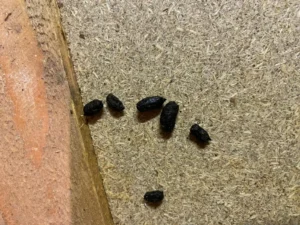
If you see lots of fresh droppings (soft and shiny), it means rats are very active.
Baby rats make high-pitched squeaking sounds. If you hear these sounds coming from walls, ceilings, or hidden areas, rats are definitely breeding nearby.
Nesting materials are another sign. Rats build nests from shredded paper, fabric, insulation, grass, or leaves.
If you find these materials gathered in hidden spots, there’s probably a nest with babies.
Increased activity during the day suggests overcrowding. Rats are nocturnal, so if you see them during daylight, the population is probably large enough that some rats are forced out during the day.
Seeing multiple rats at once is a clear sign of breeding. If you see several rats together, especially if some are smaller (juveniles), breeding is definitely happening.
How to Stop Rats From Breeding
The best way to stop rats from breeding is to make your property inhospitable to them.
Remove all food sources. Store food in sealed containers, keep garbage in bins with tight lids, don’t leave pet food out, and clean up spills immediately.
If you have fruit trees, pick up fallen fruit daily.
Eliminate water sources. Fix all leaky pipes and faucets. Don’t leave water bowls out overnight.
Make sure there’s no standing water anywhere on your property.
Take away shelter options. Clean up clutter, remove debris piles, trim overgrown vegetation, and seal gaps in structures.
Rats need safe places to nest and raise babies. If you take away these spots, they can’t breed successfully.

Seal all entry points to buildings. Rats can squeeze through holes as small as 1/2 inch.
Walk around your property and check for gaps around doors, windows, pipes, vents, and foundations.
Seal any openings with steel wool, caulk, or metal mesh. Rats can chew through wood, plastic, and rubber, but not steel or metal.
Set traps if you already have rats. Snap traps are most effective. Place them along walls where rats travel.
Bait with peanut butter and check them daily.
If you have a large infestation, consider calling professional pest control. They have experience and tools to handle serious rat problems.
How Fast Can a Rat Population Grow?
Rat populations can explode incredibly fast because of their frequent breeding.
Let’s say you start with one male and one female. In 3 weeks, the female has her first litter of 8 pups (4 males, 4 females).
Three weeks later, she has her second litter of 8 more pups. Meanwhile, the females from the first litter are now 6 weeks old and starting to breed.
By month 3, you could have the original female still breeding, plus 4 young females from her first litter, all having babies.
By month 6, you could easily have 50 to 100 rats.
By the end of one year, one pair of rats can theoretically produce over 1,500 descendants if all conditions are perfect and all babies survive.

In reality, not every baby survives. Predators, disease, lack of food, and other factors kill some rats.
But even with a lower survival rate, populations still grow extremely fast.
This is why you can’t ignore a rat problem. Even if you only see one or two rats, there are almost certainly more hiding, and they’re definitely breeding.
Conclusion
Rats breed year-round when they have access to food, water, and shelter. Female rats reach sexual maturity at just 5 weeks old and can have a litter every 3 weeks.
They’re most actively breeding during spring and summer outdoors, but indoor rats breed continuously regardless of season.
A single female can produce 40 to 120 babies in one year, and those babies start breeding themselves within weeks.
To stop rats from breeding, remove food sources, eliminate water, seal entry points, and take away shelter options.
The key is to act immediately when you see signs of rats. Their populations grow so quickly that waiting even a few weeks can turn a small problem into a major infestation.
When you make your property unattractive to rats and prevent them from accessing your home, you can stop them from breeding and keep your property rat-free.

Hi, my name is Ezra Mushala, i have been interested animals all my life. I am the main author and editor here at snakeinformer.com.