
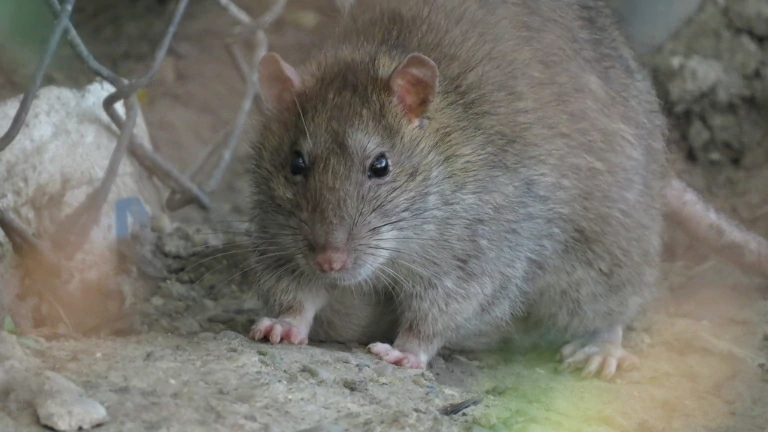
Rats come in all sorts of sizes, from tiny mice-sized creatures to animals that can be mistaken for small cats.
If you’re curious about rats (whether you’re thinking about getting a pet rat or just want to know what you might encounter), you’re probably wondering about the upper limits of rat size. What’s the biggest rat breed?
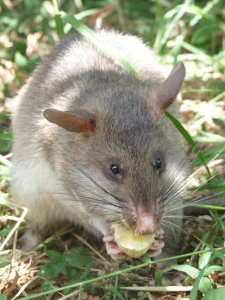
The Gambian Pouched Rat is the biggest rat breed in the world, weighing up to 3 pounds and measuring up to 3 feet long (including the tail). For pet rats, the Standard Fancy Rat is the largest commonly kept breed, weighing 1 to 2 pounds and measuring 9 to 11 inches long, not including the tail.
These giant rats are way bigger than most people expect. The difference between the smallest and largest rat breeds is actually pretty dramatic, with the biggest rats being more than ten times heavier than the smallest ones.
Gambian Pouched Rats: The True Giants
When we’re talking about the absolute biggest rats in the world, Gambian Pouched Rats take the crown.
These massive rodents are native to Africa and can weigh up to 3 pounds. To put that in perspective, that’s about the same weight as a small Chihuahua or a large guinea pig.
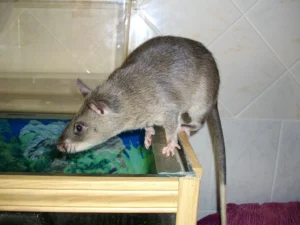
Their body length can reach 18 inches, and when you add their tail (which can be another 18 inches), you’re looking at a rat that’s 3 feet long from nose to tail tip. That’s as long as a ruler and a half placed end to end.
Despite their size, these rats aren’t aggressive. They’re actually pretty gentle and have been trained to detect landmines and diagnose tuberculosis in some African countries.
Their name comes from the large cheek pouches they use to carry food, similar to hamsters. These pouches can hold a surprising amount, which is part of what allows them to grow so large.
Sumatran Bamboo Rats: Another Giant Species
Sumatran Bamboo Rats are another really large rat species, though they’re not as commonly known as Gambian Pouched Rats.
These rats can weigh up to 4 pounds, which actually makes them heavier than Gambian Pouched Rats. Their body is thicker and more compact, giving them a stockier appearance.
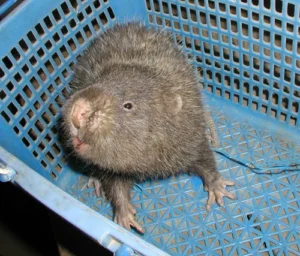
They live in Southeast Asia, particularly in bamboo forests (which explains their name). They eat mainly bamboo shoots and roots.
Bamboo rats aren’t kept as pets in most countries and are actually considered a food source in parts of China and Southeast Asia.
Their size is an adaptation to their diet and habitat. They need to be big and strong to dig extensive burrow systems and to gnaw through tough bamboo.
Standard Fancy Rats: The Biggest Pet Rats
If you’re interested in pet rats, the Standard Fancy Rat is what you’ll most commonly find, and it’s the largest rat breed typically kept as a pet.
These rats are domesticated versions of the brown rat (also called the Norway rat). Through selective breeding, they’ve been developed into friendly, healthy pets.
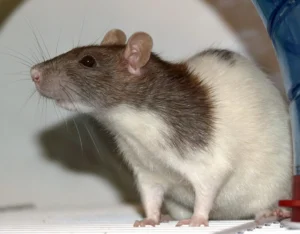
Standard Fancy Rats usually weigh between 1 and 2 pounds. Males are typically larger than females, with males often reaching the full 2 pounds while females stay closer to 1 to 1.5 pounds.
Their body length (not including the tail) is usually 9 to 11 inches. The tail adds another 7 to 9 inches, making the total length around 16 to 20 inches.
These rats are smart, social, and can be trained to do tricks. They’re way more interactive than many people expect from a rodent pet.
Norway Rats vs. Roof Rats: Wild Size Comparison
When you’re talking about wild rats that people might encounter, there are two main species, and they’re very different in size.
Norway Rats (also called brown rats) are the bigger of the two. They can weigh 7 to 18 ounces, with some large males reaching over a pound. Their body length is 7 to 10 inches, not counting the tail.
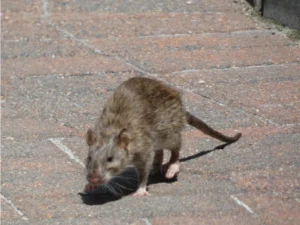
Roof Rats (also called black rats) are much smaller and more slender. They typically weigh just 5 to 9 ounces and measure 6 to 8 inches long (body only).
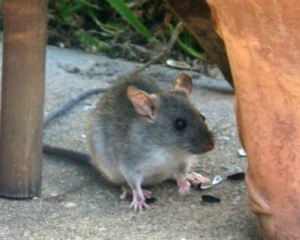
The size difference is noticeable when you see them side by side. Norway Rats look chunky and thick-bodied, while Roof Rats look sleek and athletic.
Norway Rats are the ones you’ll find in basements, sewers, and ground-level areas. Roof Rats prefer higher locations like attics, trees, and upper floors of buildings.
Rat Breed Size Comparison Table
Here’s a quick comparison of different rat breeds and their sizes:
| Rat Breed | Weight | Body Length | Total Length (with tail) | Where Found |
|---|---|---|---|---|
| Gambian Pouched Rat | Up to 3 lbs | Up to 18 inches | Up to 36 inches | Africa (wild and semi-domesticated) |
| Sumatran Bamboo Rat | Up to 4 lbs | 12-16 inches | 15-20 inches (short tail) | Southeast Asia (wild) |
| Standard Fancy Rat | 1-2 lbs | 9-11 inches | 16-20 inches | Worldwide (pet) |
| Norway Rat (Wild) | 7-18 oz | 7-10 inches | 14-18 inches | Worldwide (wild) |
| Roof Rat (Wild) | 5-9 oz | 6-8 inches | 13-17 inches | Warm regions (wild) |
| Dumbo Rat | 1-1.5 lbs | 8-10 inches | 15-18 inches | Worldwide (pet) |
| Hairless Rat | 0.75-1.5 lbs | 8-10 inches | 15-18 inches | Worldwide (pet) |
| Dwarf Rat | 3-5 oz | 4-6 inches | 8-11 inches | Worldwide (pet) |
This table shows just how much variation there is in rat sizes. The biggest rats are literally more than ten times heavier than the smallest ones.
Why Are Some Rats So Much Bigger?
The size difference between rat breeds isn’t random. There are specific reasons why some rats evolved to be giants while others stayed small.
Diet plays a huge role. Rats that have access to lots of food can grow much larger. Gambian Pouched Rats and Bamboo Rats both eat high-calorie foods (fruits, nuts, and bamboo) that support their large size.
Habitat influences size too. Rats in areas with lots of predators tend to stay smaller because it’s easier to hide. Rats in safer environments with fewer predators can afford to grow larger.
Climate matters as well. Larger animals generally do better in cooler climates because they lose heat more slowly. This is why Norway Rats (which can survive in cold areas) are bigger than Roof Rats (which prefer warm climates).
Selective breeding in pet rats has also created size variations. Breeders have developed different sizes based on what people want in a pet.
Dumbo Rats: Not Actually Bigger
There’s a common misconception that Dumbo Rats are a larger breed, but that’s not really true.
Dumbo Rats are named for their large, round ears that sit lower on the sides of their head (like Dumbo the elephant). It’s an ear mutation, not a size variation.
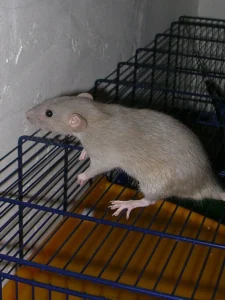
These rats are usually about the same size as Standard Fancy Rats, weighing 1 to 1.5 pounds. Some might be slightly smaller because the Dumbo gene is often bred into smaller rat lines.
The ear placement actually makes them look a bit bigger because the ears give their head more width. But if you weigh and measure them, they’re not significantly different from standard rats.
Dumbo Rats can come in any color or coat type. You can have a Dumbo Hairless Rat, a Dumbo Rex Rat, or any other combination.
Hairless Rats: Smaller Than You’d Think
Hairless Rats are another variety that people sometimes think are bigger, probably because their skin is so visible.
These rats actually tend to be slightly smaller than standard furred rats. They typically weigh 0.75 to 1.5 pounds, with most falling in the 1 to 1.25 pound range.
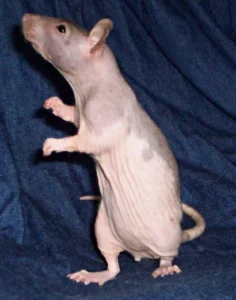
The reason they’re smaller is interesting. Without fur, they lose body heat faster. To compensate, they eat more food (proportionally) than furred rats, but they also burn more calories just staying warm.
Their metabolism is higher than furred rats, which means they process food faster. This can actually limit their growth potential slightly.
Hairless rats need warmer environments than furred rats. If they’re kept too cool, they’ll burn even more calories trying to stay warm and won’t grow as large.
Dwarf Rats: The Opposite End of the Spectrum
While we’re talking about big rats, it’s worth mentioning Dwarf Rats, which are the smallest domesticated rat breed.
These tiny rats weigh just 3 to 5 ounces as adults. That’s less than a third of what a Standard Fancy Rat weighs.
Their body length is only 4 to 6 inches, making them about half the length of standard rats. With their tail, they’re 8 to 11 inches total.
Dwarf Rats aren’t just baby rats. They’re a specific breed that stays small their whole life. They live just as long as standard rats (2 to 3 years on average).
These little rats are becoming more popular as pets, especially for people who want rats but don’t have much space. However, they can be harder to find than standard rats.
Do Bigger Rats Make Better Pets?
You might be wondering if bigger rats are better as pets, and the answer really depends on what you’re looking for.
Bigger rats are generally calmer and easier to handle. Their size makes them less fragile, which can be good if you have kids who want to interact with the pets.
They’re also easier to see and keep track of during playtime. A large rat is less likely to squeeze into tiny spaces where you can’t reach them.
However, bigger rats need larger cages. A Standard Fancy Rat needs a cage that’s at least 2 feet by 2 feet by 2 feet, and bigger is always better.
They eat more food, which means higher ongoing costs. A large rat might eat twice as much as a dwarf rat.
Smaller rats are often more energetic and playful. Some people prefer this personality, even though it can make them a bit harder to handle.
Health Considerations for Large Rats
Bigger rats can have some specific health issues that smaller rats don’t face as often.
Joint problems are more common in large, heavy rats. The extra weight puts more stress on their legs and spine, especially as they age.

Obesity is a real concern. It’s easy for a naturally large rat to become overweight, which can lead to heart problems, breathing difficulties, and a shorter lifespan.
Tumors tend to be more common in larger rats, particularly in females. This might be related to hormones and growth factors.
Respiratory infections can be more serious in big rats because their larger body size means their respiratory system has to work harder.
Despite these concerns, large rats can live just as long as smaller rats if they’re given proper care, a good diet, and regular vet checkups.
Caring for Giant Pet Rats
If you decide to get one of the larger rat breeds as a pet, there are some special things to keep in mind.
Cage size is critical. You can’t keep a large rat in a small cage. They need room to move around, climb, and explore. A multi-level cage works best.
Food portions need to be adjusted carefully. Large rats need more food than small rats, but you have to watch their weight to make sure they’re not overeating.
Exercise is really important. Big rats can become lazy if they’re not encouraged to move. Provide climbing structures, wheels (if they’ll use them), and plenty of out-of-cage playtime.
Bedding needs to be deep enough to support their weight. Large rats are heavier on their feet, so thin bedding can lead to pressure sores.
Hammocks and sleeping platforms need to be sturdy. A hammock that works fine for a dwarf rat might not hold up under a 2-pound standard rat.
Can You Keep Giant Rats as Pets?
You might be wondering if you can actually keep a Gambian Pouched Rat or Bamboo Rat as a pet, and the answer is complicated.
Gambian Pouched Rats are kept as pets in some countries, but they’re illegal in the United States. The U.S. banned their import in 2003 after they were linked to a monkeypox outbreak.
Even where they’re legal, these giant rats have different care needs than Fancy Rats. They live longer (6 to 8 years), need much larger enclosures, and can be more destructive.
Bamboo Rats are almost never kept as pets. They’re wild animals with specific dietary needs (they mainly eat bamboo), and they don’t do well in captivity.
If you want a really big pet rat, your best option is to find a breeder who specializes in large Standard Fancy Rats. Some breeding lines produce consistently larger animals.
Record-Breaking Rats
There have been some truly massive individual rats that go beyond typical breed sizes.
The largest rat ever officially recorded was a Gambian Pouched Rat named Cricetomys ansorgei that weighed 4.5 pounds and measured 36 inches long. This was documented in scientific literature.
In the wild, there are occasional reports of Norway Rats exceeding 2 pounds, though these are rare and hard to verify.
Some pet Fancy Rats have reached 2.5 pounds, though this is usually because they’re overweight rather than naturally large.
There are urban legends about giant sewer rats, but most of these stories are exaggerated. The biggest wild Norway Rats are rarely over a pound, though they can look bigger when wet or when their fur is fluffed up.
Conclusion
The Gambian Pouched Rat is the biggest rat breed in the world, reaching up to 3 pounds and 3 feet long.
For pet owners, the Standard Fancy Rat is the largest commonly available option, weighing 1 to 2 pounds and measuring up to 20 inches total length.
These size differences are huge when you compare them to smaller breeds like Dwarf Rats (which weigh just 3 to 5 ounces) or wild Roof Rats (5 to 9 ounces).
If you’re thinking about getting a pet rat, size should be one factor in your decision, but it shouldn’t be the only one. Think about cage space, food costs, handling ease, and personality too.
Bigger rats aren’t automatically better pets. They’re calmer and sturdier, but they also need more space and food. Smaller rats are more energetic and easier to house.
Whatever size rat you choose, make sure you can provide proper care, including a large enough cage, good nutrition, veterinary care, and plenty of social interaction. Rats of all sizes can make wonderful pets when their needs are met.

Hi, my name is Ezra Mushala, i have been interested animals all my life. I am the main author and editor here at snakeinformer.com.