

If you’ve spotted rats around your property, you’re probably wondering how they’re getting inside. These rodents are masters at finding and exploiting tiny openings in buildings.
You might look at a small crack or gap and think there’s no way a rat could fit through it. But you’d be surprised at what they can actually squeeze through. What gaps can rats get through?
Rats can squeeze through gaps as small as half an inch (about 1.3 cm) wide. If a rat can fit its skull through an opening, the rest of its body can follow. Young rats can fit through even smaller gaps, sometimes as narrow as a pencil width.
This means that tiny cracks under doors, small openings around pipes, and hairline gaps in your walls are all potential entry points. Understanding what gaps rats can use helps you protect your home more effectively.
Why Rats Can Fit Through Such Small Gaps
Rats have incredibly flexible bodies that let them compress and squeeze through tight spaces. Unlike humans, rats don’t have rigid collarbones, so their shoulders can collapse inward.
The only really solid part of a rat’s body is its skull. Once the head makes it through, the rest of the body can basically flatten and slide through behind it.
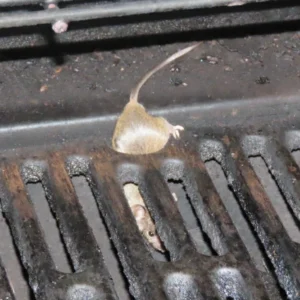
Their ribs are also more flexible than you’d expect. Rats can compress their ribcage significantly, making their bodies much narrower when they need to squeeze through something tight.
On top of that, rats are persistent. If they know there’s food, water, or shelter on the other side of a gap, they’ll work at it for as long as it takes to get through.
Common Gaps Rats Use to Enter Homes
Rats are really good at finding weak points in your home’s structure. Here are the most common types of gaps they exploit.
Gaps under doors are one of the easiest entry points. If there’s even half an inch of space between your door and the threshold, a rat can squeeze under it. Worn weatherstripping makes this even easier.
Cracks in your foundation or exterior walls are another common problem. Even hairline cracks can widen over time, and rats will chew them bigger if they need to.

Openings around utility lines and pipes are basically highways for rats. When plumbers or electricians install pipes, they often leave small gaps around the entry points. Rats love these spots.
Gaps in your roof or soffits give rats access to your attic. If you have any openings near your roofline, rats can climb up and squeeze through.
Spaces around windows and vents are easy targets too. If your window frames are old or your vent screens are damaged, rats will find a way in.
How to Measure If a Gap Is Too Big
The easiest way to check if a gap is big enough for a rat is to use a simple test. If you can fit your thumb through it, a rat can probably get through it too.
For a more precise measurement, use a ruler. Any gap that’s half an inch wide or bigger is a potential entry point for adult rats. Young rats can fit through gaps as small as a quarter-inch.
You can also use a pencil as a measuring tool. If a pencil can slide through a gap, a young rat can likely fit through it. If your index finger fits, an adult rat definitely can.
When you’re inspecting your home, bring a flashlight and really look carefully. Some gaps are hard to spot just by walking around. Get down on your hands and knees if you have to.
Gaps Under Doors
The gap under your door is one of the most common ways rats get inside. Most exterior doors have at least a small gap at the bottom to allow for air circulation, but this can be a problem.
If the gap is half an inch or more, rats can slide right under. They’ll flatten their bodies and wiggle through, and once they’re in, they’ll start looking for food and nesting spots.
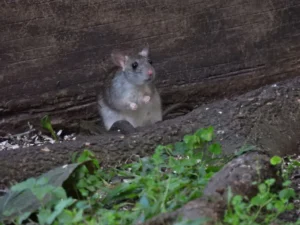
Interior doors can also be entry points if you have rats in your walls or basement. They’ll use gaps under bedroom doors, closet doors, or bathroom doors to move around your house.
To fix this, install door sweeps on all exterior doors. These are cheap rubber or brush strips that seal the gap between the door and the floor. Make sure the sweep actually touches the ground when the door is closed.
For garage doors, add a rubber threshold seal along the bottom. Garage doors often have bigger gaps because the floor might not be perfectly level.
Gaps Around Pipes and Utility Lines
Anywhere a pipe, wire, or cable enters your home is a potential entry point for rats. These openings are often bigger than they need to be because contractors cut holes slightly larger than the pipe to make installation easier.
Check around your water pipes, gas lines, electrical conduits, cable TV lines, and internet cables. Look both inside and outside your home for gaps around these entry points.
Even if the gap looks small, rats can make it bigger by chewing. They have incredibly strong teeth that can gnaw through wood, plastic, and even some soft metals.
To seal these gaps, use expanding foam and steel wool. Stuff steel wool into the opening first (rats hate chewing on it), then spray expanding foam around it to hold everything in place. The foam alone won’t stop rats, but the combination works really well.
Cracks in Foundations and Walls
Foundation cracks are a major concern because they give rats direct access from outside to inside your home. Even a thin crack can be a problem if it goes all the way through the wall.
Rats can widen small cracks by chewing. What starts as a hairline fracture can become a rat-sized hole in just a few days if they’re motivated enough.
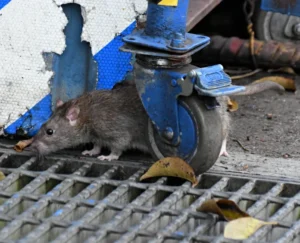
Exterior walls can also develop gaps where different materials meet. For example, where brick meets wood siding, or where your house attaches to a concrete patio or steps.
To fix foundation cracks, use hydraulic cement or concrete patch. These materials dry hard and rats can’t chew through them. For larger cracks, you might need a professional to do the repair properly.
For gaps in siding or exterior walls, use metal flashing or hardware cloth (wire mesh) to cover the openings. Secure it with screws so rats can’t pull it loose.
Gaps in Attics and Roof Areas
Rats are excellent climbers, and they’ll use tree branches, vines, or even climbing directly up your walls to reach your roof. Once they’re up there, they’ll look for any gap they can use to get into your attic.
Common roof entry points include gaps in your soffit (the underside of your roof overhang), broken or missing roof vents, spaces where your roof meets your chimney, and openings around attic vents or gable vents.

Even small gaps in these areas are enough. Rats will squeeze through, chew the opening bigger if needed, and set up a nest in your attic insulation.
To prevent this, inspect your roofline regularly. Use a ladder and check all around your roof edge for gaps or damage. Repair any broken vents or soffit panels right away.
Cover attic vents with metal mesh or hardware cloth. The mesh should have holes no bigger than a quarter-inch to keep rats out. Secure it with screws or heavy-duty staples.
Gaps Around Windows
Windows are often overlooked as entry points, but rats can definitely use them if there are gaps. Old window frames can shrink or warp over time, creating spaces between the frame and the wall.
Window screens are another weak point. If your screen has even a small tear, rats can push through it or chew it bigger. Screens are meant to keep bugs out, not rodents, so they’re not very strong.

Basement windows are especially vulnerable because they’re close to ground level where rats are most active. If your basement window is cracked, has gaps around the frame, or doesn’t close properly, rats will find it.
To secure your windows, check all the frames for gaps and seal them with caulk or expanding foam. Replace any damaged or torn screens with new ones, or better yet, use hardware cloth instead of regular screening.
For basement windows, consider adding window well covers. These are plastic or metal covers that go over the window well and prevent rats from getting close to the window in the first place.
How Small Are Baby Rats?
Baby rats (called pups) are incredibly small when they’re born. They’re about the size of a jellybean and can fit through gaps that adult rats couldn’t dream of squeezing through.
As they grow, young rats are still much smaller than adults. A three-week-old rat might be able to fit through a gap the width of a pencil. By the time they’re fully grown (around three months), they need the same half-inch gap as other adults.
This is why sealing even tiny gaps is so important. If you only seal the big openings, young rats can still get in, and they’ll eventually grow up and start breeding inside your home.
When you’re rat-proofing your house, assume that any visible gap is big enough for a baby rat. If you can see daylight through it, or if air is moving through it, seal it up.
Can Rats Make Gaps Bigger?
Yes, rats can absolutely make existing gaps bigger by chewing. Their teeth grow continuously throughout their lives, so they’re always looking for things to gnaw on.
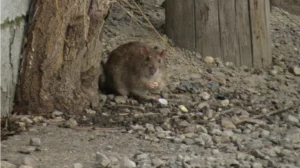
Rats can chew through wood, plastic, drywall, soft metals like aluminum, rubber, and vinyl siding. If a gap starts out too small for them, they’ll just chew it bigger until they can fit through.
This process can happen surprisingly fast. On soft wood or drywall, a rat can enlarge a small crack into a rat-sized hole in just a few hours. On harder materials, it might take a day or two.
Materials rats can’t chew through include thick steel, solid concrete (if it’s not cracked), thick glass, and brick. When you’re sealing gaps, use materials from this list to make sure your repairs actually last.
Testing Your Home for Rat-Sized Gaps
To properly protect your home, you need to do a thorough inspection. Here’s how to find all the gaps rats might be using.
Start outside during the day. Walk around your entire house and look at the foundation, walls, roof, and all entry points. Bring a flashlight, a ruler, and something to take notes with.
Check low to the ground first since that’s where most rats travel. Get down and look under bushes, decks, and porches. Rats often hide their entry points in areas you don’t normally see.
Use your thumb or a pencil to test gap sizes. If either one fits through easily, mark that spot as a problem area.
Go inside and check your basement, crawl spaces, and attic. Look for droppings, gnaw marks, or grease stains along the walls. These signs tell you where rats are traveling and where they might be getting in.
Pay special attention to corners and edges. Rats like to travel along walls rather than out in the open, so they’ll use gaps in corners more often than gaps in the middle of a wall.
Sealing Gaps: Best Materials to Use
Once you’ve found all the gaps, you need to seal them with materials rats can’t get through. Here are your best options.
Steel wool is perfect for small gaps. Push it tightly into the opening, and rats won’t be able to chew through it. It hurts their teeth and gums, so they give up and look for easier entry points.

Expanding foam works well when combined with steel wool. Use the steel wool as a barrier, then spray foam around it to hold it in place and fill any remaining space.
Hardware cloth (metal mesh) is great for larger openings like vents or big holes. Use mesh with quarter-inch holes or smaller. Secure it with screws so rats can’t pull it off.
Sheet metal or metal flashing works for covering bigger areas. You can cut it to size and attach it with screws or construction adhesive.
Concrete or hydraulic cement is the best choice for foundation cracks and holes in concrete. It dries hard and creates a permanent seal that rats can’t chew through.
Conclusion
Rats can squeeze through gaps as small as half an inch, and young rats can fit through even smaller openings. Their flexible bodies and persistent nature make them experts at finding and exploiting tiny gaps in your home.
To keep them out, you need to inspect your property regularly and seal every gap you find. Use materials like steel wool, metal mesh, and concrete that rats can’t chew through.
Don’t underestimate how small of an opening a rat can use. If you can fit your thumb through it, a rat can get through it too. Taking the time to seal these gaps properly will save you from dealing with a rat infestation later.

Hi, my name is Ezra Mushala, i have been interested animals all my life. I am the main author and editor here at snakeinformer.com.