
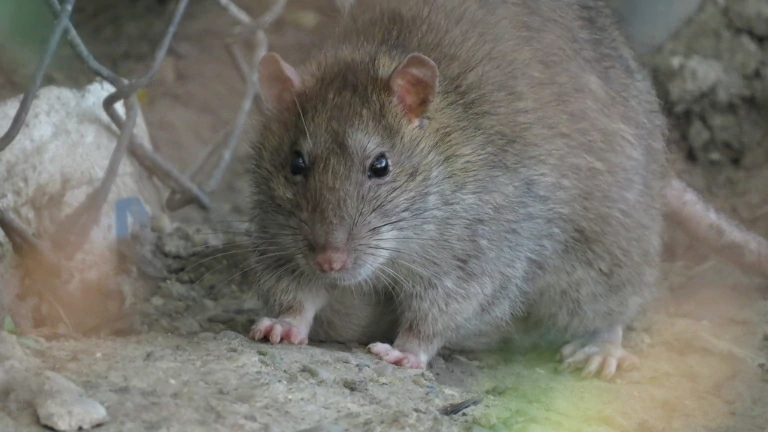
If you’ve ever seen rat droppings around your home or cleaned out a pet rat’s cage, you know that rats produce quite a bit of poop.
These small animals seem to leave droppings everywhere they go. But how often do rats poop, and how many times a day do rats poop?
Rats poop between 40 to 50 times per day on average. Some rats can poop up to 80 times in a 24-hour period, depending on their diet, age, and activity level.
This might seem like a huge amount, but it’s completely normal for rats. Their fast digestive systems and frequent eating habits mean they’re constantly producing waste.
Why Rats Poop So Often
Rats have incredibly fast digestive systems compared to larger animals.
Food moves through a rat’s digestive tract in just 4 to 6 hours from the time they eat it until it comes out as poop. Compare that to humans, where digestion takes 24 to 72 hours.

This rapid digestion is partly because rats have such fast metabolisms. Their bodies process everything quickly, including breaking down food and eliminating waste.
The other reason rats poop so much is because they eat so frequently. Rats eat small amounts 15 to 20 times per day. Since they’re constantly putting food in one end, waste is constantly coming out the other end.
Rats also can’t control when they poop as well as some larger animals can. They don’t have strong voluntary control over their bowel movements, so when waste is ready to come out, it just comes out wherever they happen to be at that moment.
How Many Times a Day Do Rats Poop
The number of times rats poop each day varies based on several factors.
An average adult rat poops 40 to 50 times in a 24-hour period. However, this is just an average. Some healthy rats might poop 30 times a day, while others poop 60 to 80 times a day.

Young rats (from weaning age to about 4 months old) tend to poop more frequently because they eat more relative to their body size. A young growing rat might poop 60 to 80 times per day.
Senior rats (over 2 years old) might poop slightly less often as their metabolism slows down. An older rat might poop 30 to 40 times per day instead of 50.
The rat’s diet makes a big difference too. Rats eating lots of fiber (like vegetables and whole grains) will poop more often because fiber adds bulk to their stool and speeds up digestion. Rats eating mostly low-fiber foods might poop a bit less frequently.
What Rat Poop Looks Like
Healthy rat droppings have a specific appearance that you should know if you have pet rats or are dealing with wild rats.
Fresh rat poop is dark brown or black in color. Each dropping is shaped like a small pellet or grain of rice. They’re about 1/2 inch to 3/4 inch long (roughly 12 to 18 millimeters) and pointed at both ends.
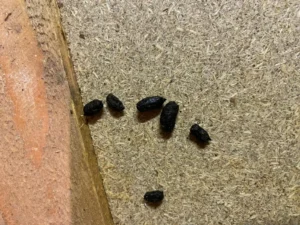
The droppings are relatively soft when they first come out but harden as they dry. Fresh poop might look slightly shiny or moist, while older droppings become dull and hard.
One single rat dropping is quite small (much smaller than dog or cat poop), but because rats poop 40 to 50 times a day, the droppings add up quickly. You’ll often find them scattered in groups or trails showing where the rat has been.
The size of the droppings depends on the rat’s size. Large male rats produce bigger droppings than smaller female rats or young rats. However, even the biggest rat droppings are still quite small compared to other animals.
Where Rats Poop
Rats poop pretty much everywhere they go because they can’t hold it in like some animals can.
Wild rats leave droppings along their regular travel routes. You’ll find poop concentrated near their nests, along walls and baseboards where they run, near food sources, and in areas where they spend a lot of time.
Rats prefer to stay close to walls and edges when they move around (this helps protect them from predators in the wild). This means you’ll rarely find rat droppings in the middle of an open floor. Instead, look for them along walls, in corners, behind appliances, and under furniture.

Pet rats also poop throughout their cage. However, some pet rats can be trained to use a litter box for at least some of their bathroom needs. Even well-trained rats will still poop outside the litter box sometimes, but training can reduce the amount of droppings scattered around the cage.
Many pet rats naturally prefer to poop in certain areas of their cage. They might choose one or two corners as their main bathroom spots, even without formal litter training.
How Diet Affects How Often Rats Poop
What rats eat has a direct impact on how often they poop and what their droppings look like.
Rats eating a high-fiber diet poop more often. Fiber-rich foods like vegetables, fruits, and whole grains move through the digestive system quickly and add bulk to the stool. A rat eating lots of fresh vegetables might poop 60 to 80 times per day.
Low-fiber foods like plain grains or processed foods take longer to digest and produce less waste. Rats eating mostly low-fiber foods might only poop 30 to 40 times per day.
The type of protein in the diet also matters. Animal-based proteins (like chicken or eggs) tend to make firmer droppings, while plant-based proteins might make softer droppings.
Rats that don’t drink enough water can develop constipation, which means they poop less often than normal. Their droppings might also be harder and drier. This is why it’s important to always give your pet rats access to fresh, clean water.
Changes in diet can temporarily change how often rats poop. If you switch your pet rat to a new food, they might poop more or less for a few days while their digestive system adjusts.
The Difference Between Rat Poop and Mouse Poop
People often confuse rat droppings with mouse droppings, but there are clear differences.
Rat poop is bigger than mouse poop. Rat droppings are about 1/2 to 3/4 inch long, while mouse droppings are only about 1/4 inch long (roughly the size of a grain of rice).
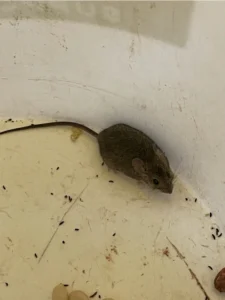
Rat droppings are thicker and more sausage-shaped with pointed ends. Mouse droppings are thinner and more like tiny pellets with pointed ends.
Both rats and mice leave their droppings scattered around, but rats produce fewer individual droppings in total (40 to 50 per day) compared to mice (50 to 80 per day). However, since rat droppings are bigger, you’ll notice them more easily.
The color is similar for both (dark brown to black when fresh), so color alone won’t help you tell them apart. Size and shape are the most reliable ways to identify whether you’re dealing with rats or mice.
Health Problems That Change Pooping Frequency
Changes in how often a rat poops can signal health problems.
Diarrhea makes rats poop more frequently, and their droppings will be soft, mushy, or watery instead of formed pellets. Diarrhea can be caused by bacterial infections, parasites, stress, or sudden diet changes. It’s serious because rats can get dehydrated very quickly.
Constipation means the rat is pooping less often than normal, and when they do poop, the droppings are small, hard, and dry. This can happen if the rat isn’t drinking enough water, isn’t eating enough fiber, or has a blockage in their intestines.
Blood in the droppings (making them look reddish or with visible red spots) is always a serious sign. This could mean the rat has internal parasites, an infection, or damage to their digestive tract.
If your pet rat suddenly starts pooping much more or much less than usual, or if their droppings look different (different color, consistency, or size), you should take them to a vet. Changes in poop are often one of the first signs that something is wrong.
Why Rats Poop While They Eat
If you have pet rats, you’ve probably noticed they often poop right in or near their food bowl.
This seems gross to humans, but it’s completely normal behavior for rats. Remember, rats can’t control when they poop very well. If waste is ready to come out while they’re eating, it just comes out right there.

In the wild, this actually isn’t a problem because rats are always moving to new food sources. They don’t eat in the same exact spot every day, so they’re not really eating where they pooped previously.
Pet rats might eat in the same food bowl every day, which means their droppings can contaminate their food. This is why you should clean your pet rat’s food bowl daily and remove any droppings you see in or near the food.
Some rat owners use elevated food bowls or feeding platforms to help keep food away from droppings. Others feed their rats in a separate area from where they use the bathroom most often.
Can You Litter Train Rats to Reduce Random Pooping
You can teach many pet rats to use a litter box for at least some of their bathroom needs.
Rats naturally prefer to pee in certain spots, and many will also poop in those same spots. By placing a litter box in the corner where your rat already goes to the bathroom most often, you can encourage them to use it more consistently.
However, even well-trained rats won’t use the litter box 100% of the time. You should expect that a trained rat might do 60% to 80% of their business in the litter box, but they’ll still poop elsewhere in the cage sometimes.
Some rats are easier to train than others. Young rats and female rats tend to be better at litter training than older rats or males (though there are exceptions).
The training process takes patience. You need to watch where your rat naturally goes to the bathroom, put a litter box there, and reward them when they use it. Whenever you find droppings outside the litter box, put them in the box so the rat learns that’s where poop should go.
Even with perfect litter training, rats will still poop while they’re playing, eating, or exploring. They just can’t hold it in until they get back to the litter box like a dog or cat can.
How Stress Affects Rat Pooping
Stressed rats often poop more than calm, relaxed rats.
When rats feel scared or anxious, their digestive systems speed up. This is a natural stress response that happens in many animals. The body basically says “we might need to run away, so let’s get rid of any extra weight.”
You might notice your pet rat pooping more when you first bring them home, when you introduce them to new rats, or during other stressful situations like vet visits or loud noises.
Wild rats living in dangerous environments with lots of predators might poop more frequently than pet rats living in safe, calm homes. The constant stress keeps their digestive systems in high gear.
Once the stressful situation is over and the rat calms down, their pooping frequency usually goes back to normal within a few hours to a day.
Rat Poop and Disease Transmission
Rat droppings can carry diseases that are dangerous to humans, which is why proper cleanup is important.
Rat poop can contain bacteria like Salmonella and E. coli, viruses like Hantavirus, and parasites like tapeworms. These disease-causing organisms can make humans sick if they get into your body.

You can be exposed to these diseases by directly touching rat droppings, breathing in dust from dried droppings, or touching surfaces contaminated with droppings and then touching your mouth, nose, or eyes.
This is why you should never vacuum or sweep rat droppings (this makes dust that you can breathe in). Instead, spray the droppings with a disinfectant or water to make them wet, then pick them up with paper towels while wearing gloves. Put the droppings in a sealed plastic bag and throw it in the trash.
After cleaning up rat droppings, always wash your hands thoroughly with soap and water. Clean the area where the droppings were with a good disinfectant.
Pet rat droppings are generally less risky than wild rat droppings because pet rats live in cleaner conditions and aren’t exposed to as many disease-causing organisms. However, you should still practice good hygiene when cleaning your pet rat’s cage.
How to Reduce the Mess from Pet Rat Poop
While you can’t stop rats from pooping 40 to 50 times a day, you can manage the mess.
Clean your pet rat’s cage frequently. Many rat owners do a quick spot-clean daily (removing visible droppings and soiled bedding) and a deep clean weekly (removing all bedding, washing all surfaces, and replacing everything).
Use absorbent bedding that makes it easier to spot droppings. Bedding materials like paper-based bedding or aspen shavings work well. Avoid cedar or pine shavings, which can be harmful to rats’ respiratory systems.

Consider using fleece liners instead of loose bedding. Fleece can be washed and reused, and droppings sit on top of it instead of mixing into it, making cleanup easier. You’ll still need to sweep or shake off the droppings daily.
Set up a litter box in the corner where your rats poop most often. Even if they don’t use it all the time, catching even 50% of the droppings in one spot makes the rest of the cage cleaner.
Use cage accessories that are easy to clean. Plastic shelves and ramps can be wiped down quickly, while fabric items like hammocks should be washed regularly.
Comparing Rat Poop to Other Pet Droppings
Rats poop more frequently than most other common pets, but the individual droppings are smaller.
Hamsters poop about 20 to 30 times per day, which is less than rats. Hamster droppings are also smaller, about the size of a grain of rice.
Guinea pigs poop even more than rats (up to 100 times per day), but their droppings are much larger. A guinea pig produces more total waste than a rat even though rats poop more frequently.
Rabbits can poop 200 to 300 times per day, far more than rats. However, rabbit droppings are dry, round pellets that are easy to clean up.
Cats and dogs poop much less frequently (1 to 3 times per day), but their individual droppings are much larger. The total volume of waste a cat or dog produces is much more than what a rat produces.
So while rats poop more often than most pets, the small size of each dropping means they don’t actually produce that much total waste compared to larger animals.
Conclusion
Rats poop between 40 to 50 times per day on average, with some rats pooping up to 80 times daily.
This frequent pooping is normal and happens because rats have fast digestive systems, eat many small meals throughout the day, and can’t control their bowel movements as well as larger animals.
If you have pet rats, expect to clean their cage regularly to manage the droppings. If you’re dealing with wild rats, the amount of droppings can help you figure out how many rats you’re dealing with and where they’re spending most of their time.

Hi, my name is Ezra Mushala, i have been interested animals all my life. I am the main author and editor here at snakeinformer.com.