

Rats are known for reproducing incredibly fast, which is one reason they’re such a difficult pest to control. A small rat problem can turn into a major infestation in just a few months.
If you’ve spotted rats around your property, you’re probably worried about how quickly their numbers can grow. So, how often do rats breed?
Female rats can breed every 3 weeks and can have 5 to 10 litters per year. Each litter contains 6 to 12 babies (called pups). This means a single female rat can produce 40 to 120 offspring in just one year.
This incredibly fast breeding cycle is what makes rats such a persistent problem. Once they establish themselves somewhere, their population can explode in a very short time.
Understanding their breeding patterns helps you realize why it’s so important to deal with rat problems immediately, before they get out of control.
The Rat Breeding Cycle
Female rats (called does) reach sexual maturity really fast. They can start breeding when they’re only 5 weeks old.
Male rats (called bucks) mature slightly later, around 6 to 8 weeks old.
Once a female is mature, she goes into heat (estrus) every 4 to 5 days. When she’s in heat, she’s receptive to mating and can become pregnant.
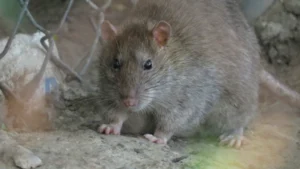
The pregnancy (gestation period) lasts about 21 to 23 days. That’s just 3 weeks from mating to birth.
After giving birth, a female rat can go into heat again within 24 to 48 hours. This means she can get pregnant again almost immediately after having a litter.
This is called postpartum estrus, and it’s one of the main reasons rats breed so quickly.
So a female rat can have a new litter roughly every 3 weeks if conditions are right. Over the course of a year, that adds up to 5 to 10 litters.
Each litter typically has 6 to 12 pups, though some litters can be smaller (4 to 5) or larger (up to 14).
If you do the math, a single female rat can produce anywhere from 40 to 120 babies in one year. But it gets worse.
Those babies will also start breeding when they’re 5 to 8 weeks old. So within a few months, you don’t just have one breeding female. You have dozens.
How Many Rats Can Come From One Pair?
Let’s say you start with just one male and one female rat. How many rats could you have after one year?
If the female has 6 litters in a year (a conservative estimate) with 8 pups per litter (an average), that’s 48 babies.
Now let’s say half of those babies are female. That’s 24 new females. If each of those females starts breeding at 8 weeks old and has even just 2 litters before the year ends, you’re looking at hundreds of rats.

Some studies estimate that one pair of rats can produce over 1,500 descendants in a single year if all the conditions are perfect and all the babies survive.
In reality, not all babies survive. Predators, disease, lack of food, and other factors kill some of them.
But even with a lower survival rate, the population can still grow incredibly fast.
This is why you can’t ignore a rat problem. Even if you only see one or two rats, there are probably more hiding, and they’re definitely breeding.
What Conditions Do Rats Need to Breed?
Rats breed more successfully when they have access to three basic things: food, water, and shelter.
Food is the most important factor. Rats need a steady supply of food to stay healthy and reproduce.
They eat almost anything, including grains, fruits, vegetables, meat, garbage, pet food, and even insects. If food is plentiful, rats will breed more often and have larger litters.
If food is scarce, breeding slows down. Females might have fewer litters or smaller litters, and some babies might not survive.
Water is also critical. Rats need water every day to survive. If they have easy access to water (from leaky pipes, pet bowls, puddles, or other sources), they’ll thrive and breed more.

Shelter is the third factor. Rats need safe places to nest and raise their young.
They prefer dark, hidden areas like inside walls, under floors, in attics, basements, sheds, or inside clutter and debris piles.
If your property has these conditions, rats will breed there. If you take away food, water, and shelter, breeding slows down significantly.
Do Rats Breed Year-Round?
Yes, rats can breed all year long, as long as conditions are good.
Unlike some animals that only breed during certain seasons, rats don’t have a specific breeding season. They’re opportunistic breeders, which means they’ll reproduce whenever they can.
In the wild, rats might breed more during warmer months when food is more available. But in human environments (homes, warehouses, restaurants, etc.), food and shelter are usually available year-round.
This means rats living near or inside human structures can breed constantly, even in winter.
In fact, rats often move indoors during fall and winter looking for warmth and food. If they find both, they’ll settle in and start breeding.
This is why rat infestations can get really bad during colder months. The rats are inside where it’s warm, they have access to food, and they’re breeding nonstop.
How Long Do Rats Live?
Rats don’t live very long, which is actually part of the problem.
In the wild, most rats live only 6 months to 1 year. They’re killed by predators, disease, or harsh weather.
In human environments where they have food, water, and shelter, rats can live 2 to 3 years.
Pet rats that are well cared for can live even longer, sometimes up to 4 years.
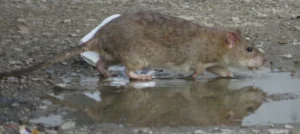
The short lifespan combined with rapid breeding means rat populations turn over quickly. Old rats die, but they’re constantly replaced by new babies.
This also means that rats are always adapting. If you use poison or traps, the rats that survive might pass on traits that make them more cautious or resistant.
Over time, the population can become harder to control.
Signs That Rats Are Breeding on Your Property
If rats are breeding nearby, you’ll start to see signs.
Droppings are the most obvious sign. Rat droppings are about 1/2 to 3/4 inch long, dark, and capsule-shaped with blunt ends.
Fresh droppings are soft and shiny. Old droppings are dry and crumbly.
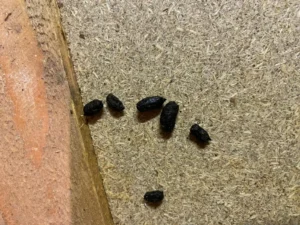
If you see a lot of droppings, or if you see fresh droppings every day, it means rats are actively living and breeding nearby.
You might hear noises, especially at night. Rats are nocturnal, so they’re most active after dark.
Listen for scratching, scurrying, squeaking, or gnawing sounds in walls, ceilings, or under floors.
If you hear baby rats squeaking, that’s a clear sign of breeding. Baby rats are very vocal.
Look for nests. Rats build nests out of shredded paper, fabric, insulation, leaves, or other soft materials.
Nests are usually hidden in dark, enclosed spaces like inside walls, in attics, or under piles of clutter.
Check for gnaw marks. Rats have to chew constantly to keep their teeth from growing too long.
They’ll chew on wood, plastic, wires, cardboard, and just about anything else. Fresh gnaw marks are lighter in color and have rough edges.
You might also notice greasy rub marks along walls and baseboards. Rats have oily fur, and they tend to follow the same paths over and over.
This leaves dark, greasy smudges along the surfaces they travel against.
If you see live rats during the day, that’s a bad sign. Rats are nocturnal, so if they’re out during daylight, it usually means the population is so large that some rats are forced to come out when they normally wouldn’t.
How to Stop Rats From Breeding
The best way to control rat breeding is to make your property less hospitable to them.
Remove food sources. Don’t leave pet food out overnight, keep garbage in sealed containers, clean up spills immediately, and store food in airtight containers.
If you have fruit trees, pick up fallen fruit right away. If you compost, use a sealed bin and don’t add meat or dairy products.
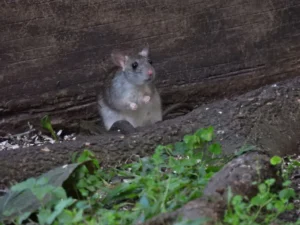
Eliminate water sources. Fix leaky pipes, faucets, and hoses. Don’t let water pool anywhere in your yard or around your house.
Empty containers that collect water, and keep pet water bowls inside at night.
Remove shelter options. Clean up clutter, debris piles, and junk around your property.
Trim back overgrown vegetation, especially near your house. Keep grass short and remove weeds.
Store firewood at least 20 feet from your house and raise it off the ground.
Seal entry points to your house. Rats can squeeze through holes as small as 1/2 inch (about the size of a quarter).
Check for gaps around doors, windows, pipes, vents, and your foundation. Seal any openings with steel wool, caulk, or metal mesh.
Set traps if you already have rats. Snap traps are the most effective. Place them along walls where rats travel, near burrows, or anywhere you’ve seen droppings.
Bait traps with peanut butter, bacon, or dried fruit.
Check traps daily. When you catch a rat, dispose of it (wear gloves) and reset the trap.
If you have a serious infestation, you might need to call a professional pest control company. They can assess the situation and set up a comprehensive control plan.
Do Rats Breed With Their Siblings?
Yes, rats will breed with siblings, parents, and other close relatives if they’re the only mates available.
This is called inbreeding, and it’s common in wild rat populations that are isolated or in small spaces.
Inbreeding can lead to genetic problems over time. Inbred rats might have weaker immune systems, shorter lifespans, or other health issues.

But in the short term, inbreeding doesn’t stop rats from reproducing. It just means the population might be less healthy overall.
In larger rat populations, rats usually have access to unrelated mates, which keeps the gene pool diverse.
But even with inbreeding, rats breed fast enough that population growth is still a major problem.
Can You Stop Rats From Breeding Completely?
In practical terms, you can’t completely stop rats from breeding everywhere. They’re too widespread and too adaptable.
But you can definitely stop them from breeding on your specific property.
The key is to remove everything they need: food, water, and shelter. Without these things, rats will go somewhere else to breed.
If you already have rats, you need to trap or remove them first. Then, make sure they can’t come back by sealing entry points and keeping your property clean and unattractive to them.
Consistency is important. Rats are always looking for new places to live. If you let your guard down and food or clutter starts piling up, they’ll move back in.
Regular inspections and maintenance will keep your property rat-free.
How Fast Can a Rat Infestation Grow?
A rat infestation can grow from a few rats to dozens or even hundreds in just a few months.
Let’s say two rats (one male, one female) get into your attic in January. By February, the female has her first litter of 8 pups.
By March, she has her second litter. The first litter is now old enough to start breeding.
By April, you could have 30 or 40 rats. By summer, you could have over 100.
This is why it’s so critical to act fast when you spot rats. The longer you wait, the harder and more expensive the problem becomes.
Some people think they only have one or two rats and ignore the problem. But those one or two rats are breeding, and soon you’ll have many more.
Don’t wait. As soon as you see signs of rats, take action.
Conclusion
Rats breed incredibly fast, with females capable of having a new litter every 3 weeks and producing up to 120 offspring per year.
This rapid reproduction is why rat infestations can spiral out of control so quickly.
To prevent rats from breeding on your property, remove food sources, eliminate water, and take away shelter options.
Seal entry points to your home and set traps if you already have rats.
The key is to act immediately when you spot signs of rats. The longer you wait, the bigger the problem becomes.
When you make your property unattractive to rats and remove the conditions they need to breed, you can stop their population from growing and keep your home rat-free.

Hi, my name is Ezra Mushala, i have been interested animals all my life. I am the main author and editor here at snakeinformer.com.