
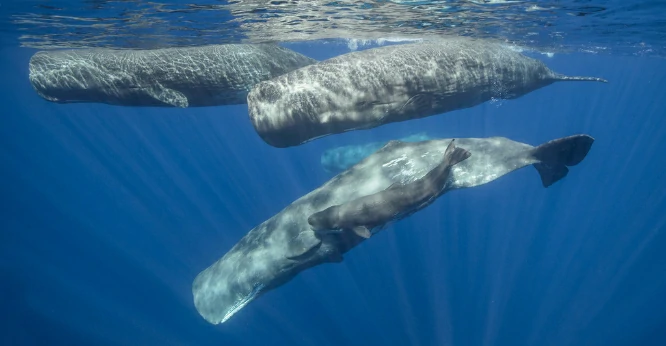
Whales are some of the most impressive divers on the planet. They live in the ocean but breathe air just like we do, which means they need to come up for air regularly.
But watching whales, you’ll notice they can disappear beneath the waves for surprisingly long periods. Just how long can whales stay underwater before they need to surface and breathe?
Most whales can stay underwater for 20 to 90 minutes, depending on the species. Deep-diving whales like sperm whales can hold their breath for up to 90 minutes, while whales that feed closer to the surface usually stay down for 5 to 20 minutes at a time.
The amount of time a whale can spend underwater depends on several things, including its size, what it eats, how deep it dives, and what it’s doing.
Whales that hunt in deep water need to stay down much longer than whales that feed near the surface.
How Long Different Whale Species Stay Underwater
Different whale species have very different diving abilities.
The whales that dive the deepest and hunt for prey far below the surface can stay underwater much longer than whales that eat near the top of the ocean.
Here’s a table showing how long 10 different whale species typically stay underwater:
| Whale Species | Typical Dive Duration | Maximum Recorded Time |
|---|---|---|
| Sperm Whale | 45-60 minutes | 90+ minutes |
| Cuvier’s Beaked Whale | 60-90 minutes | 222 minutes (3.7 hours) |
| Blainville’s Beaked Whale | 45-60 minutes | 137 minutes |
| Humpback Whale | 10-15 minutes | 45 minutes |
| Blue Whale | 10-20 minutes | 36 minutes |
| Gray Whale | 15-20 minutes | 30 minutes |
| Beluga Whale | 15-20 minutes | 25 minutes |
| Minke Whale | 5-15 minutes | 20 minutes |
| Orca (Killer Whale) | 5-10 minutes | 17 minutes |
| Bowhead Whale | 10-20 minutes | 60 minutes |
As you can see, there’s a massive difference between species.
Some whales rarely stay down for more than 10 minutes, while others regularly spend over an hour underwater.
Why Some Whales Stay Underwater Longer
The whales that can stay underwater the longest are usually the ones that hunt in really deep water.
Sperm whales and beaked whales dive thousands of feet down to hunt squid and deep-sea fish.
To make these deep dives worth the effort, they need to spend a long time down there hunting.
If they could only stay down for a few minutes, they’d waste all their energy swimming up and down without catching much food.
Whales that eat near the surface don’t need to hold their breath as long.
Humpback whales, for example, often feed on small fish and krill that live in the upper parts of the ocean.
They can come up for air whenever they want.
What Lets Whales Stay Underwater So Long?
Whales have some amazing body features that let them stay underwater much longer than other mammals.
These features help them store more oxygen and use it more slowly.
Their muscles have huge amounts of a protein called myoglobin, which holds onto oxygen. Whale muscles can store way more oxygen than the muscles of land mammals.
This is why whale meat looks so dark red, almost black. That color comes from all the myoglobin.
Whale blood also carries more oxygen than ours does. They have more blood in their bodies compared to their size, and that blood is packed with red blood cells.
More red blood cells means more oxygen gets carried to the muscles and organs.
Their bodies are also really good at deciding which parts get oxygen during a dive. Important organs like the brain and heart get priority, while less important systems (like digestion) get less blood flow during deep dives.
What Happens Inside a Whale During a Deep Dive?
When a whale dives deep, some really cool things happen inside its body to help it survive. Its heart rate drops dramatically to save oxygen.
A whale’s heart might beat 60 times per minute at the surface, but during a deep dive, it can slow down to just 3 to 5 beats per minute.
Blood gets rerouted away from certain body parts. The whale’s body basically turns off blood flow to areas that don’t absolutely need oxygen right now.
The stomach, intestines, and kidneys get much less blood, while the brain and heart get plenty.
The whale’s lungs actually collapse at great depths. This might sound bad, but it’s actually helpful.
When the lungs collapse, air gets pushed into areas where it won’t be absorbed into the blood.
This prevents nitrogen from building up in the blood, which is what causes “the bends” in human divers.
How Deep Whales Dive Affects How Long They Stay Down
There’s a strong connection between how deep a whale dives and how long it stays underwater.
Generally, whales that dive deeper stay down longer because they need more time to reach their hunting grounds and catch prey.
Sperm whales regularly dive to depths of 1,000 to 2,000 feet and can go over 7,000 feet deep. These deep dives can last 45 to 90 minutes.
The whale needs all that time to swim down, hunt, and swim back up.
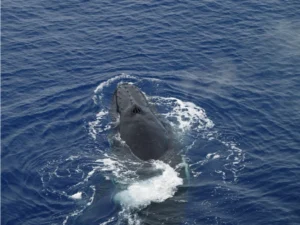
Humpback whales usually feed in the top 500 feet of water. Their dives are much shorter, usually 10 to 15 minutes, because they don’t need to go as far or stay down as long to find food.
The deepest diving whales are beaked whales, which can reach depths of nearly 10,000 feet. These extreme dives can last over two hours.
The Record-Breaking Dives
The longest recorded whale dive is absolutely incredible. A Cuvier’s beaked whale was tracked staying underwater for 222 minutes (that’s 3 hours and 42 minutes). This broke all previous records and amazed scientists.
Before that, the record was held by another Cuvier’s beaked whale that stayed down for 137 minutes. These whales are the champions of deep diving and breath-holding in the animal kingdom.
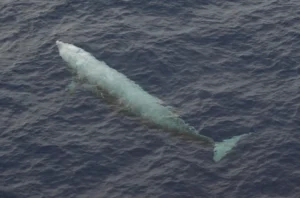
The same species also holds the record for deepest dive, reaching nearly 10,000 feet below the surface.
We still don’t know that much about these whales because they spend so much time in deep water where they’re really hard to study.
How Do Baby Whales Learn to Hold Their Breath?
When whale calves are first born, they can’t hold their breath for very long at all. A newborn needs to breathe every few minutes, and staying underwater is something they learn gradually.
Right after birth, the mother or other adults help push the calf to the surface for its first breath.
This is critical because the calf could drown if it doesn’t breathe within a few minutes of being born.
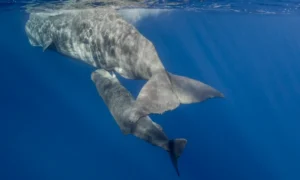
For the first few weeks, the calf stays very close to the surface and takes frequent breaths.
As it grows stronger and its lungs develop, it starts practicing longer dives with its mother.
By the time the calf is a few months old, it can hold its breath for several minutes. Full diving ability usually develops over the first year or two of life.
What Whales Do Underwater
What a whale does while it’s underwater affects how long it can stay down. A whale that’s actively hunting and swimming fast uses up oxygen much quicker than a whale that’s just cruising along.
Sperm whales hunting squid at great depths are working hard. They’re swimming, searching, chasing, and catching prey.
Despite all this activity, they can still stay down for an hour or more because they’re so good at managing their oxygen.
Whales that are just traveling might stay down for their typical dive time but not work as hard. They’re basically just holding their breath while swimming at a comfortable pace.
Resting whales sometimes take what are called “logging” breaks, where they float at the surface, breathing regularly without diving. This lets them recover between deep dives.
How Often Do Whales Need to Surface?
The time between breaths depends on what the whale is doing and what species it is. After a deep, long dive, a whale needs to take several breaths at the surface to recover.
Sperm whales, after a 45-minute deep dive, might stay at the surface for 8 to 10 minutes, taking multiple breaths to refill their oxygen stores.
The breathing pattern looks like several quick breaths with short gaps between them.
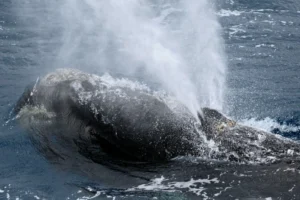
Whales that make shorter dives don’t need as long to recover. A humpback might surface, take one or two breaths, and dive again within a minute or two.
Young whales and whales that are sick or stressed need to breathe more often than healthy adults.
Can Whales Drown If They Stay Down Too Long?
Yes, whales can drown if they stay underwater too long and run out of oxygen. But whales are really good at knowing their limits.
They have internal signals that tell them when their oxygen is getting low and it’s time to surface.
In normal circumstances, whales won’t stay down past the point where it’s dangerous. But if something goes wrong (like getting trapped in fishing gear or being injured), a whale can run out of oxygen and drown before reaching the surface.
This is why getting tangled in fishing nets is so deadly for whales. The trapped whale uses up its oxygen trying to escape and can drown within 30 to 60 minutes.
How Scientists Figure Out Dive Times
Measuring how long whales stay underwater isn’t easy since we can’t just follow them around. Scientists use several clever methods to track whale dives.
They attach special tags to whales using suction cups. These tags record depth, time, water temperature, and sometimes even the whale’s heart rate.
When the tag eventually falls off, it floats to the surface and scientists recover it to download all the data.
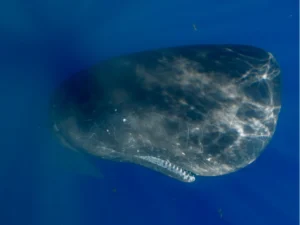
Satellite tags let scientists track when whales surface anywhere in the ocean. Every time the whale comes up, its location gets sent to a satellite.
By looking at the time between surface events, scientists can tell how long the whale was underwater.
Some studies use underwater cameras or drones to watch whales and time their dives directly.
How Breathing Patterns Change with Activity
Whales breathe differently depending on what they’re doing. When they’re hunting or traveling fast, they tend to make shorter, more frequent dives with quick breaths in between.
During feeding, whales might make many medium-length dives in a row as they follow schools of fish or patches of krill. They’ll surface quickly, take a few breaths, and dive again.
When resting or moving slowly, whales might stay at or near the surface, breathing regularly without making deep dives. This is when they recover energy and let their oxygen stores fully recharge.
Temperature Affects How Long Whales Can Stay Down
Water temperature can affect how long whales can hold their breath. Cold water holds more oxygen than warm water, which is better for whales.
But cold water also makes whales use more energy to stay warm.
Whales in polar regions, like bowhead whales, have thick blubber that keeps them warm. This insulation means they don’t waste as much energy on heat, so they can stay down longer.
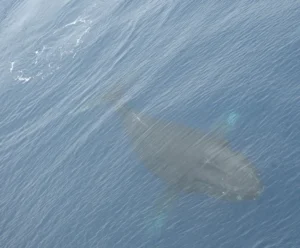
In warmer tropical waters, whales might need to work harder to stay cool, which could affect their dive times.
However, scientists are still learning about exactly how temperature affects whale diving.
Comparing Whale Dive Times to Other Animals
Whales aren’t the only animals that can hold their breath for a long time, but they’re among the best. Let’s compare whales to some other diving animals.
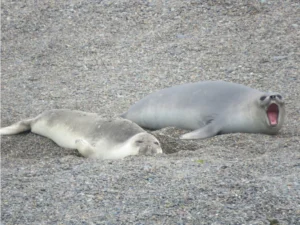
Elephant seals can stay underwater for about 20 to 30 minutes, which is impressive but not as long as large whales.
Sea turtles can stay down for 4 to 7 hours, but they’re basically resting on the seafloor and barely moving, so they need very little oxygen.
Penguins can dive for about 20 minutes, while walruses usually stay down for 5 to 10 minutes.
Humans, even with lots of training, can only hold their breath for a few minutes (the world record is around 24 minutes, but that’s under special conditions).
Whales stand out because they can stay down for so long while still being active and hunting.
How This Affects Whale Behavior
The amount of time whales can spend underwater shapes their entire lifestyle. Deep-diving whales organize their whole day around dive cycles.
They dive deep, hunt for 45 to 90 minutes, surface to breathe and recover, and then dive again.
Whales that can’t dive as long need to feed in shallower water where they can come up more often.
This is one reason different whale species don’t compete as much for food. They’re hunting in different parts of the ocean.
Migration patterns are also affected. Whales need to know where they can find food within their diving range and plan their routes around breathing and feeding needs.
Conclusion
Whales can stay underwater anywhere from a few minutes to several hours, depending on the species.
The champions are beaked whales, which can hold their breath for over three hours while diving to incredible depths.
These amazing abilities come from special features in their bodies, including muscles packed with oxygen-storing proteins, extra blood volume, and the ability to slow their heart rate and redirect blood flow during dives.
Every part of a whale’s body is built to make these long dives possible.
Understanding how long whales can stay underwater helps us appreciate just how well-adapted these animals are to ocean life.
It also helps scientists protect them by knowing where and when whales need to surface to breathe, which can prevent dangerous interactions with ships and fishing gear.

Hi, my name is Ezra Mushala, i have been interested animals all my life. I am the main author and editor here at snakeinformer.com.