
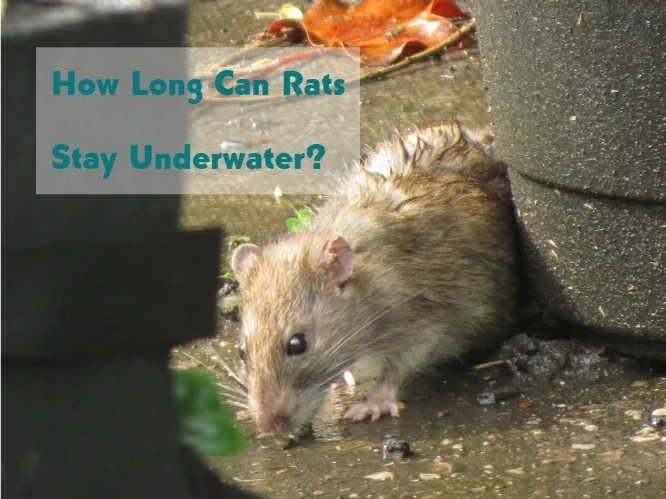
Rats are surprisingly good swimmers, but what about staying underwater? If you’ve ever wondered whether rats can hold their breath or how long they can survive submerged, you’re not alone.
Maybe you’re dealing with rats near water, or you’re just curious about what these animals can actually do. How long can rats stay underwater?
Rats can stay underwater for about 3 minutes on average. Some rats can hold their breath even longer (up to 5 minutes in rare cases), but most will surface well before the 3-minute mark. They’re built for swimming on the surface, not for diving deep or staying submerged for long periods.
This ability to hold their breath is actually pretty impressive for such a small animal. It’s one of the reasons rats can be so hard to get rid of, especially in areas near water or in sewer systems.
Why Rats Can Hold Their Breath So Long
For their size, rats have pretty efficient lungs and a good oxygen storage system. When a rat goes underwater, its body automatically slows down certain functions to conserve oxygen.
The heart rate drops, and blood flow gets redirected to the most important organs like the brain and heart. This is called the “dive response,” and lots of mammals have it (including humans).
Rats also have a higher tolerance for carbon dioxide buildup than many animals. This means they don’t feel the urgent need to breathe as quickly as some other animals would.
Their small size actually helps here too. Smaller bodies use oxygen more slowly when at rest, so a rat that’s just floating or slowly swimming underwater doesn’t burn through its air supply super fast.
Still, 3 minutes is about the max for most rats. After that, they really need to get air or they’ll drown.
Rats Don’t Actually Want to Stay Underwater
Just because rats can hold their breath for 3 minutes doesn’t mean they enjoy it or do it on purpose. Rats would much rather swim on the surface where they can breathe normally.
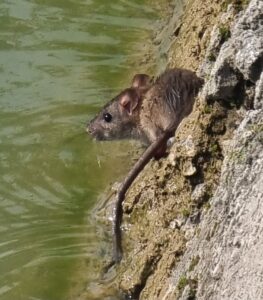
When rats swim, they usually keep their nose and mouth above water. They paddle with their legs and use their tail for steering, just like many other animals that swim.

Rats only go completely underwater when they’re forced to. This might happen if they’re trying to escape a predator, if they fall into water and panic, or if they’re diving for food in an emergency.
In sewer systems, rats sometimes have to swim underwater through pipes or when water levels rise suddenly. But even then, they’re trying to get back to air as fast as possible.
A rat that stays underwater by choice is either in serious danger or has found something it really needs (like food). Otherwise, it’ll surface and swim normally.
What Happens When a Rat Runs Out of Air?
When a rat hits its breath-holding limit, things get dangerous fast. The rat will start to panic and try desperately to reach the surface.
If it can’t get air, the rat will eventually breathe in water. This is called drowning, and it happens when water fills the lungs instead of air.
Rats can lose consciousness in less than a minute once they start drowning. After that, brain damage starts happening really quickly because the brain isn’t getting oxygen.
If you pull a rat out of water right after it’s stopped moving, there’s sometimes a small chance it could recover with help. But most of the time, once a rat has been underwater too long, it’s fatal.
This is why rats are so motivated to stay near the surface when swimming. They know instinctively that going too deep or staying under too long is dangerous.
Young Rats Can’t Hold Their Breath as Long
Baby rats and young rats don’t have the same breath-holding ability as adults. Their lungs are smaller and less developed, and they don’t have as much practice.
A young rat might only be able to hold its breath for 30 seconds to a minute. This makes them much more vulnerable around water.

In the wild, mother rats are really careful about keeping their babies away from water until they’re old enough to handle it. Baby rats can drown in just a few inches of water if they fall in and panic.
As rats grow and mature, their breath-holding ability improves. By the time they’re full-grown adults (around 4-6 months old), they can do the full 3 minutes.
If you have pet rats, it’s really important to never leave young rats unsupervised near water, even shallow water. They can get into trouble much faster than adult rats.
Rats Can Swim Through Pipes Underwater
One of the most disturbing things about rats (if you’re trying to keep them out of your house) is that they can swim through your plumbing. Sewer rats do this all the time.
A rat can hold its breath long enough to swim through a typical section of pipe. If the pipe is connected and leads somewhere with air, the rat can make it through.
This is how rats sometimes end up coming up through toilets. They swim through the sewer pipes, hold their breath through the trap, and pop up in the bowl.

Most pipe runs are short enough that a rat can make it through on one breath. If the pipe is longer, rats might find air pockets along the way.
You can prevent this by installing rat guards or one-way valves in your plumbing. These devices let water flow but stop rats from swimming up through the pipes.
Cold Water Affects How Long Rats Can Stay Under
Water temperature makes a big difference in how long a rat can hold its breath. Cold water is actually more dangerous than warm water in some ways.
When a rat hits cold water, its body goes into shock. The heart rate spikes at first, and the rat might gasp and accidentally inhale water right away.
Cold water also drains body heat fast. Rats are small, so they lose heat quickly when they’re wet and cold. This uses up energy and oxygen faster.
In really cold water, a rat might only be able to hold its breath for a minute or two before it has to surface. The cold makes everything harder.
Warm water is a bit easier for rats to handle, but it’s still stressful. The ideal situation for a rat is to avoid going underwater completely.
Rats Learn to Avoid Deep Water
Rats are smart, and they learn from experience. If a rat has a scary experience with deep water, it’ll avoid that area in the future.
Wild rats tend to stick to shallow water where they can keep their feet on the bottom. They’ll wade through puddles or shallow streams, but they avoid jumping into anything deep.

This is a learned behavior that helps them survive. Rats that are too bold around water are more likely to drown, so the cautious ones are the ones that live long enough to have babies.
Pet rats sometimes act differently because they’re in a safe environment. Some pet rats actually enjoy playing in shallow water, but even they don’t like being forced underwater.
If you want to give your pet rat a bath, always use very shallow water (just an inch or two) and never submerge the rat’s head. Let the rat stay in control.
Rats Are Better at Surface Swimming Than Diving
Rats evolved as surface swimmers, not divers. Their bodies are built for paddling across water, not for going deep.
When a rat swims on the surface, it can go for a long time. Some rats can swim for hours if they need to, as long as they’re not fighting a current and have somewhere to rest eventually.

But diving underwater is a different story. Rats don’t have any special adaptations for diving like seals or otters do. They’re just holding their breath, same as you would.
Their eyes aren’t protected underwater, and they can’t see very well when submerged. This makes underwater navigation really hard for them.
Rats also have a hard time diving down because their bodies are naturally buoyant. They float, which means they have to work hard to stay underwater. This uses up oxygen faster.
Drowning Is a Common Cause of Death for Wild Rats
Despite being able to hold their breath for 3 minutes, lots of wild rats drown every year. It’s actually one of the more common ways rats die.
This happens when rats fall into water they can’t get out of. Things like buckets, pools, wells, or steep-sided ponds can trap rats.

Even if the rat can swim and hold its breath, if there’s no way to climb out, it’ll eventually get tired and drown. Rats can only tread water for so long before their muscles give out.
Flash floods are also dangerous for rats. Rats living in burrows or sewers can get caught by sudden rising water and drowned before they can escape.
Some people use drowning as a method for rat control, but it’s actually pretty cruel. The rat suffers for several minutes before dying.
Rats Can Survive Brief Submersion
If a rat goes underwater for just a few seconds (like if a wave hits it or it dips under while swimming), it’s usually fine. Rats can handle brief submersion without any problems.
The danger comes when the rat can’t surface quickly or gets held underwater. That’s when the clock starts ticking on that 3-minute limit.

Rats also shake off water really well. When they get out of water, they’ll shake their whole body (kind of like a dog does) to get most of the water off their fur.
After that, they’ll groom themselves to dry off completely. Rats are really good at keeping their fur clean and dry, which helps them stay warm.
If a rat gets completely soaked and can’t dry off, it can get hypothermia. This is especially dangerous for young rats or sick rats.
Different Rat Species Have Similar Abilities
Whether you’re talking about Norway rats, roof rats, or other common rat species, they all have roughly the same breath-holding ability. About 3 minutes is the standard across the board.
Some individual rats might be slightly better or worse than others, but the species differences are pretty small. It’s more about the individual rat’s size, health, and experience.

Wild rats that live near water might be slightly better at breath-holding than rats that never encounter water. Practice and necessity can make a small difference.
But even the best rat swimmers can’t stay underwater indefinitely. They’re mammals, and they need air just like we do.
No rat species has evolved to be fully aquatic. They’re all land animals that can swim when they need to, not water animals that can walk on land.
Conclusion
Rats can hold their breath for about 3 minutes underwater, which is actually pretty impressive for their size. This ability helps them survive in sewers, escape predators, and navigate through pipes.
But just because they can hold their breath doesn’t mean they want to. Rats would much rather swim on the surface where they can breathe normally and see where they’re going.
If you’re dealing with rats in an area with water, remember that they can swim through pipes and hold their breath long enough to get through most plumbing systems. You’ll need proper barriers or one-way valves to keep them out.

Hi, my name is Ezra Mushala, i have been interested animals all my life. I am the main author and editor here at snakeinformer.com.