

Rats have a reputation that’s hard to shake. Most people see them as dirty pests that spread disease and ruin food. But there’s another side to these rodents that scientists have known about for years.
Rats can solve puzzles, remember complex routes, and even show empathy for other rats. They’ve been used in lab studies for decades because of how smart they are. So just how smart are rats?
Rats are surprisingly intelligent. They have large brains for their body size, complex social structures that require communication and learning, and they’ve evolved to survive in constantly changing environments where problem-solving skills mean the difference between life and death.
Their intelligence isn’t just random. It’s the result of millions of years of evolution in environments where only the smartest rats survived long enough to have babies.
How Rat Brains Compare to Other Animals
When you look at brain size compared to body size, rats actually punch above their weight. Their brains are surprisingly large for such small animals.
A rat’s brain weighs about 2 grams, which doesn’t sound like much. But when you compare that to their body weight, the ratio is pretty impressive. They have more brain power per pound than many other animals their size.

The structure of their brain matters too. Rats have a well-developed cerebral cortex (the outer layer of the brain that handles thinking and decision-making). This part of the brain is where complex thoughts happen.
They also have a large hippocampus (the memory center). This helps them remember places they’ve been, food sources they’ve found, and dangers they’ve encountered. If a rat finds food in one spot, it’ll remember that location and come back.
What Problem-Solving Skills Do Rats Have?
Rats can figure out problems that would stump many other animals. Scientists have tested this over and over in different ways.
In maze studies, rats can learn complex routes after just a few tries. They don’t just memorize one path either. If you block their usual route, they’ll find a new way to get to the food or exit.

They can also understand cause and effect. If pushing a lever gives them food, they’ll learn that connection fast. Some rats even figure out that certain actions lead to rewards while others lead to nothing.
Tool use is another area where rats shine. While they don’t use tools like monkeys do, they can manipulate objects to get what they want. They’ll push things around, stack items to reach higher places, and move obstacles out of their way.
One study showed rats could learn to drive tiny cars to get treats. They learned to steer left and right to reach their goal. That takes spatial awareness and planning.
Rats Have Complex Social Lives
Living in groups makes rats smarter. They have to communicate, cooperate, and sometimes compete with each other. This social pressure pushes their intelligence higher.
Rats use different squeaks and sounds to talk to each other. Some of these sounds are too high-pitched for humans to hear, but other rats pick them up just fine. They use these calls to warn about danger, show excitement about food, or communicate during mating.

They also recognize individual rats. If you put a rat in a cage with ten other rats, it’ll remember which ones are friendly and which ones are aggressive. That takes memory and social awareness.
Even more interesting is how rats show empathy. In experiments, rats will free other trapped rats even when there’s no reward for doing it.
They seem to understand when another rat is in distress and want to help.
They’ll also share food with rats who’ve helped them before. This shows they remember past interactions and adjust their behavior based on those memories.
Why Did Rats Evolve to Be So Smart?
Intelligence doesn’t just appear for no reason. Animals get smarter when being smart helps them survive and have more babies.
Rats live in environments that change all the time. Cities grow, buildings get torn down, food sources appear and disappear. A rat that can adapt to these changes will live longer than one that can’t.
They also face constant threats. Predators, poison, traps, and competition from other rats all threaten their survival. Smart rats avoid dangers better than less intelligent ones.
Finding food requires brainpower too. Rats are omnivores (they eat both plants and meat), so they need to recognize many different food sources. They have to remember where food was, figure out how to get to it, and avoid contaminated or poisoned food.
Their reproductive success depends on intelligence too. Smarter rats find better nesting sites, protect their babies more effectively, and teach their young important survival skills.
How Rats Learn and Remember
Rats have excellent memory, especially for things that matter to their survival. They use different types of learning to build up their knowledge.
Spatial memory is one of their strongest skills. They create mental maps of their territory. A rat might know dozens of different routes through a building, remembering which paths are safest and which have food.
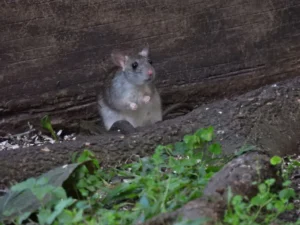
They also learn through trial and error. If something works, they’ll try it again. If it fails or causes pain, they’ll avoid it next time. This is called associative learning.
Social learning happens too. Young rats watch older rats and copy what they do. If mom rat avoids a certain food, the babies will probably avoid it too. This passes down survival knowledge without every rat having to learn everything from scratch.
Rats can even learn abstract concepts. In studies, they’ve learned to match patterns, understand “more” versus “less,” and make choices based on probability. These aren’t simple tasks.
Their memory lasts a long time too. Rats can remember routes and food locations for months. Some studies suggest they remember certain things for their entire lives.
Can Rats Recognize Human Emotions?
This might sound strange, but research suggests rats can pick up on human feelings to some degree. They’re very good at reading body language and tone of voice.
Pet rats often respond differently to happy voices versus angry voices. They’ll approach when you sound friendly and hide when you sound upset. This shows they’re processing emotional information from sound.
They also watch human behavior closely. A rat that’s been around people will notice patterns in what you do. They’ll know when it’s feeding time based on your routine, not just the clock.
Some rats even seem to bond with specific people. They’ll be more relaxed and playful with someone they trust compared to a stranger. That suggests they remember individuals and have different relationships with different people.
How Smart Are Rats Compared to Dogs or Cats?
This is hard to measure because different animals are smart in different ways. But rats hold their own against popular pets.
Dogs are great at understanding human cues and commands. Rats can’t quite match that, but they can learn tricks and respond to their names. Some pet rats learn to come when called or do simple behaviors on command.

Cats are known for being independent and smart about hunting. Rats are just as clever about survival and actually better at problem-solving in some tests. They’re more persistent when facing puzzles.
In maze tests, rats often outperform both cats and dogs. Their spatial memory and navigation skills are top-notch. They’re also faster learners in many situations.
The main difference is motivation. Dogs want to please humans, which makes them easier to train. Rats are more motivated by food and curiosity, so you have to work with that.
What About Rats Makes Them Good for Science?
Scientists use rats in research for reasons that go way beyond just being cheap or easy to keep. Their intelligence is actually a big part of why they’re so useful.
Rats can learn complex tasks that help researchers study learning, memory, and decision-making. They can run through mazes, press levers in specific sequences, and make choices based on rewards.
Their social behavior lets scientists study how animals interact, communicate, and form relationships. This helps us understand social dynamics in other species, including humans.
They’re also smart enough to show psychological conditions. Rats can develop something similar to depression, anxiety, or addiction. This makes them useful for studying mental health treatments.
Their brain structure is similar to human brains in important ways. While obviously much simpler, the basic organization is there. What scientists learn about rat brains often applies to understanding human brains too.
Do Wild Rats Act Differently Than Lab Rats?
Wild rats and lab rats are the same species, but they’ve had very different lives. This affects how their intelligence shows up.
Wild rats are more cautious and suspicious. They have to be because their environment is dangerous. They’re slower to trust new foods or explore new areas. This is called neophobia (fear of new things).

Lab rats have been bred for generations to be calmer around humans. They’re less scared and more willing to explore. This makes them easier to work with but might make them seem less sharp about survival.
Wild rats are better at avoiding traps and poison because they have to be. They watch what happens to other rats and learn from it. If one rat gets sick from eating something, the others will avoid that food.
But lab rats can learn more complex artificial tasks. They’re used to puzzle-solving in controlled settings. A wild rat might not sit still long enough to learn to drive a tiny car, but it could outsmart traps that would catch a lab rat.
How Do Rats Use Their Intelligence to Survive in Cities?
Cities are tough environments, but rats thrive there because they’re smart enough to adapt. They’ve figured out how to live alongside millions of people.
They learn subway and sewer systems like humans learn street maps. Rats know which tunnels lead where, which times are safest to travel, and where food sources are located.

They’ve adapted their schedules to human activity. In busy areas, rats come out more at night when fewer people are around. In quieter neighborhoods, they might be active during the day too.
Rats also learn to avoid dangers specific to cities. They figure out which areas have poison, where traps are set, and which routes have predators (like cats or hawks). This knowledge gets passed down through generations.
They’re incredibly good at finding food in human environments. They can open packaging, get into containers, and access food storage areas. They remember which garbage cans get filled on which days and plan their routes accordingly.
Can Rats Feel Emotions Like Humans Do?
This gets into complicated territory, but research suggests rats experience basic emotions. They’re not just little robots running on instinct.
Rats can feel fear. When they’re scared, their behavior changes in measurable ways. Their heart rate goes up, they freeze or run, and they avoid the thing that scared them in the future.
They also seem to feel something like happiness or pleasure. When they’re playing or getting treats, they make high-pitched chirping sounds that researchers think are similar to laughter. They’ll seek out activities that produce these positive feelings.
Stress and anxiety show up in rats too. Long-term stress changes their behavior and even their brain chemistry. They become more cautious, sleep less, and show signs of what looks like worry.
The empathy studies mentioned earlier suggest rats can recognize distress in other rats and care about it. That’s a more complex emotion than simple fear or pleasure.
Whether rats feel emotions exactly like humans is impossible to know. But they clearly have internal states that go beyond just reacting to their environment.
What Can Pet Rat Owners Notice About Intelligence?
People who keep rats as pets see their intelligence on display every day. These observations match what scientists have found in labs.
Pet rats learn their names and come when called. Not always (they’re not dogs), but often enough to show they understand. They recognize the sound and connect it to themselves.
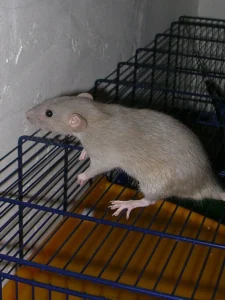
They figure out how to escape from cages if there’s any weakness. Owners often tell stories about rats who learned to unlatch doors, push aside barriers, or squeeze through impossibly small gaps.
Rats remember people and have clear preferences. They’ll be excited to see someone they like and cautious around someone they don’t trust. This shows individual recognition and memory.
They also learn routines and anticipate what comes next. If you always give treats after cleaning the cage, your rat will start getting excited as soon as you begin cleaning. They’ve connected the two events.
Play behavior shows intelligence too. Rats will roughhouse with each other and with humans, adjusting how hard they bite or scratch based on who they’re playing with. That takes awareness and control.
Do Rats Get Smarter as They Age?
Like many animals, rats learn throughout their lives, but their peak learning ability comes at certain ages. Young adult rats (around 3-6 months old) learn new tasks fastest.
Baby rats learn a lot from their mothers and siblings. This early period shapes how they approach problems later in life. Rats who had more stimulation as babies often do better on intelligence tests as adults.

Adult rats continue learning but might take a bit longer to pick up new tricks. They’ve also accumulated a lot of experience by this point, which makes them better at applying what they already know to new situations.
Older rats (over 18 months) start showing some cognitive decline, similar to aging in humans. Their memory isn’t quite as sharp, and they learn new tasks more slowly. But they still retain much of what they learned earlier in life.
The environment matters a lot. Rats kept in enriched environments (with toys, puzzles, and social interaction) stay sharper longer than rats in bare cages. Mental stimulation seems to keep their brains working better.
How Do Researchers Test Rat Intelligence?
Scientists have developed lots of ways to measure how smart rats are. These tests look at different types of intelligence.
The Morris water maze is a classic test. Rats swim in a pool looking for a hidden platform just below the water’s surface. Smart rats remember where the platform is and swim straight to it on later tries.
T-mazes and Y-mazes test decision-making. Rats have to choose which path leads to food. Researchers can make this harder by changing which arm has the reward or adding rules like “always turn right.”
Object recognition tests measure memory. A rat explores two objects, then later sees one familiar object and one new one. Smart rats spend more time investigating the new object because they remember the old one.
Social learning tests look at whether rats can learn by watching others. One rat learns a task, then researchers see if other rats can learn it faster by watching the first rat do it.
Puzzle boxes test problem-solving. Rats have to figure out how to open a box to get food inside. Some boxes require multiple steps, like pulling a lever then pushing a door.
Conclusion
Rats are intelligent because evolution favored smart survivors. Their large brains, complex social lives, and ability to adapt to changing environments all pushed them to develop impressive mental abilities.
They can solve problems, remember routes and individuals, learn from experience, and even show empathy. These aren’t just party tricks. This intelligence is what lets them thrive in cities, sewers, farms, and wild areas all over the world.
Whether you see them as pests or interesting animals, their intelligence is real and measurable. Understanding this changes how we deal with them, study them, and think about animal intelligence in general.
The next time you see a rat (hopefully not in your kitchen), remember you’re looking at one of the smartest small mammals on the planet. They’ve earned their reputation as survivors through brainpower as much as through breeding.

Hi, my name is Ezra Mushala, i have been interested animals all my life. I am the main author and editor here at snakeinformer.com.