

Crawl spaces are one of the most common places rats invade in homes. These dark, quiet areas under your house provide perfect shelter for rats looking for a safe place to nest and breed. If you’ve heard scratching sounds coming from below your floors or noticed signs of rats in your crawl space, you’re probably wondering how they got down there in the first place. So how exactly do rats get into crawl spaces?
Rats get into crawl spaces through foundation cracks, gaps around pipes and utility lines, broken or missing vent screens, and openings where the foundation meets the walls. They only need a hole about the size of a quarter to squeeze through, and they’re really good at finding and using these entry points.
Once rats find a way into your crawl space, they’ll use it over and over again. They’ll even create well-worn paths to and from these entry points. Understanding how rats get in is the first step to keeping them out and protecting your home from damage.
Cracks and Gaps in the Foundation
Your home’s foundation is supposed to be a solid barrier, but over time, it can develop weak spots that rats will use to get inside.
Foundation cracks happen naturally as your house settles and the concrete ages. Even small cracks that seem too tiny for a rat can become entry points. Rats can squeeze their bodies through incredibly small spaces because their skulls are the only rigid part of their skeleton.
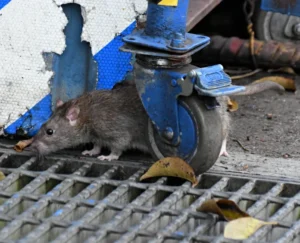
If a rat can fit its head through a gap, it can fit its entire body through. This means a crack that’s only about a quarter inch wide is big enough for a rat to use.
Temperature changes cause concrete to expand and contract, which creates more cracks over time. If you live in an area with cold winters, this freeze-thaw cycle can make foundation cracks worse each year.
Rats don’t just find these cracks randomly. They actively search the perimeter of your home, using their sensitive whiskers and noses to detect air flow from inside. When they find a crack with air coming through it, they know it’s a potential entry point.
Utility Line Entry Points
Anywhere pipes, wires, or cables enter your crawl space is a potential entry point for rats. These are some of the most common ways rats get in.
Water pipes usually enter your home through the foundation, and there’s often a gap around them. Even if the gap was sealed when the house was built, that seal can crack or deteriorate over time.
Electrical conduits and cable lines create similar opportunities. The holes drilled for these utilities are often slightly larger than the pipes themselves, leaving a gap that rats can use.

Gas lines are another common entry point. The gaps around gas pipes might seem too high off the ground for rats to reach, but rats are excellent climbers. They can scale rough concrete walls easily.
HVAC ducts that run through the crawl space sometimes have gaps where they connect to the main system. Rats can squeeze through these gaps or even chew through thin duct material to get inside.
Rats will also chew around utility entry points to make the gaps bigger. Their teeth never stop growing, so they’re constantly gnawing on things. A small gap can become a rat-sized hole pretty quickly.
Damaged or Missing Vent Screens
Crawl space vents are necessary for air circulation, but they’re also prime entry points for rats if they’re not properly protected.
Vent screens are supposed to keep pests out while allowing air to flow. But these screens are often made of thin metal or plastic that rats can chew through without much effort.
Over time, vent screens can rust, corrode, or come loose from their frames. A screen that looks intact from a distance might actually have a hole in the corner that’s big enough for a rat.
Weather and moisture damage these screens pretty quickly, especially in humid climates. The constant exposure to moisture from the crawl space can make metal screens rust through in just a few years.
Sometimes vent screens are missing entirely. Previous homeowners or contractors might have removed them for access and never replaced them. Or they might have fallen off due to rust or poor installation.
Rats will test vent screens by pushing on them and chewing at the edges. If they find a weak spot, they’ll work at it until they create an opening large enough to get through.
Gaps Between Foundation and Walls
The point where your home’s foundation meets the wooden structure above it is often a weak spot for rat entry.
This connection isn’t always perfectly sealed. There can be gaps between the concrete foundation and the wooden sill plate (the board that sits on top of the foundation).
These gaps happen for several reasons. Sometimes they’re just construction flaws from when the house was built. Other times, the wood shrinks over time, creating spaces that weren’t there originally.
Termite damage can also create gaps in this area. If termites have eaten away at the sill plate, rats can use those damaged areas to get into the crawl space.
Rats specifically look for these horizontal gaps because they provide easy access. They can run along the outside of your foundation, find a gap, and slip right into the crawl space.
The area where different building materials meet is always vulnerable. Concrete and wood expand and contract at different rates with temperature changes, which can create or widen gaps over time.
Door and Access Panel Gaps
The doors and access panels that let you get into your crawl space can also let rats in if they’re not properly sealed.
Crawl space doors are often made of thin wood or metal. If the door doesn’t fit tightly in its frame, there will be gaps around the edges that rats can squeeze through.
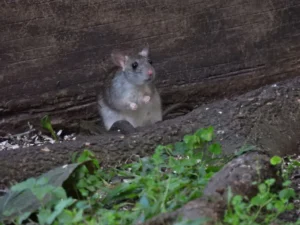
The bottom of the door is especially vulnerable. Even a small gap between the door and the ground is enough for a rat to get under. Rats are really good at flattening themselves to fit under obstacles.
Access panels in the floor of your house that lead to the crawl space can have similar problems. If the panel doesn’t sit flush with the floor, or if the seal around it has deteriorated, rats can find their way through.
Sometimes these doors and panels warp over time due to moisture exposure. A warped door won’t close properly, leaving gaps that get bigger over time.
Latches and hinges on crawl space doors can also create entry points. The holes for these hardware pieces need to be sealed properly, or rats will use them to get in.
How Rats Find Entry Points
Rats don’t just stumble into your crawl space by accident. They actively search for ways to get in, and they’re surprisingly good at it.
Rats follow the perimeter of buildings, keeping close to walls and foundations as they move around. This behavior, called thigmotaxis, means they naturally explore every inch of your foundation while looking for food or shelter.
Their whiskers are incredibly sensitive and can detect tiny air currents. When a rat walks past a crack or gap, it can feel the air moving through it. This tells the rat there’s a space on the other side worth investigating.
Rats also have an excellent sense of smell. They can smell food, moisture, or even the scent of other rats that might have used an entry point before. These smells guide them to potential ways into your home.
They’re persistent too. A rat might test the same spot multiple times over several days, gradually working at it until it creates an opening. They don’t give up easily when they find a promising entry point.
Once one rat finds a way in, others will follow. Rats leave scent trails that other rats can detect and follow. So if you have one rat in your crawl space, you’ll probably have more soon.
Why Crawl Spaces Attract Rats
Understanding why rats want to get into your crawl space helps you see why they work so hard to find entry points.
Crawl spaces provide shelter from predators and weather. Rats are vulnerable to hawks, owls, cats, and other predators when they’re out in the open. A crawl space gives them a safe place to hide during the day.

The temperature in a crawl space is usually more stable than outside. In winter, it’s warmer than the outdoor air. In summer, it’s cooler. This makes it a comfortable place for rats year-round.
Crawl spaces are usually dark and quiet. Rats are naturally cautious animals that prefer areas where they won’t be disturbed. Your crawl space is perfect for this.
There’s often plenty of nesting material available. Insulation, cardboard, fabric, and other materials commonly found in crawl spaces make excellent nesting material for rats.
If your crawl space has moisture problems, that’s even more attractive to rats. They need water to survive, and a damp crawl space provides easy access to moisture.
Crawl spaces can also provide access to the rest of your house. Rats in the crawl space can chew through floorboards or travel through wall cavities to reach other parts of your home.
Signs Rats Are in Your Crawl Space
Knowing the signs of rats in your crawl space helps you catch an infestation early, before it gets worse.
Scratching and scurrying sounds from below your floors are the most obvious sign. You’ll usually hear this at night when rats are most active.
Droppings are another clear indicator. Rat droppings are about half an inch long, dark brown or black, and shaped like grains of rice with pointed ends. If you go into your crawl space and see these, you definitely have rats.
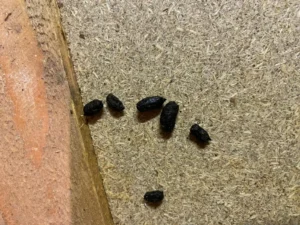
A strong, musty smell can indicate rats. The combination of rat urine, droppings, and the oils from their fur creates a distinctive odor that gets stronger as the infestation grows.
Damaged insulation is common when rats are present. They’ll tear up insulation to use as nesting material, leaving visible gaps and shredded areas.
Grease marks along beams and pipes show where rats regularly travel. Rats have oily fur, and as they follow the same paths over and over, they leave dark smudges on surfaces they brush against.
Chew marks on wood, plastic, or even soft metals show that rats are actively working in your crawl space. Fresh chew marks will be lighter in color than old ones.
Materials Rats Can Chew Through
Rats have incredibly strong teeth and can chew through a surprising variety of materials to create or enlarge entry points.
Wood is easy for rats to chew through. They can gnaw through wooden beams, floor joists, and sill plates without much trouble. This is why wooden crawl space doors aren’t very effective at keeping rats out.
Plastic and vinyl are also no match for rat teeth. Plastic vent screens, plastic pipes, and vinyl siding can all be chewed through by determined rats.
Soft metals like aluminum and copper can be gnawed through given enough time. Aluminum vent screens are better than plastic ones, but they’re not completely rat-proof.

Drywall and plaster are very easy for rats to chew through. If your crawl space has any drywall or plaster barriers, rats will go right through them.
Even concrete can be chewed through if it’s old and crumbly. While rats can’t chew through solid, healthy concrete, they can work at cracks and deteriorated areas to make them bigger.
The only materials that effectively stop rats are thick steel (at least 1/4 inch), heavy-gauge hardware cloth (1/4 inch mesh or smaller), and solid concrete in good condition.
How Fast Can a Rat Infestation Grow?
Once rats get into your crawl space, the population can grow really quickly if you don’t deal with it.
A female rat can have five to ten litters per year, with six to twelve babies in each litter. That means a single female rat can produce 60 to 120 offspring in one year.
Those babies become sexually mature in just three to four months. So the rats born in January could be having their own babies by April or May.
If you start with just two rats (a male and a female) in your crawl space, you could have hundreds of rats within a year under ideal conditions.

Crawl spaces provide ideal conditions for rat breeding. They’re safe, relatively warm, and undisturbed. Rats will breed continuously in this kind of environment.
This is why it’s so important to deal with rats as soon as you discover them. A small problem can become a major infestation really quickly.
Preventing Rat Entry
The best way to deal with rats in your crawl space is to keep them out in the first place. This means sealing every possible entry point.
Do a thorough inspection of your foundation, looking for any cracks or gaps. Get down on your hands and knees and really look closely. Rats can use openings you might not notice from a standing position.
Seal foundation cracks with concrete patch or hydraulic cement. Don’t use spray foam alone because rats can chew through it. If you use spray foam, cover it with metal mesh or cement.
Replace damaged vent screens with heavy-duty steel mesh. The mesh should have holes no larger than 1/4 inch. Secure the mesh well so rats can’t push it aside.
Seal gaps around utility lines with steel wool packed into the gap, then covered with cement or metal flashing. The steel wool is hard for rats to chew through and fills the space completely.
Install door sweeps on crawl space doors and make sure the doors fit tightly in their frames. Replace warped or damaged doors entirely.
Conclusion
Rats get into crawl spaces through foundation cracks, gaps around pipes and wires, damaged vent screens, and any other small opening they can find. They’re persistent, resourceful, and surprisingly good at squeezing through tiny spaces.
The key to keeping rats out of your crawl space is finding and sealing every possible entry point. This takes time and careful attention to detail, but it’s the only reliable way to solve the problem long-term.
Don’t ignore signs of rats in your crawl space. The problem won’t go away on its own, and it’ll only get worse as the rat population grows. Take action as soon as you notice any evidence of rats, and you’ll save yourself a lot of trouble and expense down the road.

Hi, my name is Ezra Mushala, i have been interested animals all my life. I am the main author and editor here at snakeinformer.com.