
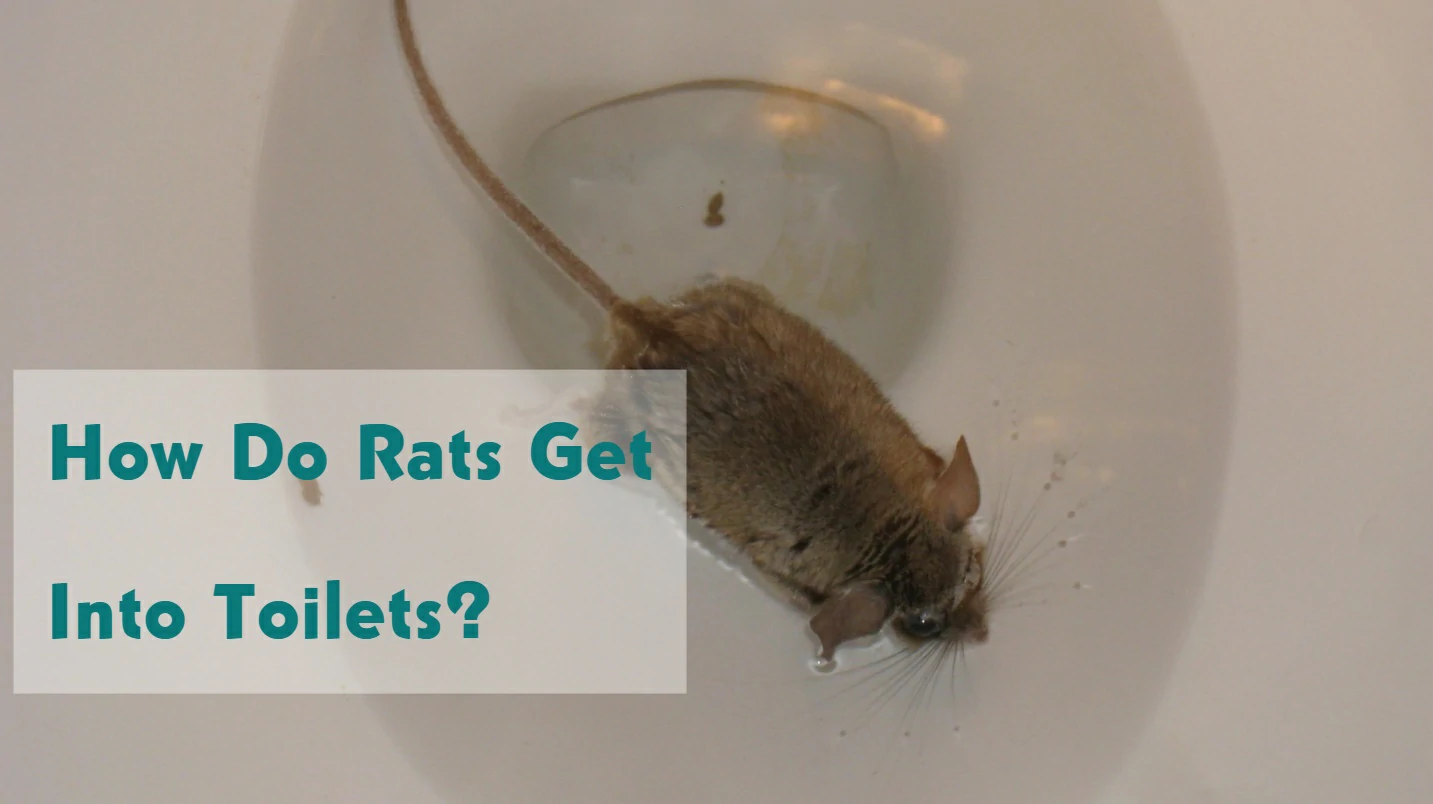
You’ve heard the horror stories and maybe seen the viral videos of rats appearing in toilets. But how exactly does a rat get from the sewer system all the way up into your toilet bowl?
Understanding the journey rats make helps you see why this happens and how to prevent it. How do rats actually get into toilets?
Rats get into toilets by swimming up through the sewer system and your home’s drain pipes. They start in the municipal sewer, find your home’s connection, swim or climb up your main drain line, navigate to your toilet’s pipe, dive through the water trap, and emerge in your toilet bowl. The entire journey can take just minutes for a determined rat.
It sounds impossible, but rats have all the physical abilities needed to make this journey.
Their swimming skills, lung capacity, flexibility, and determination combine to make your toilet an accessible target.
Step One: Rats Living in the Sewer System
The journey starts with rats already living in the sewer. Before a rat can enter your toilet, it needs to be in the sewer system under your street.
This is where the story really begins.
City sewers are perfect rat habitat. They provide everything rats need to survive: shelter from predators, protection from weather, constant moisture, and tons of food.

Human waste and food scraps flushed down drains feed entire rat colonies.
Sewer rat populations can be huge. Research on urban rat populations shows that major cities can have millions of rats living in their sewer systems.
New York City alone might have 2-3 million rats underground at any time.
Rats enter sewers through many routes. Storm drains provide easy access. Broken sewer pipes let rats in from the surrounding soil. Manholes and access points give direct entry.
Once in, rats rarely leave because the sewer provides everything they need.

These sewer rats are constantly exploring. They’re always looking for new food sources, nesting sites, and territory.
This natural exploration behavior is what leads them to investigate the pipes that connect to buildings.
Step Two: Finding Your Home’s Sewer Connection
Once in the sewer, a rat needs to find the pipe that connects your home to the main sewer line. This is where the rat’s journey toward your toilet actually begins.
Every building has a connection point where its plumbing joins the municipal sewer. This is usually a large pipe (4-6 inches) that carries all your home’s wastewater to the main sewer line running under the street.

Rats find these connections while swimming through the sewer. They’re not specifically looking for your house, they’re just exploring every tunnel and pipe they come across.
When they find your connection, they investigate it like any other opening.
Smells from your drains attract rats. Food waste from your kitchen, soap from bathrooms, and other organic matter creates scents that travel down your pipes.
Rats can smell this from the sewer and it draws them to investigate your connection.
Damaged connection points are easier entry spots. If there are cracks or gaps where your home’s line connects to the main sewer, rats find these weaknesses.
Old cast iron or clay pipes often have deteriorated connections that rats can exploit.
Step Three: Navigating Your Main Drain Line
After finding your home’s sewer connection, the rat enters your main drain line. This is the pipe that collects waste from all your fixtures and carries it to the sewer.
The main drain line is typically 3-4 inches wide. This gives rats plenty of room to move. They can easily swim, climb, or crawl through pipes this size. It’s not a tight squeeze for them at all.
Rats can climb vertical pipes. Your main drain probably goes straight up from where it connects to the sewer.
Rats are excellent climbers who can scale the inside of pipes by bracing against the walls with their feet and back.

They navigate in complete darkness. Drains have no light, but rats don’t need it. Their sensitive whiskers touch the pipe walls and tell them which direction to go. They can map their route entirely by touch.
When water flows down the drain, rats can find air pockets or wait it out. If someone flushes or runs water while a rat is in your pipes, the rat swims or holds onto the pipe wall. Once the water stops, they continue their journey.
Step Four: Choosing the Toilet Branch
Your main drain line branches off to different fixtures in your house. The rat reaches a junction where it can go toward your toilet, kitchen sink, bathroom sink, or other drains. Here’s why rats often choose the toilet branch.
Toilet drain pipes are the largest. While sink drains might be 1.5 to 2 inches, toilet drains are typically 3-4 inches.
Rats naturally follow the path of least resistance, and the larger pipe is easier to navigate.
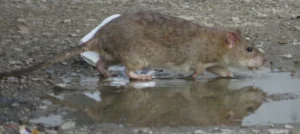
Toilet connections are usually more direct. Toilets often connect to the main drain with fewer bends and turns than other fixtures. A straighter path is more appealing to a rat trying to explore.
The toilet branch might have stronger air flow. Toilets have larger vent pipes that allow air to move through the system.
Rats can sense this air movement and follow it, thinking it might lead to an exit or new area.
Sometimes rats don’t choose, they try multiple branches. A rat might explore your kitchen sink drain first, find it too small or difficult, back out, and then try the toilet drain instead.
They’re persistent investigators.
Step Five: Swimming Through the Water Trap
The water trap in your toilet is supposed to keep things from coming up through the drain. But for rats, it’s just a short underwater swim.
This is the critical moment where the rat’s swimming ability really matters.
Toilet water traps are relatively short. The trapped water in your toilet bowl creates a seal of maybe 12-18 inches of water.
For a human, swimming underwater for that distance is nothing. For a rat, it’s equally easy.
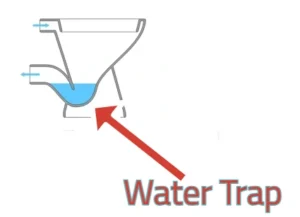
Rats can hold their breath for up to three minutes. Studies show that swimming through your toilet’s water trap takes a rat maybe 10-15 seconds at most.
They have plenty of breathing capacity to spare.
They dive down into the water headfirst. Rats are comfortable swimming underwater.
They tuck their legs close to their body, use their tail for steering, and power through the water trap with strong strokes.
There’s usually an air pocket above the trap. Even while water fills the U-bend, there’s often air space in the pipe above it.

A rat can surface in this air pocket, take a breath, and prepare for the final push into your toilet bowl.
The curved shape of the trap doesn’t stop rats. While it keeps solid objects from going back down easily, rats are flexible and can navigate the curve by feel.
They just swim around the bend and keep going.
Step Six: Emerging Into the Toilet Bowl
After swimming through the trap, the rat surfaces in your toilet bowl. This is the moment you might actually see it. Here’s what happens as the rat emerges.
The rat breaks the water surface and immediately looks for a way out. It’s been swimming in darkness through pipes and is probably disoriented.
The light from your bathroom and open air are the first things it notices.

If your toilet lid is up, the rat will try to climb out. The porcelain sides of the toilet bowl are smooth, but rats have sharp claws.
They can grip the edges and pull themselves up and over the rim.
If the lid is down, the rat is trapped. It can tread water indefinitely, but it can’t get out. This is why keeping your toilet lid closed is such effective protection.
The rat physically can’t escape into your bathroom.
Some rats might panic and try to go back down. If they feel too exposed or scared in the toilet bowl, they might dive back underwater and swim back through the trap.
But others are bold and will wait for an opportunity to escape.
Why Do Rats Even Bother Swimming Up Toilets?
You might wonder why a rat would go through all this effort just to reach your toilet. What’s motivating them to make this difficult journey?
Here’s what drives rats to explore upward through plumbing.
1. They’re Following Food Smells.
Everything you wash down your kitchen sink creates scents that travel through your plumbing.
Rats smell this food and follow the scent trail right to your home. They don’t know it leads to a toilet, they just follow the food.

2. Exploration Is in Their Nature.
Rats are naturally curious and constantly investigate new areas.
A pipe leading upward is interesting to them. They explore it the same way they’d explore any tunnel or passage in their environment.
3. They’re Looking for Nesting Sites.
Pregnant female rats especially are always searching for safe, dry places to have their babies.
Pipes leading upward might lead to a perfect nesting spot. Your walls or attic would be ideal from a rat’s perspective.
4. Sewers Can Flood During Heavy Rain.
When water levels rise in the sewer, rats are forced to find higher ground fast.
They’ll take any upward route available, including your plumbing. This is why toilet rat incidents spike during storms.
5. Competition in the Sewer Drives Rats to Find New Territory.
Studies on rat social behavior show that dominant rats control the best areas in sewers.
Weaker rats are pushed to explore elsewhere, including up through plumbing into buildings.
How Long Does the Journey Take?
From the sewer to your toilet bowl, how long does this entire journey actually take a rat? The answer might surprise you because it’s much faster than you’d think.
A rat can make the journey in as little as 15-30 minutes. Once they’ve found your home’s connection to the sewer and started up your main drain, the actual climbing and swimming doesn’t take long. Rats are quick and determined.

The exploration phase takes longer. Finding your home’s sewer connection in the first place might take hours or days as the rat explores different tunnels and pipes.
But once they’ve found it, the route to your toilet is fast.
Repeat visits are even faster. A rat that’s successfully reached your toilet before knows exactly which route to take.
They can make return trips in just minutes because they’re not exploring, they’re following a known path.
Distance doesn’t matter as much as obstacles. Your toilet might be 20 feet from your sewer connection or 100 feet, but both journeys are manageable for a rat.
The number of bends and the pipe diameter matter more than the distance.
Which Entry Points in the System Are Weakest?
While rats can potentially navigate intact plumbing systems, certain weak points make their journey easier.
Knowing these vulnerabilities helps you understand where to focus prevention efforts.
- Cracked or broken sewer pipes are the biggest weakness.
Old clay or cast iron pipes develop cracks over time.
These cracks let rats enter your plumbing system directly from the soil instead of having to find the main sewer connection.

- Failed pipe joints are common problems.
Where sections of pipe connect, the seals can deteriorate. Tree roots often invade at these joints, creating gaps. Once roots break through, rats follow.
- Damaged toilet flanges provide a shortcut.
The flange is where your toilet connects to the drain pipe.
If it’s cracked or improperly sealed, rats might access your toilet drain from spaces under your floor instead of coming all the way up from the sewer.
- Vent pipe openings on roofs can be entry points.
While designed to let air in, damaged or uncapped vent pipes give rats a way to enter your plumbing from above instead of below.
They fall in and then make their way down to accessible drains.
Do All Rats in Sewers Try This?
With millions of rats living in city sewers, you might worry they’re all trying to enter toilets constantly.
But not every sewer rat attempts this journey. Here’s what determines which rats try it.
- Most sewer rats never leave the sewer.
The sewer provides everything they need, so there’s no reason to take the risk of exploring upward.
Only a small percentage of rats ever attempt to enter buildings through plumbing.

- Younger, more adventurous rats are more likely to explore.
Like many animals, young rats are more curious and willing to take risks. They haven’t established territory in the sewer yet, so they’re more likely to investigate new areas.
- Rats displaced by dominant rats might try.
When a stronger rat takes over prime sewer territory, the displaced rat needs to find new resources.
These desperate rats are more likely to explore unusual routes like toilet pipes.

- Pregnant females seeking nesting sites are motivated explorers.
A rat looking for a safe place to have babies will investigate routes that other rats might ignore.
This is why spring and summer (breeding seasons) see more toilet rat incidents.
Ground Floor vs. Upper Floor Toilets
The floor your toilet is on makes a huge difference in how likely rats are to reach it. Height creates a significant barrier that affects rat behavior.
Ground floor toilets are by far the highest risk. These are closest to the main sewer connection with the shortest journey.
Rats can reach ground floor toilets in minutes once they’re in your plumbing.
Basement toilets are even more vulnerable than ground floor ones. They’re often below the main sewer line level, making them the first fixtures rats encounter when exploring upward.
If you have a basement bathroom, pay extra attention to prevention.

Second floor toilets are much less likely targets. A rat would have to climb much farther through your plumbing. While possible, most rats won’t make this extra effort when easier targets exist.
Third floor and higher are very unlikely. The journey is just too long and difficult. While not impossible, documented cases of rats reaching upper floors through toilets are extremely rare.
This means apartment buildings see most incidents in ground floor and basement units. If you rent, knowing which floor you’re on helps you understand your actual risk level.
How Stop Rats Before They Reach Your Toilet
Now that you understand each step of how rats enter toilets, you can see that breaking the chain at any point prevents the problem.
Here’s where intervention works best.
1. Fix Sewer Line Damage.
This stops rats from entering your plumbing system in the first place. If they can’t get into your pipes, they can’t reach your toilet.
This is the most comprehensive solution.
2. Install Backflow Preventers on Your Main Line.
These devices let water flow out but prevent anything from coming back in.
They stop rats before they get far enough to choose which fixture to investigate.
3. Use Toilet Rat Guards.
These are installed in the toilet drain itself and stop rats at the last possible moment
. Even if they navigate all the way to your toilet pipe, the guard prevents them from emerging in the bowl.
4. Keep Toilet Lids Closed.
This doesn’t stop rats from reaching the bowl, but it prevents them from getting into your bathroom.
It’s the simplest intervention and surprisingly effective.
5. Multiple Interventions Provide the Best Protection.
Using several prevention methods creates redundant safety measures. If one fails, others still protect you.
Conclusion
Rats enter toilets through a multi-step journey that starts in the sewer system and ends in your toilet bowl.
They find your home’s sewer connection, climb or swim up your main drain line, choose the toilet branch, dive through the water trap, and emerge in the bowl.
The entire trip can take just minutes for a determined rat.
What makes this possible is the rat’s incredible physical abilities. They can swim for extended periods, hold their breath for minutes, squeeze through tight spaces, climb vertical pipes, and navigate in complete darkness.
Your toilet’s water trap doesn’t stop them, it’s just a short underwater swim.
The best prevention is breaking the entry chain at multiple points. Fix damaged sewer pipes to stop rats from entering your system. Install backflow preventers on your main line.
Use toilet rat guards on vulnerable fixtures. And always keep toilet lids closed as your last line of defense.

Hi, my name is Ezra Mushala, i have been interested animals all my life. I am the main author and editor here at snakeinformer.com.