
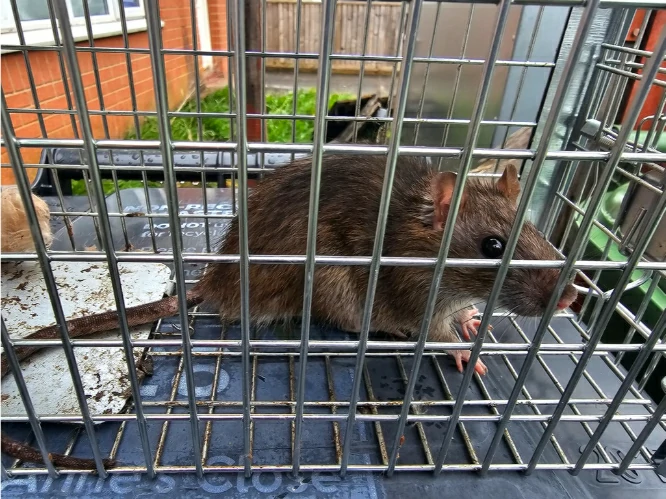
You’ve probably heard that rats can squeeze through impossibly small openings, maybe even smaller than their own bodies. It sounds hard to believe when you look at a rat’s size, but if you’ve ever dealt with a rat problem, you know they seem to appear in places you wouldn’t think they could reach. So how do rats actually manage this? How do rats get through small spaces?
Rats can squeeze through spaces as small as a quarter (about half an inch) because they have flexible skeletons and collapsible rib cages. If a rat can fit its skull through an opening, it can usually get its entire body through by compressing its rib cage and contorting its body. They also use their strong teeth to make small openings bigger.
This amazing ability is one of the main reasons rats are so hard to keep out of homes and buildings. Even tiny gaps that look too small to be a problem can become entry points for these determined rodents.
The Physical Adaptations That Let Rats Squeeze Through Tight Spaces
Rats have several body features that make them incredibly good at getting through small openings. Understanding these adaptations helps explain why they’re so successful at invading spaces.
Their skull is the limiting factor. A rat’s skull is the most rigid part of its body. If the skull can fit through an opening, the rest of the body can follow. This is why people say that a rat can get through any gap larger than a quarter, which is roughly the width of an adult rat’s skull when positioned correctly.

Collapsible rib cages give rats incredible flexibility. Unlike humans, rats have very flexible ribs that can compress and shift. When squeezing through a tight space, a rat can make its body narrower by compressing its rib cage inward. The ribs aren’t rigidly connected like ours, so they can move more freely.
Flexible spine and joints let rats contort their bodies in ways that look almost impossible. Their vertebrae can bend and twist, allowing them to change their body shape to fit through openings. They can stretch out long and thin, or compress themselves into tighter configurations.
No collarbone restricts their shoulder movement. Rats don’t have collarbones (clavicles) like humans do. This absence means their shoulder joints have much more range of motion. They can move their front legs closer together and make the front part of their body narrower.
Slippery fur helps them slide through tight spaces. A rat’s fur is relatively smooth and slightly oily, which reduces friction. When combined with their body compression, this lets them slip through openings more easily.
Strong, flexible whiskers help rats measure spaces. Before attempting to squeeze through an opening, rats use their whiskers to gauge whether they can fit. Their whiskers extend roughly as wide as their body at its widest point, so if the whiskers fit, the rat knows it can probably get through.
How Rats Determine If They Can Fit
Rats don’t just blindly try to force themselves through every opening they see. They have methods for testing spaces first.
They use their whiskers to measure the opening. A rat’s whiskers are extremely sensitive and can detect the size of an opening in the dark. The rat will move its head side to side, letting the whiskers touch both sides of a gap. If the whiskers don’t bend or get compressed, the gap is wide enough.

Rats test with their head first. If a rat thinks it can fit through an opening, it’ll stick its head in to check. If the skull fits through comfortably, the rat knows the rest of its body will follow. You might notice rats poking their heads through gaps repeatedly before committing to pushing through.
They push and probe to test resistance. Rats will use their snout to push against materials around an opening to see if anything gives way. If they find a weak spot or flexible material, they’ll work on it to make the opening bigger.
Scent plays a role too. Rats can smell what’s on the other side of an opening. If they detect food, water, or signs of other rats, they’re more motivated to try squeezing through, even if the space looks challenging.
The Process of Squeezing Through Small Openings
When a rat actually squeezes through a tight space, it follows a pretty specific process. Watching this happen can be both fascinating and disturbing.
The rat positions its head at an angle. Rather than facing an opening straight-on, rats often turn their head to the side, making the skull narrower. This angled approach lets them fit through slightly smaller spaces.
It pushes the head through first. Once the rat has determined it can fit, it starts pushing its head into the opening. The rat might wiggle its head side to side to work it through, especially if the fit is tight.
The shoulders compress and push through. After the head is through, the rat brings its front legs closer together and pushes with its back legs. The flexible shoulders compress inward, and the front part of the body follows the head.
The rib cage collapses as it moves through. This is the really impressive part. As the rat’s body enters the opening, its ribs compress, making the middle of its body narrower. The rat continues pushing with its back legs while pulling with its front legs.
The hips and back legs follow. Once most of the body is through, the rat’s hips and back legs slide through relatively easily. These parts are more flexible than you might think, and by this point, the hardest work is done.
The whole process might take just a few seconds for a gap that’s barely big enough, or it might happen so quickly in a larger opening that you barely see it happen.
What Size Opening Can Different Rats Fit Through
Not all rats are the same size, and this affects what size gaps they can squeeze through.
Adult rats need openings about half an inch (the size of a quarter) at minimum. A full-grown Norway rat or roof rat can typically squeeze through a gap this size, though it’ll be a tight fit and require some effort.
Young rats can fit through even smaller spaces. Juvenile rats that aren’t fully grown can squeeze through openings as small as a nickel or even a dime. This is really concerning because it means even gaps that seem way too small can let young rats into your home.
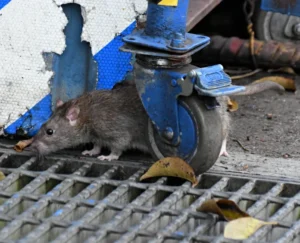
Pregnant female rats need slightly larger openings. A female rat that’s pregnant and close to giving birth has a less flexible midsection, so she needs bigger gaps than she normally would. However, she’s still capable of fitting through surprisingly small spaces.
Obese or overfed rats have more difficulty with tight spaces. Rats that have access to lots of food and have put on extra weight might not be able to fit through openings that a leaner rat could manage. However, they can still fit through gaps much smaller than you’d expect.
The type of opening matters too. A round hole is harder for rats to fit through than a long, narrow crack. Rats can make their bodies long and thin more easily than they can compress themselves into a compact circle.
How Rats Make Small Openings Bigger
When rats find a gap that’s almost big enough but not quite, they don’t just give up. They have ways of enlarging openings to make them usable.
Gnawing is their primary tool. Rats have incredibly strong teeth that never stop growing. They can chew through wood, plastic, soft metals, and many other materials. If an opening is too small, a rat will simply gnaw away at the edges until it’s big enough.
They target weak materials first. Rats are smart about where they chew. They’ll work on rotted wood, rusted metal, old mortar, or any material that’s already degrading. These weak spots give way faster than solid, new materials.
Rats can chew remarkably fast. Depending on the material, a rat might enlarge a gap from the size of a dime to the size of a quarter in just an hour or two. For softer materials like drywall or thin wood, it can happen even faster.
They work in shifts. If you have multiple rats trying to access the same space, they might take turns chewing to enlarge an opening. This speeds up the process considerably.
Water damage and weathering help rats. Openings that have been exposed to moisture or weather are easier to enlarge. Rats will take advantage of any degradation to make their job easier.
Common Entry Points Where Rats Squeeze Through
Understanding where rats commonly squeeze into buildings helps you know where to look and what to protect.
Gaps around pipes and utility lines are extremely common entry points. When plumbers and electricians install pipes, wires, or cables, they typically drill holes slightly larger than needed. The extra space around these utilities is often the perfect size for rats to squeeze through.

Cracks in foundations might look too small to matter, but if they’re wider than a quarter inch, rats can get through. Foundation cracks often widen over time, making them increasingly vulnerable.
Gaps under doors are frequent entry points. If there’s even a half-inch gap under your door, especially garage doors or exterior basement doors, rats can flatten themselves and squeeze underneath.
Spaces around air conditioning units or through-wall installations create gaps between the unit and the wall. These gaps are often overlooked but are perfect for rats.
Roof edges where the roof meets the walls can have small gaps that rats exploit. Missing or damaged soffit panels, gaps in fascia boards, or spaces where different building materials meet all provide potential entry points.
Vent openings with damaged or missing screens let rats squeeze right in. Dryer vents, crawl space vents, attic vents, and exhaust vents are all vulnerable if the protective screens are broken or absent.
Gaps around windows and doors where weatherstripping has failed or frames have shrunk create spaces rats can use. Even if these gaps look too small to matter, they might be large enough for rats.
Preventing Rats From Squeezing Into Your Home
Knowing that rats can fit through incredibly small spaces means you need to be thorough when rat-proofing your property.
Seal all openings larger than a quarter inch. This is the critical measurement to remember. Walk around your entire home, inside and out, looking for gaps, cracks, and holes. If you can fit a pencil through an opening, a rat can probably squeeze through it.
Use materials rats can’t chew through. Steel wool, copper mesh, metal sheeting, and concrete are all good options for sealing gaps. Avoid using materials like spray foam, caulk, or wood by themselves, as rats can chew through these. You can use these materials, but reinforce them with metal mesh.
Pay special attention to areas where utilities enter your home. These are the most commonly overlooked entry points. Seal around all pipes, wires, and cables with metal mesh or steel wool, then cover with cement or another durable material.
Install door sweeps on all exterior doors. Make sure the sweep eliminates any gap between the bottom of the door and the threshold. Replace worn-out sweeps before gaps develop.
Repair foundation cracks promptly. Even small cracks should be filled with hydraulic cement or concrete patch. Don’t wait for them to get worse, as they will over time.
Replace or repair damaged vent screens. Use heavy-duty metal screens rather than plastic ones. Make sure screens fit securely in their frames with no gaps around the edges.
Maintain your home’s exterior. Regular maintenance helps you spot developing problems before they become entry points. Check for rotting wood, rusted metal, crumbling mortar, and other signs of deterioration that rats could exploit.
What to Do If You Find Rats Squeezing Into Your Home
If you catch rats in the act of squeezing through gaps or you find evidence that they’re using small openings to get in, you need to take immediate action.
Don’t seal the opening right away if rats might be inside. If you seal an entry point while rats are in your walls or home, you’ll trap them inside. They’ll die in your walls and create terrible smells, or they’ll desperately chew through other areas to escape, creating more damage.
Set traps near entry points first. Place snap traps or other effective rat traps near the openings where rats are squeezing in. This lets you catch the rats before you seal the gaps.

Monitor traps daily. Check traps every day and remove any caught rats. Keep trapping until you go several days without catching any rats. This indicates you’ve gotten them all out.
Then seal the openings properly. Once you’re confident no rats remain inside, seal all the entry points with appropriate materials. Use metal mesh, steel wool, or other rat-proof materials.
Inspect your entire property for additional entry points. If rats were using one gap, there are probably others. Do a thorough inspection and seal all potential entry points, not just the one you found.
Consider professional help if rats keep getting in. If you’re sealing openings but rats still find ways in, a pest control professional can help identify entry points you’re missing and implement a comprehensive exclusion plan.
Conclusion
Rats get through small spaces by using their flexible skeletons, collapsible rib cages, and the absence of collarbones. If their skull can fit through an opening roughly the size of a quarter, they can compress their body and squeeze the rest of the way through. When gaps are too small, rats use their powerful teeth to gnaw and enlarge the opening until it’s big enough.
This incredible ability makes it challenging to keep rats out of buildings, but it’s not impossible. The key is being thorough about sealing all openings larger than a quarter inch with materials rats can’t chew through. Focus especially on areas around pipes and utilities, foundation cracks, gaps under doors, and damaged vents.
Understanding how rats squeeze through small spaces helps you take their abilities seriously and put in the effort needed to truly rat-proof your property. Don’t assume that small gaps don’t matter. To a rat, even a tiny opening is an invitation to come inside.

Hi, my name is Ezra Mushala, i have been interested animals all my life. I am the main author and editor here at snakeinformer.com.