
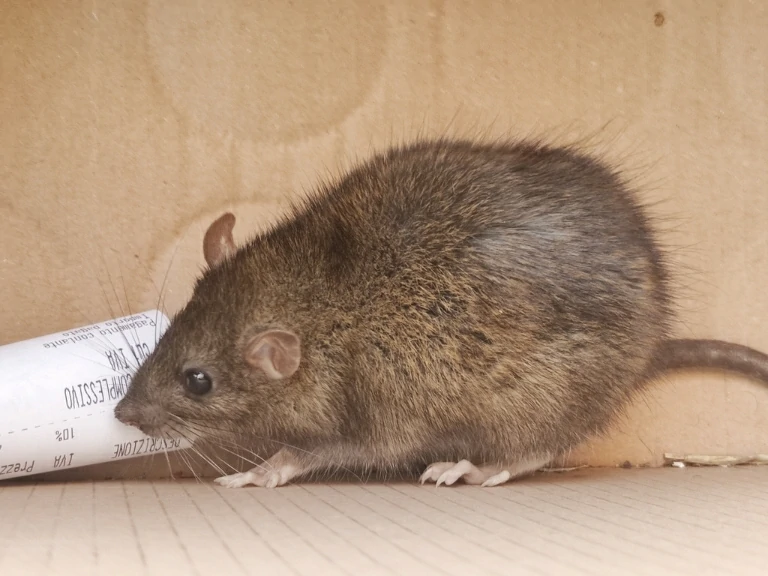
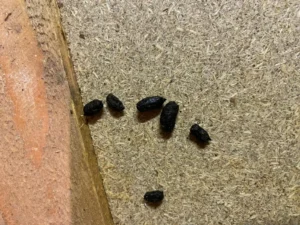
You’ve found rat droppings in your basement or garage, and now you’re worried about cleaning them up. You’re also wondering if leaving them there might actually bring more rats to your house.
It’s a fair question because animal waste can sometimes attract other animals. So does rat poop attract more rats?
Rat poop doesn’t directly attract more rats the way food does, but it does send signals to other rats. Rat droppings contain pheromones that tell other rats “rats have been here.” This can make your house seem like a safe place for new rats to explore, especially if the droppings are fresh and there are a lot of them.
While rat poop itself isn’t a food source that brings rats running, it’s still important to clean it up quickly. The presence of rat droppings is a sign that rats feel comfortable in that area, and other rats can pick up on that.
How Rats Use Scent To Communicate
Rats rely heavily on their sense of smell to understand their environment. They use pheromones (chemical signals) to communicate with each other, even when they’re not in the same place at the same time.
When a rat poops or pees somewhere, it’s not just waste. It’s leaving behind information that other rats can read like a message.
These scent markers tell other rats about gender, age, health, and whether the area is safe. If a rat’s droppings are in your house, it means that rat felt safe enough to spend time there.
Other rats can smell those droppings and learn that rats have been living there successfully. Fresh droppings send a stronger signal than old, dried-out ones.
If the droppings are recent, other rats know that the area is currently being used by rats. This doesn’t mean they’ll immediately run to your house, but it does mean they might be more willing to explore the area if they come across it.
Rats are cautious animals, so knowing that other rats are nearby can actually make them feel safer about investigating a new area.
Rat Droppings Don’t Smell Like Food
Unlike things that actually attract rats (like pet food, garbage, or pantry items), rat droppings don’t smell like food to other rats. They won’t seek out rat poop the way they’d seek out a bowl of dog food or a bag of birdseed.
The main attractants for rats are always going to be food, water, and shelter. Rat poop is more like a signpost than a destination.
It tells rats “other rats have been here,” but it doesn’t give them a reason to come on its own. Think of it like this: if you’re driving down a road and you see a bunch of other cars pulled over at a rest stop, you might think “that must be a decent place to stop.”
But you wouldn’t pull over just because other cars are there. You’d pull over because you need gas, food, or a bathroom.
Rats work the same way. They’re looking for resources, not for other rats’ poop.
Fresh Droppings Vs. Old Droppings
The age of the droppings matters when it comes to how much information they give to other rats. Fresh droppings are dark, moist, and have a strong smell.
They tell other rats that there’s active rat activity happening right now in this area. If another rat finds fresh droppings, it knows the rats who left them are probably still nearby.
Old droppings are dry, gray, and don’t smell as strong. They tell rats “rats used to be here, but maybe not anymore.”
Old droppings don’t carry the same pheromone strength as fresh ones. As droppings age and dry out, the chemical signals in them break down and become less noticeable.
So a pile of old, dusty rat droppings from months or years ago won’t attract rats the way fresh droppings might influence their behavior. Still, it’s best to clean up all rat droppings, old or new.
Even if old droppings aren’t sending strong signals to other rats, they can still make you sick if you breathe in the dust from them.
What Actually Attracts Rats To Your House
If you’re finding rat droppings in your house, the droppings themselves aren’t what brought the rats there in the first place. Rats came to your house looking for food, water, and shelter.
Once they found those things, they stayed and started leaving droppings everywhere they go. The real problem isn’t the poop, it’s whatever made your house attractive to rats in the first place.
If you clean up the droppings but don’t fix the underlying problems (like food sources, water leaks, or entry points), more rats will keep coming. The droppings are just evidence that rats are there, they’re not the reason rats showed up.
Food is the number one attractant. If rats can smell food in your house, they’ll try to get inside.
This includes pet food, garbage, pantry items, bird seed, and even food spills you might not have cleaned up properly. Water is just as important.
Leaky pipes, dripping faucets, pet water bowls, and standing water in your basement all give rats a reason to stick around. And shelter is the third key factor.
Rats need warm, safe places to build nests and raise babies. If your house has easy entry points and good nesting spots, rats will move in.
The Role Of Urine In Rat Communication
While we’re talking about rat waste, it’s worth knowing that rat urine is actually more important for communication than droppings. Rats pee constantly as they move around, leaving trails that other rats can follow.
These urine trails contain even more pheromone information than droppings do. When a rat is exploring, it’ll follow urine trails left by other rats because those trails lead to food, water, and safe paths.
If you shine a blacklight in areas where rats have been, you’ll see the urine trails glowing. It can be pretty shocking to see just how much rats pee as they move around.
These trails are like highways for rats. Once a trail is established, rats will use it over and over.
New rats coming into the area will also use these trails because they trust that other rats have found them safe. So while rat poop sends some signals, rat urine is actually doing more of the heavy lifting when it comes to communication between rats.
Why You Should Clean Up Rat Droppings Quickly
Even though rat droppings don’t directly attract more rats like food does, you should still clean them up as soon as you find them. The longer droppings sit there, the more they contribute to making your house feel like “rat territory.”
If you have a lot of droppings built up, it means rats have been living there for a while. That area now smells like rats to other rats, which can make new rats feel more comfortable exploring it.

Also, rat droppings carry diseases that can make you and your family really sick. Hantavirus, leptospirosis, and salmonella can all be spread through contact with rat droppings.
You can get sick by breathing in dust that contains dried droppings, touching droppings and then touching your face, or eating food that’s been contaminated by rat droppings. Kids and people with weak immune systems are especially at risk.
Cleaning up droppings also helps you see if you still have an active rat problem. If you clean up all the droppings and then see new ones appear the next day, you know rats are still there.
This tells you that you need to keep working on getting rid of them. On the other hand, if you clean up the droppings and don’t see any new ones for several days, the rats might be gone.
How To Safely Clean Up Rat Droppings
Cleaning up rat droppings isn’t something you should do carelessly. You need to protect yourself from the diseases and bacteria in the droppings.
Before you start, put on rubber or plastic gloves. You should also wear a mask (an N95 mask is best) to avoid breathing in any dust from the droppings.
Don’t sweep or vacuum rat droppings. This stirs up dust that contains harmful bacteria and viruses, and you’ll breathe it in.
Instead, spray the droppings with a disinfectant solution or a mixture of bleach and water (1 part bleach to 10 parts water). Let the solution soak the droppings for at least 5 minutes.
This kills bacteria and keeps dust from flying up when you clean. Once the droppings are wet, use paper towels to pick them up and put them in a plastic bag.
Seal the bag tightly and throw it in the trash. After you’ve picked up all the droppings, clean the area again with disinfectant.
Mop or wipe down any surfaces where the droppings were. Throw away the paper towels, gloves, and mask in a sealed plastic bag.
Wash your hands really well with soap and hot water, even if you wore gloves. If the area had a lot of droppings or the infestation was bad, you might want to call a professional cleaning company.
They have special equipment and training to clean up rat waste safely. This is especially important if the droppings are in areas with poor ventilation, like attics or crawl spaces.
Preventing Rats From Coming Back
Once you’ve cleaned up the droppings, you need to make sure rats don’t come back. Start by finding and sealing any holes or gaps where rats might be getting into your house.
Rats can squeeze through openings as small as a quarter, so check carefully. Use steel wool or metal mesh to stuff into holes before sealing them with caulk or foam.
Rats can chew through regular foam and caulk, but they can’t chew through metal. Pay attention to areas around pipes, wires, vents, and where your foundation meets your walls.
Also check your roof, soffit vents, and anywhere tree branches touch your house. Next, get rid of food sources.
Store all food in thick plastic or glass containers with tight lids. Don’t leave pet food out all day, and make sure your garbage cans have tight lids.
Clean up any spills or crumbs right away. Fix any leaky pipes or faucets in your house.
Rats need water every day, and a steady water source will keep bringing them back. Check under sinks, around toilets, and in your basement for leaks.
Keep your house clean and organized. Don’t let clutter build up in basements, attics, or garages because rats love hiding in messy areas.
Keep stored items off the floor and in sealed containers when possible.
What If You Keep Finding Fresh Droppings
If you clean up rat droppings and keep finding fresh ones, it means you still have active rats living in your house. The droppings are telling you the rats haven’t left yet.
At this point, you need to focus on trapping or removing the rats that are still there. Set snap traps in areas where you’re finding fresh droppings.

Use bait like peanut butter, bacon, or dried fruit. Place the traps along walls because rats like to run along edges, not out in the open.
Check the traps every day and reset them as needed. If you’re still catching rats after a week or two, you might have a bigger infestation than you thought.
This is when you should probably call a pest control professional. They can assess how many rats you’re dealing with and use methods that are more effective than what you can do on your own.
They’ll also help you find all the entry points and seal them up properly. Remember, as long as rats can get into your house, new ones will keep replacing the ones you catch.
You have to close off their access points to really solve the problem.
Do Rat Droppings Attract Other Animals
While we’re on the subject, it’s worth mentioning that rat droppings don’t just send signals to other rats. Some predators are attracted to areas where there are lots of rats because rats are a food source for them.
If you have a lot of rat droppings in your yard or around your house, it means rats are active in that area. This might attract predators like cats, foxes, hawks, or owls that hunt rats.
That might sound like a good thing (natural pest control), but having predators prowling around your property comes with its own issues. The better solution is to get rid of the rats and clean up their droppings so your property isn’t attractive to anyone, rats or predators.
Conclusion
Rat droppings don’t directly attract more rats like food or water would, but they do send chemical signals that tell other rats the area is being used. Fresh droppings have stronger signals than old, dried-out ones.
The real problem isn’t the droppings themselves, it’s whatever attracted the rats to your house in the first place. Focus on removing food sources, fixing water leaks, and sealing entry points.
Clean up any rat droppings you find quickly and safely, using proper protective equipment and disinfectants. If you keep finding fresh droppings, you still have active rats in your house and need to deal with them.
The goal is to make your house unattractive to rats so they leave and don’t come back, and cleaning up their droppings is just one part of that bigger plan.

Hi, my name is Ezra Mushala, i have been interested animals all my life. I am the main author and editor here at snakeinformer.com.