
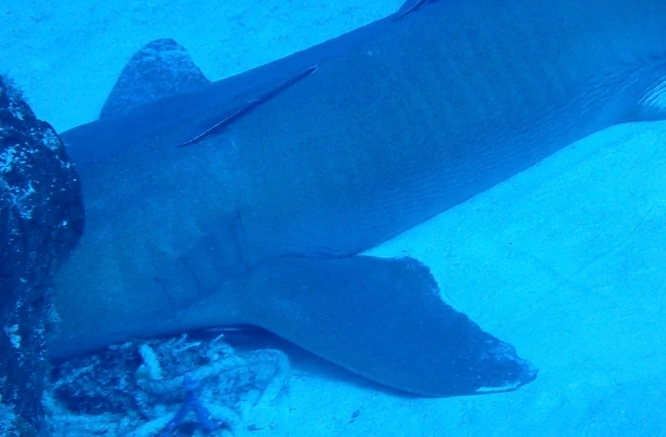
When you think about how animals sleep, you probably picture them lying down in a safe spot. Fish don’t really sleep the way land animals do, but they do rest.
Sharks are a bit different from typical fish, and their resting behavior varies quite a bit from species to species. So do sharks sleep on the ocean floor?
Some shark species do sleep (or rest) on the ocean floor, but many don’t. Bottom-dwelling sharks like nurse sharks, wobbegongs, and leopard sharks can rest on the seafloor because they can pump water over their gills while staying still. However, sharks like great whites and makos must keep swimming constantly to breathe, so they can’t rest on the ocean floor at all.
The answer really depends on which type of shark you’re talking about. Shark species have evolved different strategies for how they rest, and these strategies are closely linked to how they breathe.
Some sharks have the luxury of lying down to rest, while others are stuck swimming their entire lives.
Sharks That Do Rest on the Ocean Floor
Several shark species are perfectly capable of resting on the ocean floor, and they do this regularly. These bottom-dwelling sharks have adapted to a lifestyle that includes long periods of staying still.
Nurse sharks are probably the most famous example. During the day, nurse sharks often rest in groups on the ocean floor, sometimes piling on top of each other in caves or under ledges.
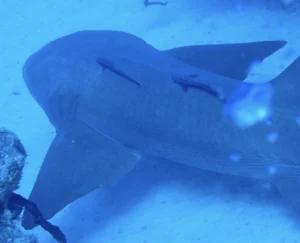
They can stay completely still for hours at a time. If you’re diving in tropical waters and see sharks resting on the bottom, they’re most likely nurse sharks.
Wobbegongs (also called carpet sharks) spend most of their time lying on the bottom. Their flat bodies and camouflage patterns help them blend in with rocks and coral.
They’ll rest in one spot for extended periods, waiting for prey to swim by. When they’re not actively hunting, they’re basically just lying there on the seafloor.
Leopard sharks also rest on the bottom regularly. These smaller sharks are often found in shallow coastal waters, and divers frequently encounter them lying on sandy or muddy bottoms.
They’re not particularly aggressive, so they make great subjects for underwater photography when they’re in their resting spots.
Angel sharks are another bottom-dwelling species. These sharks are so flat that they’re sometimes mistaken for rays. They bury themselves partially in sand with only their eyes exposed, waiting for prey. This is both a hunting strategy and a resting behavior.
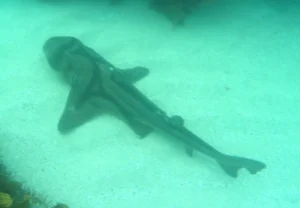
Port Jackson sharks (found in Australian waters) also rest on the ocean floor. They’re often found wedged into rocky crevices or resting in small caves. They can stay in the same spot for days at a time, only leaving to hunt or during breeding season.
What all these species have in common is the ability to breathe while staying still. They can actively pump water over their gills, which means they don’t need to swim constantly to get oxygen. This ability is what allows them to rest on the ocean floor.
Sharks That Can’t Rest on the Ocean Floor
On the flip side, many shark species can never rest on the ocean floor because they’d suffocate if they stopped swimming. These sharks must keep moving constantly to breathe.
Great white sharks are the most famous example. These sharks use ram ventilation, which means they have to swim forward to force water over their gills.
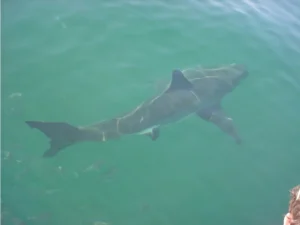
If a great white stopped swimming and settled on the ocean floor, it would die within minutes from lack of oxygen. Great whites swim 24/7, even when they’re in what scientists call a “resting state.”
Mako sharks face the same challenge. These are some of the fastest sharks in the ocean, and their high-speed lifestyle requires constant water flow over their gills.
They can’t pump water over their gills effectively while staying still, so they’re perpetually in motion.
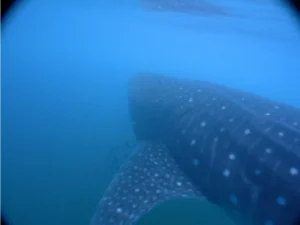
Whale sharks, despite being gentle filter feeders, also need to keep swimming. These massive sharks (the largest fish in the ocean) cruise slowly through the water constantly.
They occasionally pause briefly, but they can’t rest on the ocean floor like bottom-dwelling species can.
Blue sharks, hammerhead sharks, and thresher sharks all fall into this category too. These open-ocean species are built for constant movement.
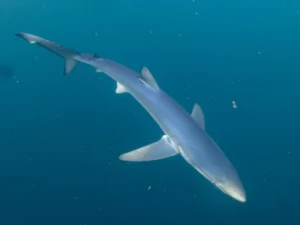
Their body structure, fin design, and breathing method all require them to stay in motion.
This constant swimming requirement shapes their entire lifestyle. These sharks don’t have dens or home bases where they return to rest.
Instead, they swim through vast territories, possibly entering states of reduced awareness while still moving (similar to how dolphins sleep). They can’t afford to stop, not even for a moment.
How Do Bottom-Dwelling Sharks Breathe While Resting?
The ability to rest on the ocean floor comes down to a specific breathing technique called buccal pumping. Understanding this process helps explain why some sharks can rest while others can’t.
Buccal pumping works like this: the shark opens its mouth and expands its throat cavity, sucking water in. Then it closes its mouth and contracts the throat, forcing the water over its gills and out through the gill slits.
It’s essentially breathing with its mouth and throat muscles, similar to how you use your diaphragm to breathe.
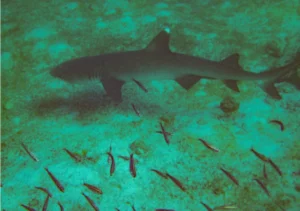
This method allows water to flow over the gills even when the shark isn’t moving forward. The shark creates its own water current using muscle contractions, independent of any forward motion.
As long as the shark keeps pumping, it keeps breathing, regardless of whether it’s swimming or lying still.
You can actually see this happening if you watch a resting nurse shark closely. You’ll notice its mouth opening and closing rhythmically, and you’ll see water being pushed out through its gill slits.
The shark is actively working to breathe, but it doesn’t need to swim to do it.
Some sharks can use both buccal pumping and ram ventilation, switching between them as needed. When they’re swimming and hunting, they might rely more on ram ventilation (it’s more energy-efficient when moving).
When they want to rest, they switch to buccal pumping. This flexibility gives them the best of both worlds.
Bottom-dwelling sharks also tend to rest in areas with good water current. Even though they can pump water over their gills, having natural current helps reduce the work required.
A shark resting in a spot with steady current needs to pump less vigorously because the current assists in moving water over the gills.
Spiracles and Their Role in Ocean Floor Resting
Many bottom-dwelling sharks have a special breathing feature that helps them rest on the ocean floor: spiracles. These are small openings behind the eyes that serve as an alternate water intake.
Spiracles look like little holes or slits positioned just behind and above each eye. When a shark is lying on the ocean floor with its mouth pressed against sand or rocks, it can’t easily draw water in through its mouth.
Spiracles solve this problem by providing a clear water intake on top of the head.
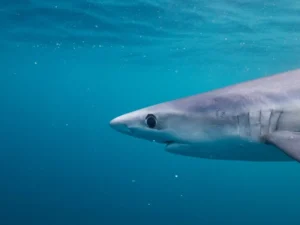
Water enters through the spiracles, flows over the gills, and exits through the normal gill slits. This means the shark can breathe clean water even when its mouth is buried or closed.
It’s a clever adaptation that makes ocean floor resting much more practical.
Nurse sharks, wobbegongs, angel sharks, and most other bottom-dwelling species have prominent spiracles. If you look at photos of these sharks, you can usually see the spiracles clearly.
They’re an important part of what allows these sharks to spend so much time on the bottom.
Sharks that don’t rest on the ocean floor typically have much smaller spiracles or no functional spiracles at all. Great white sharks have tiny, almost useless spiracles because they never need them.
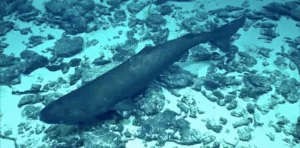
They’re always swimming with their mouth open, so there’s no risk of sucking up sediment.
The presence and size of spiracles is actually a good clue about a shark’s lifestyle. Large spiracles usually mean the shark spends significant time on or near the bottom.
Small or absent spiracles suggest the shark is an active swimmer that spends little time resting in one place.
Interestingly, rays (which are closely related to sharks) have very large, prominent spiracles. This makes sense because rays spend almost their entire lives on the ocean floor, often buried in sand. Spiracles are essential for their survival.
Where Do Sharks Rest on the Ocean Floor?
Sharks that rest on the ocean floor don’t just settle down anywhere. They choose specific locations that offer certain advantages like protection, good water flow, or proximity to prey.
Caves and rocky overhangs are popular resting spots. These locations provide protection from predators and strong currents.
Nurse sharks in particular love to squeeze into caves, sometimes sharing the space with multiple other nurse sharks. The cave provides a dark, safe environment where they can rest undisturbed.
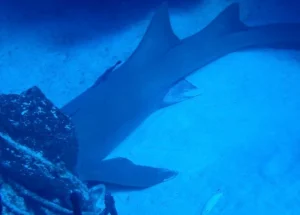
Sandy or muddy bottoms in relatively shallow water are another common resting area, especially for leopard sharks and angel sharks.
These sharks sometimes partially bury themselves in the substrate, which provides camouflage and protection. The sand might also feel comfortable to rest on, similar to how you might prefer a soft bed.
Coral reefs offer lots of nooks and crannies where sharks can wedge themselves. These hiding spots protect the shark from strong currents and make them less visible to potential threats.
Reef sharks (even though they’re called reef sharks) don’t always rest on the bottom, but some species do use reef structures for protection during rest periods.
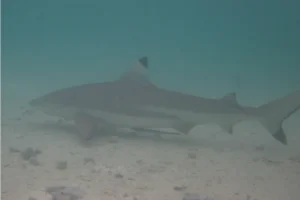
Areas with moderate current are preferred over completely still water. While strong current would require too much effort to maintain position, moderate current helps keep fresh, oxygenated water flowing over the shark’s gills. This reduces the work needed for breathing during rest.
Some sharks return to the same resting spot repeatedly, sometimes for months or years. This suggests they find these locations particularly suitable.
It might be because of good hiding spots, optimal water conditions, or proximity to hunting grounds. These habitual resting spots become known to researchers and divers who can reliably find sharks in these locations.
Depth varies by species. Some bottom-dwelling sharks rest in very shallow water (just a few feet deep), while others prefer deeper areas. The depth usually correlates with where that species normally hunts and what kind of environment they’re adapted to.
How Active Sharks Rest Without Stopping
Sharks that can’t rest on the ocean floor have evolved different strategies for getting the rest they need while still swimming. It’s a challenge, but millions of years of evolution have provided solutions.
Scientists believe these sharks enter a state of reduced awareness while swimming. Their brain activity slows down, they become less responsive to their surroundings, and their swimming becomes more automatic.
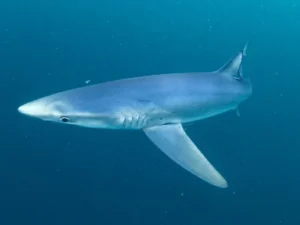
It’s not sleep in the way we think of it, but it’s a form of rest that allows the shark to conserve energy and recover.
This state is sometimes called “sleep swimming” or “restful wakefulness.” The shark keeps moving and breathing, but it’s not fully alert or actively hunting
If you watched a shark in this state, you’d notice it swimming more slowly, in repetitive patterns, and showing less interest in things happening around it.
Some researchers think these sharks might use unihemispheric sleep, similar to dolphins. This means one half of the brain rests while the other half stays awake to control swimming and breathing.
Then the sides switch, allowing both halves to get rest while the shark keeps moving. This hasn’t been proven definitively in sharks, but the evidence suggests it’s possible.
Great whites and other obligate ram ventilators often swim in lazy circles or figure-eight patterns during their resting periods.
These repetitive paths might be a sign that they’re on autopilot, with just enough brain activity to maintain swimming but not much else. The paths might also follow ocean currents, which reduces the energy needed to keep moving.
These sharks might also take advantage of ocean currents to reduce swimming effort. By positioning themselves in currents that naturally push water over their gills, they can swim more slowly or with less effort while still getting adequate oxygen.
It’s not the same as stopping, but it’s more efficient than swimming against current or in still water.
Rest periods for these sharks probably occur in cycles throughout the day and night.
They might rest more during certain times when prey is less active, then become more alert during prime hunting hours. The pattern varies by species and individual circumstances.
Do Sharks Have Preferred Resting Times?
Like most animals, sharks have patterns to their activity and rest cycles. The timing of when sharks rest often relates to when they hunt and what kind of lifestyle they lead.
Many bottom-dwelling sharks are nocturnal, meaning they’re more active at night. Nurse sharks, for example, often rest on the ocean floor during the day and become active hunters after sunset.
During daylight hours, you’ll find them in their resting spots, sometimes in groups. As darkness falls, they leave these spots to hunt for fish, crustaceans, and other prey.
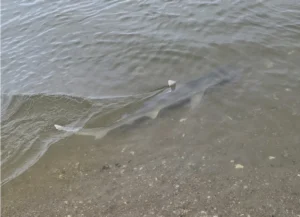
This pattern makes sense from an evolutionary perspective. Many of the animals these sharks hunt are more active or easier to catch at night.
The sharks conserve energy during the day when hunting success would be lower, then expend energy at night when the payoff is better.
Not all sharks follow this pattern though. Some species are more active during the day or show no strong preference. The pattern depends on the shark’s prey, its hunting strategy, and environmental factors in its habitat.
Great whites and other active swimmers don’t have clear-cut rest periods tied to time of day. Instead, they probably rest opportunistically throughout the 24-hour cycle.
They might enter rest states when traveling between hunting grounds, when prey isn’t available, or after a large meal when they don’t need to hunt for a while.
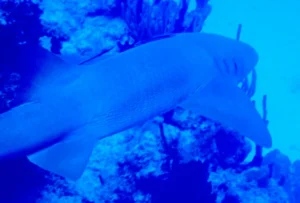
Environmental factors influence rest patterns too. Water temperature, current strength, and seasonal changes all affect when sharks choose to be active versus resting.
During cooler months, sharks might rest more to conserve energy. During breeding season, rest patterns might change as sharks focus energy on reproduction.
In areas with heavy boat traffic or human activity, sharks might shift their rest patterns to avoid disturbance. If their preferred resting areas are constantly disrupted during the day, they might become more nocturnal to avoid the disruption.
How Long Do Sharks Rest?
The duration of shark resting periods varies widely depending on the species and circumstances. Bottom-dwelling sharks that can truly rest have different patterns than sharks that must keep swimming.
Nurse sharks and similar bottom-dwellers might rest for several hours at a time during the day. A nurse shark could settle into a favorite cave in the morning and stay there until late afternoon or evening, only leaving when it’s time to hunt.
During this time, it’s in a true resting state with lowered awareness and reduced activity.
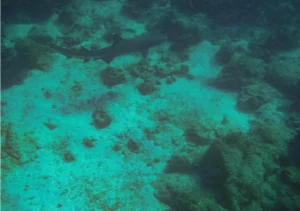
These extended rest periods allow the shark to conserve significant energy. By not swimming or hunting during the day, the shark saves energy that can be used for nighttime hunting activities. T
his efficiency is part of what makes the bottom-dwelling lifestyle successful.
Sharks that must keep swimming probably have shorter rest periods distributed throughout the day. They might enter a rest state for 30 minutes to an hour, then become more alert for a while, then rest again.
The pattern is less defined than with bottom-dwelling sharks because they can’t truly stop moving.
After a big meal, sharks often rest more. Digesting a large meal requires energy, and the shark doesn’t need to hunt again soon.
A shark that’s just eaten a seal or large fish might spend the next day or two in a more restful state, swimming slowly and staying less active.
This post-feeding rest helps the shark digest efficiently.
Environmental conditions affect rest duration too. In ideal conditions (comfortable water temperature, good oxygen levels, safe location), sharks might rest longer. In less ideal conditions, they might rest less or be more easily disturbed from their rest state.
Conclusion
So do sharks sleep on the ocean floor? Some species definitely do. Bottom-dwelling sharks like nurse sharks, wobbegongs, and leopard sharks regularly rest on the seafloor, sometimes for hours at a time.
They can do this because they can pump water over their gills while staying still. However, many other shark species (like great whites and makos) can never rest on the ocean floor because they must keep swimming constantly to breathe.
These sharks rest while swimming, entering a state of reduced awareness without ever stopping their forward motion.
The diversity in shark resting behavior shows how different species have adapted to different lifestyles. Some found a way to rest comfortably on the bottom, while others evolved to rest while swimming.
Both strategies work well in their respective contexts, which is why sharks as a group have been so successful for hundreds of millions of years.

Hi, my name is Ezra Mushala, i have been interested animals all my life. I am the main author and editor here at snakeinformer.com.