

When you think about fish, you probably picture them covered in shiny, overlapping scales like the ones you see on goldfish or salmon.
Sharks are fish too, so it makes sense to assume they have the same kind of scales. But if you’ve ever touched shark skin or seen a close-up photo, you know it looks and feels very different from typical fish skin. So do sharks have scales?
Yes, sharks have scales, but they’re completely different from the scales on regular fish. Shark scales are called dermal denticles (or placoid scales), and they’re actually tiny teeth-like structures that cover the shark’s body. These scales are made of the same material as shark teeth and give shark skin its rough, sandpaper-like texture.
If you run your hand along a shark’s body from tail to head, it feels incredibly rough, almost like sandpaper.
That’s because you’re rubbing against thousands of tiny, tooth-like scales pointing in the opposite direction.
But if you stroke from head to tail (the direction the scales point), the skin feels much smoother.
These unique scales serve multiple purposes and are one of the reasons sharks have been so successful as predators for millions of years.
What Are Dermal Denticles?
The scales on a shark are officially called dermal denticles, which literally means “little skin teeth.” That’s a pretty accurate name because these scales are structured almost exactly like tiny teeth.
Each denticle has a base embedded in the shark’s skin, a middle layer similar to dentine (the material inside your teeth), and an outer coating of enamel-like material.

If you looked at a single dermal denticle under a microscope, you’d see it looks like a miniature version of a shark tooth. It has a pointed tip, a broad base, and ridges running along its surface.
The exact shape and size vary depending on where on the shark’s body you’re looking and what species of shark you’re examining.
These scales don’t overlap like fish scales do. Instead, they sit next to each other, covering the shark’s body in a tight pattern.
Each denticle is individually anchored in the skin and points backward toward the tail.
This arrangement creates that rough, directional texture that shark skin is famous for.
The scientific name “placoid scales” is another term for these structures. “Placoid” refers to their plate-like nature. But most scientists and researchers call them dermal denticles because it emphasizes their tooth-like structure and composition.

What’s really interesting is that shark teeth are actually modified dermal denticles. Over millions of years of evolution, the denticles around a shark’s mouth evolved into the teeth we recognize today.
This is why sharks can continuously replace their teeth throughout their lives. The mechanism that produces dermal denticles is the same one that produces teeth, and it never stops working.
How Shark Scales Differ from Fish Scales
When you compare shark scales to typical fish scales, the differences are huge. It’s not just about appearance. The entire structure, composition, and function are completely different.
Regular fish scales (like the ones on a trout or bass) are made of thin, flat plates that overlap each other like shingles on a roof. These scales are made of bone and collagen, and they grow larger as the fish grows.
You can actually tell a fish’s age by looking at growth rings in its scales, similar to counting tree rings.
Shark scales don’t work that way at all. Dermal denticles are made of dentine and enamel, the same materials as teeth. They don’t grow larger as the shark grows.

Instead, as a shark gets bigger, more denticles form to cover the increasing surface area. A baby shark has the same size denticles as an adult shark, just fewer of them.
Fish scales are relatively smooth and provide a flexible, protective covering. You can easily scrape them off, and they come away in flat pieces.
Shark scales are firmly embedded in the skin and don’t come off easily. If you tried to remove a dermal denticle, you’d have to dig into the shark’s skin to get the whole thing out because of how deeply the base is anchored.
The texture is another obvious difference. Fish feel slippery and smooth when you handle them. Sharks feel rough and abrasive.

Sailors and fishermen used to actually use shark skin as sandpaper (called shagreen) to smooth wood and polish metal. That tells you just how different the texture is from regular fish.
Also, fish scales flex and move with the fish’s body. Dermal denticles are rigid and stay in position. This gives sharks a different kind of protection and swimming efficiency compared to regular fish.
Why Shark Skin Feels Like Sandpaper
If you’ve ever touched a shark (or shark skin leather), you know it has a very distinctive rough texture. This roughness comes from those dermal denticles and the way they’re arranged on the shark’s body.
Each denticle points backward toward the shark’s tail. When you run your hand from head to tail (the same direction the shark swims), you’re moving with the denticles and it feels relatively smooth.

But if you stroke from tail to head, you’re rubbing against the sharp, pointed tips of thousands of tiny tooth-like scales. That’s when it feels like coarse sandpaper.
The roughness varies depending on the shark species and where on the body you’re touching. Some areas have larger, more widely spaced denticles, while others have smaller, more densely packed ones.
Generally, the areas where water flows most directly during swimming (like along the sides of the body) have more streamlined denticles.
Historical records show that people have known about this sandpaper texture for a very long time.
Before modern sandpaper was invented, craftsmen used dried shark skin to smooth wood and other materials.

It was effective because the denticles are hard and abrasive. The skin from certain sharks was particularly valued for this purpose.
Today, shark skin leather (called shagreen) is still used to make things like wallets, belts, and fancy book covers. The distinctive rough texture is part of its appeal.
However, the skin is usually processed and polished to make it less abrasive while still maintaining some of that unique bumpy texture that identifies it as shark skin.
Swimming near sharks or accidentally brushing against one can actually cause scrapes and cuts on human skin. The denticles are sharp enough to break skin if you’re not careful.
This is one reason divers need to be cautious around sharks, even non-aggressive species. An accidental brush against a shark can leave you with painful scrapes similar to road rash.
What is The Purpose of Shark Scales?
Dermal denticles aren’t just for protection. They serve multiple functions that make sharks more effective predators and help them survive in the ocean environment.
The most obvious function is protection. The tough, tooth-like scales create a kind of armor that protects the shark from injuries. If a shark scrapes against coral or rocks, the denticles take the damage instead of the shark’s actual skin.
They also provide some protection against parasites and other small organisms that might try to attach to the shark’s skin.
But the really interesting function is hydrodynamic. The shape and arrangement of dermal denticles help reduce drag as the shark swims through water.

The tiny ridges on each denticle create micro-turbulences in the water flowing over the shark’s body. This might sound strange, but these micro-turbulences actually reduce overall drag and allow the shark to swim more efficiently.
Scientists have studied this effect extensively because it has applications in human technology. The design of shark scales has inspired everything from swimsuit designs to coatings for airplane wings.
Olympic swimmers used to wear suits with patterns mimicking shark skin because tests showed it reduced drag in the water (though these suits are now banned in competition).
Dermal denticles might also help with noise reduction. The way they manage water flow over the shark’s body could make sharks quieter as they swim, which would be a huge advantage when sneaking up on prey.

Some research suggests this is true, though it’s hard to measure precisely.
Some scientists think the denticles might have antibacterial properties too. The texture and material composition make it difficult for bacteria to establish colonies on shark skin.
This could help prevent infections and keep the shark healthy. There’s ongoing research into whether mimicking this property could help create antibacterial surfaces for hospitals and other places where preventing bacterial growth is important.
How Dermal Denticles Vary Among Shark Species
Not all shark scales look the same. Different shark species have evolved different types of dermal denticles based on their lifestyle and habitat.
If you examined scales from various shark species under a microscope, you’d see significant differences in shape, size, and structure.
Fast-swimming sharks like mako sharks and great white sharks have streamlined denticles with prominent ridges. These ridges run parallel to the direction of water flow and help reduce drag even further. The denticles on these sharks are optimized for speed and efficiency.
Bottom-dwelling sharks like nurse sharks and wobbegongs have broader, flatter denticles. These sharks don’t need to be as streamlined because they’re not swimming at high speeds.

Their denticles are more focused on protection and durability since these sharks spend time resting on rocky or coral surfaces.
Some shark species have denticles with multiple points or elaborate shapes. Angel sharks, for example, have denticles that look more ornate and complex when viewed under magnification.
The exact reason for these variations isn’t always clear, but it’s likely related to their specific ecological niche and behaviors.
The size of denticles also varies. Larger sharks don’t necessarily have larger denticles. A whale shark (the biggest fish in the ocean) has relatively small denticles compared to some smaller shark species.
The number of denticles increases as the shark grows, but the individual denticles stay roughly the same size.
Scientists can actually identify shark species by examining their dermal denticles. Each species has a distinctive denticle pattern and structure.
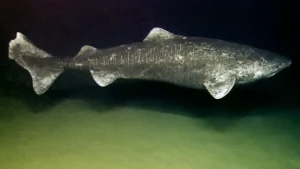
This is useful in research and conservation work, especially when you only have a small piece of shark skin and need to figure out what species it came from.
The variation in dermal denticles is a good example of how evolution fine-tunes even the smallest details of an animal’s body.
These tiny scales have been optimized over millions of years to help each shark species survive in its particular environment.
Can You See Shark Scales with the Naked Eye?
If you look at a shark from a normal viewing distance, you can’t really see individual dermal denticles.
The shark’s skin just looks gray or brown (or whatever color the species is), with a slightly textured appearance. But if you get close enough, you can start to see that the texture comes from tiny individual structures.
On larger sharks, you might be able to make out individual denticles if you get your face close to the skin, though they’ll still be pretty small.
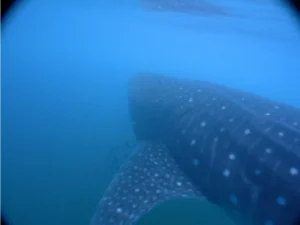
On smaller sharks, the denticles are even tinier and harder to see without magnification. What you’ll definitely notice is the overall texture and how it changes depending on which direction you look at it.
The best way to really see dermal denticles is with magnification. Under a microscope or with a good magnifying glass, the tooth-like structure becomes obvious.
You can see the individual points, the ridges, the way they overlap, and how they’re anchored in the skin. High-resolution photographs of shark skin show these details beautifully.
In certain lighting conditions, you might see the denticles catch the light in interesting ways. When light hits shark skin at the right angle, you can sometimes see a kind of sparkle or sheen that comes from light reflecting off the enamel-like coating of millions of tiny scales.
This is more noticeable when the shark is wet or when you’re seeing it underwater.

If you ever get the chance to touch shark skin (in a controlled, safe environment like an aquarium touch tank), you’ll definitely feel the denticles even if you can’t see them clearly.
The rough, directional texture is immediately obvious to your sense of touch. Just remember to stroke from head to tail if you don’t want to get scratched.
Some museums and aquariums have dried shark skin samples that visitors can touch. These are great for experiencing the texture firsthand.
You can also find microscope images of dermal denticles online if you want to see what they look like up close without having to access an actual shark.
How Shark Scales Have Inspired Technology
The unique properties of dermal denticles have caught the attention of engineers and designers working in various fields. The way shark skin reduces drag and resists bacterial growth has inspired several technological innovations.
One of the most famous examples is in competitive swimming. In the late 1990s and early 2000s, swimsuit manufacturers developed suits with patterns that mimicked the structure of shark skin. The idea was to reduce drag and help swimmers move through water more efficiently.
These suits did seem to work, with swimmers breaking records while wearing them. Eventually, they were banned from Olympic competition because they provided too much of an advantage, but the technology proved the concept.
The aerospace industry has also looked at shark skin for inspiration. Reducing drag on airplanes saves fuel, which is a huge deal economically and environmentally.
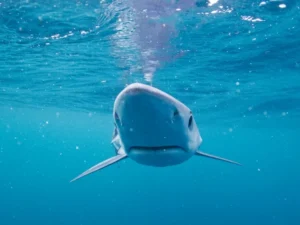
Researchers have experimented with applying shark-skin-inspired coatings to airplane surfaces. Early tests showed promise in reducing drag, though implementing this on a large scale is complicated and expensive.
The antibacterial properties of shark skin have inspired work on creating surfaces that resist bacterial growth.
Hospitals, in particular, are interested in this because bacterial infections are a major problem in healthcare settings.
Scientists have developed surface textures that mimic the pattern of dermal denticles, making it harder for bacteria to establish colonies. Some of these products are already being tested or used in hospitals.
Ship hulls are another area where shark skin technology has been applied. Ships moving through water face significant drag, and they also tend to accumulate barnacles and other organisms that slow them down even more.
Coatings inspired by shark skin could reduce both drag and biofouling, making ships more efficient.

Even the wind energy industry has shown interest. Wind turbine blades could potentially benefit from shark-skin-inspired surfaces that reduce drag and increase efficiency.
Small improvements in efficiency can translate to significant gains when you’re talking about thousands of wind turbines.
The fact that engineers keep looking to shark skin for inspiration shows just how effective the design of dermal denticles really is. Evolution spent millions of years optimizing these structures, and now human technology is trying to learn from that natural engineering.
Do Shark Scales Grow Back?
Since dermal denticles are similar to teeth in structure, you might wonder if they can grow back if damaged. The answer is complicated and depends on what you mean by “grow back.”
Individual dermal denticles don’t regenerate the same way fish scales do. If you damage a fish scale, it can often repair itself or a new scale can grow in its place relatively quickly.
Dermal denticles don’t work that way. Once a denticle is broken or damaged, that specific denticle won’t repair itself.
However, sharks do have some ability to produce new denticles. As a shark grows and its body surface area increases, new denticles form to cover the additional skin.
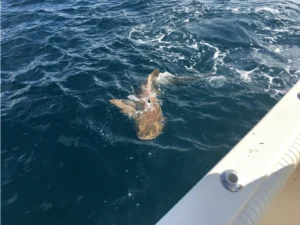
This production of new denticles continues throughout the shark’s life, though it slows down as the shark reaches full size.
If a shark loses a patch of denticles due to injury, the area might eventually produce new ones, but it’s a slow process and the new denticles might not perfectly match the surrounding ones.
The skin has to heal first, and then new denticles can form. This isn’t as efficient or fast as tooth replacement (sharks can replace teeth in days or weeks), but it does happen to some degree.
Young, growing sharks are constantly adding new denticles as their body expands. An adult shark that’s stopped growing won’t produce many new denticles unless there’s an injury that triggers the process.
This is different from teeth, which sharks replace continuously throughout their entire lives regardless of growth.

The tough, durable nature of dermal denticles means they don’t often need replacing anyway. They’re made to last and can withstand a lot of wear and tear.
A shark can go its whole life with most of its original denticles intact, only losing or damaging them through injury or extreme wear.
This durability is part of what makes shark skin such effective armor. Unlike softer fish scales that damage easily, dermal denticles can take a beating and keep protecting the shark underneath.
Conclusion
So do sharks have scales? Yes, but not like regular fish. Sharks have dermal denticles, which are tooth-like scales made of the same material as shark teeth.
These unique scales give shark skin its distinctive sandpaper texture and serve multiple purposes, including protection, reducing drag, and potentially resisting bacterial growth.
The design is so effective that engineers and scientists continue to study shark skin for inspiration in developing new technologies.
The next time you think about sharks, remember that even their skin is specially adapted to make them better predators.
Those tiny tooth-like scales covering their body are just one more example of how evolution has fine-tuned sharks into incredibly effective ocean hunters.

Hi, my name is Ezra Mushala, i have been interested animals all my life. I am the main author and editor here at snakeinformer.com.