
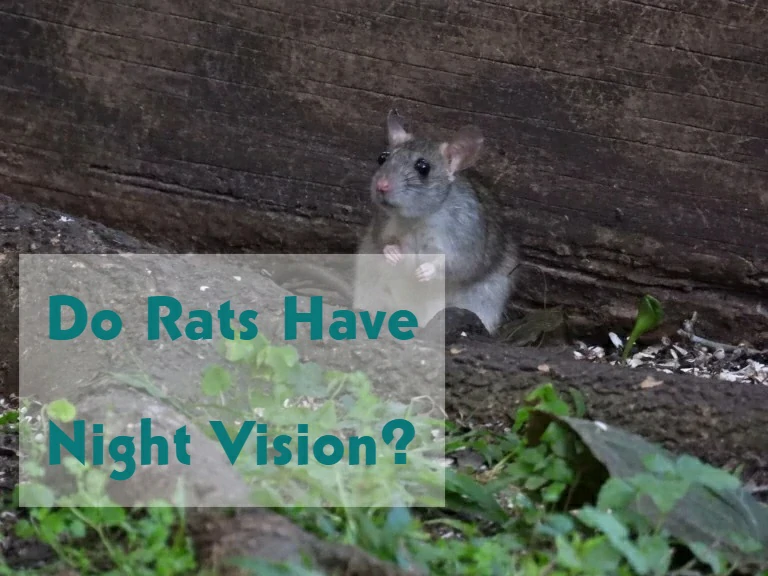
Rats are mostly active at night, scurrying around in the dark while most other animals are asleep.
If you’ve ever seen a rat moving confidently through a dark space, you’ve probably wondered how they can see so well when there’s barely any light.
So do rats actually have night vision?
Rats don’t have true night vision like some animals, but their eyes are specially built to work well in low light. They have more rod cells (the cells that detect light) in their eyes than humans do, which helps them see in dim conditions. However, they rely more on their other senses (like smell, hearing, and touch) to move around in complete darkness.
While rats can see better than humans in low light, they’re not seeing in total darkness the way you might imagine.
Their vision is just one tool they use, and it’s not even their best one.
How Rat Eyes Are Different from Human Eyes
To understand how rats see in the dark, you need to know a bit about how their eyes work. All eyes have two main types of light-detecting cells: rods and cones.
Rod cells help you see in low light. They’re really sensitive to light but don’t detect color very well. Cone cells help you see color and fine details, but they need bright light to work.
Rats have way more rod cells than cone cells in their eyes. This means their eyes are built for seeing in dim light rather than seeing bright colors or sharp details.

Humans, on the other hand, have a better balance of rods and cones, which is why we see colors and details better but struggle more in the dark.
This difference makes sense when you think about how rats live.
They’re nocturnal (active at night) and spend a lot of time in dark places like burrows, sewers, and inside walls.
They don’t need to see every detail or color. They just need to detect movement, shapes, and obstacles.
What Can Rats Actually See in the Dark?
When there’s some light (even just a little bit from the moon, stars, or a distant streetlight), rats can see pretty well.
They can make out shapes, detect movement, and move around without bumping into things.
But their vision isn’t perfect. Rats are actually somewhat nearsighted, which means they can’t see things clearly if they’re far away.
Their vision is sharpest for objects that are close to them (within a few feet).

Rats also don’t see colors the way humans do. They can see some colors (mostly in the blue and green range), but their color vision is pretty limited.
This doesn’t really matter to them, though, because color isn’t important for a nocturnal lifestyle.
In complete darkness (like a room with absolutely no light), rats can’t really see at all. That’s when they switch to using their other senses, which are actually much better than their vision.
Why Rats Don’t Need Perfect Vision
Here’s the thing: rats don’t rely on their eyes as much as we do. While vision is our main sense, rats use a combination of senses to understand their environment.
In many cases, their other senses are more important than their eyesight.
Rats have an incredible sense of smell. They use scent to find food, recognize other rats, detect danger, and navigate their environment.

A rat can identify another rat by smell and even tell if that rat is a friend or a stranger.
Their hearing is also amazing. Rats can hear sounds at much higher frequencies than humans can.
They use these sounds (including ultrasonic squeaks that we can’t hear) to communicate with each other and detect threats.
But probably the most important sense for moving around in the dark is their sense of touch.
Rats have long whiskers (called vibrissae) on their faces that are incredibly sensitive. These whiskers can detect tiny air currents, textures, and objects in their path.
How Rat Whiskers Help Them Move Around in Total Darkness
A rat’s whiskers are like built-in sensors that give them a 3D map of their surroundings. As a rat moves, its whiskers brush against objects, walls, and obstacles.
The rat’s brain processes this information instantly, telling it where things are and how to move around them.
This is why rats can run confidently through a dark maze or navigate a cluttered space without seeing much at all.
They’re basically “feeling” their way around with their whiskers.
Rats also have whiskers on other parts of their body (not just their face), which gives them even more information about their environment.
It’s like having tiny touch sensors all over.
In complete darkness, a rat’s whiskers are way more useful than its eyes. This is one of the reasons rats do so well in places like sewers, basements, and inside walls where there’s little to no light.
How Rats Compare to Other Animals with Night Vision
Some animals have truly impressive night vision. Cats, for example, have a special layer in their eyes (called the tapetum lucidum) that reflects light back through the retina.

This gives their eyes a second chance to catch any available light, which is why cat eyes seem to glow in the dark when light hits them.
Rats don’t have this reflective layer, so their night vision isn’t as good as a cat’s. If you shine a light at a rat’s eyes in the dark, they won’t glow the way a cat’s or dog’s eyes do.
Owls are another example of animals with amazing night vision. Their eyes are huge compared to their head size, and they’re packed with rod cells.

Owls can see in light levels that are way too dim for humans (or rats) to see in.
So while rats can see better than humans in low light, they’re not in the same league as true night vision specialists like cats and owls.
Do Rats Actually Prefer Darkness Over Light?
Even though rats can see in low light, they actually prefer darkness or dim light over bright light. Bright light can hurt their eyes and make them uncomfortable.
This makes sense when you think about their lifestyle. In the wild, rats are prey animals. Lots of predators (like hawks, owls, foxes, and cats) hunt during the day or in well-lit areas. By staying active in the dark, rats reduce their chances of being spotted and eaten.

Rats also tend to move along walls and edges rather than out in the open. This behavior (called thigmotaxis) gives them extra protection because they can feel the wall with their whiskers and body, and they’re less exposed to predators.
If you turn on a bright light in a room where rats are active, they’ll usually scatter and hide. The sudden brightness is uncomfortable for them, and it makes them feel exposed and vulnerable.
How Rats Find Their Way Around Places They Already Know
Once a rat has explored an area a few times, it creates a mental map of that space. It remembers where food is, where dangers are, and how to get from one place to another. This mental map is built using all of its senses (not just vision).
When a rat is moving through a familiar space, it’s not really “looking” where it’s going. It’s following a remembered path, using its whiskers to confirm that things are where they should be.
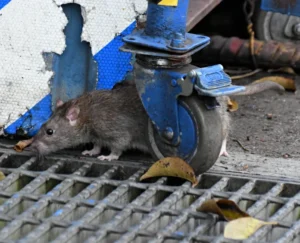
This is why rats can move so quickly through dark, cluttered spaces.
They already know the layout, so they don’t need to rely on vision as much. They’re basically running on autopilot.
If you change something in a rat’s environment (like moving an object or blocking a path), the rat will notice right away.
It might stop, investigate with its whiskers and nose, and then update its mental map.
Can Rats See Infrared or Ultraviolet Light?
Some animals can see types of light that humans can’t. For example, some snakes can detect infrared light (heat), and some birds can see ultraviolet light.
Rats can’t see infrared light. They don’t have the special heat-sensing organs that snakes have.

However, there is some evidence that rats might be able to see a bit into the ultraviolet range (though scientists aren’t completely sure about this).
Even if rats can see some UV light, it probably doesn’t help them much in the dark since UV light comes from the sun and isn’t available at night.
How Rat Vision Affects Their Behavior
The way rats see (or don’t see) affects how they behave. For example, rats tend to freeze when they hear or sense danger. This makes sense because movement is easier to spot than a still object, especially in low light.
Rats also prefer to take the same paths over and over. This behavior (called routine running) helps them move efficiently through their environment without having to rely heavily on vision.

They know the safe routes and stick to them.
When rats are exploring a new area, they move slowly and carefully. They use their whiskers, nose, and ears to gather information, and they map out the space bit by bit.
Once they’ve explored an area, they can move through it much faster.
Pet Rats Can Still See Just Fine in Normal Lighting
If you have a pet rat, you might notice that it seems pretty comfortable in normal indoor lighting. That’s because rats are adaptable. While they’re built for low light, they can function in brighter conditions too.
Pet rats actually adjust to their owner’s schedule pretty well.

If you’re active during the day, your rat will often be more active during the day too (though it might still be more energetic in the evening and early morning).
However, you should still avoid putting your pet rat’s cage in direct sunlight or under very bright lights.
Their eyes are sensitive, and too much bright light can cause them discomfort.
Why Movement Matters More Than Detail in Rat Vision
Rats are really good at detecting movement, even in low light. This is because their eyes are optimized for picking up changes in their environment rather than seeing fine details.

If something moves in a rat’s peripheral vision, the rat will notice it right away. This helps them spot potential predators or other threats before those threats get too close.
On the flip side, a rat might not notice a person or object if it’s completely still. Movement is one of the main things that grabs a rat’s attention.
How Do Scientists Figure Out What Rats Can See?
Researchers have learned a lot about rat vision by doing experiments in controlled environments. They test how rats respond to different light levels, colors, and visual patterns.
One common test involves training rats to choose between two options based on what they can see.
For example, a rat might be trained to press a lever when it sees a light turn on.
By changing the brightness or color of the light, scientists can figure out what rats can and can’t see.

Other studies look at the structure of rat eyes using microscopes and other tools.
By counting the number of rod and cone cells, scientists can predict how well rats should be able to see in different conditions.
These studies have confirmed that rats are built for low-light vision but aren’t as good in bright light or at seeing fine details.
Do Albino Rats See Differently?
Albino rats (the white rats with pink or red eyes) have slightly different vision than regular rats.
Albino rats have less pigment in their eyes, which can make them even more sensitive to bright light.
The lack of pigment also affects how much light gets filtered as it enters the eye. This can make albino rats’ vision a bit blurrier than normal rats’ vision.
However, albino rats still have all the same basic structures in their eyes (rods, cones, etc.), so they can still see in low light. They just might be a little more uncomfortable in bright conditions.
The Bottom Line on Rat Vision
Rats have decent low-light vision thanks to the high number of rod cells in their eyes. But they’re not seeing in complete darkness the way you might imagine when you hear “night vision.”

Their real superpower isn’t their eyes at all. It’s the combination of their whiskers, sense of smell, hearing, and ability to remember and map their environment.
These senses work together to help rats move confidently through dark spaces where most other animals would struggle.
Conclusion
So, do rats have night vision? Not exactly. Rats can see better than humans in low light because their eyes have more light-sensitive rod cells. But they can’t see in total darkness, and their vision isn’t as sharp or detailed as ours.
What really helps rats move around in the dark is their combination of senses. Their whiskers, sense of smell, and excellent hearing are just as important (if not more important) than their vision.
These senses work together to give rats a complete picture of their surroundings, even when there’s barely any light.
If you’ve ever wondered how a rat can run through a dark room without bumping into anything, now you know: it’s not just their eyes doing the work. It’s their whole sensory system working together to keep them safe and help them find what they need.

Hi, my name is Ezra Mushala, i have been interested animals all my life. I am the main author and editor here at snakeinformer.com.