
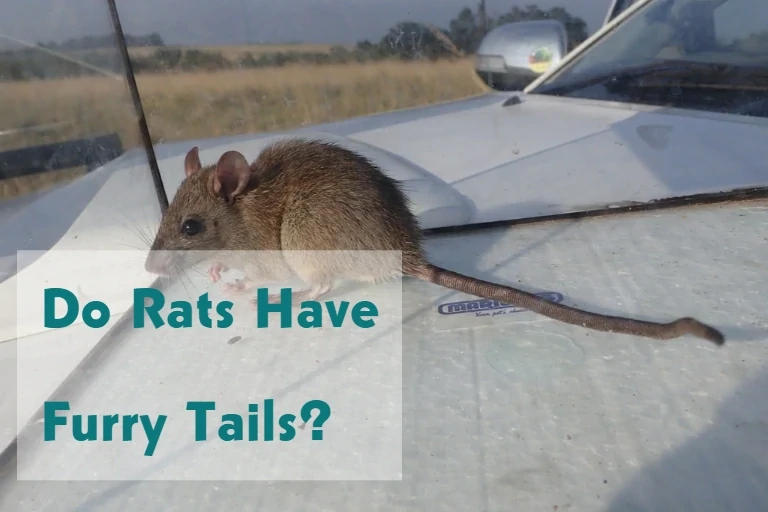
Rats are one of those animals that people either find fascinating or want nothing to do with. One thing that stands out about them is their long, thin tails.
If you’ve ever gotten close enough to look at a rat’s tail, you might have noticed it looks pretty different from the rest of its body. Do rats have furry tails?
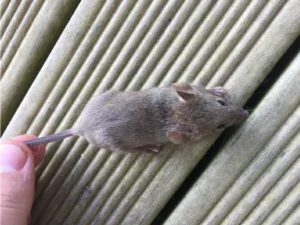
No, rats don’t have furry tails. Their tails are covered in thin, sparse hair and small scales that make them look almost naked. The tail feels rough and leathery, not soft and furry like the rest of their body.
This is one of the things that creeps people out about rats. While their bodies are covered in thick, soft fur, their tails look completely different.
It’s smooth, scaly, and honestly a little strange to look at if you’re not used to it.
Why Rats Don’t Have Furry Tails
Rat tails evolved to be hairless for good reasons. The tail isn’t just some weird body part, it actually serves really important functions that work better without fur.
The main job of a rat’s tail is balance. Rats are incredible climbers and jumpers, and they use their tails like a tightrope walker uses a balance pole.
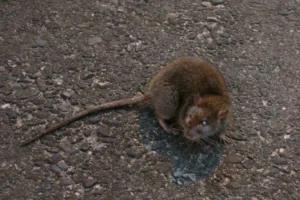
When they’re running along narrow ledges or jumping between surfaces, the tail helps them stay steady.
Having fur on the tail would make it heavier and less flexible. A bare tail is lighter and can move more quickly to adjust the rat’s balance. It’s also more sensitive to touch, which helps the rat feel its surroundings when it’s moving in tight spaces or in the dark.
Another reason is temperature control. Rats can’t sweat like humans do. Their tails help them cool down by releasing heat. Blood flows through the tail, and the thin skin lets heat escape. If the tail was covered in fur, it wouldn’t work as well for cooling off.
What Rat Tails Actually Look Like Up Close
If you look at a rat’s tail closely, you’ll see it’s covered in small, overlapping scales. These scales are similar to what you’d see on a snake or a fish, but they’re softer and more flexible.
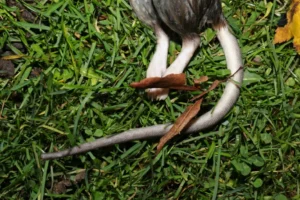
Between the scales, there are tiny, fine hairs. These hairs are so short and sparse that you probably won’t notice them unless you’re really looking.
They’re not like the thick fur on the rat’s body. They’re more like peach fuzz.

The tail usually has a pinkish or grayish color, depending on the rat’s overall coloring. On darker rats, the tail might be darker. On lighter rats (like albino rats), the tail is usually pale pink.
The texture of the tail feels rough and slightly bumpy because of the scales. It’s not slimy or wet like some people think. It’s dry and leathery.
How Do Rats Use Their Tails?
The tail is one of the most useful parts of a rat’s body, even though it doesn’t look like much.
For balance, the tail works like a counterweight. When a rat is walking along a narrow pipe or fence, it holds its tail out to the side or moves it around to keep from tipping over. It’s basically doing constant tiny adjustments to stay upright.
When rats climb, they use their tails for stability. If they’re climbing up a rope or a tree, the tail helps them grip and keeps them from falling backward.

Some rats can even partially wrap their tails around objects for extra support.
Rats also use their tails to communicate. When a rat is excited or alert, its tail might stand up or twitch. When it’s relaxed, the tail drags on the ground.
Other rats can read these signals and know what’s going on.
The tail helps with temperature control, like I mentioned earlier. On hot days, blood flows to the tail where heat can escape. On cold days, rats tuck their tails close to their bodies to keep warm.
Do All Rodents Have Hairless Tails?
Not all rodents have tails like rats. Different rodents have different types of tails depending on how they live and what they need.
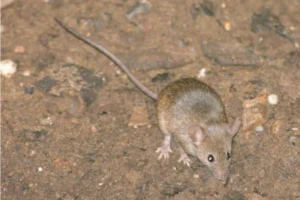
Mice have tails similar to rats. They’re long, thin, and mostly hairless with scales and sparse hair. This makes sense because mice and rats are closely related and live similar lifestyles.
Squirrels, on the other hand, have big, bushy tails covered in thick fur. They use their tails for balance too, but also for warmth and communication. A squirrel’s tail is basically a fluffy blanket it can wrap around itself.

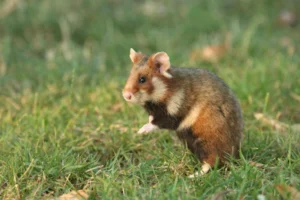
Hamsters and gerbils have short, stubby tails with some fur on them. Their tails aren’t as important for balance because these animals don’t climb as much as rats do.
Beavers have flat, paddle-shaped tails with no fur. They use them for swimming, slapping the water as a warning signal, and storing fat for winter.
So rats aren’t the only rodents with hairless tails, but their tails are definitely on the more extreme end of being bare.
Can You Tell Different Rat Species Apart by Their Tails?
Yes, actually. The two most common rat species (roof rats and Norway rats) have different tail characteristics.
Roof rats (also called black rats) have tails that are longer than their bodies. If you measure from nose to rump, the tail will be longer than that measurement. Their tails are thin and very flexible.
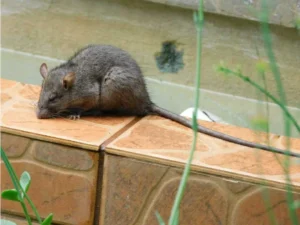
Norway rats (also called brown rats) have tails that are shorter than their bodies. The tail is also thicker and less flexible than a roof rat’s tail.
This difference makes sense when you think about how these rats live. Roof rats spend a lot of time climbing and need that extra tail length for balance. Norway rats stay mostly on the ground and in burrows, so they don’t need as much tail.
If you spot a rat and you’re trying to figure out which species it is, the tail length compared to the body is actually one of the best clues.
What Happens if a Rat Loses Part of Its Tail?
Rats can lose parts of their tails from injuries, fights with other animals, or getting caught in traps. When this happens, the tail doesn’t grow back.
A rat can survive without a full tail, but it’ll have some trouble with balance. It might be clumsier when climbing or jumping, especially right after the injury. Over time, most rats adapt and learn to balance without the missing part.
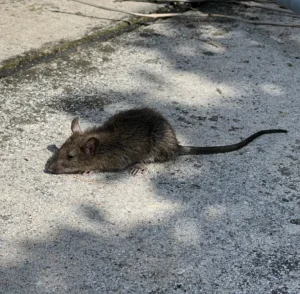
The tail can also get injured from being grabbed or pulled. If you ever need to handle a rat, you should never pick it up by the tail. This can seriously hurt the animal. The tail can get damaged, the skin can tear, or the bones inside can break.
Pet rats sometimes lose the tips of their tails from accidents or from other rats biting them during fights. Vets can treat these injuries, and the rat usually does fine afterward.
Do Pet Rats Have the Same Hairless Tails as Wild Rats?
Yes, pet rats have the same type of hairless, scaly tails as wild rats. Even fancy rats (the ones bred as pets) have tails that look pretty much identical to their wild cousins.
Some people find this off-putting when they’re thinking about getting a pet rat. The tail is definitely the part that looks the most “wild” and least like a typical fluffy pet.
But pet rat owners usually get used to the tail pretty quickly. Many say it’s actually kind of cute once you see how the rat uses it. Watching a pet rat balance on your shoulder or use its tail to steady itself while it eats is pretty entertaining.
There are no rat breeds with furry tails. All rats, whether wild or domesticated, have the same basic tail structure.
Why Do People Find Rat Tails So Creepy?
The hairless tail is probably one of the main reasons people are scared of or grossed out by rats. It’s just not what we expect from a mammal.
Most mammals we’re familiar with are covered in fur from head to toe (or at least head to tail). Seeing a long, scaly, pink tail on an otherwise furry animal triggers something in people that feels wrong or unnatural.

The tail also kind of looks like a worm or a snake, which are animals that a lot of people already find creepy. That association doesn’t help rats’ reputation.
There’s also the texture issue. Fur is soft and pleasant to touch. Scales are rough and weird. People naturally prefer soft things, so a scaly tail gets an automatic negative reaction.
But really, the rat’s tail is perfectly normal for what it needs to do. It’s just different from what we’re used to seeing on our pets.
Can Rat Tails Carry Diseases?
The tail itself isn’t any more likely to carry diseases than the rest of the rat’s body. Rats can carry diseases, but those diseases aren’t specifically concentrated in the tail.
The bigger concern with rat tails is that they can spread bacteria or parasites if the rat has been in dirty environments. Rats living in sewers, garbage dumps, or other gross places will have all kinds of bacteria on their skin, including their tails.
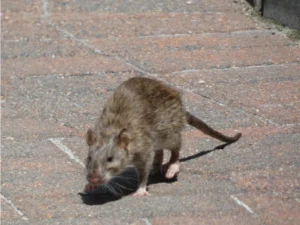
If a rat’s tail drags through contaminated areas and then touches surfaces in your home, it can spread germs. This is one reason why wild rats in your house are a health concern.
Pet rats that are kept clean and healthy don’t have this problem. Their tails are no more germy than any other part of their body.
The main thing to remember is that if you’re dealing with wild rats, you shouldn’t touch them (including their tails) without protection. And if you have pet rats, regular handling of the tail is fine as long as you wash your hands afterward.
Do Rats Feel Pain in Their Tails?
Yes, absolutely. Even though the tail doesn’t have fur, it has nerves and blood vessels running through it. Rats can feel everything that happens to their tails.
The tail is sensitive to touch, pressure, temperature, and pain. This sensitivity is actually part of how the tail works as a sensory tool. Rats use their tails to feel around in tight spaces or to sense when something is too hot or cold.
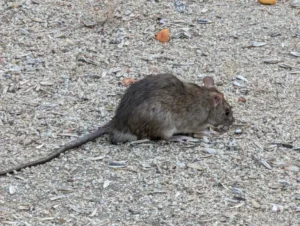
This is why it’s so important not to grab, pull, or step on a rat’s tail. It hurts them just like it would hurt if someone grabbed your finger and pulled on it.
If a rat’s tail gets injured, it can be really painful for the animal. Broken tails, torn skin, or infections all cause significant discomfort.
Are There Any Animals Related to Rats That Do Have Furry Tails?
Some animals in the same family as rats have different tail types, but you have to go pretty far out on the family tree to find truly furry tails.
Pack rats (also called woodrats) have tails that are slightly fuzzier than regular rats. They’re not fully furry, but they have more hair on them than typical rat tails.
Chinchillas are rodents with incredibly soft, thick fur that covers their entire bodies, including their tails. But chinchillas are pretty distantly related to rats.
Dormice are small rodents with bushy, furry tails that look more like squirrels than rats. Again, they’re not closely related to rats even though they’re both rodents.
The closest relatives to rats (mice, voles, lemmings) mostly have the same type of hairless or nearly hairless tails. It seems like this tail type works really well for this group of animals.
Conclusion
Rats don’t have fur on their tails. Instead, their tails are covered in scales and tiny, sparse hairs that make them look almost naked. This hairless design isn’t just weird looking, it’s actually really useful.
The bare tail helps rats balance when they’re climbing and jumping. It helps them cool down when they’re hot. It’s lightweight and flexible, which makes it perfect for the active, acrobatic lifestyle rats live.
While the scaly tail might be off-putting to people who aren’t used to rats, it’s a normal and healthy part of how these animals are built.
Whether you’re dealing with wild rats or considering a pet rat, understanding their tails helps you appreciate how well-adapted these animals really are.

Hi, my name is Ezra Mushala, i have been interested animals all my life. I am the main author and editor here at snakeinformer.com.