
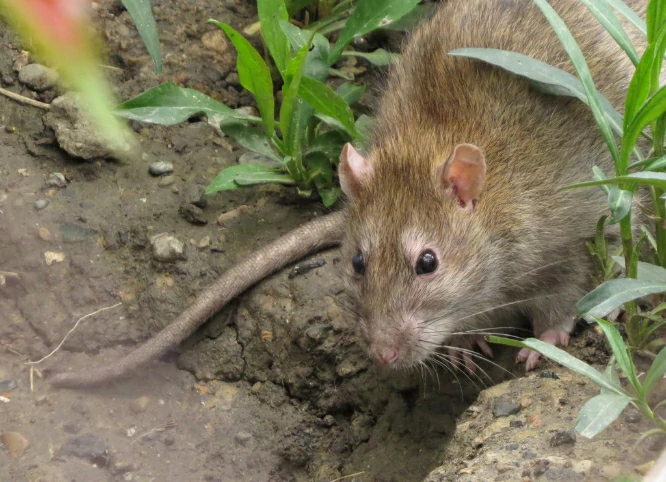
You’ve probably heard crazy stories about giant rats, maybe from a friend who swears they saw a rat as big as a small dog, or from sensational news headlines with photos of unusually large rodents. These stories can be pretty alarming, especially if you’re dealing with a rat problem or live in an urban area. Do rats actually get as big as cats?
No, rats don’t get as big as cats. The largest common rat species (Norway rats) typically weigh 12 to 16 ounces and measure 16 to 20 inches from nose to tail. An average cat weighs 8 to 10 pounds, which is 5 to 8 times heavier than even the largest rats. Stories of cat-sized rats are usually exaggerations or cases of mistaken identity.
While rats can certainly get bigger than many people expect, they’re nowhere near cat-sized. Understanding actual rat sizes helps you know what you’re dealing with.
Actual Sizes of Common Rat Species
There are several rat species, but most people encounter only two types: Norway rats and roof rats.
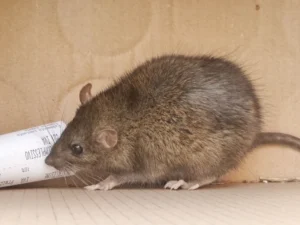
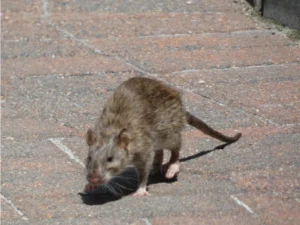
Norway rats (also called brown rats or sewer rats) are the larger of the two common species. Adults typically weigh between 12 and 16 ounces. Their body length (not including the tail) is usually 7 to 10 inches. The tail adds another 6 to 8 inches. So from nose to tip of tail, they’re about 13 to 18 inches long.
Roof rats (also called black rats) are smaller and more slender. Adults usually weigh 5 to 9 ounces. Their body length is about 6 to 8 inches, with a tail that’s actually longer than their body at 7 to 10 inches. Total length from nose to tail tip is around 13 to 18 inches.
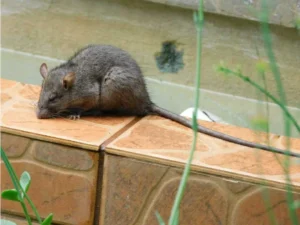
For comparison, an average house cat weighs between 8 and 10 pounds (128 to 160 ounces). Even a small cat usually weighs at least 6 pounds (96 ounces). This means even the largest Norway rat weighs less than one-sixth of what an average cat weighs.
In terms of length, rats can seem long because of their tail, but their actual body is much smaller than a cat’s body. A rat’s body is roughly the size of your fist, while a cat’s body is obviously much larger.
Why Rats Seem Bigger Than They Are
There are several reasons people often think rats are bigger than their actual size.
The tail makes a huge difference in perception. When you see a rat scurry across your path, your brain registers the entire length including that long, hairless tail. This makes the rat look bigger than it actually is. The tail can be as long as or longer than the body.
Fear and surprise magnify perception. When you unexpectedly see a rat, your brain goes into alert mode. Studies show that fear can make threats seem physically larger than they really are. A startled person is likely to overestimate the size of the rat they just saw.

The angle matters too. If you’re looking down at a rat from above, it looks smaller. But if you’re at ground level or the rat is slightly elevated (on a fence, coming out of a wall), it can look much larger.
Wet rats look bigger than dry rats. Their fur lies flat when wet, but it puffs out when they’re dry. A rat that’s been swimming or caught in rain can look significantly larger once its fur dries.
Poor lighting conditions make it hard to judge size accurately. Many rat sightings happen at dawn, dusk, or nighttime when lighting isn’t great. In these conditions, it’s easy to misjudge the actual size.
The Largest Rats Ever Recorded
While normal rats don’t get cat-sized, there have been some unusually large specimens found over the years.
The largest Norway rat ever reliably measured was found in 2012 and weighed about 2 pounds. This is still only about one-fifth the weight of an average cat, even though it was an exceptionally large rat.
In 2016, a large rat was found in London that measured about 20 inches including the tail. News outlets called it “giant,” but it was actually just a larger-than-average Norway rat, not some mutant creature.
There are some genuinely large rat species in other parts of the world. The Gambian pouched rat, found in Africa, can weigh up to 3 pounds and measure up to 3 feet including the tail. But these aren’t the rats you’d find in your basement or alley.
The Sumatran bamboo rat can weigh up to 8 pounds, which is approaching cat weight. However, these are specialized species that live in Southeast Asian forests, not the rats that invade homes in North America or Europe.
The key point is that the rats you’re likely to encounter in urban or suburban areas don’t get anywhere close to cat-sized, no matter what scary stories you’ve heard.
Why the Myths About Giant Rats Persist
Stories about cat-sized or dog-sized rats keep circulating, even though they’re not true. There are several reasons these myths won’t die.
Sensational news headlines get clicks and attention. A story about “Giant Rat Found!” with a misleading photo angle gets way more views than “Normal-Sized Rat Found.” News outlets know this and sometimes play up the size angle.
Misleading photo angles are common. If you photograph a rat up close with nothing in the photo for scale, it can look huge. Holding a dead rat closer to the camera while standing farther back makes it look bigger than the person holding it.
People confuse other animals with rats. Nutria (also called river rats) can weigh 15 to 20 pounds and look somewhat rat-like. Groundhogs, large opossums, and even beavers are sometimes mistaken for “giant rats” by people who get only a quick glimpse.
Urban legends and storytelling naturally exaggerate. When someone tells a story about the rat they saw, it tends to grow with each retelling. A 12-ounce rat becomes “huge” in one telling, “massive” in the next, and “big as a cat” by the third retelling.
Historical references to “rats the size of cats” from medieval times or other periods were probably talking about nutria, capybaras, or just using hyperbole to describe a scary experience.
How Big is Too Big for a Rat?
If you see what looks like an unusually large rat, you might actually be looking at something else entirely.
An adult Norway rat shouldn’t weigh more than about 20 ounces at most. If you see something that looks bigger than this, you might be looking at a different animal.

Nutria are often mistaken for giant rats. They have orange teeth, webbed hind feet, and can weigh 15 to 20 pounds. They’re semi-aquatic and are sometimes called river rats, but they’re actually not closely related to true rats.
Groundhogs or woodchucks can be mistaken for rats from a distance, especially if you only see them briefly. They’re much larger than rats, weighing 5 to 14 pounds.

Opossums have a rat-like tail and can be confused with rats, especially at night. Adults weigh 4 to 14 pounds, much larger than any common rat species.
If what you saw looks bigger than a large guinea pig, it’s probably not a rat. It might be worth investigating further to identify what it actually is.
Do Rats in Cities Get Bigger Than Rural Rats?
There’s a common belief that city rats are huge compared to rural rats because of abundant food sources. The truth is more complicated.
Urban rats do have access to more consistent food sources from garbage, restaurants, and other human activity. This can allow them to reach their maximum potential size more reliably.
However, urban environments also have higher disease rates, more competition for territory, and more predators (including cats, dogs, and humans). These factors can keep rat populations from getting as large as they theoretically could.
Rural rats might have less consistent food, but they also face less competition and sometimes fewer predators. In grain storage facilities or farms with plentiful food, rats can get just as large as urban rats.
The biggest factor in rat size is genetics and species, not location. A Norway rat in the city and a Norway rat in the country will reach roughly the same maximum size if they both have adequate food.
What varies more by location is population density, not individual rat size. Cities might have more rats per square mile, but the individual rats aren’t significantly bigger.
Comparing Rats to Other Common Animals
To really understand rat size, it helps to compare them to animals you’re more familiar with.
A large Norway rat (16 ounces) is about the same weight as a guinea pig, though shaped differently. If you’ve held a guinea pig, that’s roughly how heavy a large rat feels.
Rats are much smaller than rabbits. Even a small rabbit typically weighs 2 to 3 pounds, which is two to three times the weight of the largest rat.
Chipmunks and squirrels offer another comparison. Gray squirrels weigh about 1 pound, making them similar to or slightly larger than the biggest rats. Chipmunks are much smaller, at about 3 ounces.
A large rat is roughly the weight of a softball, though obviously shaped differently. This gives you a sense of how much mass we’re actually talking about.
Rats are definitely smaller than you’d expect if you’ve only heard stories and never actually seen one up close. They’re not tiny, but they’re not monstrous either.
Why Rat Size Matters for Control
Understanding actual rat size is important when you’re trying to deal with a rat problem.
Trap size and placement depend on rat size. You need traps that are appropriately sized for 12 to 16 ounce rats. Traps that are too small won’t work. Traps that are too large are wasteful and might not trigger properly.
Entry point sizes matter. Rats can squeeze through holes as small as a quarter (about 3/4 inch). Knowing the actual size of rats helps you understand what gaps you need to seal. You don’t need to seal every tiny crack, just ones large enough for an actual rat.
Bait amounts should be appropriate. You don’t need huge amounts of bait for normal-sized rats. A small amount of peanut butter or other bait is enough.
Understanding rat size helps you set realistic expectations. You’re not trying to catch cat-sized monsters. You’re dealing with animals that, while unpleasant, are manageable with the right approach.
If someone tries to sell you extra-large traps or excessive amounts of bait because “city rats are huge,” they’re probably overselling. Standard rat control methods work fine for normal-sized rats.
What Actually Makes a Rat Look Intimidating
Rats don’t need to be cat-sized to be unsettling. There are other factors that make them seem threatening.
Their appearance is unsettling to many people. The hairless tail, the prominent teeth, the small eyes, and the general body shape trigger disgust in a lot of people, regardless of size.
They move quickly and unpredictably. When a rat scurries across a room or jumps unexpectedly, the quick movement can be startling even if the rat itself is small.
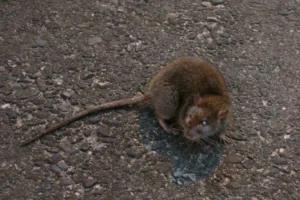
The context matters. Seeing a rat in your home is much more disturbing than seeing the same animal in a pet store. The invasion of your space makes it seem more threatening.
Their association with disease and filth makes them psychologically scarier than their actual physical size warrants. We know rats can carry diseases, and this knowledge amplifies our fear response.
The sounds they make, especially scratching in walls or ceilings at night, can be very unsettling. You can’t see the rat, so your imagination might make it bigger than it really is.
Conclusion
Rats don’t get as big as cats. The largest common rats (Norway rats) weigh about 12 to 16 ounces, while an average cat weighs 8 to 10 pounds. Even exceptionally large rats rarely exceed 2 pounds, which is still only about one-fifth the weight of an average cat.
Stories about cat-sized rats are exaggerations, usually caused by fear, misleading photos, poor lighting, or mistaking other animals for rats. While rats can certainly be larger than people expect, especially when you factor in the tail, they’re nowhere near cat-sized.
Understanding the actual size of rats helps you deal with them more effectively. You can choose appropriately sized traps, seal the right-sized holes, and have realistic expectations about what you’re dealing with. Rats are a problem that can be managed, not monsters that require extreme measures.

Hi, my name is Ezra Mushala, i have been interested animals all my life. I am the main author and editor here at snakeinformer.com.