
A well-kept lawn is something to be proud of, but mysterious holes can ruin the look and make you wonder what’s going on underneath. You might notice small holes appearing overnight, dirt piled around the entrances, or soft spots where the ground feels unstable.
Several animals dig in lawns, so it can be hard to know what’s causing the damage. If you’re worried that rats might be the culprits, you’re not alone. Do rats dig holes in lawns?
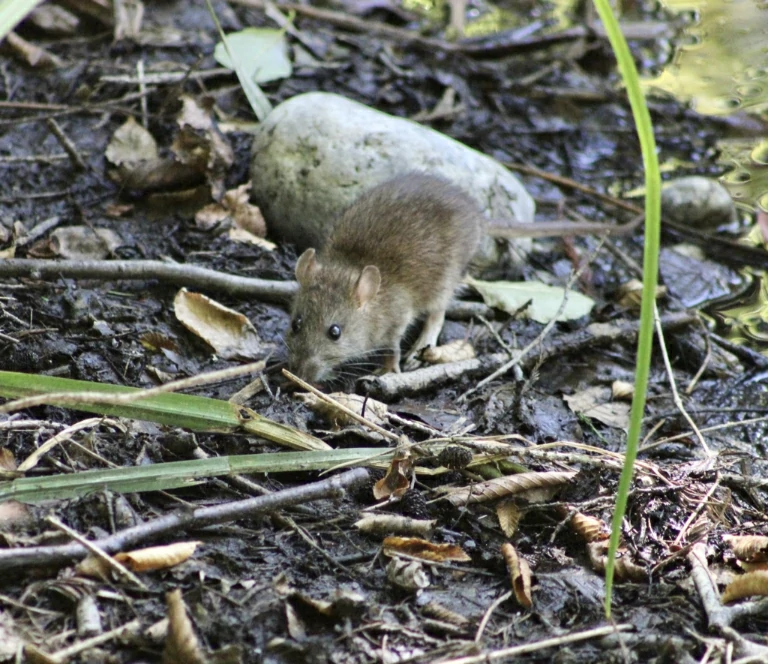
Yes, rats do dig holes in lawns. Norway rats (brown rats) create burrows in grass and soil, especially when lawns provide access to food, water, and cover. These holes are usually 2-4 inches wide and often appear near edges, bushes, or structures where rats feel safer.
Rats don’t just dig random holes. They’re creating underground tunnel systems that serve as homes, hiding spots, and routes to food. Understanding why rats dig in lawns and how to identify their burrows can help you take action before the problem gets worse.
Why Rats Dig Holes in Lawns
Rats dig holes in lawns for the same reasons they dig anywhere else: shelter, safety, and access to resources.
First, burrows protect rats from predators. Lawns are relatively open spaces, which makes rats vulnerable to hawks, owls, cats, and other hunters. By digging underground, rats can hide where predators can’t reach them.
Second, burrows protect rats from weather. Underground spaces stay cooler in summer and warmer in winter. They’re also sheltered from rain, wind, and snow.

Third, lawns often have food nearby. If your lawn is near a garden, bird feeder, compost bin, or building with accessible food, rats will dig burrows to stay close to those food sources.
Fourth, lawns provide good digging conditions. Grass roots help hold the soil together, which makes burrows more stable. The soil in lawns is often soft and well-watered, making it easy to dig.
Finally, lawns offer some cover. Taller grass, bushes along the edges, or decorative plants all give rats hiding spots and make them feel safer.
What Rat Holes in Lawns Look Like
Rat burrow entrances in lawns have some distinct features.
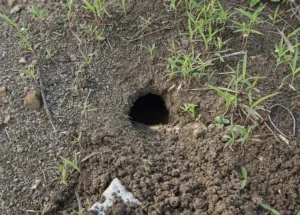
The holes are usually 2-4 inches wide. They’re round or slightly oval and look clean and well-defined.
You might see fresh dirt piled around the entrance, especially if the burrow was recently dug. This dirt is usually darker and moister than the surrounding soil.

Rat holes often appear near the edges of lawns, especially along fences, buildings, or next to bushes and trees. Rats prefer to dig where there’s some cover rather than in the middle of an open lawn.
You might notice multiple holes in the same area. Rat burrow systems usually have more than one entrance, so if you find one hole, there are probably others nearby.
The holes might have worn paths (runways) leading to them. These are trails in the grass where rats travel repeatedly between the burrow and food sources.
Unlike some other animals, rat holes don’t usually have a lot of debris or vegetation blocking the entrance. Rats keep their entrances clear so they can get in and out quickly.
How to Tell If Rats Are Digging the Holes
Several animals dig holes in lawns, so how do you know if it’s rats?
First, check the size. Rat holes are 2-4 inches wide. Smaller holes (less than 1 inch) are probably mice or voles. Larger holes (5+ inches) might be from rabbits, groundhogs, or skunks.
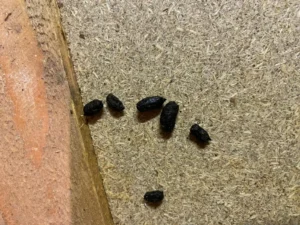
Second, look for droppings. Rat droppings are dark, pellet-shaped, and about the size of a grain of rice. You’ll usually find them near the burrow entrance or along runways.
Third, watch for runways. Rats create visible trails in the grass between burrows and food sources. These trails are usually 2-3 inches wide and look like well-worn paths.
Fourth, check the location. Rats prefer to dig near cover (edges of lawns, near bushes or buildings) rather than in the middle of open grass.
Fifth, look for gnaw marks. Rats chew on plants, roots, sprinkler lines, and anything else near their burrows.
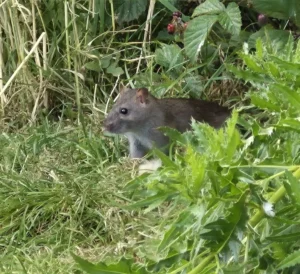
Sixth, pay attention to timing. Rats are most active at dusk and dawn. If you see animals coming out of the holes during these times and they have long tails, naked or scaly appearance, and rat-like features, that confirms it.
Finally, try the smell test. Rat burrows often have a musky, unpleasant odor, especially if there are multiple rats or if the burrow has been there for a while.
Where Rats Dig in Lawns
Rats don’t dig randomly. They choose spots that offer the best combination of safety and access to resources.
Along fence lines, you’ll often find rat burrows. Fences provide cover and rats can use them as guides when they travel at night.
Near buildings, especially along foundations, rats dig because buildings offer additional shelter and often have food sources inside or nearby.

Under bushes, shrubs, or decorative plants, rats feel safer because the vegetation hides the burrow entrance from predators.
Near water sources, like sprinklers, garden ponds, or drainage areas, rats will dig because they need water to survive.
In corners or edges of the lawn, rats prefer these spots because they can keep their backs protected while watching for danger from the open side.
Close to bird feeders, compost bins, or gardens, rats dig to stay near easy food sources.
You’re less likely to find rat holes in the middle of an open lawn because it’s too exposed. Rats are cautious and prefer areas with some cover.
What Rats Do With the Holes They Dig
The holes you see in your lawn are entrances to underground tunnel systems.
Inside the burrow, rats create multiple chambers for different purposes. There’s a nesting chamber where rats sleep and raise babies. This chamber is lined with soft materials like grass, leaves, or shredded paper.
There’s usually a food storage chamber where rats stash seeds, nuts, and other food items they’ve collected.
Some burrows have areas where rats concentrate their waste, though rats can’t fully control their bowels.
The tunnels connect these chambers and often have multiple entrances for escape routes. If a predator tries to dig into one entrance, rats can flee through another.
Rats use these burrows as home base. They sleep underground during the day and come out at night to search for food and water.
The burrows also protect rats during bad weather and give them safe places to hide when they sense danger.
How Rat Holes Damage Lawns
Rat burrows can cause several problems for your lawn.
First, they create unsightly holes that ruin the appearance of your grass. If you’re trying to keep a nice-looking lawn, rat holes are frustrating.
Second, they create soft spots and depressions. The tunnels underneath weaken the soil structure, and over time the ground above might sink or collapse slightly. This creates uneven areas that are hard to mow and can be tripping hazards.
Third, rats eat grass roots and other plants. This can kill patches of grass and create brown or dead spots.
Fourth, the dirt piled around burrow entrances smothers the grass nearby, creating more bare or damaged areas.
Fifth, if you’ve got irrigation systems, rats might chew through underground sprinkler lines or drip systems, causing leaks and water waste.
Sixth, rat burrows can attract other pests. Once rats are established, other animals might use the abandoned burrows or be drawn to the area.
Finally, large burrow systems near sidewalks, driveways, or building foundations can cause settling or shifting, which might lead to cracks or other structural issues.
What Attracts Rats to Your Lawn?
Rats don’t dig in your lawn for no reason. Something is attracting them.
Food is the biggest draw. If you’ve got a garden nearby, bird feeders, fruit trees, compost bins, or pet food outside, rats will dig burrows close by to access those food sources.
Water attracts them too. Lawns are usually watered regularly, which means there are puddles, sprinkler runoff, or moist soil. If you’ve also got a pond, birdbath, or other water feature, that makes your lawn even more appealing.
Cover and shelter make your lawn attractive. Overgrown grass, bushes, shrubs, piles of yard waste, or clutter all give rats places to hide and feel safe.
Proximity to other food sources matters. If your lawn is near a building with accessible garbage, a neighbor’s yard with chickens, or a nearby farm, rats might use your lawn as a convenient spot to dig between food locations.
Soft soil is easier to dig. If you’ve recently aerated your lawn, tilled the edges, or added topsoil, you’ve made it easier for rats to dig.
If your neighbors have rats, there’s a good chance they’ll spread to your property. Rats don’t respect property lines.
How to Stop Rats from Digging Holes in Your Lawn
If you want to keep rats from digging in your lawn, you need to make it less attractive and harder to burrow in.
First, remove food sources. Take down bird feeders (or switch to rat-proof designs), pick up fallen fruit, secure compost bins, and don’t leave pet food outside.
Second, eliminate water sources. Fix leaky sprinklers and hoses, and don’t let water pool on your lawn.
Third, keep your lawn well-maintained. Mow regularly, trim bushes and shrubs away from the edges, and remove piles of leaves, branches, or other debris.
Fourth, fill in existing burrows. Once you’re sure rats aren’t inside, fill the holes with dirt or gravel and pack it down firmly. You can stuff steel wool into the entrance first to make it harder for rats to re-dig.
Fifth, use traps. Place snap traps or live traps near burrow entrances and along runways. Bait them with peanut butter, bacon, or dried fruit.
Sixth, consider barriers. You can install underground barriers made of hardware cloth (metal mesh) along the edges of your lawn to prevent rats from digging in.
Seventh, encourage natural predators. Owls, hawks, and snakes hunt rats. You can install owl boxes to attract owls to your yard.
Eighth, use motion-activated lights or sprinklers. Rats are nocturnal and don’t like bright lights or sudden movements. These can deter them from your lawn.
Ninth, keep your lawn short. Rats feel safer in taller grass, so keeping your grass mowed short makes your lawn less attractive.
Should You Use Poison?
Poison is an option, but it has risks.
First, poisoned rats can die in their burrows, which creates a smell problem. If a rat dies underground, you might not be able to reach the body to remove it.
Second, poison can harm other animals. If a rat eats poison and then gets eaten by a hawk, owl, or cat, that predator can get poisoned too.

Third, poison doesn’t solve the root problem. If your lawn still has food, water, and cover, new rats will move in after you’ve killed the old ones.
If you do use poison, place it in tamper-resistant bait stations and follow all safety instructions. Keep it away from areas where pets, children, or wildlife might access it.
Traps are often a safer and more effective choice for lawns.
Can You Just Fill the Holes and Ignore the Problem?
Filling holes without addressing the rats is a temporary fix at best.
If rats are still active, they’ll just dig new holes or re-dig the ones you filled. Rats are persistent and won’t give up easily.
Before you fill holes, make sure the rats are gone. You don’t want to trap them underground, because they’ll either dig out or die and create a smell problem.
After you’re sure the rats are gone, fill the holes with dirt or gravel and pack it down firmly. You can also stuff steel wool into the entrance before filling to make it harder to re-dig.
Monitor the area. If new holes appear, you know rats are still around and you need to take more aggressive action.
The best approach is to combine filling holes with removing food sources, eliminating shelter, and setting traps.
How to Repair Lawn Damage from Rat Burrows
Once you’ve gotten rid of the rats, you’ll need to repair the damage they caused.
First, fill all the burrow holes with dirt or topsoil. Pack it down firmly and add more as needed to bring it level with the surrounding ground.
Second, repair any sunken or collapsed areas by adding soil and compacting it.

Third, reseed the bare or damaged spots. Use grass seed that matches your existing lawn, spread it evenly, and water it regularly until it grows.
Fourth, fertilize the repaired areas to help the new grass grow faster and stronger.
Fifth, keep the lawn well-watered and mowed as the grass fills in.
Depending on how bad the damage is, it might take several weeks or months for your lawn to fully recover.
Other Animals That Dig Holes in Lawns
If you’re not sure the holes are from rats, here are some other possibilities.
Moles create volcano-shaped mounds of dirt and tunnel just below the surface. Their holes are smaller and more numerous than rat holes.
Voles dig small holes (less than 2 inches wide) and create surface runways that look like shallow trenches in the grass.
Groundhogs (also called woodchucks) dig much larger holes, usually 6-10 inches wide, and often have mounds of dirt around the entrance.
Rabbits dig holes for nesting, but these are usually shallower and wider than rat burrows.
Skunks dig small, cone-shaped holes when they’re searching for grubs and insects. These holes are usually 3-4 inches wide and shallow.
Chipmunks dig small burrows (about 2 inches wide) but they’re more common in areas with rocks, logs, or other cover.
If you’re not sure what’s digging in your lawn, the size of the hole, the type of damage, and other signs (like droppings or runways) can help you identify the culprit.
Conclusion
So, do rats dig holes in lawns? Yes, absolutely. Norway rats dig burrows in lawns to create shelter, stay safe from predators, and access food and water sources nearby.
Rat holes in lawns are usually 2-4 inches wide and appear near edges, bushes, or buildings. They’re connected to underground tunnel systems where rats nest, store food, and hide.
These burrows can damage your lawn by creating unsightly holes, soft spots, and dead patches of grass. But you can stop rats by removing food sources, eliminating shelter, filling in burrows, and setting traps.
The key is making your lawn less attractive to rats. If you take away what they need, they’ll move on, and your lawn can recover.

Hi, my name is Ezra Mushala, i have been interested animals all my life. I am the main author and editor here at snakeinformer.com.