

Both rats and rabbits have reputations for breeding like crazy, and both species can create serious pest problems or overwhelm pet owners who aren’t prepared. But which one actually breeds faster? Do rats breed faster than rabbits?
Yes, rats breed faster than rabbits. Rats become sexually mature at 5 weeks old, can breed every 3 weeks, and have 6 to 12 babies per litter. Rabbits reach sexual maturity at 3 to 6 months, breed every 4 to 5 weeks, and have 4 to 12 babies per litter. One female rat can produce up to 70 offspring per year, while one female rabbit produces about 50 offspring per year.
While both animals reproduce quickly by human standards, rats have several reproductive advantages that make them the faster breeders overall.
Comparing Basic Reproductive Stats
Let’s break down the key numbers that determine how fast these animals breed.
Rats reach sexual maturity incredibly early, at just 5 to 8 weeks old. That means a baby rat can start having its own babies when it’s barely two months old. Rabbits take much longer, reaching sexual maturity at 3 to 6 months, depending on the breed.

The gestation period (pregnancy length) for rats is about 21 to 23 days, less than a month. Rabbits have a similar gestation period of 28 to 31 days, which is about a week longer.
Rats can get pregnant again immediately after giving birth. They can actually get pregnant while nursing their current litter, though this stresses their body. Rabbits can also get pregnant right after giving birth (they’re “induced ovulators,” meaning mating triggers ovulation).
Litter size for rats ranges from 6 to 12 pups on average, with some large litters reaching 14 or more. Rabbit litters are similar, averaging 4 to 12 babies (called kittens or kits), with larger breeds typically having bigger litters.
The number of litters per year is where rats really pull ahead. A female rat can have 12 to 15 litters per year (theoretically, though this would be really unhealthy for her). A female rabbit typically has 10 to 12 litters per year.
Why Rats Breed So Fast
Rats have evolved several adaptations that make them incredibly efficient breeders.
Their early sexual maturity means they can start reproducing when they’re still very young. A rat born in January could have its first litter in March, and its babies could be breeding by May. This creates exponential population growth really quickly.
Short gestation means rats don’t stay pregnant long. In the time a rabbit is pregnant once, a rat could almost have gone through two pregnancies.

Rats practice something called “postpartum estrus,” which means they come into heat and can get pregnant within 24 hours after giving birth. This keeps the breeding cycle going continuously.
Rat mothers wean their babies at about 3 weeks old. As soon as the babies are weaned, the mother can focus entirely on the next litter. Rabbit mothers nurse their babies for 4 to 8 weeks before weaning.
Rats are less selective about their living conditions. They’ll breed in sewers, basements, walls, or anywhere they can find shelter. Rabbits need more space and are slightly pickier about their environment.
The Mathematics of Rat Reproduction
The numbers around rat reproduction are really shocking when you do the math.
One female rat can theoretically have up to 15 litters per year. With an average of 8 pups per litter, that’s 120 babies per year from one female.

But it gets worse. Half of those babies will be female, and they can start breeding at 5 weeks old. By the end of the first year, the original female rat’s daughters and granddaughters are all breeding too.
Scientists have calculated that if all offspring survived and continued breeding, one pair of rats could produce 15,000 descendants in a single year. Obviously this doesn’t happen in reality because of predation, disease, and lack of resources, but it shows the potential.
Even under more realistic conditions (accounting for infant mortality, predation, etc.), one female rat can easily produce 30 to 50 surviving offspring in a year if conditions are good.
In comparison, one female rabbit might produce 40 to 60 babies per year, but because rabbits mature more slowly, there are fewer generations in the same time period.
The Mathematics of Rabbit Reproduction
Rabbits breed fast too, which is where the phrase “breeding like rabbits” comes from, but they’re not quite as fast as rats.
A female rabbit can have 10 to 12 litters per year. With an average of 6 kits per litter, that’s about 60 to 72 babies per year from one female.

However, baby rabbits don’t reach sexual maturity until 3 to 6 months old. This means there are fewer generations within a year compared to rats.
The classic calculation is that one pair of rabbits can produce about 40 to 50 offspring in a year under good conditions. Their grandchildren won’t start breeding until later in the year or the following year.
Over multiple years, rabbit populations can explode just like rat populations. Australia’s rabbit problem is a famous example, where 24 rabbits introduced in 1859 grew to millions within just a few decades.
Still, in a direct month-by-month comparison, rats will outpace rabbits in population growth, especially in the first year.
Real-World Breeding Rates
In the real world (not theoretical calculations), both rats and rabbits breed fast, but environmental factors affect them differently.
Wild rat populations in cities can double every few months when food is plentiful. A small rat infestation can become a major problem within 6 to 12 months if not controlled.
Rabbit populations in the wild are controlled more by predators and habitat. When rabbits are introduced to areas without predators (like Australia or certain islands), their populations can explode.

Pet rats that aren’t spayed or neutered will breed continuously if kept together. Many accidental litters have happened when people thought they bought two females but actually got a male and female.
Pet rabbits similarly will breed if not separated. A common surprise for new rabbit owners is finding that their “two females” were actually a male and female, and now they have babies.
Both species will slow their breeding in poor conditions. If food is scarce or the environment is stressful, both rats and rabbits will have smaller litters or might not breed at all.
Survival Rates of Offspring
The number of babies born isn’t the whole story. You also need to consider how many survive.
Rat pups have a relatively high mortality rate in the wild. Only about 5% to 10% of rats born in the wild survive to adulthood. Predators, disease, starvation, and exposure all take their toll.
In domestic settings or protected environments (like inside buildings), rat survival rates are much higher. Up to 80% or 90% of rat pups might survive if they have access to food and shelter.
Rabbit kits also have high mortality in the wild. About 20% to 30% typically survive to adulthood. They’re prey animals with lots of predators (hawks, foxes, coyotes, snakes, and more).
Domestic rabbit kits have much better survival rates, often 80% to 90% or higher with proper care.
The key difference is that rats have more babies more often, so even with high mortality, they maintain population numbers. Rabbits produce fewer generations per year, so population growth is slightly slower.
Environmental Factors That Affect Breeding
Both rats and rabbits breed more when conditions are good, but they respond to different environmental cues.
Rats breed year-round in stable environments like buildings. In the wild, they might slow breeding in very cold weather, but they don’t have a specific breeding season.
Rabbits are somewhat seasonal breeders in the wild. They breed most actively in spring and summer when food is plentiful. In domestic settings with constant food and temperature, they’ll breed year-round.

Food availability hugely affects both species. Rats with unlimited food will breed constantly. Rats without enough food will produce smaller litters or stop breeding. The same goes for rabbits.
Stress reduces breeding in both species. Overcrowding, predator presence, or unstable environments can slow reproduction.
Temperature matters more for rabbits than rats. Rabbits can suffer heat stress, which affects their fertility. Rats are more adaptable to various temperatures.
Breeding in Captivity vs. Wild
The breeding rate can be very different depending on whether we’re talking about wild or captive animals.
Captive rats (pets or lab rats) often breed faster than wild rats because they have consistent food, shelter from predators, and no harsh weather. A pair of pet rats can quickly turn into dozens if not separated.
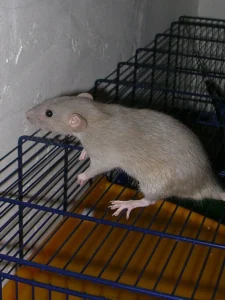
Wild rats face more challenges. Only the strongest and smartest survive, and food isn’t always available. Breeding still happens fast, but mortality rates are higher.
Captive rabbits similarly breed faster than wild rabbits. Domestic rabbit breeds have often been selected for fertility, making them even more productive than wild rabbits.
Wild rabbits have to deal with predators, disease, and variable food supplies. Their actual population growth is slower than the theoretical maximum.
For both species, captivity generally increases breeding success because it removes most of the natural checks on population growth.
Health Impacts of Rapid Breeding
Breeding super fast takes a toll on the mother’s body, for both rats and rabbits.
Female rats that breed continuously can develop health problems. They can become malnourished because they’re using so much energy to produce milk. They’re also at higher risk for mammary tumors and reproductive organ problems.
Each pregnancy and nursing period depletes the mother rat’s body. In the wild, most female rats only live about a year, partly because of the stress of constant reproduction.
Female rabbits face similar issues. Continuous breeding can lead to uterine cancer, exhaustion, and nutritional deficiencies. Responsible rabbit breeders give females breaks between litters.
The babies can also be affected. When a mother is undernourished or stressed, her offspring might be smaller, weaker, or have developmental problems.
For ethical pet ownership, it’s important not to breed rats or rabbits continuously. Both animals need time to recover between litters, and honestly, the world doesn’t need more pet rats or rabbits unless you’re a responsible breeder working to improve the species.
Population Control Challenges
The fast breeding of both rats and rabbits creates challenges for pest control.
Rat infestations are hard to eliminate partly because of how fast they reproduce. Even if you kill 90% of the rats in an area, the remaining 10% can rebuild the population within a few months.
Rabbit control faces similar problems. In Australia, billions of dollars have been spent trying to control rabbit populations, with limited success. The rabbits breed faster than they can be eliminated.

For rats, urban pest control requires constant effort. You can’t just do a one-time treatment and expect the problem to stay solved.
For rabbits in pest situations (like agricultural areas), fencing and habitat modification are more effective than trying to kill them faster than they breed.
Both species benefit from “r-selection” reproductive strategies, meaning they produce lots of offspring quickly. This makes them very hard to control through population reduction alone.
Comparing to Other Fast-Breeding Animals
How do rats and rabbits compare to other animals known for breeding fast?
Mice breed even faster than rats. They reach sexual maturity at 3 to 4 weeks, have shorter gestation (19 to 21 days), and can have even more litters per year. Mice are probably the fastest-breeding common mammal.
Guinea pigs breed slower than both rats and rabbits. They don’t reach maturity until 8 to 12 weeks, and their gestation is much longer (59 to 72 days).
Gerbils are in between. They mature at 10 to 12 weeks and have a 24 to 26 day gestation. They’re faster than guinea pigs but slower than rats.
Hamsters vary by species. Syrian hamsters reach maturity at 8 weeks with 15 to 18 day gestation. They’re slower than rats but faster than rabbits.
Among mammals, rats and rabbits are both in the “very fast breeder” category, with rats being slightly faster overall.
Why These Animals Evolved Fast Breeding
Both rats and rabbits evolved to reproduce quickly for good evolutionary reasons.
Rats are small prey animals with lots of predators. Fast breeding is a survival strategy. If most rats die young (which they do), the species needs to produce lots of offspring to maintain population numbers.
Rabbits face similar pressures. They’re prey for dozens of different predators. Fast breeding helps ensure that some offspring survive even when predation is high.
Both species can exploit temporary resource abundance. If food becomes available (like a grain store for rats or a garden for rabbits), fast breeding allows them to take advantage quickly.

Small body size correlates with fast breeding in mammals. Larger animals typically breed more slowly because pregnancy and raising offspring takes more energy.
The r-selection strategy (producing many offspring with minimal parental investment) works well for animals in unstable or dangerous environments. Rats and rabbits both use this strategy effectively.
Preventing Unwanted Breeding in Pets
If you keep rats or rabbits as pets, preventing breeding is important unless you’re a responsible breeder.
For rats, the solution is simple: keep males and females separated, or better yet, spay and neuter them. Rat surgery has become safer and more common in recent years.
Never assume you know the sex of baby rats. Many accidental litters happen because people sexed their rats wrong. Get a vet or experienced breeder to confirm the sex if you’re unsure.
For rabbits, spaying and neutering is strongly recommended even if you only have one rabbit. It prevents accidental breeding, reduces aggression and territorial behavior, and significantly reduces the risk of reproductive cancers.
Baby rabbits should be separated by sex by 10 to 12 weeks old, before they reach sexual maturity. Many people have been surprised by litters from rabbits they thought were too young to breed.
If you’re breeding either species intentionally, do it responsibly. Make sure you have homes for all the babies, provide proper care for the mother, and work on improving the health and temperament of the animals, not just producing more.
Impact on Ecosystems
The fast breeding of rats and rabbits has significant impacts when they’re introduced to new environments.
Rats have been introduced to islands worldwide (often accidentally, via ships). On many islands, they’ve devastated native bird populations by eating eggs and chicks. Their fast breeding means they can quickly establish large populations.
Rabbits introduced to Australia in 1859 became one of the worst invasive species disasters in history. Their fast breeding, combined with lack of natural predators, led to billions of rabbits devastating agriculture and native ecosystems.
In both cases, the ability to breed faster than native predators or control methods can eliminate them has made these species incredibly problematic.
Native ecosystems often can’t adapt fast enough to deal with the rapid population growth of introduced rats or rabbits.
Control efforts need to account for the breeding speed. Simply removing some animals isn’t enough; you need to prevent breeding or remove animals faster than they can reproduce.
Conclusion
Rats breed faster than rabbits when you compare all the factors: earlier sexual maturity (5 weeks vs. 3 to 6 months), slightly shorter gestation (21 to 23 days vs. 28 to 31 days), and more potential litters per year (12 to 15 vs. 10 to 12).
A female rat can produce up to 70 offspring per year under ideal conditions, while a female rabbit produces about 50. More importantly, rat offspring start breeding sooner, creating more generations per year.
Both animals are incredibly fast breeders by mammal standards, which is why both have “breeding like rabbits” or “breeding like rats” as expressions for rapid reproduction.
This fast breeding is a major reason both species can become serious pests when they invade new areas or when they’re not properly controlled in domestic settings.
If you keep either animal as a pet, make sure you understand their reproductive capacity and take steps to prevent unwanted breeding through separation or spaying/neutering.
The rapid breeding of both rats and rabbits is an evolutionary adaptation to their role as prey animals and their ability to exploit temporary resources. It’s amazing from a biological perspective, but it creates real challenges for pest control and responsible pet ownership.

Hi, my name is Ezra Mushala, i have been interested animals all my life. I am the main author and editor here at snakeinformer.com.