

Orcas (also called killer whales) are apex predators that sit at the very top of the ocean food chain. These intelligent marine mammals are known for hunting seals, fish, and even other whales.
But when you think about sharks, you usually picture them as the ultimate ocean predator. So what happens when these two top predators cross paths? Do orcas eat sharks?
Yes, orcas hunt and eat sharks. Several orca populations around the world specifically target sharks as a regular part of their diet, including great white sharks, sevengill sharks, and various other species. Orcas have developed specialized hunting techniques to kill and eat sharks safely.
Orcas aren’t just capable of eating sharks. They’re actually really good at it.
Scientists have documented orcas hunting sharks in multiple locations around the world, and in some places, shark hunting seems to be a learned behavior passed down through orca family groups.
When an orca decides to hunt a shark, the shark is usually at a serious disadvantage, even if it’s a great white.
How Orcas Hunt Sharks
Orcas don’t just randomly attack sharks. They use calculated strategies that show off their intelligence and cooperative hunting skills. The way they hunt varies depending on the shark species and what the orcas have learned from their pod members.
One common technique involves flipping the shark upside down. This might sound simple, but it’s incredibly effective. When a shark is turned upside down, it enters a state called tonic immobility, which is basically a paralysis-like trance.
The shark becomes completely helpless and can’t fight back or swim away. Orcas seem to know this and use it to their advantage.
Scientists first documented this behavior off the coast of California when researchers watched orcas hunting sevengill sharks. The orcas would approach from below, ram the shark, and flip it over.
Once the shark was upside down and immobilized, the orca could easily kill and eat it. The whole process showed a level of knowledge about shark biology that’s pretty remarkable.
Orcas also hunt sharks in groups. While one orca might distract or position the shark, others move in for the attack. This teamwork makes them even more dangerous to sharks.
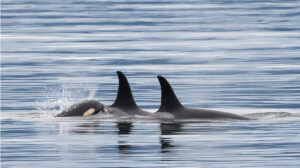
They can surround a shark, cut off escape routes, and coordinate their movements to ensure a successful hunt.
What’s really interesting is that orcas seem to target specific parts of the shark. They often go straight for the liver, which is packed with nutrients and oils.
In some cases, orcas will kill a shark, eat only the liver, and leave the rest of the carcass. This selective feeding shows they know exactly what parts of the shark are most valuable.
Why Do Orcas Target Shark Livers?
If you’ve heard about orcas eating sharks, you’ve probably heard about their love for shark livers. But why are orcas so interested in this specific organ? It turns out there are some really good reasons.
Shark livers are huge compared to most other fish. In some shark species, the liver can make up 20-30% of the shark’s total body weight.
That’s a massive organ, and it’s filled with oils and fats that are incredibly energy-dense. For an orca, eating a shark liver is like getting a highly concentrated energy boost.
The liver in sharks serves multiple purposes. It helps with buoyancy (since sharks don’t have swim bladders), and it stores energy. The oils in shark livers are rich in squalene and other compounds that make them extremely nutritious.
An orca can get a huge amount of calories from a single shark liver without having to eat the entire shark.
Scientists have found evidence of this selective feeding behavior in multiple locations. In South Africa, several great white shark carcasses washed up on beaches with surgical-like precision cuts near the pectoral fins.
The sharks’ livers were missing, but the rest of the body was largely untouched. Researchers determined that orcas were responsible, and they’d specifically targeted and removed the livers.
This behavior requires knowledge and skill. The orcas have to know where the liver is located, how to access it, and how to extract it efficiently.
It’s not something an orca would figure out by accident. This knowledge is likely passed down through generations, with experienced orcas teaching younger family members how to hunt sharks and extract the most valuable parts.
Documented Cases of Orcas Killing Great White Sharks
Great white sharks are often called the ocean’s apex predator, but orcas have proven that even great whites aren’t safe from predation.
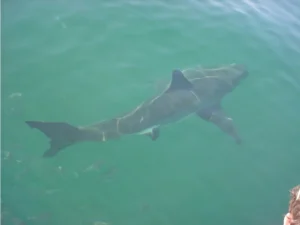
Several well-documented cases have shown orcas successfully hunting and killing great white sharks.
One of the most famous cases happened in 1997 off the coast of California near the Farallon Islands. Researchers and whale watchers witnessed an orca attacking and killing a great white shark.
The orca used the flip technique, turning the shark upside down and holding it in tonic immobility until it suffocated. The entire attack lasted about 15 minutes, and afterward, the orca fed on the shark.
In South Africa, starting around 2017, a pair of orcas nicknamed Port and Starboard began hunting great white sharks in False Bay and Gansbaai.
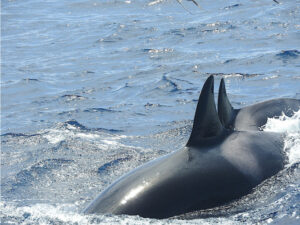
These two orcas developed a reputation for their shark-hunting abilities. Over several years, at least eight great white shark carcasses washed up on beaches, all with their livers removed. Scientists confirmed through analysis that orcas were responsible.
What’s fascinating about Port and Starboard is that their presence in an area causes great white sharks to leave. After these orcas show up, the shark population in that area dramatically drops.
Sharks that have been regular residents in an area for years will suddenly disappear, sometimes for months. This shows that sharks can recognize the threat orcas pose and actively avoid areas where these predators are hunting.
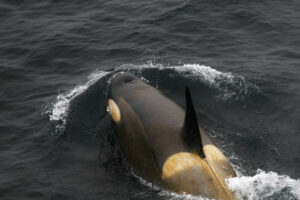
In Monterey Bay, California, researchers have tracked similar patterns. When orcas show up near seal colonies where great whites typically hunt, the sharks leave almost immediately.
One study found that after an orca attack on a shark, the remaining sharks in the area stayed away for up to a year. That’s a long time for a predator to abandon prime hunting grounds, which tells you how seriously sharks take the orca threat.
Which Shark Species Do Orcas Eat?
Orcas don’t just hunt one type of shark. They’ve been documented eating a variety of shark species, from small ones to some of the largest sharks in the ocean.
The species they target often depends on what’s available in their hunting area and what their pod has learned to hunt.
Great white sharks get a lot of attention in the media, but they’re not the only sharks on the menu. Orcas also hunt sevengill sharks, which are large predatory sharks found in temperate waters.
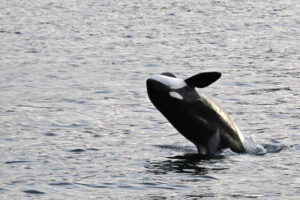
In some areas, sevengill sharks make up a regular part of certain orca pods’ diets.
Basking sharks, despite being massive (they can grow over 30 feet long), have also been hunted by orcas. These sharks are filter feeders and not aggressive, which probably makes them easier targets.
There are documented cases of orcas attacking basking sharks in various locations.
Orcas in New Zealand have been observed hunting school sharks and various other species. In some cases, they eat smaller sharks whole, while with larger sharks, they employ their liver-extraction technique.
The hunting strategy changes based on the size and species of the shark.
Even whale sharks, the largest fish in the ocean, aren’t completely safe.
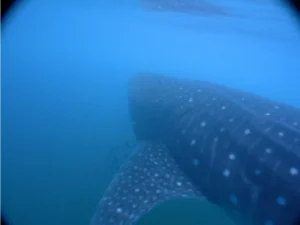
While there are fewer documented cases of orcas hunting whale sharks (probably because their ranges don’t overlap as much), there have been observations of orcas showing interest in whale sharks and potentially attacking them.
The variety of shark species that orcas hunt shows their adaptability. They’re not picky eaters when it comes to sharks.
If a shark is present and the orcas have the skills to hunt it, it’s potential prey.
Do Sharks Fear Orcas?
If you’ve ever wondered whether sharks can feel fear, the answer seems to be yes, at least when it comes to orcas. Scientific research has shown that sharks exhibit clear avoidance behavior when orcas are around.
The evidence is pretty compelling. In areas where orcas have been spotted or where an orca attack on a shark has occurred, shark populations drop dramatically.
This isn’t just a few sharks leaving for a day or two. We’re talking about entire shark populations abandoning areas for weeks or even months.
At the Farallon Islands, researchers studying great white sharks noticed that after orcas showed up and killed a shark, the remaining white sharks left the area almost immediately.
These sharks had been using the area to hunt seals, which is prime real estate for a great white. But they abandoned it completely after witnessing or sensing the orca attack.
Scientists believe sharks can detect chemical cues in the water when another shark is killed. When an orca kills a shark, blood and other fluids are released into the water.
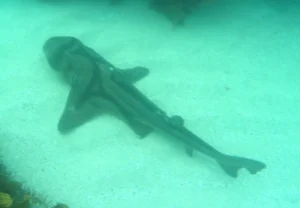
Other sharks in the area can pick up on these signals and recognize that a major predator is around. This causes them to leave quickly.
Some researchers describe this as a “fear response” or “risk avoidance behavior.” Sharks are capable of assessing threats and making decisions to protect themselves.
When the threat is as serious as an orca, the smart move is to get out of the area and find safer hunting grounds.
This behavior shows that despite being apex predators themselves, sharks recognize that they’re not invincible. They have predators too, and orcas are at the top of that very short list.
The fact that sharks will abandon prime feeding areas because of orcas tells you everything you need about the power dynamic between these two species.
How Do Orcas Avoid Getting Bitten by Sharks?
You might wonder how orcas manage to attack sharks without getting seriously injured themselves. After all, sharks have powerful jaws and sharp teeth.
The answer lies in the orcas’ hunting techniques and physical advantages.
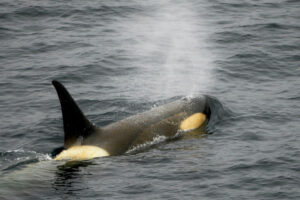
First, orcas are much larger than most sharks. An adult orca can weigh 8,000 to 12,000 pounds and reach lengths of 20 to 26 feet.
Even a great white shark, which is one of the larger shark species, typically maxes out at about 20 feet and 5,000 pounds. The size difference gives orcas a significant advantage.
The tonic immobility technique is crucial. By flipping the shark upside down, the orca essentially disables it before the shark can mount any effective defense.
A shark in tonic immobility can’t bite, can’t swim away, and can’t fight back. It’s completely vulnerable, which allows the orca to finish the hunt without risking injury.
Orcas also use their intelligence and speed. They’re incredibly fast swimmers when they need to be, and they can outmaneuver most sharks. By attacking from below or from the side, orcas can avoid the shark’s mouth entirely.
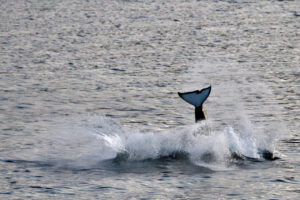
They use their powerful tails and bodies to ram sharks, which can cause significant damage without putting themselves in the shark’s bite range.
The thick layer of blubber that orcas have also provides some protection. While a shark bite would still hurt and cause damage, the blubber acts as a buffer that might prevent a bite from being immediately fatal.
That said, orcas are smart enough to avoid getting bitten in the first place whenever possible.
Group hunting also reduces risk. When multiple orcas work together to hunt a shark, they can coordinate their movements to keep the shark disoriented and overwhelmed.
The shark has to deal with threats from multiple directions, which makes it harder for the shark to focus on attacking any single orca.
Orca Populations That Specialize in Hunting Sharks
Not all orcas eat sharks. Orcas are divided into different ecotypes (basically subgroups with different diets and behaviors), and only some of these ecotypes include sharks in their regular diet.
The orcas that do hunt sharks have often developed this as a cultural behavior passed down through their pod.
Off the coast of California, some orca pods have been documented hunting sharks regularly, particularly sevengill sharks and great whites.
These orcas seem to have learned the techniques from older pod members and continue to use them generation after generation.
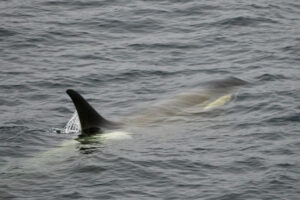
The famous pair in South Africa, Port and Starboard, appear to specialize in hunting sharks. They’re part of a relatively rare orca ecotype that doesn’t have the typical curved dorsal fin (theirs flop to one side, which is how they got their nicknames).
These two have become so efficient at shark hunting that their presence alone causes sharks to flee the area.
In New Zealand waters, some orca pods are known to hunt various shark species. Researchers have observed and documented these hunts, noting the specific techniques used and how the behavior seems to be shared knowledge within the pod.
What’s interesting is that orcas in other parts of the world might not hunt sharks at all. Some orca populations specialize in hunting fish like salmon.
Others focus on marine mammals like seals and sea lions. And some populations hunt other whales.
The diet varies based on location, available prey, and what knowledge has been passed down through the pod’s culture.
This shows how adaptable and intelligent orcas are. They don’t just eat whatever is available.
They develop hunting strategies for specific prey types, teach these strategies to their young, and maintain these cultural practices over time.
Shark hunting is just one example of this cultural learning in action.
What Happens to Shark Populations When Orcas Are Around?
The presence of orcas in an area can have a dramatic effect on local shark populations. It’s not just that orcas kill individual sharks. The fear response causes sharks to change their behavior in ways that can affect entire ecosystems.
When orcas show up in an area known for great white sharks, the sharks often leave immediately and stay away for extended periods.
This has been documented in several locations, including South Africa and California. The absence of sharks can last weeks or even months after orcas have been spotted.
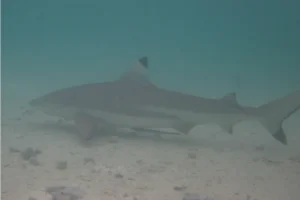
This creates a ripple effect through the ecosystem. If great white sharks leave an area, their prey (like seals) experience less predation pressure. This can lead to changes in seal behavior and population dynamics. The seals might spend more time in areas they’d usually avoid because of sharks.
In South Africa, after Port and Starboard began regularly hunting sharks near Gansbaai, the great white shark population in that area declined significantly.
Shark cage diving operations, which had been thriving for years, struggled because the sharks simply weren’t there anymore. The local ecosystem changed because one of its top predators had been displaced by an even more dominant predator.
Scientists are still studying the long-term effects of these interactions. In some cases, shark populations might adapt and find ways to coexist with orcas by changing their hunting times or locations.
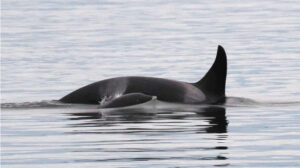
In other cases, the orcas might move on to different areas, allowing sharks to return. The dynamics are complex and vary by location.
What’s clear is that orcas have the power to dramatically influence shark behavior and distribution. Even though orcas don’t wipe out entire shark populations, their presence is enough to cause major disruptions to where sharks hunt and how they behave.
Conclusion
So do orcas eat sharks? Definitely. Orcas are capable hunters that have developed specialized techniques for killing and eating various shark species, including great white sharks.
They often target the nutrient-rich livers of sharks, showing selective and intelligent feeding behavior. The presence of orcas in an area can cause entire shark populations to flee, demonstrating just how much sharks fear these apex predators.
The relationship between orcas and sharks is a perfect example of how even the ocean’s top predators have predators of their own.
While sharks might rule certain parts of the ocean, when orcas show up, even great white sharks know it’s time to leave.
This complex predator-prey relationship continues to fascinate scientists and shows us that the ocean’s food web is more complicated than we once thought.

Hi, my name is Ezra Mushala, i have been interested animals all my life. I am the main author and editor here at snakeinformer.com.