
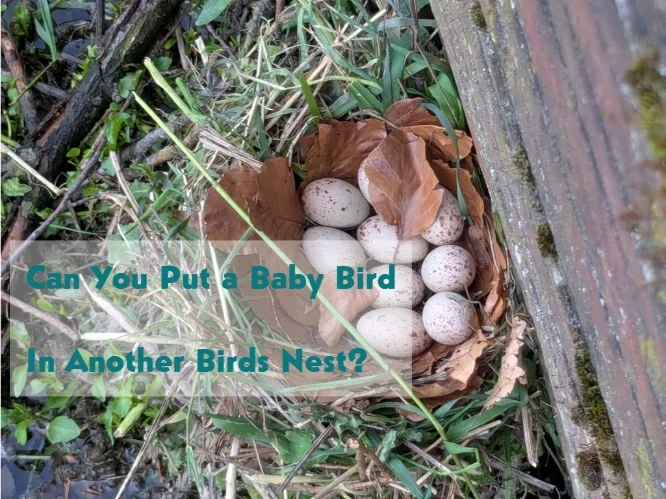
You found a baby bird on the ground, but its nest is gone. Maybe a storm destroyed it, or maybe you just can’t find it anywhere. You look around and spot another bird’s nest nearby in a different tree.
It seems like a perfect solution, right? Just put the baby in that nest instead. But here’s the real question: can you put a baby bird in another nest, or will the new parents reject it?
You can sometimes put a baby bird in another nest, but only if it’s the same species and the babies are roughly the same age. Different bird species won’t accept babies from other species, and parents may reject babies that are much older or younger than their own.
Putting a baby bird in the wrong nest is really tricky. It might work in some cases, but it can also lead to the baby being ignored, attacked, or pushed out.
You need to be really careful about when and how you try this.
Why the Bird’s Species Matters More Than You Think
Birds aren’t like humans who might adopt any baby that needs help. They’re programmed to recognize and care for their own species.
A robin won’t raise a sparrow. A cardinal won’t feed a blue jay baby. Each species has different calls, different feeding needs, and different behaviors. Parent birds know what their own babies should look and sound like.
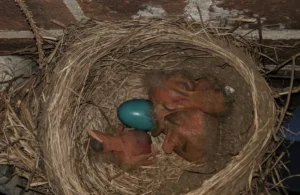
If you put a baby bird in a nest with the wrong species, the parents will usually notice something is off.
They might ignore the strange baby completely. Or they might even attack it because they see it as a threat or intruder in their nest.
The baby bird will starve if the parents won’t feed it. Even if the parents do try to feed it, they might give it the wrong type of food for its species.
A Baby’s Age and Size Make a Big Difference
Even if you find a nest with the same species, the age of the babies matters a lot.
Baby birds grow incredibly fast. A bird that’s three days old looks totally different from one that’s seven days old. Parent birds are used to seeing their babies at a specific stage of development.
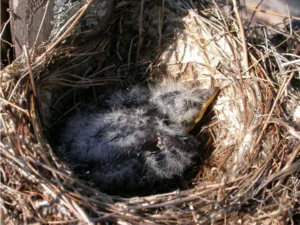
If you put a much younger baby in with older babies, it might get trampled or pushed aside. The bigger babies will be stronger and louder when begging for food. The little one won’t get enough to eat.
If you put an older baby in with younger ones, the parents might be confused. The bigger baby will need more food than the parents are prepared to provide. It might also hurt the smaller babies by accident.
The best chance of success is when the babies are within a day or two of the same age. They should be about the same size and have the same amount of feathers.
How Do Birds Actually Recognize Their Own Babies?
You might wonder how parent birds even know which babies are theirs. After all, baby birds of the same species look pretty similar.
Birds actually aren’t great at recognizing individual babies when they’re very young. They mainly respond to the location (their nest) and the begging calls (hungry baby sounds). If a baby is in their nest and making hungry chirping noises, they’ll usually feed it.
This is actually why putting a baby in another nest can sometimes work. The parents respond to the situation more than to the specific baby.
But here’s the catch. As babies get older, parents do start to recognize them better. They learn their specific calls and behaviors. By the time babies are ready to leave the nest, parents definitely know who their kids are.
That’s why this trick works better with younger babies than with older ones.
When Putting a Baby Bird in Another Nest Might Work
There are specific situations where putting a baby bird in another nest has a decent chance of working.
- If the baby fell from a nest that got destroyed, and you can find another active nest of the exact same species within 50 feet or so, it might work. The closer the nests were to each other, the better.
- If the babies in both nests are within a day or two of the same age, your chances are good. Check to see if they have similar amounts of feathers and are roughly the same size.
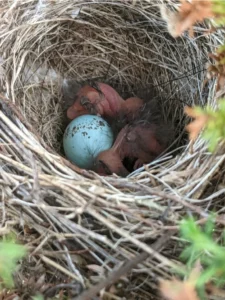
- If the foster nest only has one or two babies in it already, there’s room for one more. Nests with three or four babies are getting crowded, and adding another might be too much.
- If you act quickly after finding the baby, before it gets cold and weak, it has a better shot. A healthy baby that’s begging loudly for food is more likely to trigger the parents’ feeding response.
Clear Signs the Foster Parents Aren’t Accepting the Baby
Sometimes you can tell pretty quickly that the foster parents aren’t accepting the new baby.
- If you watch from a distance and the parents come back but ignore the new baby completely, it’s not working. They’ll feed their own babies but step right over the stranger.
- If the parents seem aggressive toward the new baby (pecking at it or trying to push it out), you need to remove it immediately. This baby is in danger.
- If the new baby is much smaller than the others and keeps getting shoved to the side, it won’t survive. It can’t compete with the bigger babies for food.
- If after an hour or two the baby is still begging constantly and the parents aren’t feeding it, the adoption failed.
Making a Substitute Nest Is Usually the Safer Choice
Instead of putting a baby bird in another nest, you’re usually better off making a substitute nest near where you found the baby.
Get a small container like a margarine tub or plastic berry basket. Poke some drainage holes in the bottom so rain water doesn’t collect inside.
Line the container with dry grass, leaves, or paper towels to make it soft and comfortable. Put the baby bird inside.
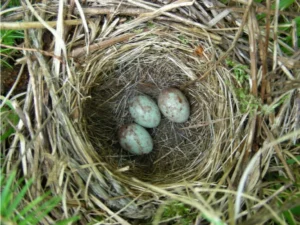
Attach this makeshift nest to a tree or bush as close as possible to where the original nest was. Put it in a shaded spot so the baby doesn’t overheat.
The parents should be able to hear their baby chirping and will come to feed it in the new location. This works because the parents actually recognize their baby’s calls. They’ll keep caring for their own baby even in a weird substitute nest.
This option is way safer than trying to sneak the baby into a stranger’s nest.
What About Orphaned Birds?
If a baby bird is truly orphaned (both parents are dead), putting it in another nest becomes more tempting. You’re trying to save its life.
But even in this case, it’s usually not the best option. The success rate is pretty low, and you might actually harm the foster family in the process.
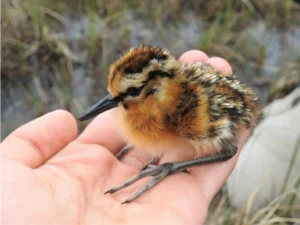
A baby bird that doesn’t belong might stress out the parents. They might abandon their entire nest if they sense something is wrong. Then you’ve gone from one orphan to a whole nest of orphans.
The better choice for an orphaned baby bird is to contact a wildlife rehabilitator. These people are trained to raise baby birds and know exactly what each species needs.
They have the right food, the right setup, and the time to feed babies every 15 to 20 minutes all day long. The baby has a much better chance of survival with them than in a stranger’s nest.
Different Bird Species React Very Differently
Some bird species are more accepting of strange babies than others. This has to do with how they nest and raise their young.
Colonial nesters (birds that nest in big groups) sometimes end up with mixed-up babies. Young birds might wander between nests, and parents might feed whoever’s in the nest when they arrive. These species might be more accepting of a foster baby.
Cavity nesters (birds that nest in holes in trees) are more protective of their space. They’re less likely to accept a stranger in their nest because their nesting site is limited and valuable.
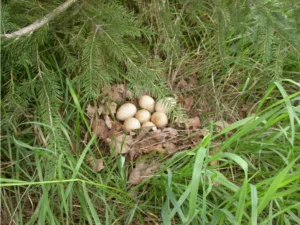
Ground nesters might be more flexible because babies naturally move around more near the nest. But they’re also more vulnerable to predators, so adding a baby that attracts extra attention could be dangerous.
Every species is different, and knowing the specific bird you’re dealing with matters a lot.
Is It Ethical to Ask Another Bird to Raise an Extra Baby?
There’s also an ethical side to putting a baby bird in another nest. You’re basically asking one set of parents to raise an extra baby without their consent.
Raising baby birds takes a massive amount of energy. Parents have to find food constantly from dawn to dusk. Adding one more mouth to feed is a significant burden.
The extra baby might mean all the babies get a little less food. The parents might wear themselves out trying to feed everyone. The original babies might not grow as strong or healthy.
You might be saving one life but potentially putting others at risk. That’s something to think about before you try this.
How to Safely Place a Baby in Another Nest
If you’ve decided to try putting a baby bird in another nest, here’s how to do it as safely as possible.
First, make absolutely sure both nests are the same species.
Look at photos online if you need to confirm what type of bird you’re dealing with.
Check that the babies are similar in age and size.
They should look like they could be siblings.
Pick up the baby gently and hold it in cupped hands.
Don’t squeeze it or grip it tightly.
Place the baby in the foster nest carefully without disturbing the other babies or eggs.
Put it in the middle if possible, not on the edge where it might fall out.
Leave the area immediately.
The parents won’t come back while you’re standing there watching.
Come back in an hour or two to check from a distance.
Watch to see if the parents are feeding the new baby along with their own. Use binoculars so you can stay far away.
Warning Signs You Need to Watch for Right Away
After you’ve placed the baby in the new nest, you need to monitor the situation carefully.
If the baby is still in the nest after a few hours and seems to be settling in, that’s a good sign. If it’s been pushed out or is sitting on the edge, things aren’t going well.

If you can see the parents feeding all the babies including the new one, success! If they’re only feeding some babies and ignoring others, the new baby isn’t being accepted.
If the new baby is chirping constantly and frantically, it’s not getting fed. If it’s quiet and calm like the others, it’s probably doing okay.
If you see any fighting or aggressive behavior in the nest, you need to remove the new baby right away. It’s not safe there.
When to Give Up and Call for Help
Sometimes you have to accept that putting the baby in another nest isn’t going to work.
- If after two to three hours the baby isn’t being fed, remove it from the foster nest. Don’t leave it there to starve.
- If the parents are attacking the baby or the other babies are hurting it, take it out immediately. This is dangerous.
- If the baby is getting weaker (less active, quieter chirping, cold to the touch), it needs professional help right now.
At this point, your best option is to call a wildlife rehabilitator. Look online for wildlife rehabilitators in your area, or call your local animal shelter for a referral.
Keep the baby warm while you wait. Put it in a box with a soft cloth and place the box on a heating pad set to low (put a towel between the heating pad and the box so it’s not too hot).
Don’t try to feed the baby yourself. Baby birds need specific foods and can easily choke or get pneumonia if fed incorrectly.
How to Prevent Nest Problems in Your Yard in the First Place
Instead of dealing with fallen babies and destroyed nests, you can do things to protect bird nests in your yard in the first place.
- Don’t trim trees or bushes during nesting season (spring and early summer). Wait until fall when babies have grown up and left.
- If you find a nest in a dangerous spot (like a wreath on your door), leave it alone if possible. Birds will be done with the nest in just a few weeks.
- Keep cats indoors. Cats are one of the biggest dangers to baby birds.
- Secure bird houses properly so they don’t fall during storms. Check that they’re mounted firmly to trees or posts.
- Don’t disturb nests once birds have started building. The parents might abandon a nest that’s been messed with too much.
Some Foster Attempts Work and Many Don’t
Wildlife rehabilitators sometimes successfully place orphaned babies with foster parents of the same species. But they’re trained professionals who know exactly what to look for.
In the wild, some species like European starlings occasionally end up raising babies that aren’t their own. This happens naturally when babies wander between nests in colonies.
But for every success story, there are probably many more failures where the baby was rejected and died. We just don’t hear about those as much.
The point is that this is always a risk. It might work, but it might not. You need to have a backup plan ready.
Conclusion
Putting a baby bird in another nest sounds like a good solution when you can’t find the original nest. But it’s actually really complicated and doesn’t always work.
The new parents might reject a baby that’s not their species. They might ignore a baby that’s the wrong age. They might attack a stranger in their nest.
Your best bet is to make a substitute nest and let the original parents keep caring for their baby. If that’s not possible, contact a wildlife rehabilitator instead of trying to sneak the baby into another family’s nest.
If you do try putting a baby in another nest, make sure it’s the same species, the babies are the same age, and watch carefully to make sure it’s being fed. Be ready to remove the baby and get professional help if the adoption doesn’t work.
Sometimes trying to help can actually make things worse. Know when to step back and let the experts handle it.

Hi, my name is Ezra Mushala, i have been interested animals all my life. I am the main author and editor here at snakeinformer.com.